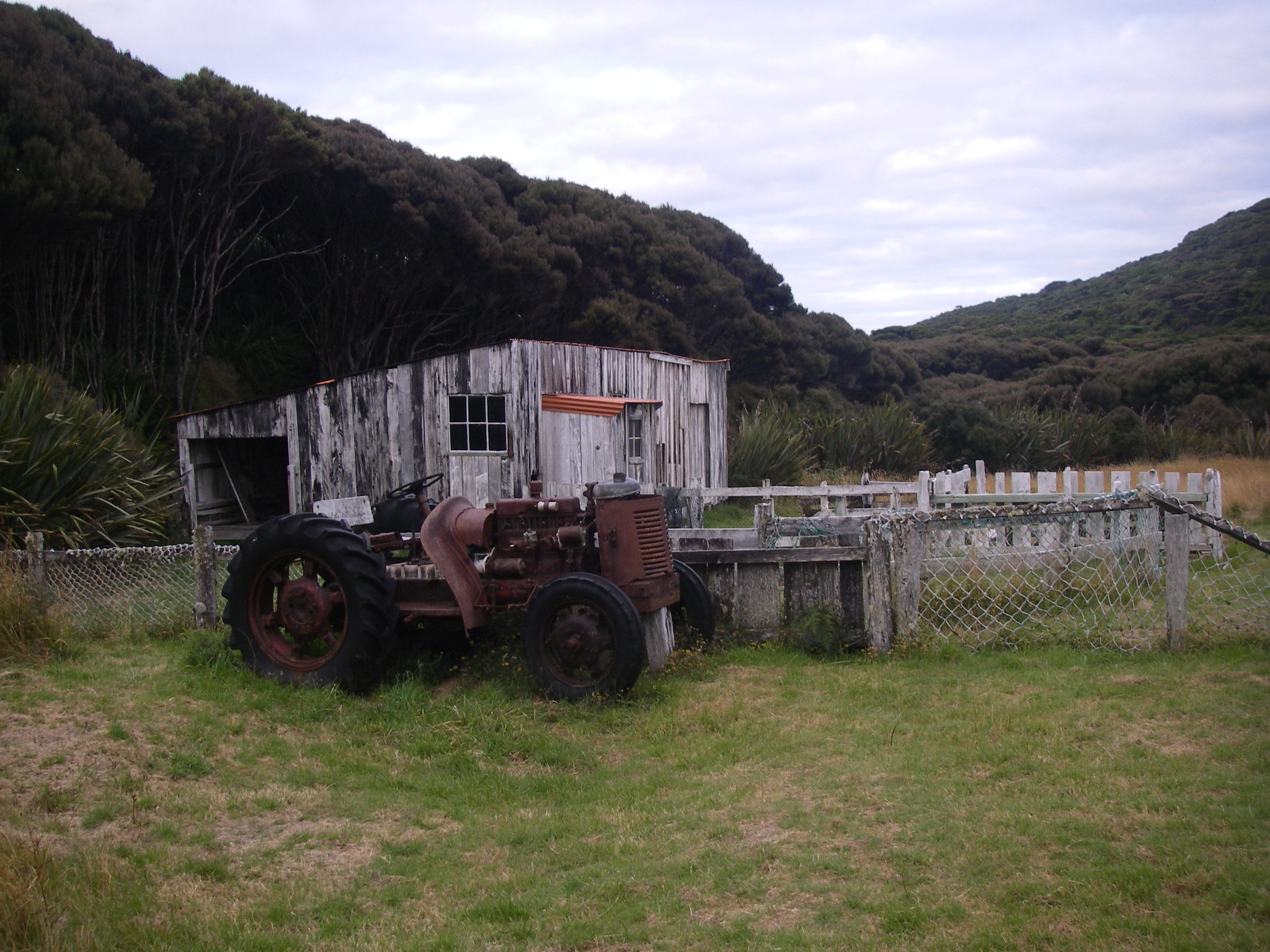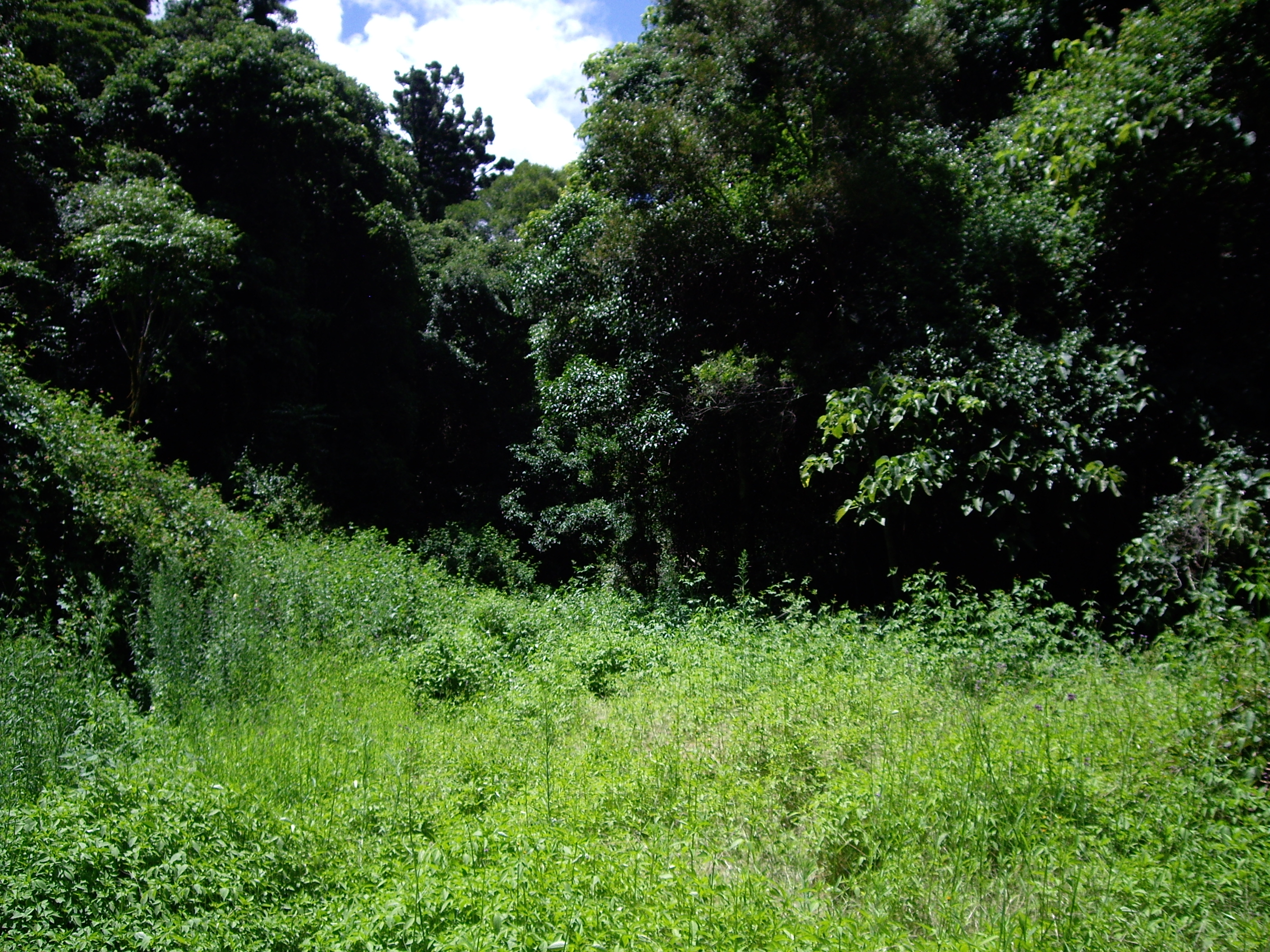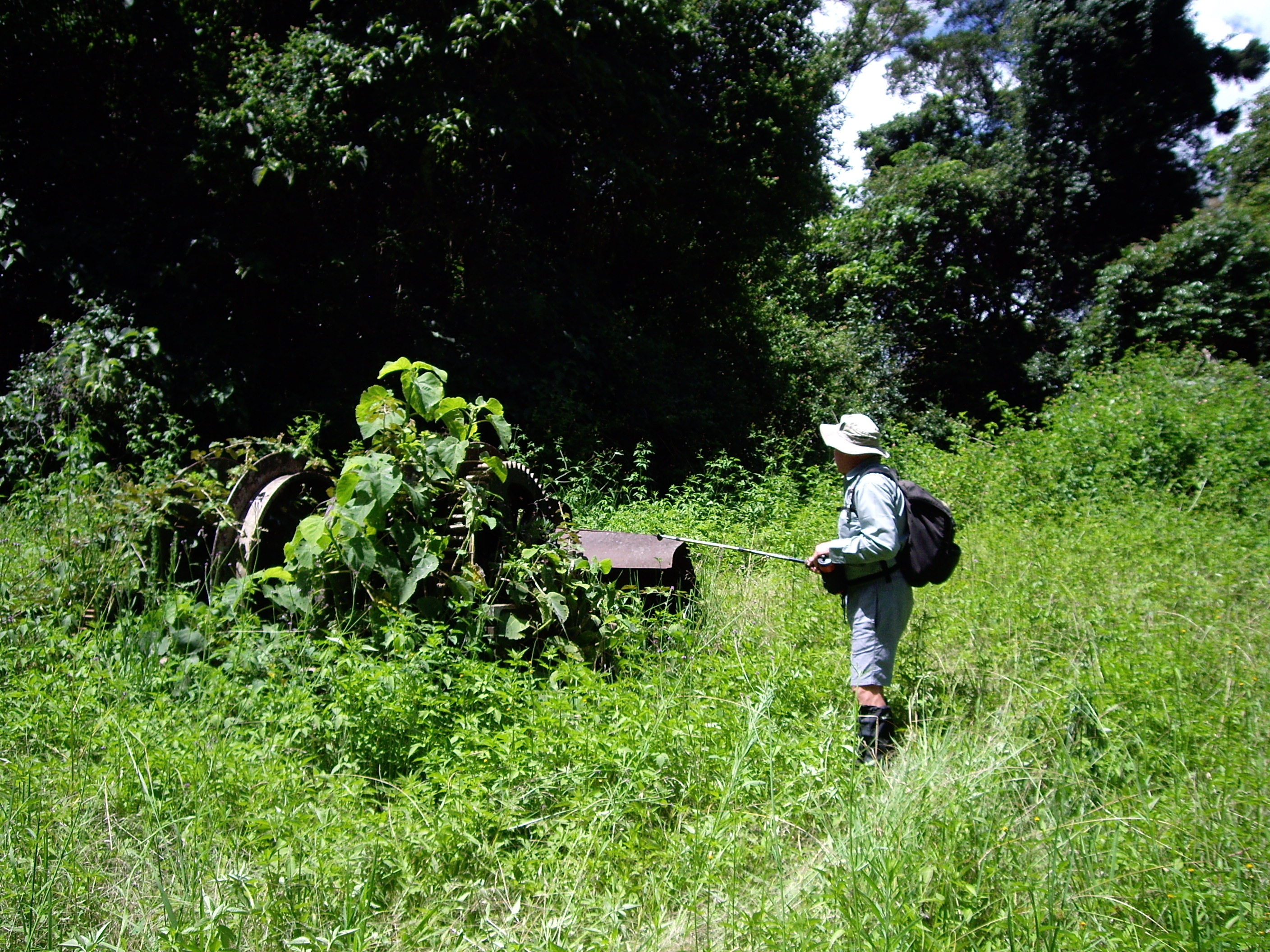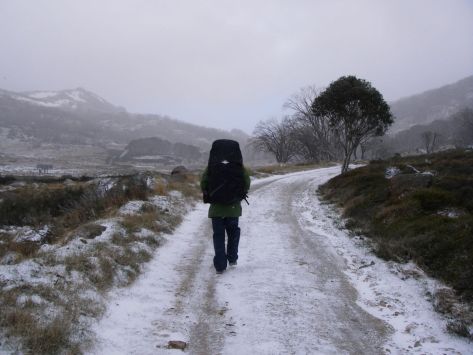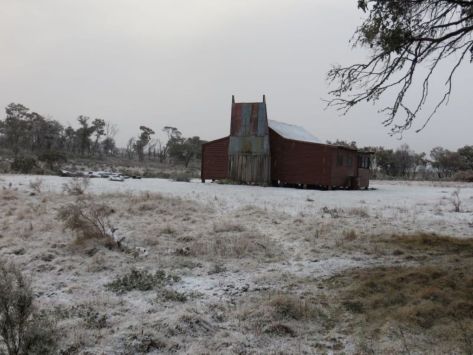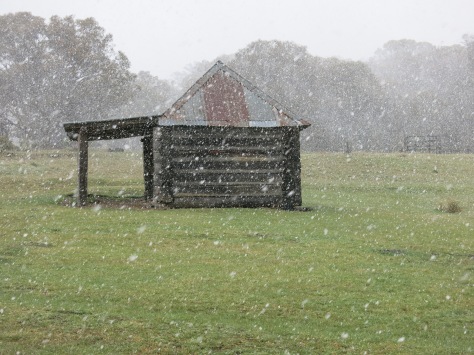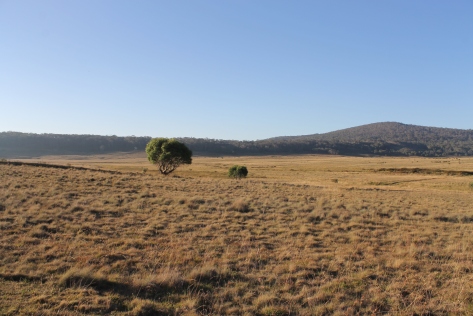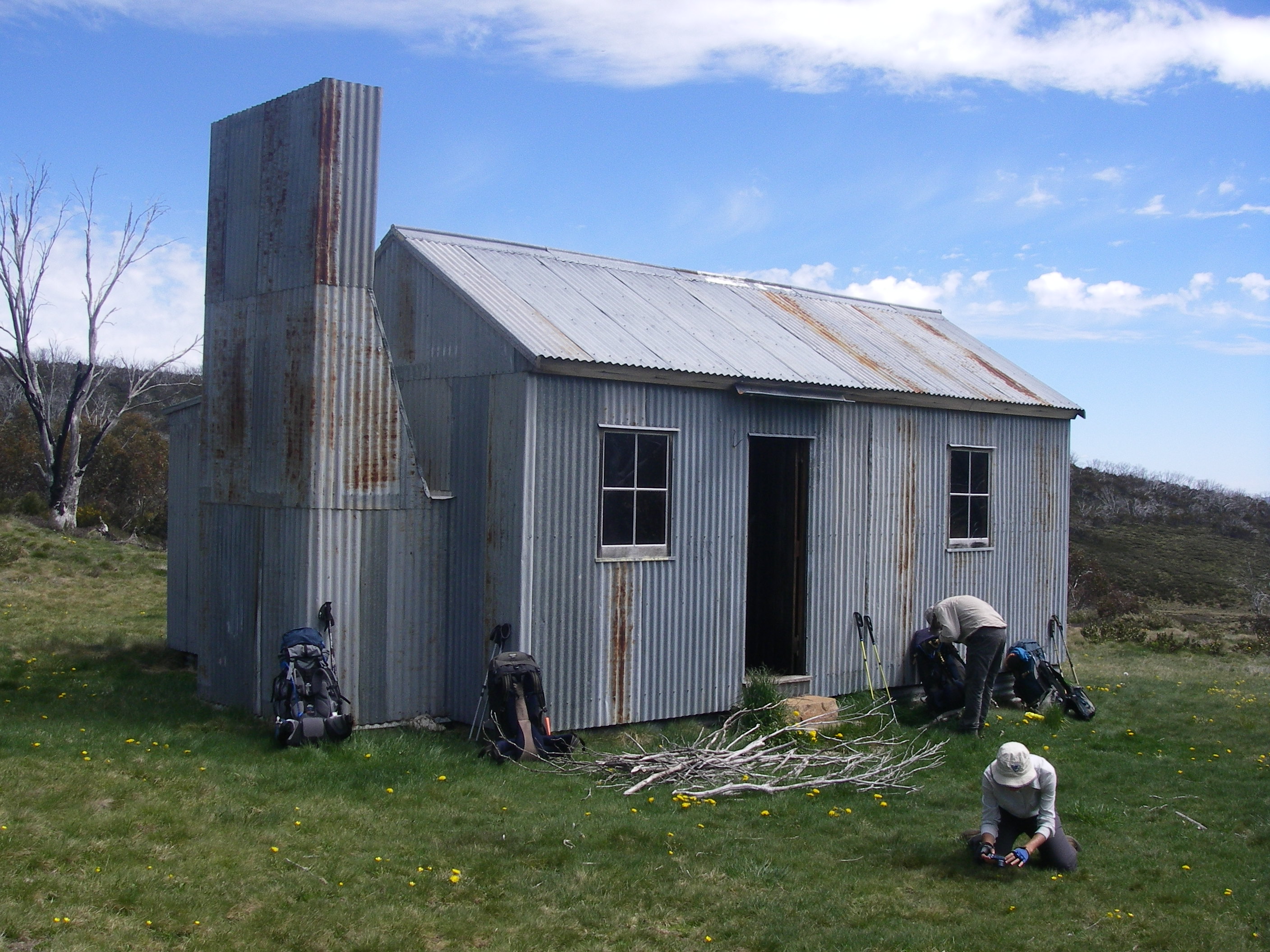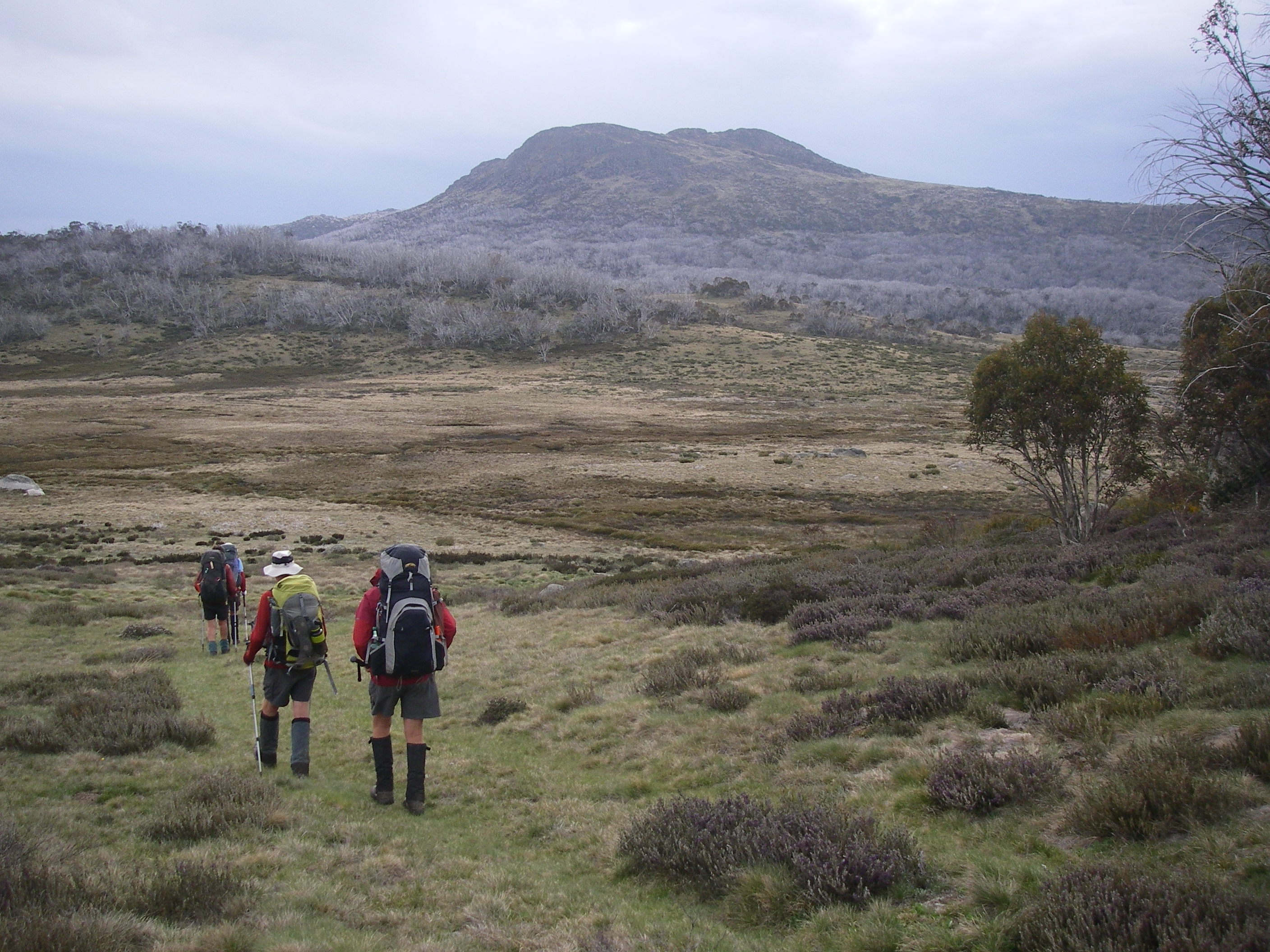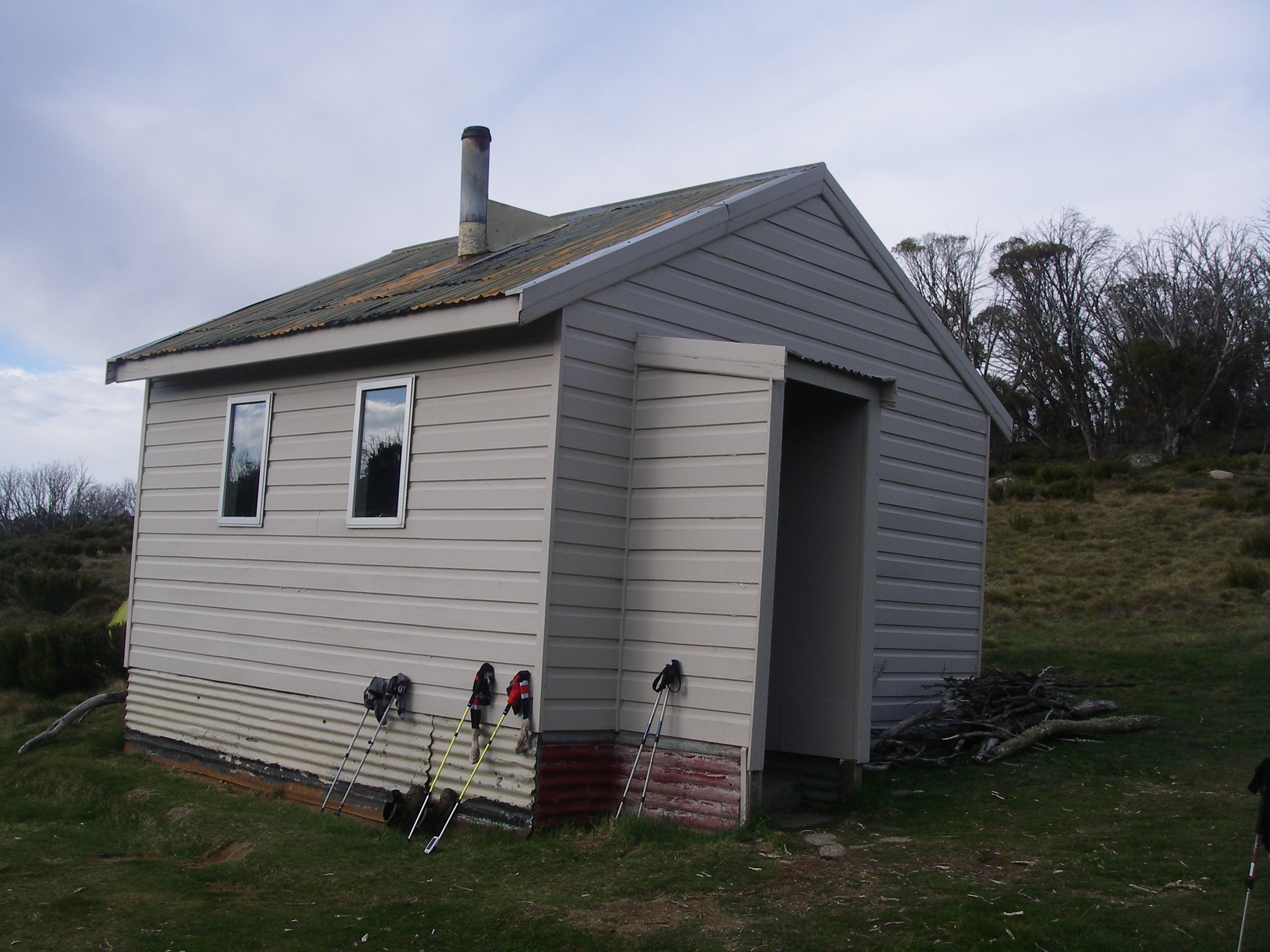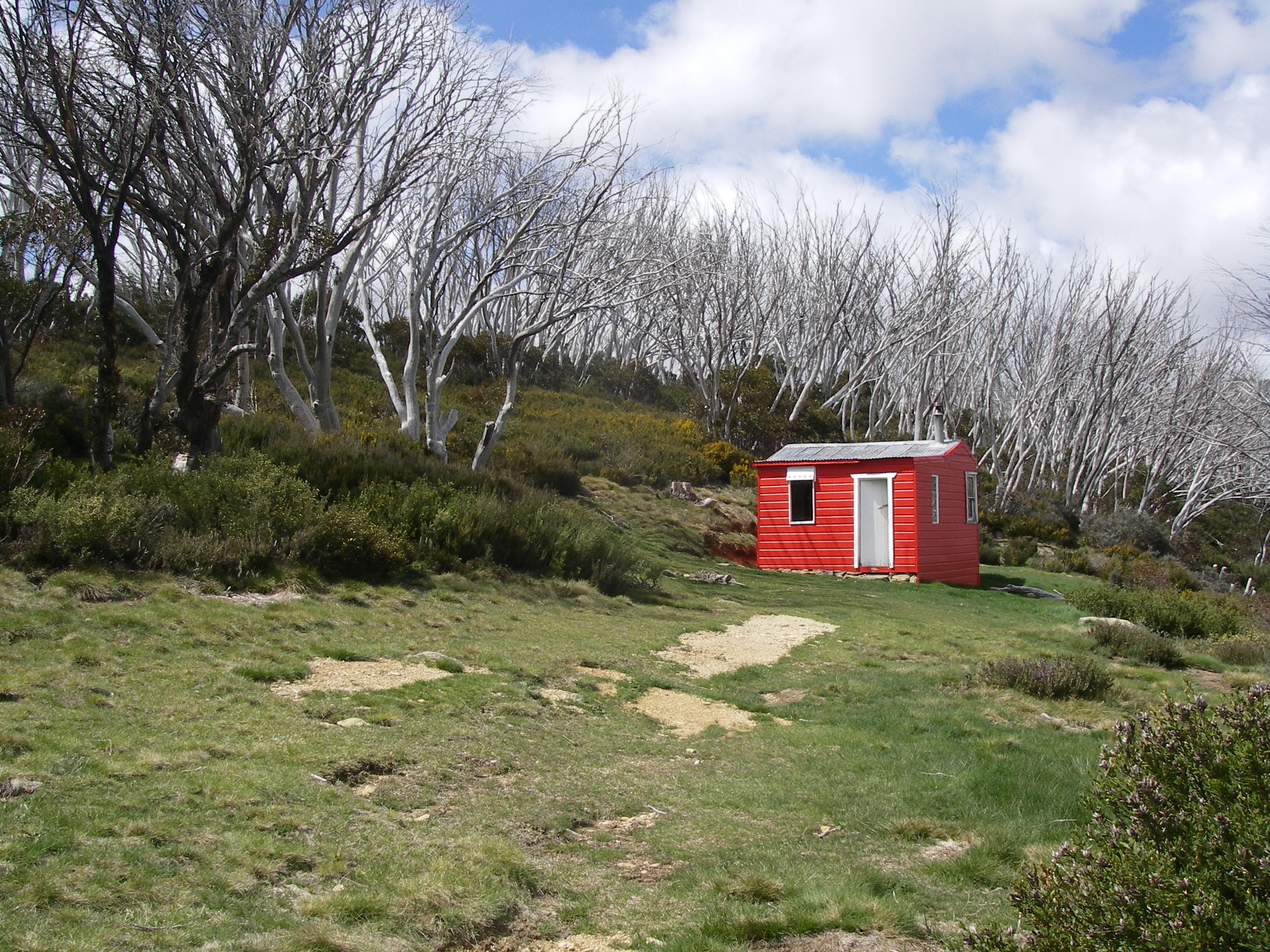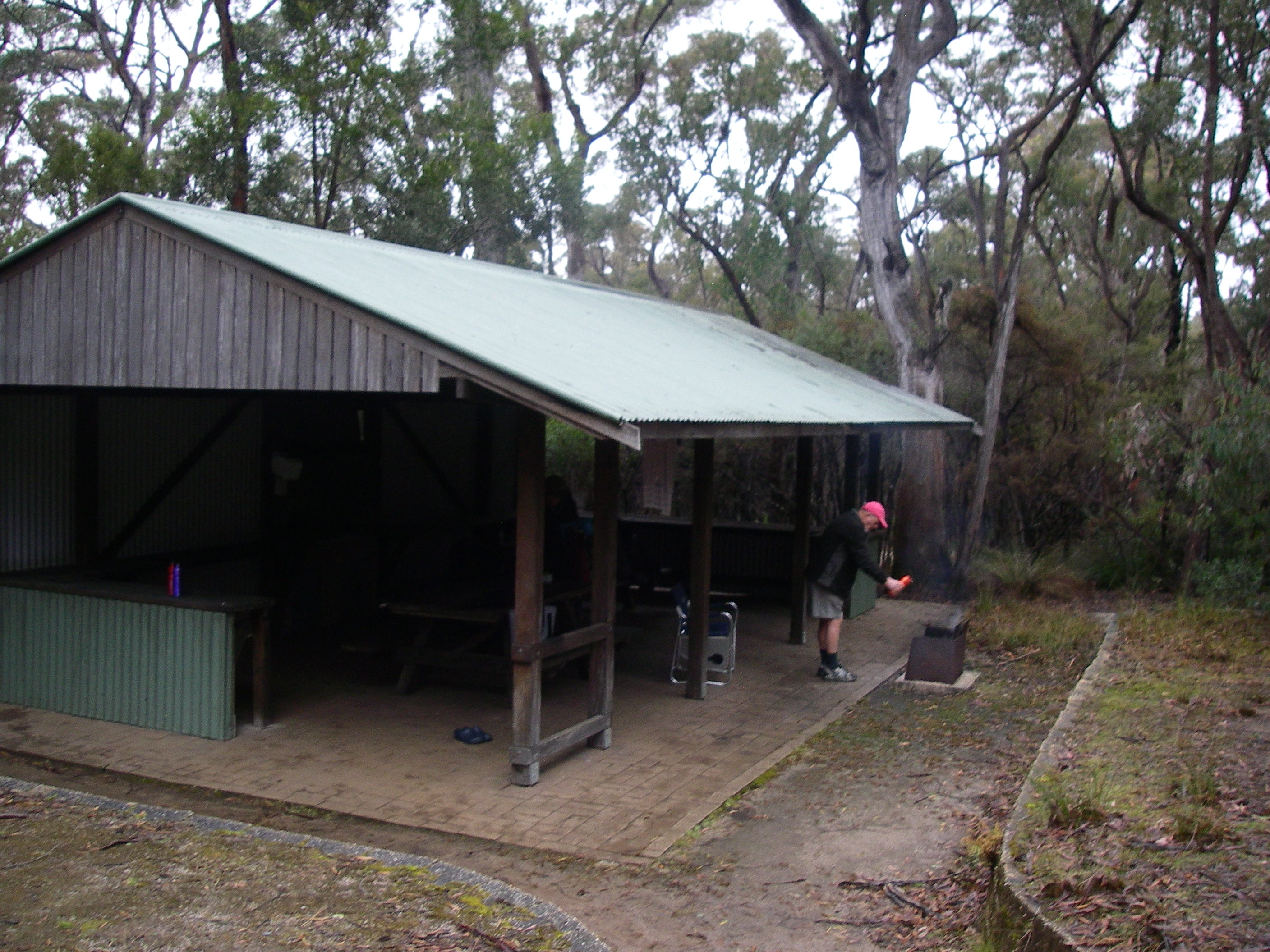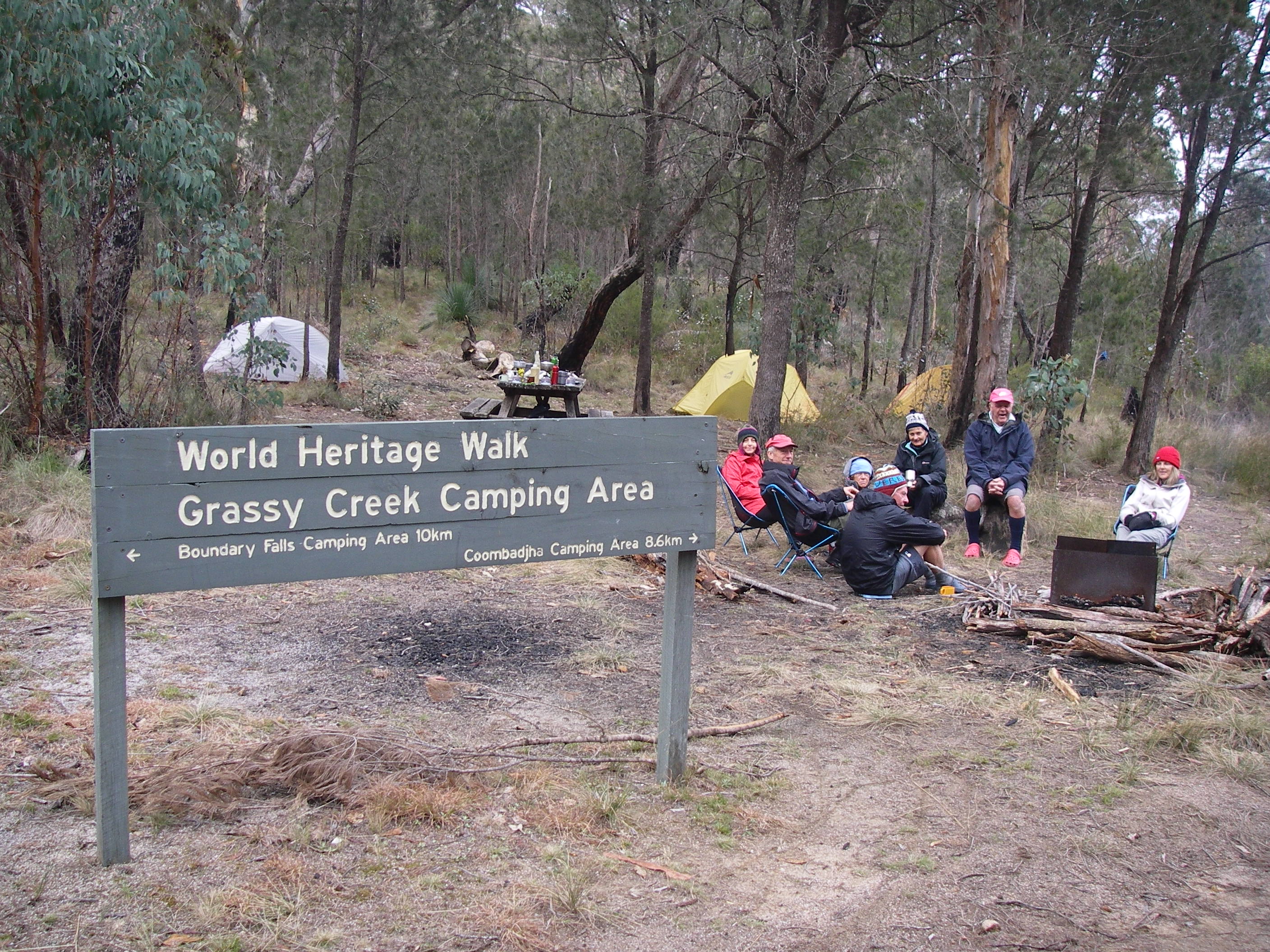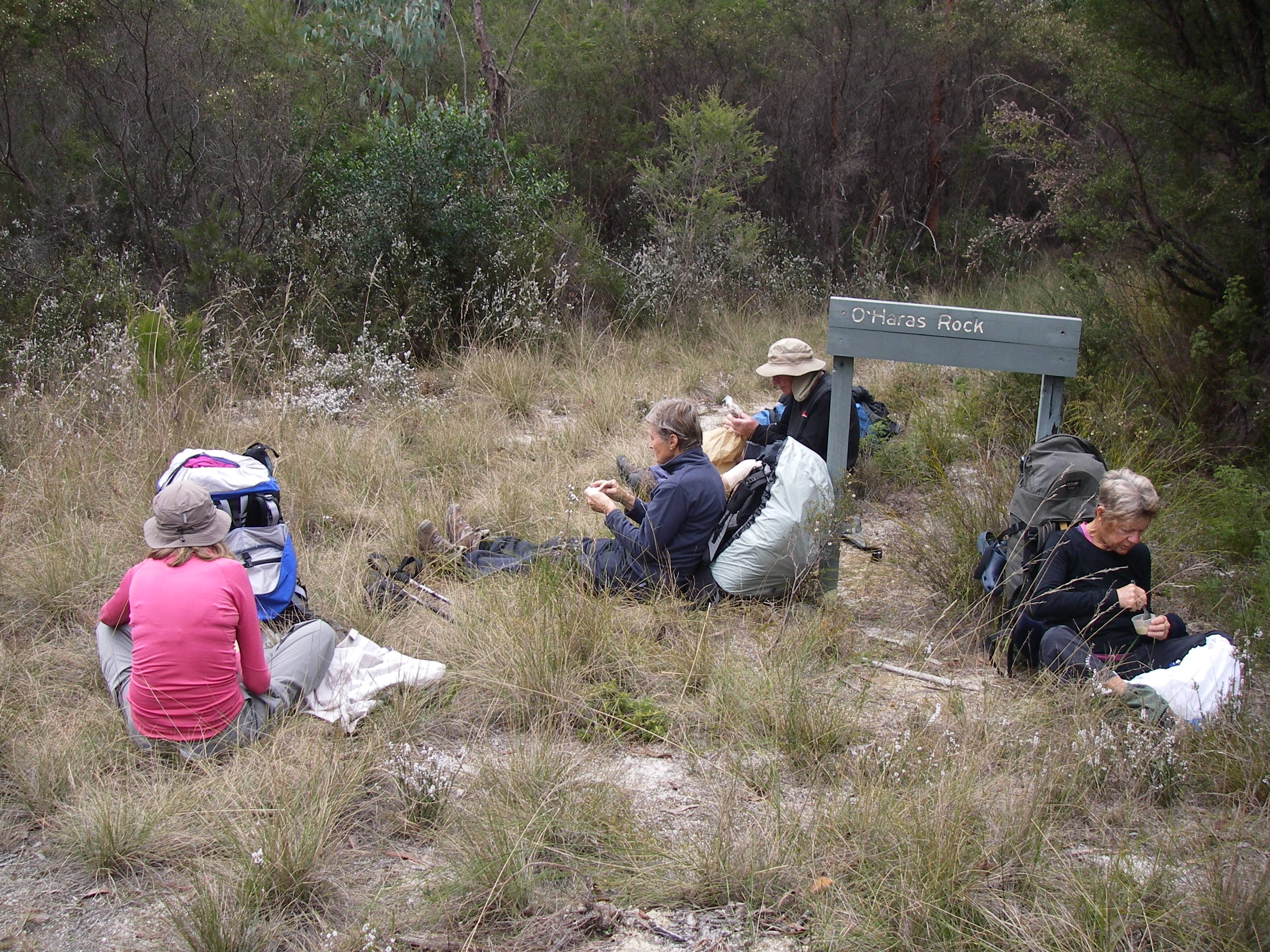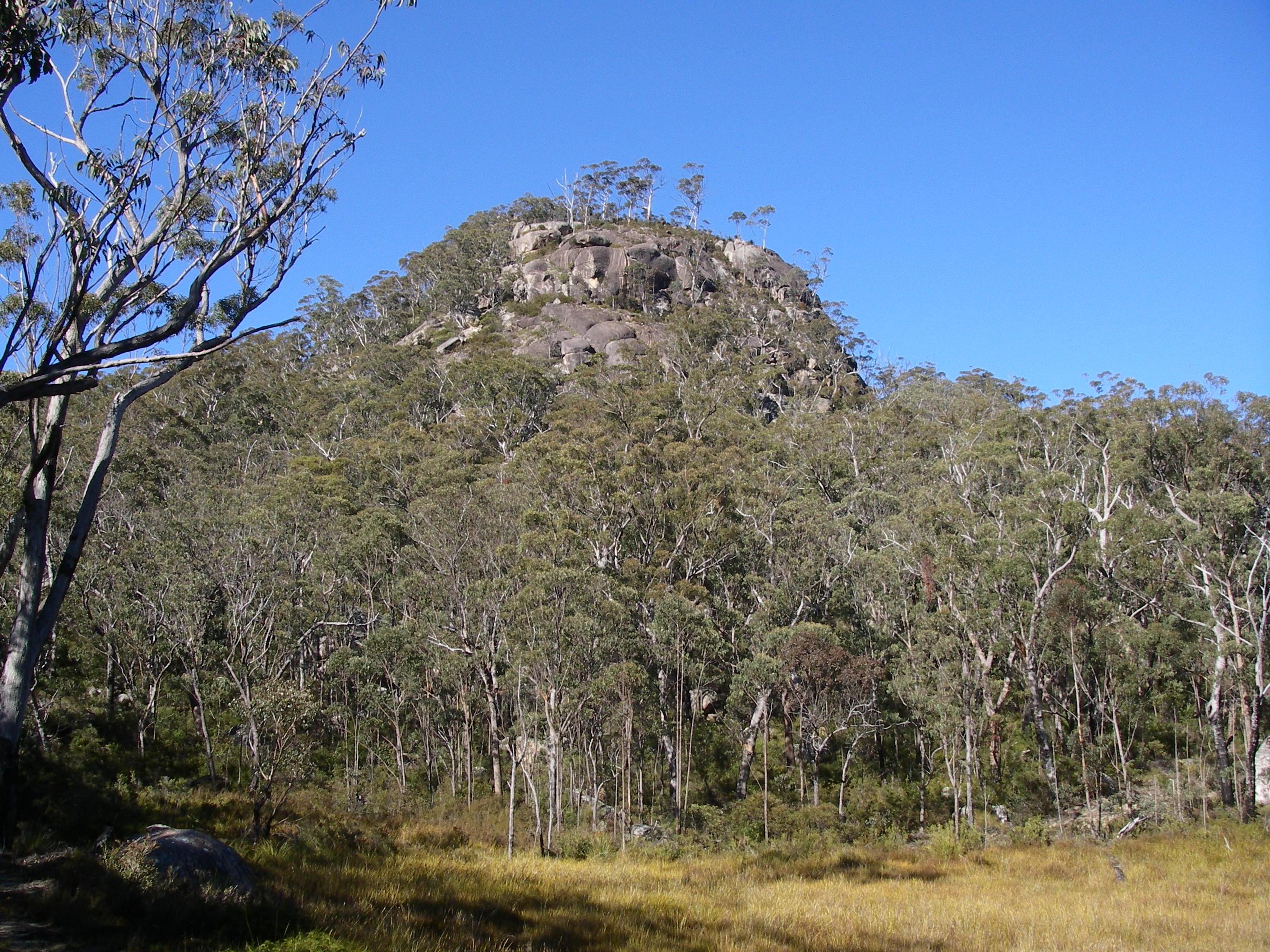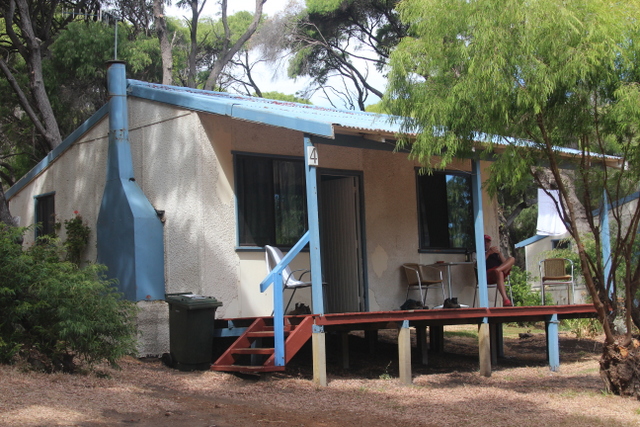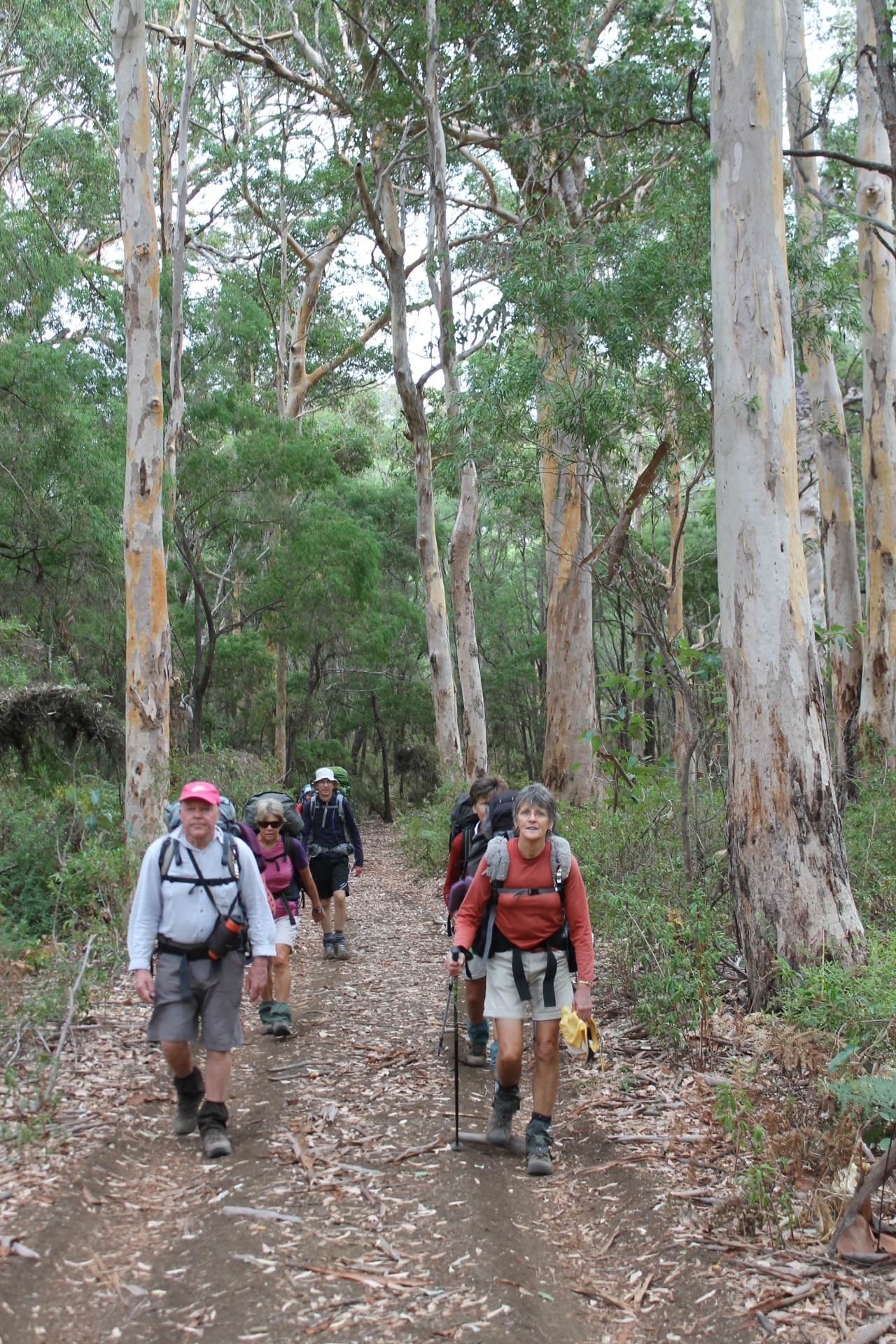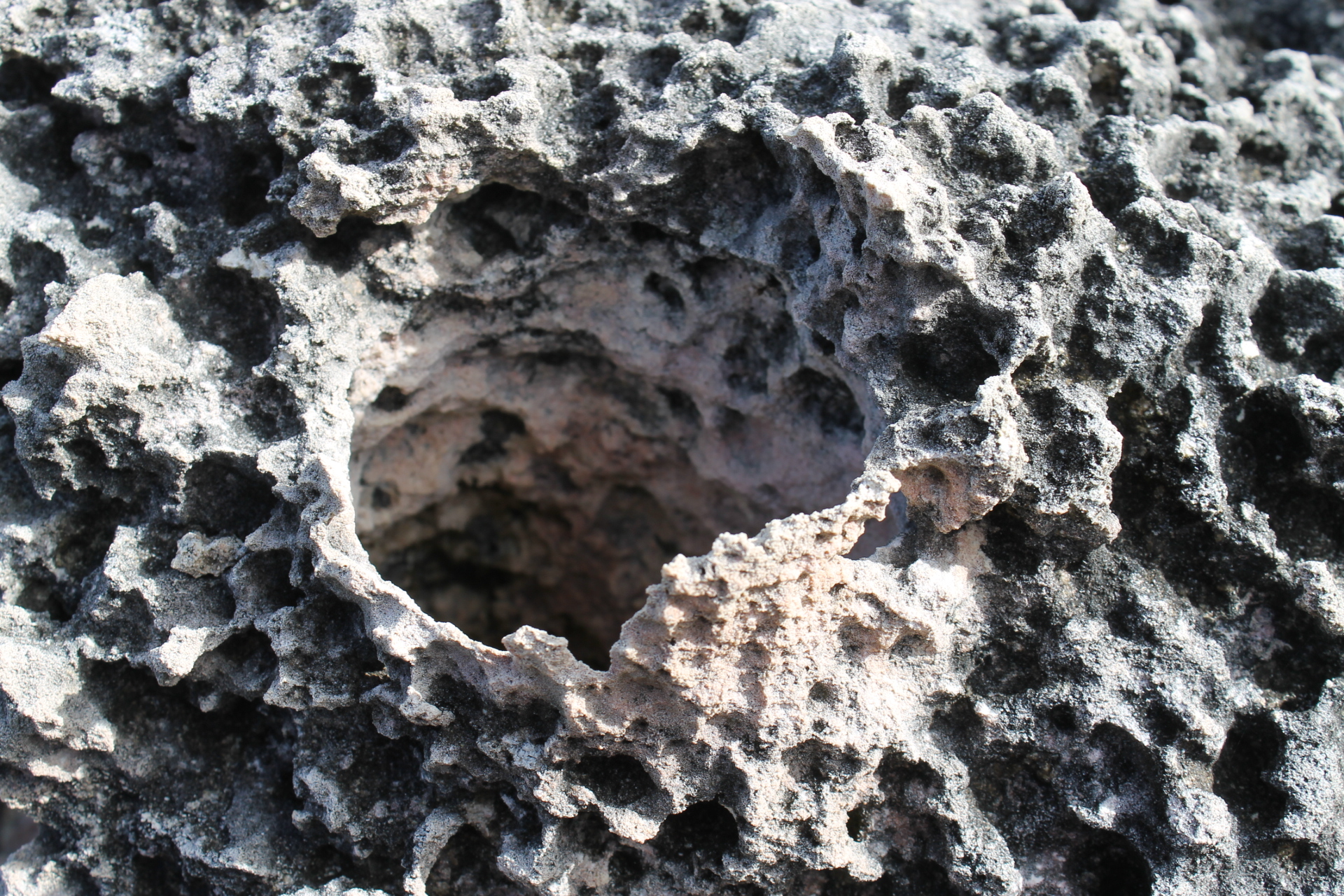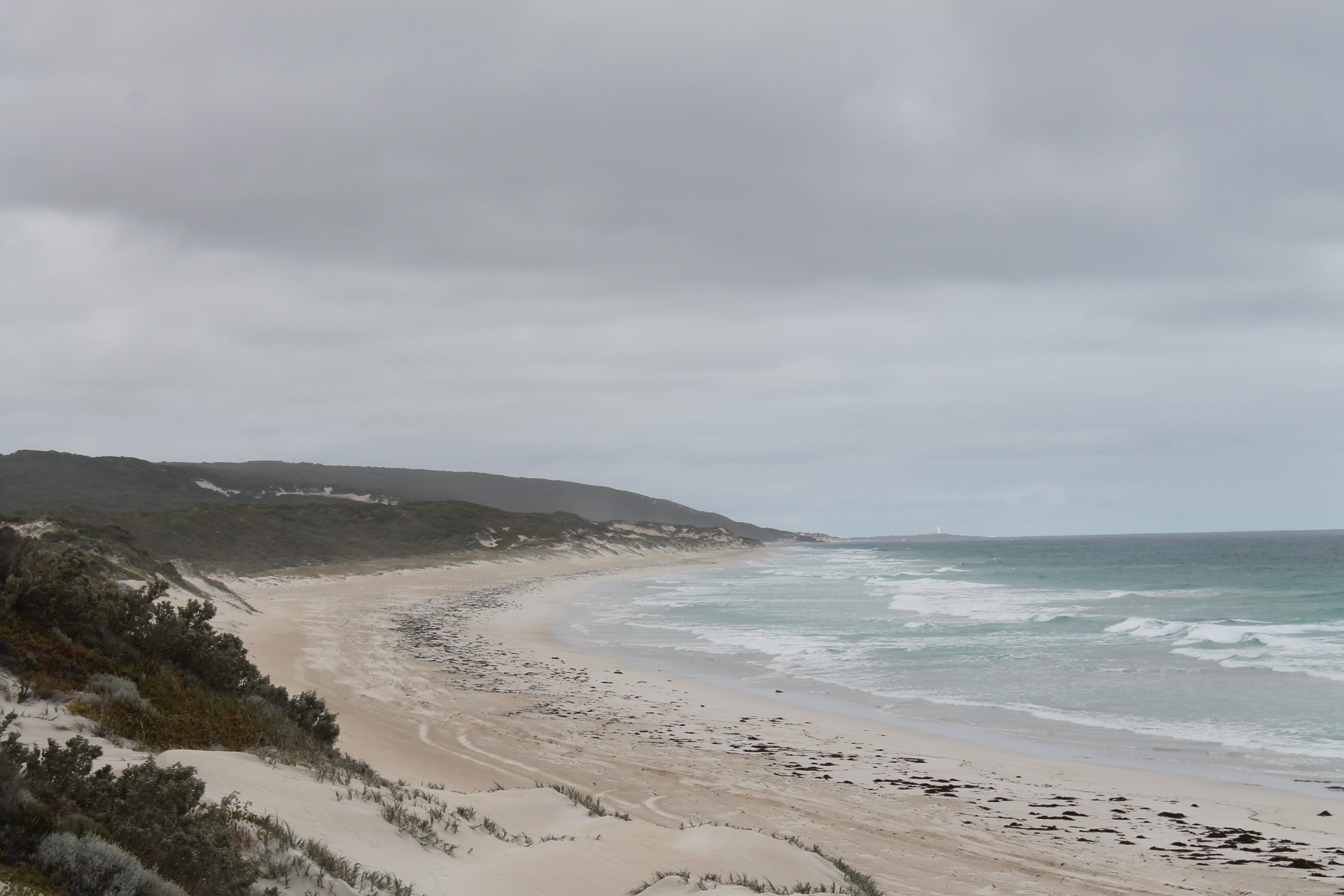
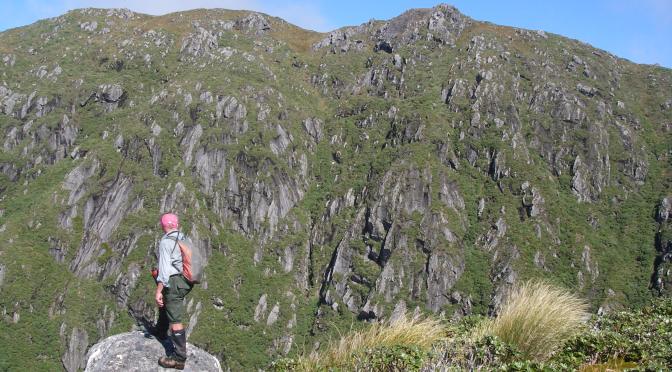
Our access point was an old winch and timber chute at the end of the of Winder Track. Soon after setting out from the car park it struck us that the Winder was going to be pretty snaky: sunny and overgrown with lanky weeds and long grass. Snake heaven.
Snake Heaven
Having tangled with an antsy Eastern Brown a few weeks earlier in the Bunya Mountains I came prepared with leather boots, long canvas gaiters, compression bandages and my Leki walking pole to brush aside any long grass. Ditto Brian. Long trousers would have a good after-thought.
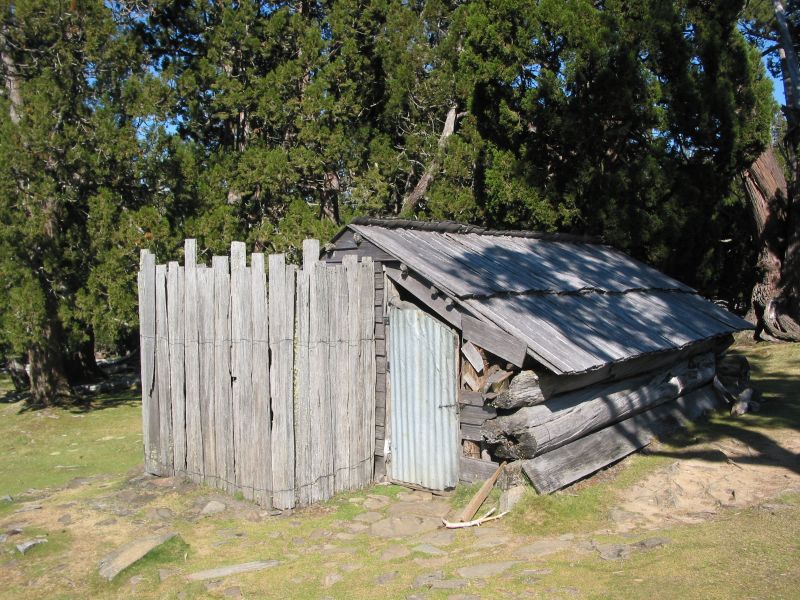
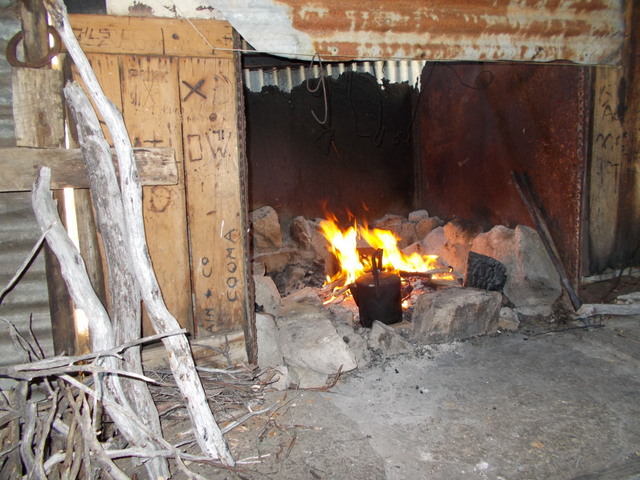
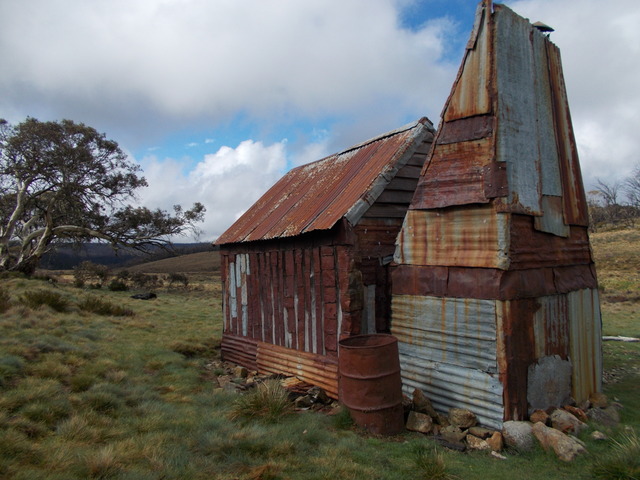
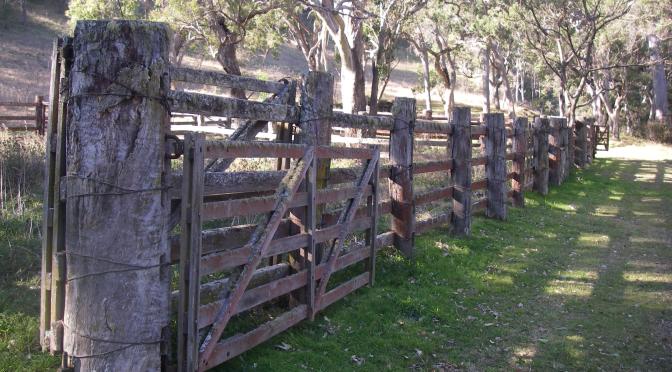
Winch at end of the Winder Track
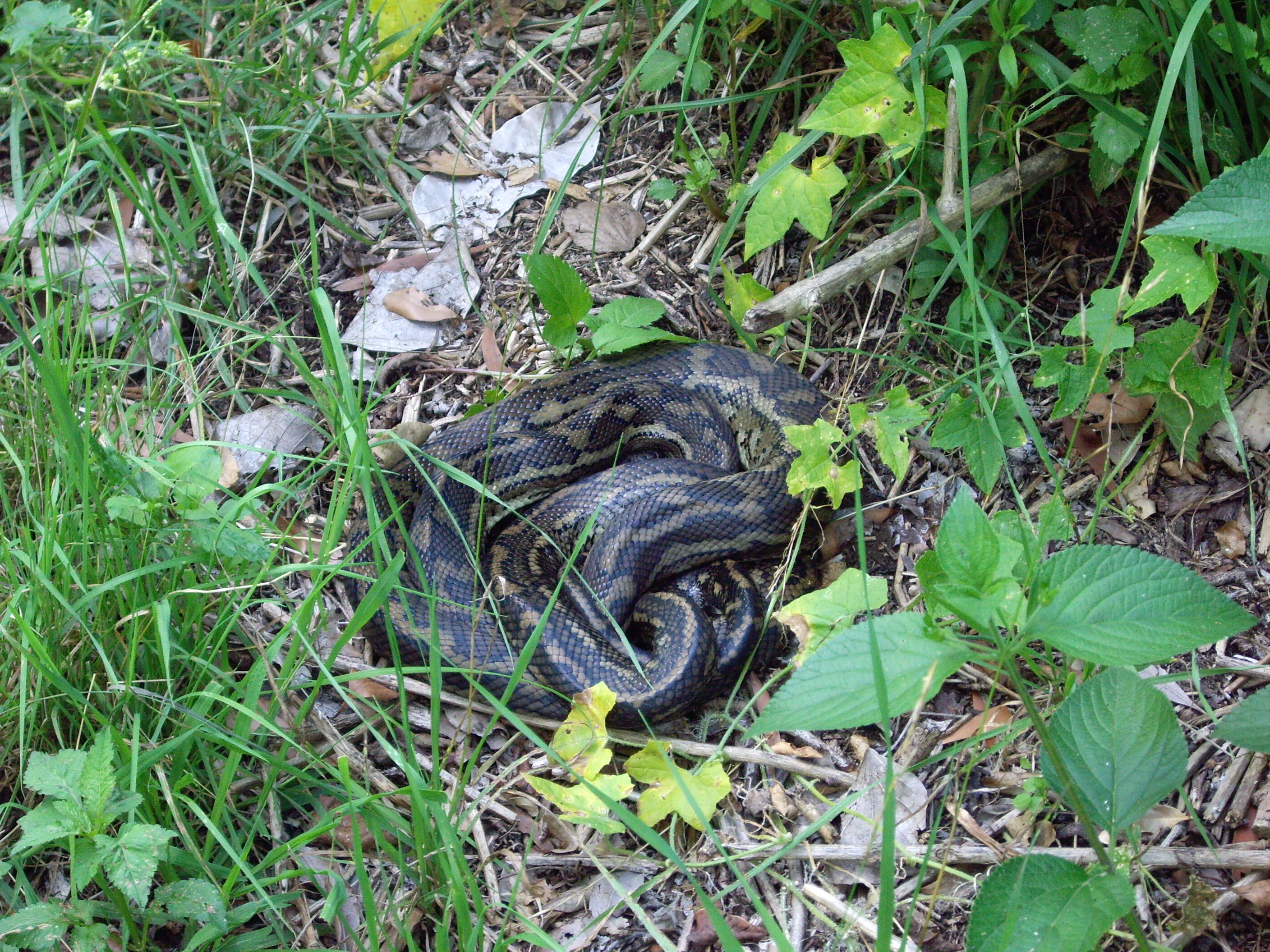
Sure enough, only 300 metres into our walk a grand-daddy Python lay comatose in the sun, stomach bulging with recent prey. We stepped around, took a few photos and walked on. The Python barely raised an eyebrow.
Small Carpet Python on Winder Track
By the end of our 16 kilometre recce the snake score was:
4 Pythons
3 Red-bellied Black snakes
1 Eastern Brown snake
At least I thought it was an Eastern Brown. One of my bushwalking friends from my youth was a bit of an amateur herpetologist and he would have grabbed it by the tail for a closer look. With the wisdom of years I realize this is definitely not wise. Unsurprisingly, he came to an untimely death, aged 39. Not from snake bite but in a downed F/A18 Hornet in the Northern Territory.
Making a lot of noise and sweeping the long grass generally does the trick. That said, I came close to standing on a curled up Red-bellied Black, my right boot hovering momentarily over the reptile. But some fancy footwork and an adrenaline rush saw me safely leap over our somnambulant friend.
But that’s not all. Later that afternoon as we drove down into the picnic area, a cute little bunny came bounding across the track, hotly pursued by a huge slavering goanna…fading fast. I’ll put my money on the bunny.
Maybe this snake danger thing is a tad overblown? Definitely when put in the context of other hazards we face every day. But while writing this report, a six year old girl from Walgett died from the bite of Brown snake. The Eastern Brown is the second most venomous terrestrial snake in the world. Over the past summer the Queensland Ambulance Service has averaged two snake-bite call-outs every day. Eleven call-outs in one 24 hour period.
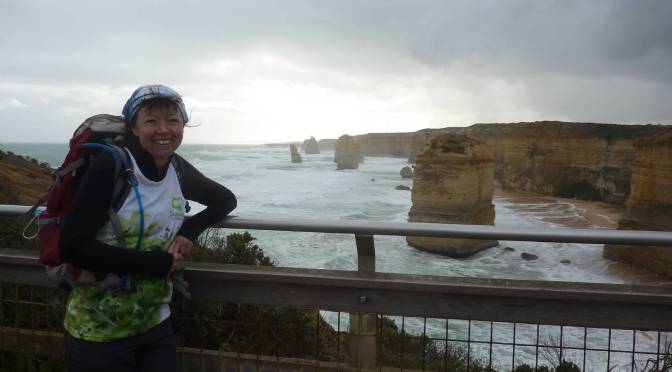
Squeezed into a narrow corridor between the waters of Bass Strait and Victoria’s Great Ocean Road is one of Australia’s best known and most picturesque long distance walks: the 104 kilometre Great Ocean Walk. Here is an account of the walk done by one of my bushwalking friends, Sam Rowe, as part of a fund raising challenge for Diabetes Queensland.
Text and Photos by Sam Rowe.
The Great Ocean Walk (GOW) is an unforgettable eight day, one direction long distance walk. It commences in the small Victorian coastal village of Apollo Bay around three hours west of Melbourne and finishes at the iconic Twelve Apostles.
History of the walk:
The idea to create the Great Ocean Walk was originally rejected in 1974. It was, however, rumoured to have been resurrected by local accommodation providers in the early 1990s, with planning actually beginning in 1994. Development did not begin until 2001; with the trail finally opening in January 2006. Parks Victoria provided an initial investment of $2.3 million for a 91 kilometre trail between Apollo Bay and the Glenample Homestead, near the Twelve Apostles. In 2009, extra funding was allocated to build 10 kilometres of additional walking track from Moonlight Head to the Twelve Apostles Visitor Centre, as well as a viewing point for the Twelve Apostles.
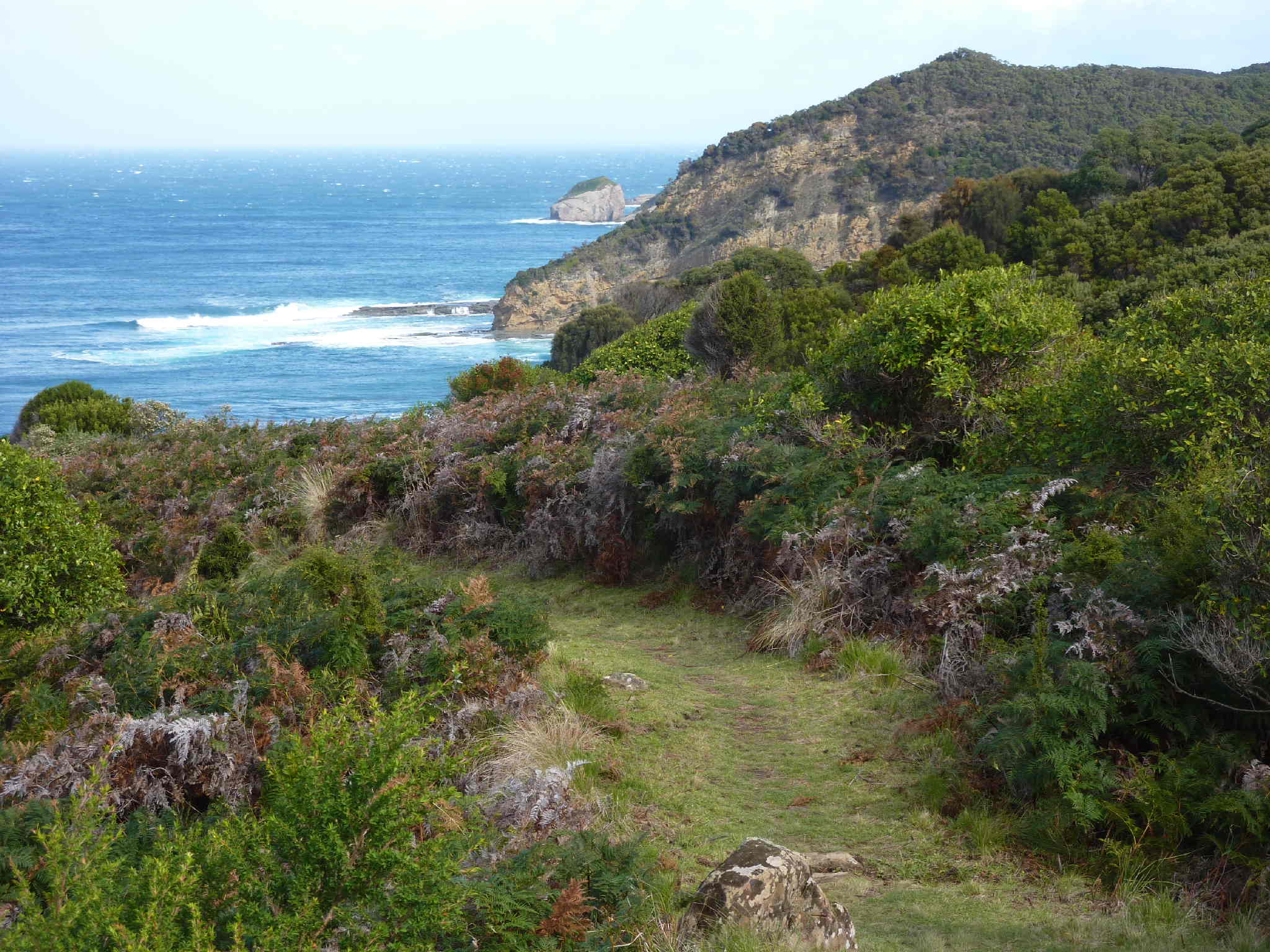
View along Great Ocean coastline.
Fund raising challenge for Diabetes Queensland:
This trip in May 2015 was a fund raising challenge for Diabetes Queensland. The challenge was to walk the 100 kilometres in five days from a base camp at Cape Otway.
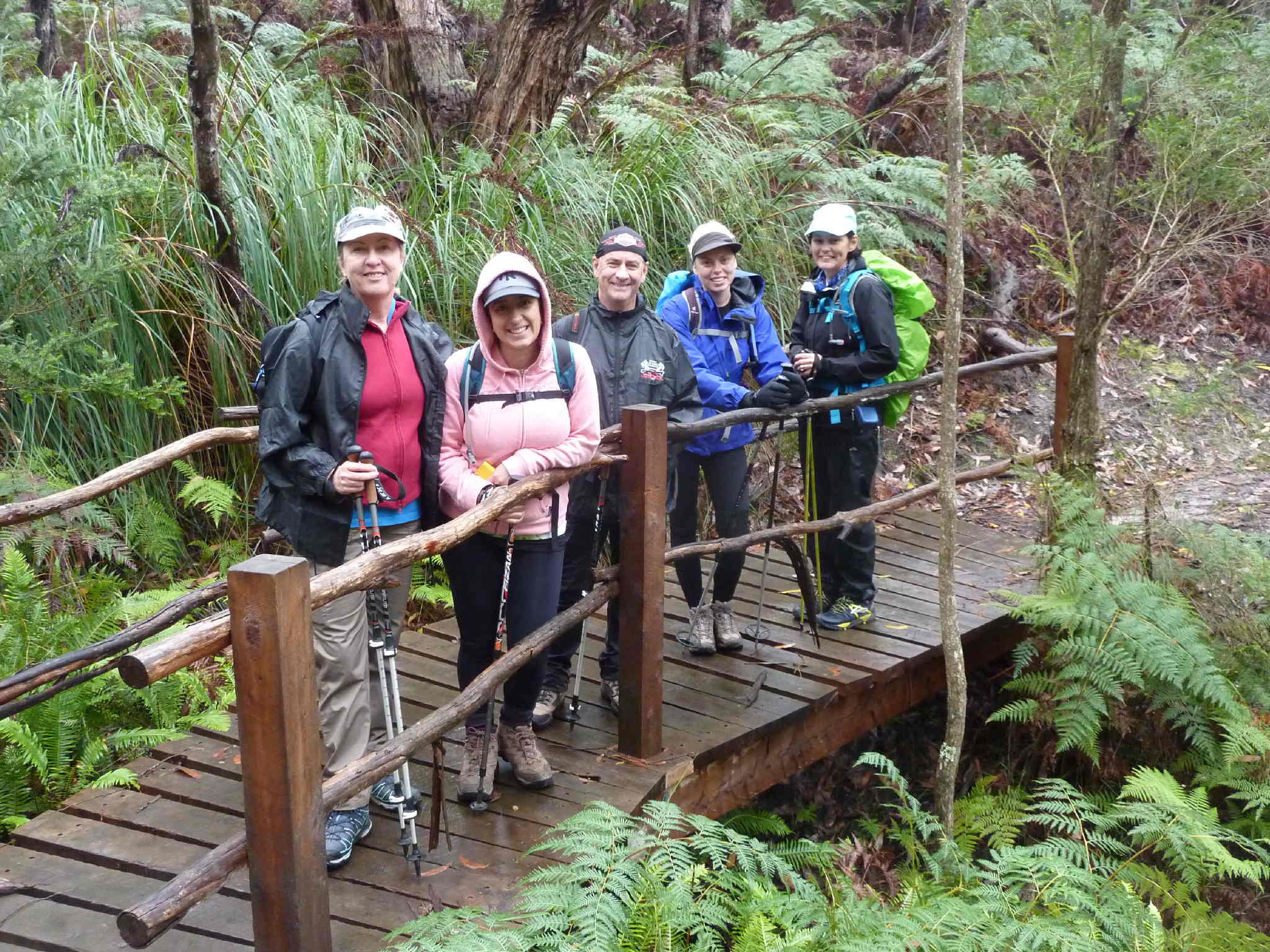
Joining me on the walk was Vanessa (leader), Cassie, Nicky, Julie and Graham. None of my fellow walkers had diabetes, but all were wanting to walk and raise money for others who do have diabetes. I was diagnosed with Type 1 Diabetes in May 2009.
The Crew
Day 1: Apollo Bay to Blanket Bay: 22 kms:
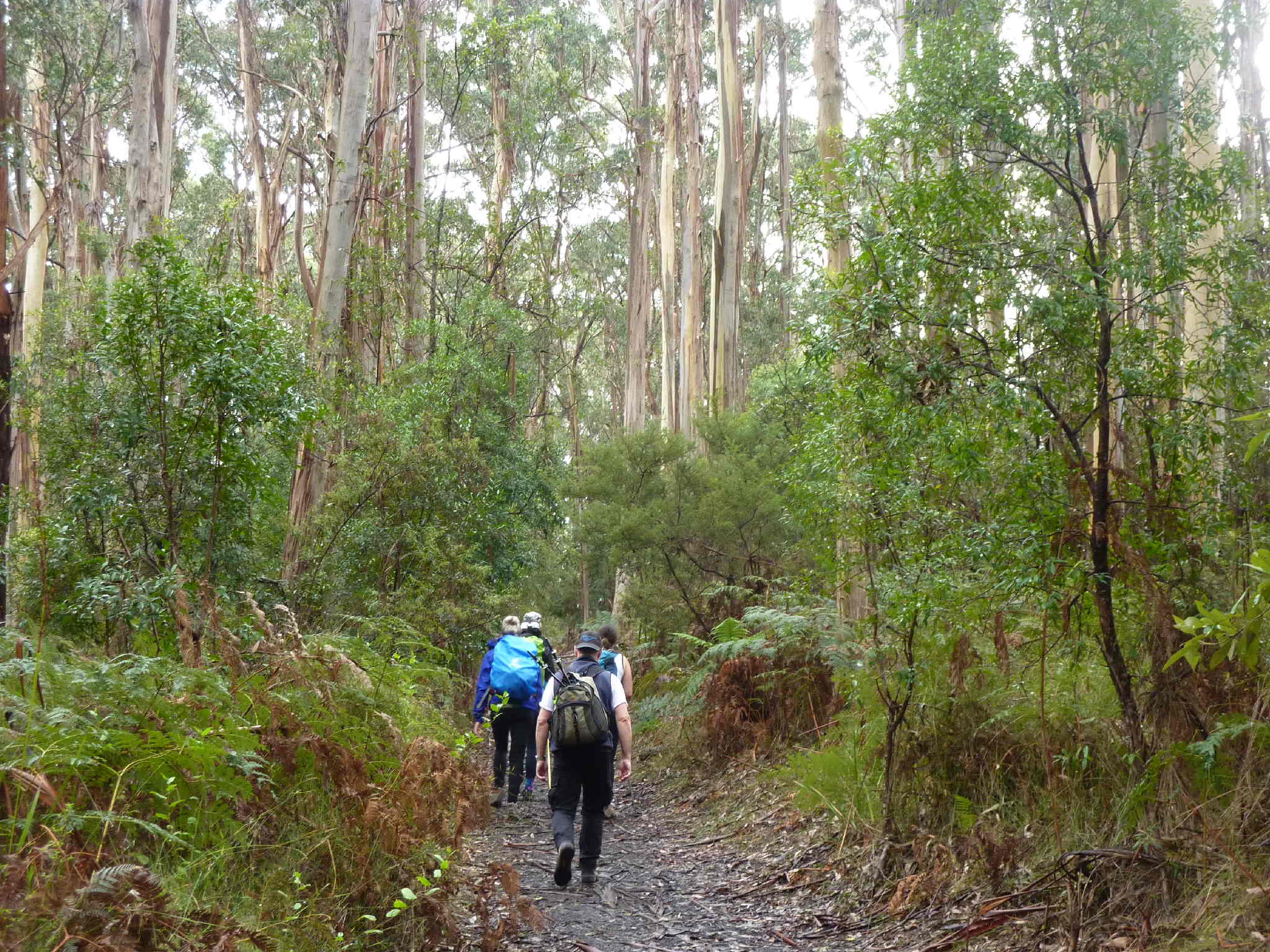
After all the obligatory photos were taken at the start of the track, we were off walking along the esplanade of Apollo Bay and finally onto the trail itself. Showers came and went as we walked along the coastline and into Shelley Beach. From here the track headed inland through the Otway National Park and along old logging tracks to our highest point of the track, Parker Ridge at 250 metres elevation.
Great Ocean Walk track in the Otway Ranges.
Whilst the gums were prolific the koala watch was unsuccessful until closer to Blanket Bay when we came across both koalas and wallabies.
Day 2: Blanket Bay to Aire River: 23 kms:
More rain showers to start the day but the coastal forest had nice coastal flora and scrub birds – Wrens, White-breasted Robin, Currawongs ,Crimson Rosellas. We reached Lewis Lookout to view back where we had walked for the first hour and it also had phone reception which made some of the walking party happy. Mobile phone coverage is limited along this coastline. Further along the track great views of the coastline ahead were seen as we made our way down to Parker Inlet. We had been advised to leave the official track here and with the tide right walked the rocky platforms and layered sedimentary cliffs to Point Franklin where we caught our first sight of the Cape Otway Lighthouse.
Cliffs of Point Franklin
Cape Otway Lighthouse:
We arrived there to enjoy a late morning tea in the cafe (whilst more showers came in). You do have to pay to enjoy this facility and it does have day trippers which you don’t have on the track, but it is iconic. Pre-paying also gives a saving.
Cape Otway Lighthouse is a lighthouse on Cape Otway in southern Victoria. It is Australia’s oldest working lighthouse. The light was first lit in 1848 using a first order Fresnel lens; it was the second lighthouse completed on mainland Australia and it remains the oldest surviving lighthouse in mainland Australia.It was decommissioned in January 1994 after being the longest continuous operating light on the Australian mainland. It is a great climb up to the tower and of course a 360 degree view.
Cape Otway Lighthouse
After filling up on the carbs of yummy cakes it was back on the track where the closest koala I have ever seen was on the track sitting in a tree “posing” for photos. I thought Parks Victoria had to plant it here for any tourist, she was just that cute.
Blinky Bill lounging next to track.
Finished this day of walking in the dunes and beaches to Aire River.
Aire River bridge.
Day 3 : Aire River to Johanna Beach: 14 kms:
Best weather day of our hike so far. Clear, sunny day which was perfect for our beach walk. As usual the track where we commenced wound up and around the coastline to a great morning tea spot, with a spectacular view before you reach Castle Cove (and the day trippers). The track continued on a ridge until it descended to Johanna Beach and the two kilometre walk along it.
Johanna Beach on a fine sunny day.
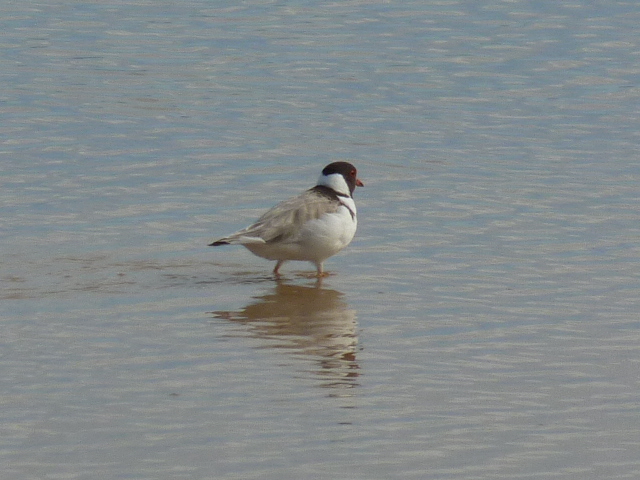
Perfect – sunny, little wind and evenHooded Plovers scampering on the beach. We even had time to sit, relax and enjoy this beach.
Hooded Plover: Status is vulnerable.
Day 4 : Johanna Beach to Moonlight Head: 21.5 kms:
This was the toughest walking day for the trip and is written in the guidebooks as such. Where we started the track climbed through farmers fields, through gates and along forest trails. The track in this area was not very well signposted to confirm you were going the right way.
The boxing kangaroo:
A big kangaroo eyeballed me over one gate. I was on the side it wanted to be on, and it was on the side I wanted. It had themost impressive abs across its chest. Thankfully it decided in one leap to go over the fence and I quickly scampered through the gate. Also Wrens and Yellow-breasted Robins keep you company along the walk.
The section includes the Milanesia track down to a lovely beach and family owned cottage. The mornings walk had six north – south trending spurs and valleys with steep steps and once we reached Ryan’s Den shelter shed we appreciated the shelter shed’s seats and cover to have a rest in.
Rugged coastline between Milanesia Beach and Ryans Den
Ryan’s Den has a great 180 degree view at the top of it, with two seats perched looking both ways, and a loo with a superb view. Unfortunately the weather was coming in and the gale force winds meant little time at the top to admire. The rest of the up and down hills for the afternoon were made more difficult with the gale winds wanting to take you off the track and several cold fronts coming through. We made it through to Moonlight Head pretty cold and wet and glad to see the transport.
Day 5 : Wreck Bay to Twelve Apostles: 20.5 kms:
Rain, sleet, leaches and trees down along the track was what we had to contend with before lunch. 38 mm of rain fell overnight and due to the conditions we stayed with the high tide trail to Devils Kitchen. With the trees down we had to walk off track and unfortunately I picked up a leach that was one of the largest I have ever had the pleasure of.
Rain, wind and hail:
Rain turned to hail as we walked down to the Gellibrand River and further into Princetown where we enjoyed the warmth and dryness of the cafe to have lunch and a hot drink. Back onto the track and the end was close. The wind tried to stop us reaching our final destination but we would not be stopped.
We reached Brown Hill to look at the view of Apostles and this was where the GOW sign was two years ago when I was last here. I am unsure where it has been relocated to as I couldn’t find it which was disappointing. The final stretch was to the Twelve Apostles and the hundreds of tourists. Even here no one could escape the gale force winds and the circuit walk was very quick, but we had done it. We had walked from Apollo Bay to the Twelve Apostles, raised over $10,000 as a group and introduced another five people to the joys of long distance walking.
I will be returning to do the GOW again in 2016. This time I’ve been asked to be the group leader for Diabetes Queensland. See you there!
The Castle is a spectacular and challenging peak in The Budawangs, New South Wales. The views from its summit are said to be outstanding. Although the walk can be done in a day, those wishing to visit Monolith Valley as well as The Castle should organise for an overnight camp at Cooyoyo Creek Campground. Hikers need a reasonable level of fitness and the final rock scrambles onto The Castle require a good head for heights. Here is an account of a walk to Monolith Valley and The Castle done by Alex B. in early spring.
Text and Photos by Alex B.
Day One:
The walk up to The Castle is one of the most rewarding in South Eastern Australia. Beginning at Long Gully (a couple of hours drive from Canberra), the track crosses Yadboro River before climbing out of the creek bed and onto a ridgeline.
Cool waters of the Yadboro River
It passes around the side of The Castle on some fairly steep, rough ground and then ascends towards the saddle at Castle Gap. We covered this over a couple of hours on a hot September afternoon – a couple of litres of water is recommended. There are some excellent views back down the valley on the climb up.
Clifflines of conglomerates and sandstones.
Our campsite was a few hundred metres below the saddle at Cooyoyo Creek campground, arriving on dusk (albeit with a fairly late start), just in time to see a stunning sunset over the massive clifflines of the Morton and Budawang National Parks.
Sunset over the Budawangs.
Day Two:
Before climbing The Castle the following day we spent a few hours in Monolith Valley, which is accessed from the saddle. An unexpected delight, it features outstanding rock formations , cool forested gorges, and a natural arch. It’s a great side trip and well worth the effort. There is a small section of scrambling required early on but chains are bolted to the rocks to help those who require it.
Photo Gallery: Monolith Valley:
Monolith Valley. Budawangs.
We ate lunch in the sunshine above the gorge before returning to the saddle to climb the castle in the afternoon.
It’s mostly scrambling with some exposed sections and a bit of squeeze through a narrow crack in the rock, however all the steepest sections have fixed ropes that can be used (most of which looked solid..) to gain the summit. However, those with a serious fear of heights may want to give it a miss.
Rock scrambles on The Castle.
Photo Gallery: views from The Castle:
View from the Castle
View from The Castle
The upper sections have brilliant views across the south coast, with the Pigeon House prominent. The total climb is around 800 metres vertically, which for coastal areas in Australia is quite a lot, and allows for some of the best views in New South Wales – personally I thought more spectacular than the Blue Mountains, which feature similar terrain.
Views east across the Budawangs to The Pigeon House
We descended after a few glorious hours on the summit, and spent another night below the saddle, before returning to the car park the next morning. A quick (and quite cold) swim was had in Yadboro creek before we headed back to the ACT.
The following is an account of a kayaking trip done by my hiking friend , kayaker and intrepid traveller, Bernhard Weitkuhn…. a 49 day expedition down Australia’s Murray River from the Snowy Mountains to the Southern Ocean. This was an impressive feat of endurance…. solo and unsupported. Here is Bernhard’s report:
Text and photos by Bernhard Weitkuhn
Photo: B.Weitkuhn: Bernhard celebrating the half way mark on his Murray River journey.
2400 kilometres , one million strokes and 49 days
After one million paddle strokes, 2400 kilometres and 49 days of continuous paddling, usually 8 hours a day I arrived at the Murray River mouth on 28th of April at 9.30 am. I was lucky with the weather crossing the Lake Alexandrina. It has a reputation of getting very choppy in any kind of wind as it is very shallow and big.
Map: Glenn Burns
Bernhard’s Photo Gallery:
Swan Reach and Bowhill
Red Gums near Waikerie
Paddle Steamer on the port bow
Murray Sunset National Park
Evening near Murrumbidgee Junction
I had a wonderful time doing this trip and although it was at times quite hard and lonely I am really glad I decided to do it. Living in Australia it has given me a lot of insight of how Australia must have been when the early explorers discovered the Murray and the country. Of course a big part of the river is built up now, but there are lots of stretches where you could think you are the first person to be there.
Photo: B. Weitkuhn: A quiet reach in Murray Sunset National Park
The weather:
The weather was kind to me. Until the last week I had only one full day of rain and one wet morning. There were strong winds much of the time, especially during that last week where the Murray does not wind as much. There are long straight stretches towards the west where the wind funnels along and builds up a steep chop. At the notorious Pellaring Reach even Captain Sturt waited for better weather. It was too rough even for him apparently. Well, I did not want any rest days so I kept going on, but at times was actually pushed backwards and had to take shelter in the reeds and willows.
Scenery:
The scenery along the Murray does not change like on our bushwalks. The banks on both sides were mainly river red gums.
Photo: B. Weitkuhn: River Red Gums
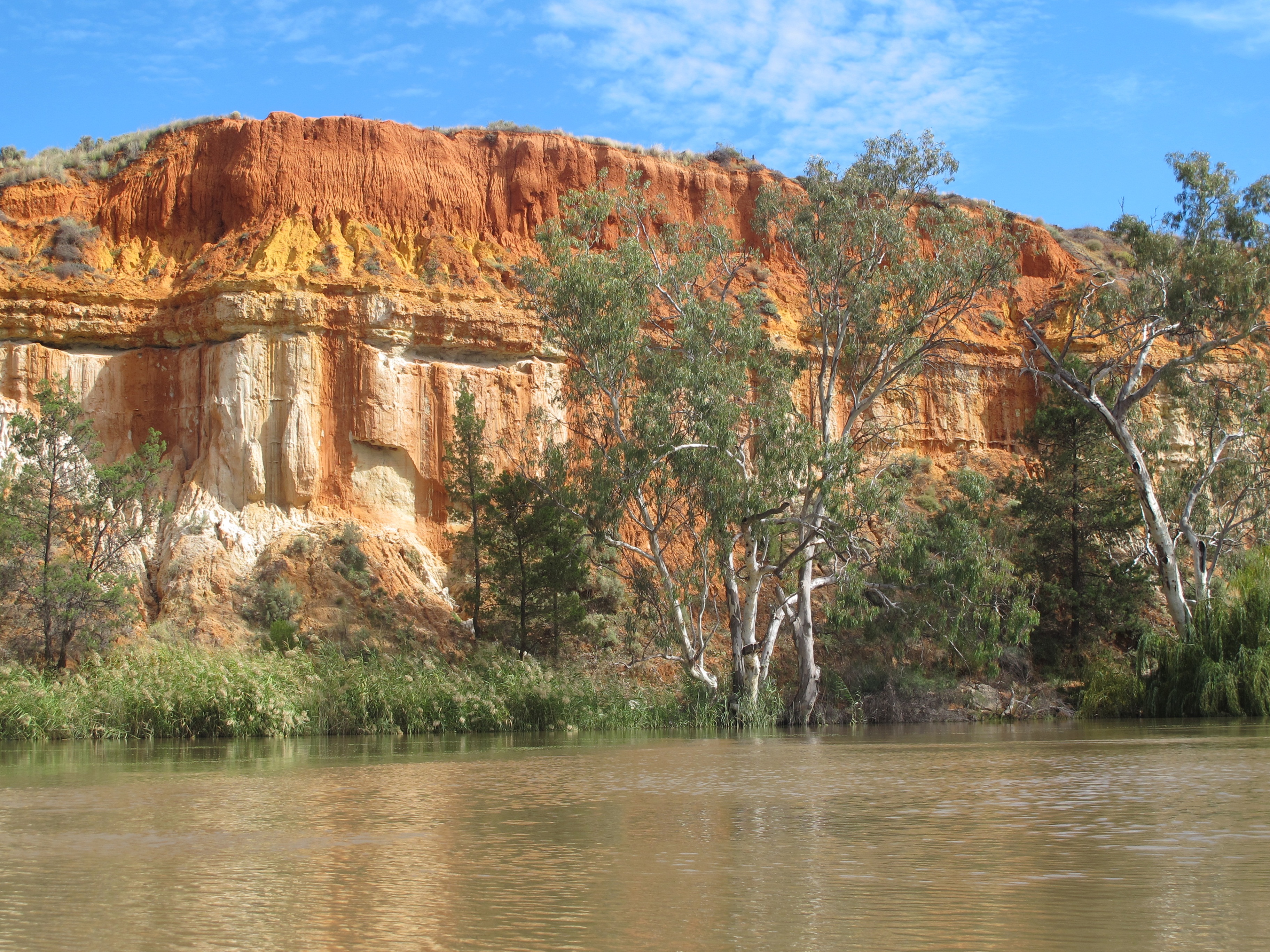
On the upper Murray after leaving from Corryong you can see a few distant hills. Later I did not see any until I came into South Australia where there are also the colourful cliffs lining the Murray River.
Photo: B. Weitkuhn: Cliffs on the lower Murray River
Because I had a good full river I was having a better view sitting high, and I could see over the embankments most of the time. That was important to find a suitable campsite.
Photo: B. Weitkuhn: First campsite on the upper Murray
Wildlife:
Birdlife was prolific, especially waterbirds. I also saw eagles and other raptors, kingfishers and other small birds as well as emus. Other wildlife was a bit disappointing. I only met some kangaroos, a few white-tailed water rats, one brown snake and one platypus as well as turtles and one seal. Then, of course, I encountered the ones I didn’t want to see, like rabbits, foxes and feral pigs.
White-tailed water rat
Duck hunters !!!
There were few other day paddlers and one couple who did it for a week. Caravan parks right next to the river were the exception, so it was mainly camping wild along the river.
Photo: B. Weitkuhn: Caravan Park on the banks of the Murray River
Sometimes in New South Wales, other times in Victoria. I tried to avoid Victoria because of the duck shooters. I could hear continuous shooting for some days and it worried me. I don’t think I looked like a duck but they might have had bad eyesight.
Photo: B. Weitkuhn: Paddlesteamer Emmylou
Fortunately there were no equipment failures or accidents. I never had a bad day feeling unwell. I was bitten at least 50 times by mosquitoes every day, you just can’t avoid it, but I did not pick up any of those fevers.
Now I will have to build my legs up to their old strength and I hope my fellow bushwalkers will have patience with me… ha!
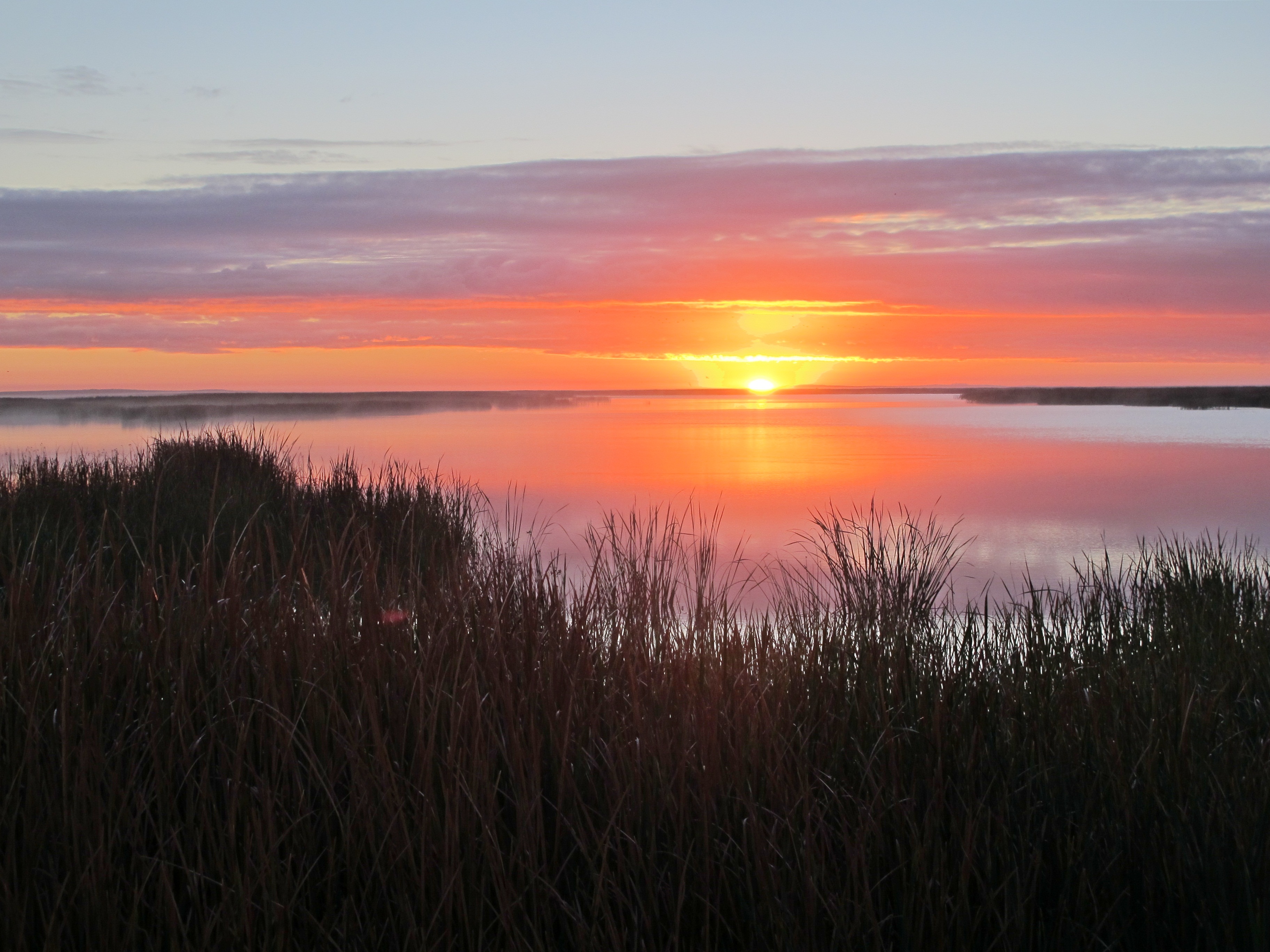
Photo: B. Weitkuhn: Sunset at journey’s end: Lake Alexandrina
E.Gill Rivers of History booklet ABC Radio History.
C.R. Twidale Geomorphology Nelson.
A. Hughes: Australia’s Paddling Hit ListA.G.Outdoors Jan-Feb 2010.
A. GregoryKayaking around Australia . My kayaking bible. Well worth buying . Has very detailed information on paddling the Murray River: maps, camping, seasons, access supplies etc.
Charts for the Murray River:
Maureen Wright:Renmark to Yarrawonga .
K. and L. Bentley:Yarrawonga to Hume Dam.
Baker – Reschke: Goolwa to Renmark.
Australia’s Murray-Darling Basin
The 2520 kilometre long Murray River forms a natural border between New South Wales and Victoria. It is joined by many tributaries including the Darling and Murrumbidgee on its journey from the Australian Alps to the Southern Ocean. The Murray-Darling Basin is the fourth longest river system in the world, exceeded only by the Nile, Amazon and the Mississippi-Missouri systems. In terms of catchment area the Murray-Darling is the sixth largest behind the Amazon, Congo, Mississippi, Yangtze Kiang and the Ganges. But the crucial difference is that the annual discharge is far less than any of the rivers listed. Much of the Murray-Darling catchment is arid or semi-arid with the average annual rainfall over the whole catchment only 425 mm per annum.
The Murray is an allogenicstream, that is, it rises in the high rainfall Australian Alps and has sufficient discharge to survive passage across extensive semi-arid deserts. In its variability of flow the Murray is typical of most Australia’s inland rivers, experiencing periods of high and low flow but as much of the infrastructure is geared to the usual low flow states any flooding results in significant damage to bridges, buildings, fences and livestock.
To climb Mt Meharry in Western Australia’s Pilbara region is easy enough. A ramble of 11 kilometres will take you to its 1253 metre summit and back. A mere day walk for local Pilbara peakbaggers. But for this party of blow-ins from the east coast, the logistics of accessing Meharry were more complicated. For Don Burgher, Brian Manuel, Judy and I, there was the five and a half hour flight to Perth followed by a road trip of four days through the outback of W.A. We touched down at Meharry’s base on a glorious winter’s day in August.
Mt Meharry summit
After an overnight camp at Dales Gorge in Karijini National Park we left Dales at 7.45 am for the final 125 kilometre drive to Meharry.
Despite what we had read about the difficulty of access once you leave the sealed Northern Highway, it was all pretty straightforward. If you stay alert the unsealed Packsaddle Road-Juno Downs has adequate signage to get you close to Meharry’s base.
It wasn’t straightforward in 2002 when Nick and Ben Gough climbed Meharry as part of their ascents of the highest peaks in each state and territory of Australia. They described it thus:
… After 4200 kilometres of driving the final leg into Mt Meharry is along an old mining exploration track, overgrown with spinifex… There were a few washouts to navigate and plenty of spinifex seeds to remove from the radiator as we pushed through the undergrowth; there were also lots of spiders, angry at being removed.” Source: Wild No 87.
But times have changed. Now you can do all this in a 2WD. But if you are feeling lazy and are blessed with a high clearance 4WD having a bit of grunt, you can bump and grind your way all the way to Meharry’s summit. Cheaters.
We didn’t, it wasn’t part of our deal. We parked our borrowed 4WD ( thanks Joseph Mania) at the first major jump-up, under the shade of a solitary snappy gum. Here we left Judy in charge of birds, bees and botany while Brian, Don and I headed off for the five kilometre walk to the summit, an altitude gain of only 427 metres.
Parked under a shady snappy gum.
What’s in a name ?
At the top of the first jump-up we had our first clear views of Meharry. The story on how WA’s highest peak was determined is worth recounting. Such is the isolation of the Pilbara region that as late as the 1960s it was thought that nearby Mt Bruce (Bunurrunna) at 1,236 metres was WA’s highest peak.
Then, in 1967, an unnamed whaleback prominence 50 kilometres to the south east was checked out by surveyor Trevor Merky and found to be 17 metres higher than Mt Bruce.
Meharry was named after William Thomas (Tom) Meharry, Chief Surveyor for WA from 1959 to 1967. After a bit of ferretting around in Native Title documents I found its aboriginal name to be Wirlbiwirlbi.
On Tom Meharry’s death in 1967, the Minister for Lands approved the name ‘Mt Meharry’ on 28 July, 1967. That should have been the end of the matter. The plaque on the summit is dedicated to Tom Meharry and WA’s surveyors and it reads:
‘ Mount Meharry, at 1250 metres, is the highest point in Western Australia. It is named after William Thomas (Tom) Meharry (1912-1967), the states State’s Geodetic Surveyor from 1959 to 1967‘.
‘This survey cairn was constructed in September 2013 as a tribute to all surveyors who have explored and mapped the magnificent Western Australian outback‘.
Geoscience Australia gives the height of Meharry as 1253 metres, not 1250 metres as per the plaque or the 1248 metres on the summit signpost. Confused?
Gina Rinehart
Enter Gina Rinehart, daughter of iron ore baron Lang Hancock. In 1999 she applied to the Geographical Names Committee to re-name Meharry to Mt Hancock after her prospector father.
They declined but Australia’s wealthiest woman wasn’t so easily put off. In 2002 she went to the top and lobbied then Premier Geoff Gallop for the change. Fortunately, he too rejected the proposal.
Features named by F. T. Gregory or related to his 1858 and 1861 expeditions.
A Spinifex Steppe
From the first jump-up it is an easy two kilometres before the track does any serious climbing. At this point the track winds up an open spinifex (Triodia spp.) covered ridgeline.
The spinifex was everywhere, easily the dominant ground cover: it grows in either doughnut shapes or hummocks Some species have long spiny leaves that dig into bare skin so it is a matter of self preservation to wear thick canvas gaiters when going off track.
On warm days one of the common hummock species of spinifex (T. pungens) releases volatile oils, producing a very distinctive resinous scent. The resin from T. pungens (in the photo) was used by aboriginals as a glue to bind spear heads to their shafts. The resin is pliable when heated but sets rock hard.
The Spinifex Steppe: Trioda pungens
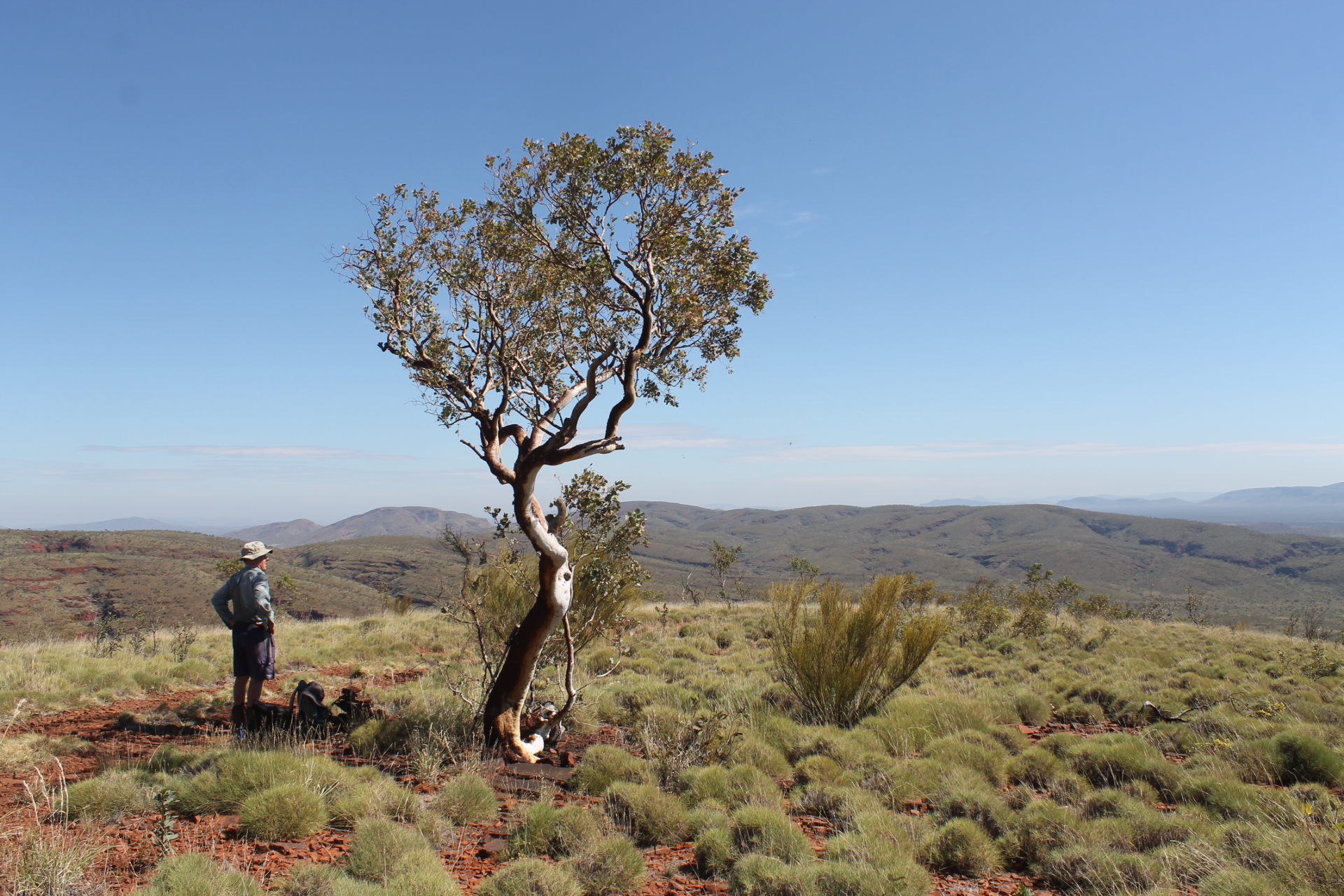
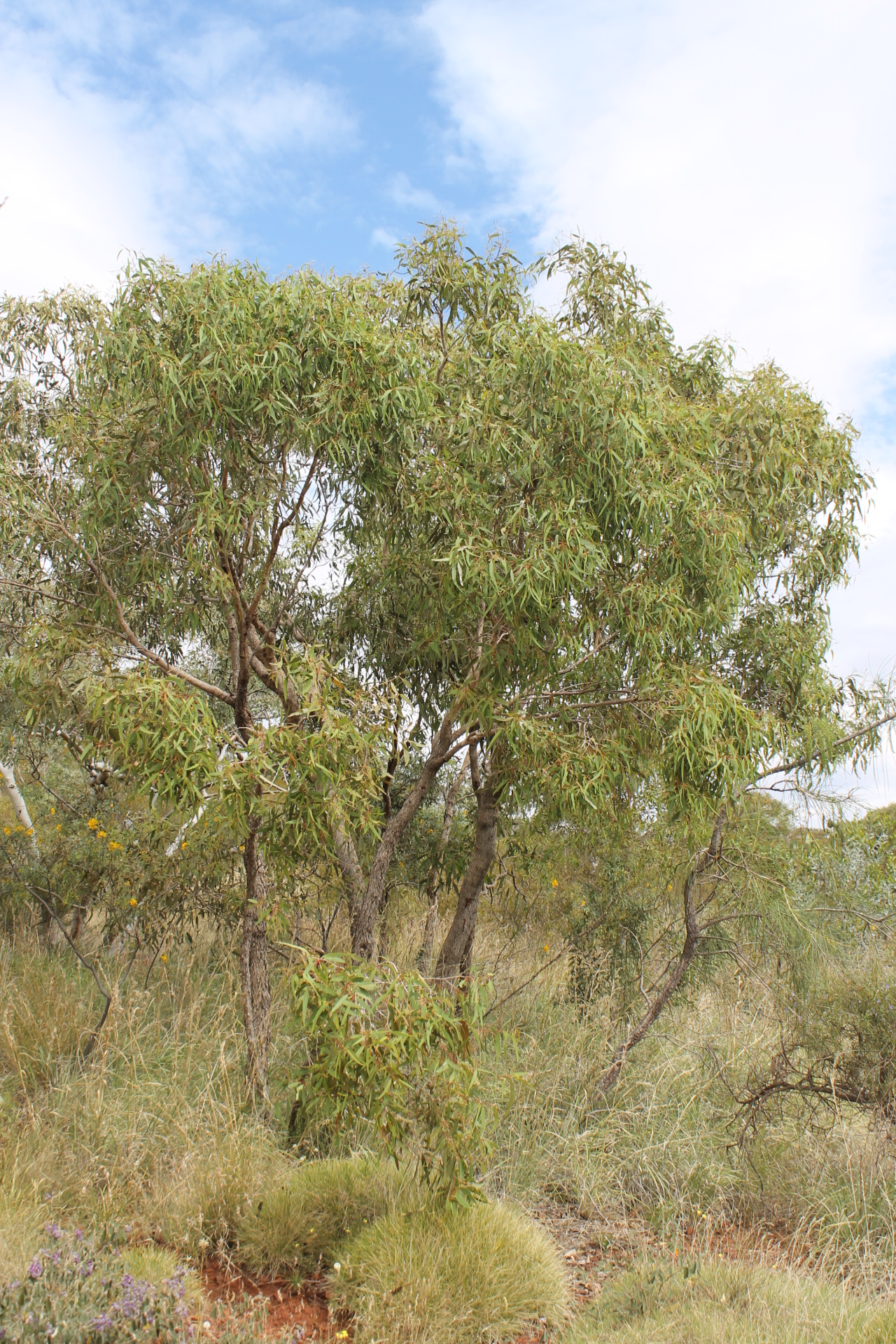
It was mid morning so the temperature was creeping up to its predicted 30°C, but tempered by a light west sou’wester. We pulled in for a water stop under the only shade, a stunted snappy gum (Eucalyptus leucophloia) located fortuitously at one of Brian’s infamous ‘uphill flat bits’.
This attractive and robust little gum is a familiar sight on the rocky hills and plateaus of the Pilbara, typically growing to three or four metres. A defining characteristic is its white powdery bark, sometimes pocked with black dimples. Hence the species name leucophloia, meaning white bark.
Brian standing in the shade of a solitary snappy gum on the flanks of Mt Meharry
The only other tree we found on Meharry was the desert bloodwood (Corymbia deserticola). With its multi-stemmed mallee growth form and rough tessellated bark it is another very striking tree of the Pilbara and easily distinguishable from the snappy gum.
Desert Bloodwood
Another two kilometres of plodding over loose scree took us to the crest of the ridge, a false summit. Meharry trig station was a further 800 metres on.
But there is no mistaking the real summit as it is marked by an elaborate rock cairn. We had left Judy and the 4WD some one hour forty five minutes earlier. Not too shabby a performance by three elderly bushwalking codgers.
Brian and Glenn at Mt Meharry summit cairn. Don wielding the camera.
Geology and Landscape
The view from the summit revealed a spectacular landscape of red whale-back mountains, razor-back ridges and steep-sided gorges that make up the Hamersley Range, one of the oldest geologic surfaces on the earth.
Karijini is the aboriginal name for the Hamersley Range. About 2,690 million years ago the Hamersley Basin began to fill with sediments forming the extensive deposits of banded ironstone formations (BIFs), cherts and metapelites collectively known to geologists as the Brockman Iron Formation.
Banded Ironstone Formation (BIF)
Mt Meharry is predominately an outcrop of this ancient Proterozoic banded ironstone.
Typically it appears as a very hard brown rock composed of iron oxide and fine grained quartz. Similar iron rich rocks occur in South Africa and Brazil but the best exposures occur in Australia’s Pilbara.
After the obligatory photos, a quick bite to eat and a good guzzle of water we turned tail and headed downhill, back to the 4WD and Judy who was busy dealing with the unwanted attentions of ‘sweat bees’.
It’s all downhill from here.
Sweat Bees.
Sweat bees is a generic term for a range of these inconspicuous little fellows (Family:Halicitdae) who are attracted to perspiration, specifically the salts in sweat and as Judy discovered, can be quite a nuisance, just like Australia’s notorious bush flies.
Birds
And what of Judy’s birding and botanizing? Well, the avians weren’t co-operating. Hardly surprising. We were, after all, in a desert, with no nearby surface water and the ocean five hundred kilometres to the west. The semi-arid tropical climate has a highly variable rainfall of only 250mm to 300mm per annum; the evaporation rate is twelve times greater, hence the minimal surface water.
The presence of surface water is very much dependent on incursions of the summer cyclonic rains sweeping in from the Indian Ocean to the west.
Back in bird land the meager offerings were a Black-faced Cuckoo-shrike, a Yellow-throated Miner and the seemingly ubiquitous Galah.
Plants
Royal mulla- mulla
However the abundance and showiness of plant life in the Australian outback is often exceptional, especially after rain.
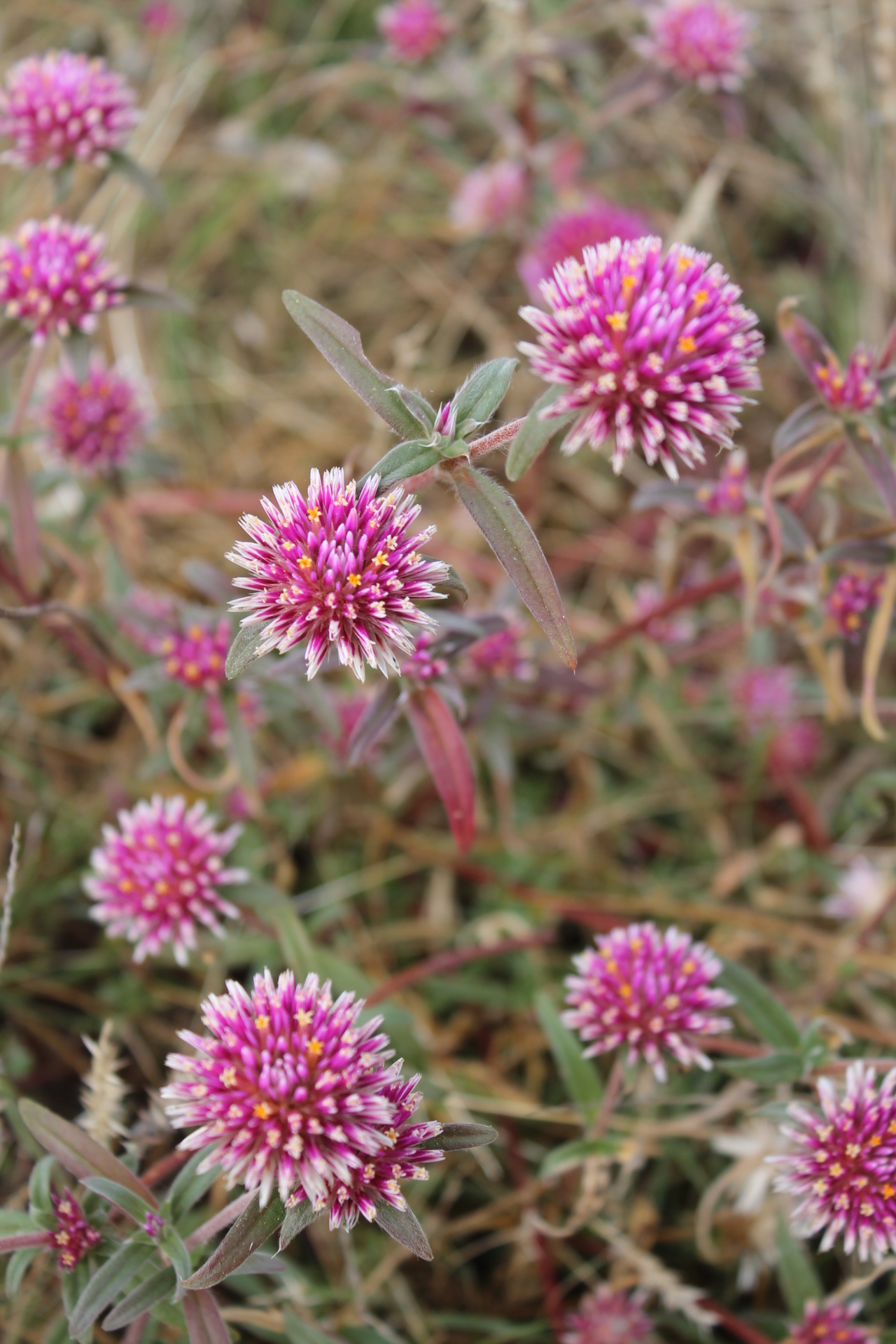
Pink Royal mulla-mulla (Ptilotus rotundifolius) covered the rocky Meharry landscape, occupying the interstices between clumps of spinifex.
Royal mulla-mulla is a low perennial shrub growing to about one metre tall. The flower spikes are unmistakable: long, cylindrical and a bright pink. More than 35 species of mulla-mulla grow in the Pilbara and make for spectacular displays after good summer rains.
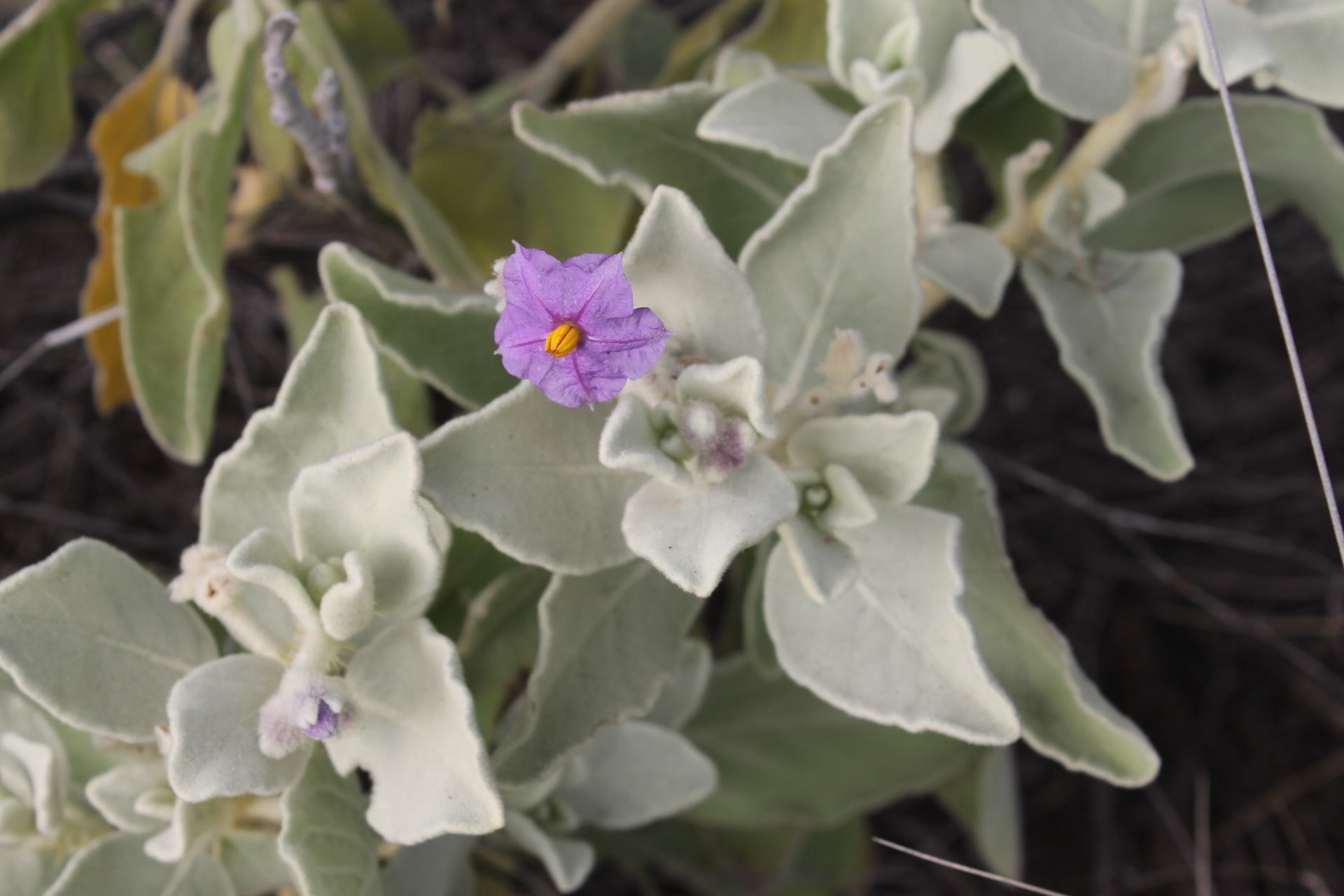
Other ground covers included the purple-flowering Flannel Bush (Solanum lasiophyllum), and the delicate blue pincushion flowers of the Native Cornflower (Brunonia australis).
Brunonia australisis the sole species in the genus Brunonia which is the only genus in the endemic family Brunoniaceae. It is named after Robert Brown, naturalist on Matthew Flinders’ Investigator.
Flannel Bush: Solanum lasiophyllum
Wattles and sennas dominated the Meharry shrub layer and included the golden-flowering Gregory’s Wattle (Acacia gregorii). This dense spreading shrub grows to only half a metre and has golden ball-like flower heads. The name commemorates Francis Thomas Gregory whose 1861 expedition passed through the Pilbara.
Gregory’s Wattle. Acacia gregorii
Another wattle found here was Acacia hamersleyensis, the Hamersley Range Wattle. This multi-stemmed wattle grows to about four metres and features bright golden dense cylindrical spikes.
Thomas Francis Gregory: The North-West Australian Exploring Expedition. 1861.
Thomas Gregory was the brother of the outstanding Australian explorer and bushman, Augustus Gregory. Their 1858 expedition to the Gascoyne River had attracted the attention of English capitalists interested in cotton ventures. The Home Office and Royal Geographical Society proposed a new colony on WA’s north-west coast with the special objective of cultivating cotton.
Francis Thomas Gregory; Source State LibQld
Thus F.T. Gregory was contracted by Captain Rowe, Surveyor General of WA to head a scaled back expedition prior to setting up a full colony. On the 23rd of April,1861 Gregory departed on the barque Dolphin with a party of nine, ten horses and supplies of flour, salted pork, dried beef preserved meat, bacon, sugar etc. Enough grub for eight months. If the desert , horses or aborigines didn’t do you in then it was a fair bet that the diet would.
On the 22nd May Gregory had transferred men, supplies and horses ashore at the head of Nickol Bay. By the 25th June he had reached the western edge of what is now Karijini National Park. On the 3rd of July he climbed Mt Samson and saw a high peak which he named Mt Bruce…
“I named Mt Bruce after the gallant commander of troops who had warmly supported me in carrying out explorations.”
And so, for well over a century, Mt Bruce was thought to be WA’s highest mountain. His journal also mentions Mt Augustus which he had named on his 1858 expedition into the Gascoyne River District after his brother Augustus Gregory. It was from Mt Augustus that he first saw Mt Bruce. But that is a story which I will keep for another time.
Mt Bruce ( Bunurrunna): 1236metres.
Such is the isolation of this area, modern day maps of the Pilbara still retain a plethora of the original names proposed by F.T. Gregory:
Mt Turner: J. Turner was second in command of the expedition.
Mt Brockman: E. Brockman was a member of the expedition.
Maitland River.
Hardy River.
Hamersley Range: Hamersley was one of the expedition’s backers.
Fortescue River: Fortescue was the British Under-secretary for colonies.
Dolphin Island: from their supply vessel Dolphin.
Ashburton River: President of the British Royal Geographical Society.
Capricorn Range: presumably because it straddles the Tropic of Capricorn.
Readers interested in the expedition journals of the Gregory brothers should acquaint themselves with an excellent facsimile edition published in 2002 by Western Australia’s Hesperian Press.
Source: Hesperian Press.
Photo Gallery: Plants of the Pilbara.
Holly Grevillea.G. wickhamii.Named after John Wickham. Captain of the Beagle who collected this plant with Charles Darwin during surveys of the north-west coast1837-1838.
Australian Desert Rose: Gossypium australe.
Sturt’s Desert Pea: Swainsona formosa.Its name honours the explorer Charles Sturt but was first collected by Willim Dampier in 1699 on an island on the Dampier Archipelago.
Common Rock Fig: Ficus brachypoda. Found growing in cooler moist gorges of the Pilbara. Often clings precariously to ledges and cliff faces.
Sticky Cassia:Senna glutinosa subsp. pruinosa
Grey Whorled Wattle: Acacia adoxa.
After reading this account you will have realised that Mt Meharry is no great challenge. For me, its interest lies in the opportunity to traverse an arid zone mountain landscape, a walk of outstanding scenic beauty as well as exceptional geologic and botanical interest. And as a bonus you can bag Western Australia’s highest mountain, a remote peak in outback Australia. Mission accomplished. Then it was back to the comfort of our camp site at Dales Gorge, under the welcome shade of a grove of Mulga trees.
A Job Well Done: resting back at Dales Gorge Campground, Karijini National Park.
Good info:
Bush Books series published by WA’s Dept of Conservation and Land management. These are pocket sized field books: Common Plants of the Pilbara, Wattles of the Pilbara, Geology and Landforms of the Pilbara.
P. Moore Plants of Inland Australia (Reed New Holland 2005)
P. Lane Geology of WA’s National Parks (Peter Lane 2007)
A.C. and F.T. Gregory Journals of Australian Explorations 1846-1861 ( Hesperian Press 2002). First published by J.C. Beal Government Printer, Brisbane 1884.
S. Mitchell Exploring WA’s Natural Wonders ( Dept of Environment & Conservation).
Hema Western Australia Road and 4WD Atlas
Aust. Geog. Western Australia State Map 1: 4 000 000
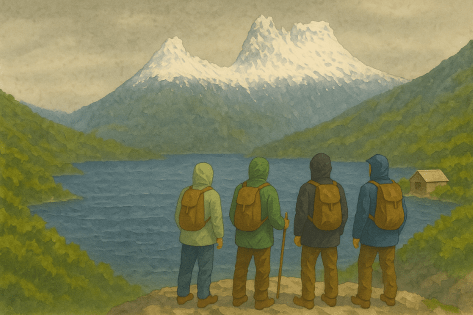
The names are drawn from the Old Testament: Lake Salome, the Pool of Bethesda, The Pool of Siloam, Wailing Wall, Mt Jerusalem, and Herods Gate. Irresistible place names to whet the bushwalker’s appetite. The Walls of Jerusalem, originally called China Walls, are located on Tasmania’s Central Plateau, east of, but contiguous to, the famed Cradle Mountain-Lake St Clair National Park; both form part of the Tasmanian Wilderness Heritage Area. Access is on foot over a steep, rough track to an alpine plateau at 1200 metres. Unpredictable weather conditions are the norm.
A cold, windy day in the Walls of Jerusalem
An Overview of The Walls of Jerusalem National Park:
The Walls of Jerusalem National Park features dolerite peaks, glacial lakes, moraine dumps as well as alpine plant communities including rare pencil pine forests and cushion plants. It is an extremely interesting area for experienced walkers as there are many possible multiday trips in the area. But long before the incursions of the modern day bushwalker, aborigines made seasonal visits to the area as evidenced by artifact scatters found in the national park. The first Europeans to visit The Walls were shepherds with their flocks of sheep in the period from 1820s through to 1920s. Surveyor James Scott explored The Walls in December 1848 and January 1849 and produced the first comprehensive map. On the map are named Wild Dog Creek, Lake Adelaide, Lake Ball (now Lake Salome) and The Walls of Jerusalem. Then came the trappers who hunted pademelons, wallabies aand possums for their fur in the 1920’s. Finally bushwalkers discovered the area. Members of the Launceston Walking Club did much to explore the area and one of their members, Reg Hall, named many of the geographic features: among them Dasmascus Gate, Herods Gate, Jaffa Gate, and Solomons Jewels.
Walls of Jerusalem: Glenn Burns
At the start of winter youngest son Alex rang asking me to join him on a snowshoeing trip into The Walls of Jerusalem National Park. And so it came to pass that on an overcast blustery Sunday afternoon in June my Virgin Australia flight crabbed down the runway at Hobart’s airport, straightened and thankfully delivered me safely to the terminal building. Alex was already waiting, sporting a massive Wilderness Equipment rucksack and an even bigger cargo bag of snowshoes and other snow hiking do-dahs.
A muffled- up Alex.
Alex the Providore:
Then it was off to Hobart CBD to stock up. Alex took command of this vital operation, apparently having had some issues with childhood experiences of my hiking menus built around pasta, porridge, packets of wheatmeal biscuits and peanut paste. But ours was to be more substantial and varied fare. Enough to see us through several Tassie blizzards: multiple blocks of chocolate, a brick-sized chunk of cheese, cheesy biscuits, a bag of nuts, bags of Mars bars, rolled oats for hot porridge, a bag of muesli, a tube of sweetened condensed milk, packets of dried soups, tubes of drinking chocolate, and a flat-pack of some hippy spinach and herb mountain bread that Alex lusted after.
Photo Gallery: by Alex Burns
Solomons Jewels
On the track to Trappers Hut
Crossing Wild Dog Creek
Snow gums
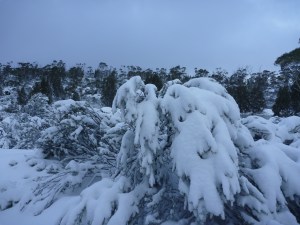
Snow laden branches
Weather reports you would rather not have:
Onward to Deloraine for a night in comfortable digs at the local motel. I must say that this was an opportune choice given the deteriorating weather. On my last extended snow trip with Alex things were quite different. It was tenting at The Diggings in Kosciuszko National Park before issuing forth to hiking on the Main Range in balmy temperatures and brilliantly sunny skies. This time we drove to Deloraine under threatening skies then finally rain. The TV weather report that night showed a dense cloud band sweeping across Tasmania. A nuisance breakout from something called the Antarctic Vortex, otherwise known as a vigorous low pressure cell and associated cold front. For our neck of the woods: 95% chance of rain, wind gusts to 100 kph, sheep graziers’ weather alert and a strong wind warning.
The Tassie Parks service has this warning about winter trips to the high country: “Winter days are cold, but can often be crisp and clear, especially in the morning. In the highlands, expect snow. You’ll need all your warm, windproof and waterproof gear. The days are short and deep snow can make walking difficult. Be prepared to be holed up during blizzards, sometimes for days.”
Monday at Cradle Mountain
Come Monday morning I peeked through the curtains. Not good. Alex who is on top of this highland weather stuff sensibly delayed our entry to The Walls for the day. A day of reading and telly watching interspersed with visits to Deloraine’s cafes for hot chocolates and coffees… perhaps? Unfortunately, Alex isn’t much for sitting around. An outing to Cradle Mountain beckoned. We trudged through Cradle’s freezing rain and gale force winds (gusting to 80 kph) for only part of the day but my enthusiasm for this alpine outing was quickly
On the way to Cradle Mt on a cold, wet day.
dampened and I was relieved that we hadn’t set out to The Walls in this weather. I’m not sure what the two bedraggled, shivering and unfit middle-aged ‘overland trackers’ made of the conditions. Apparently they were out in all weathers because they were ‘on a schedule’. I guess they made it to Waterfall Hut with a bit of a struggle. But it was back to the delights of Deloraine in a warm car for Alex and me. Hopefully for an early start tomorrow. The evening TV weather report was mildly off-putting for this warm-blooded denizen of the subtropics: sheep graziers’ weather alert, road alert for snow and ice, maximum 0°C, minimum -2°C, snow to 400 metres, 12-20 cm of snowfall, winds to 40 kph and a bushwalker alert. But in Alex’s book it was all systems go.
Tuesday: into The Walls Of Jerusalem
Tuesday pre-dawn. Alex was up and packing. Although we had already lost a day we opted for an ‘overnighter’, a lightning swoop on The Walls of Jerusalem. By mid-morning we had bumped our way into The Walls car park where a lonely signboard informed us that: Thieves are active in this area. I stepped out into snow and wind gusts but was reassured by Alex’s assessment that conditions were ‘pretty benign’.
Walls of Jerusalem car park.
Trappers Hut:
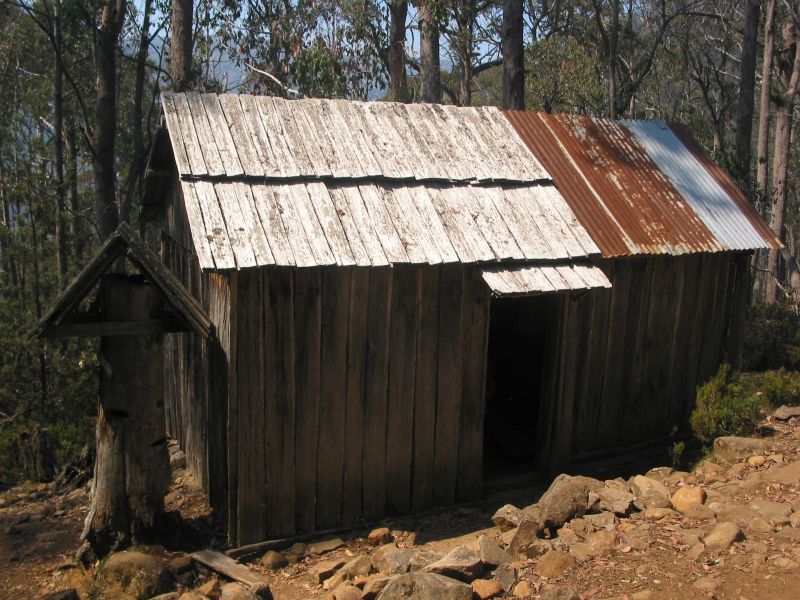
We wandered off uphill, still able to pick the general line of the track even under the deepening snow cover. About an hour later we arrived at Trappers Hut, dived inside out of wind and snow, wolfed down a feed of chocolate then paused to examine our surroundings. Trappers Hut, built by Boy Miles, a Changi POW, and Dick and Alistair Walters in 1946, is a two bunker with vertical slab construction with a shingle and corrugated iron roof. The gable at one end, covered with chook wire, was open to the elements, with a light dusting of snow covering the bunk below.
Trappers Hut
The hut is a reminder that in bygone days these high alpine zones were exploited for grazing, mining and trapping. Possum trappers built huts, called badger boxes, around the edge of the Central Plateau especially during the Great Depression of the 1930s. They were keen to get the furry winter pelts of the mountain dwelling brush-tailed possums, pademelons and Bennett’s wallabies for which they received about the equivalent of two dollars fifty a skin.
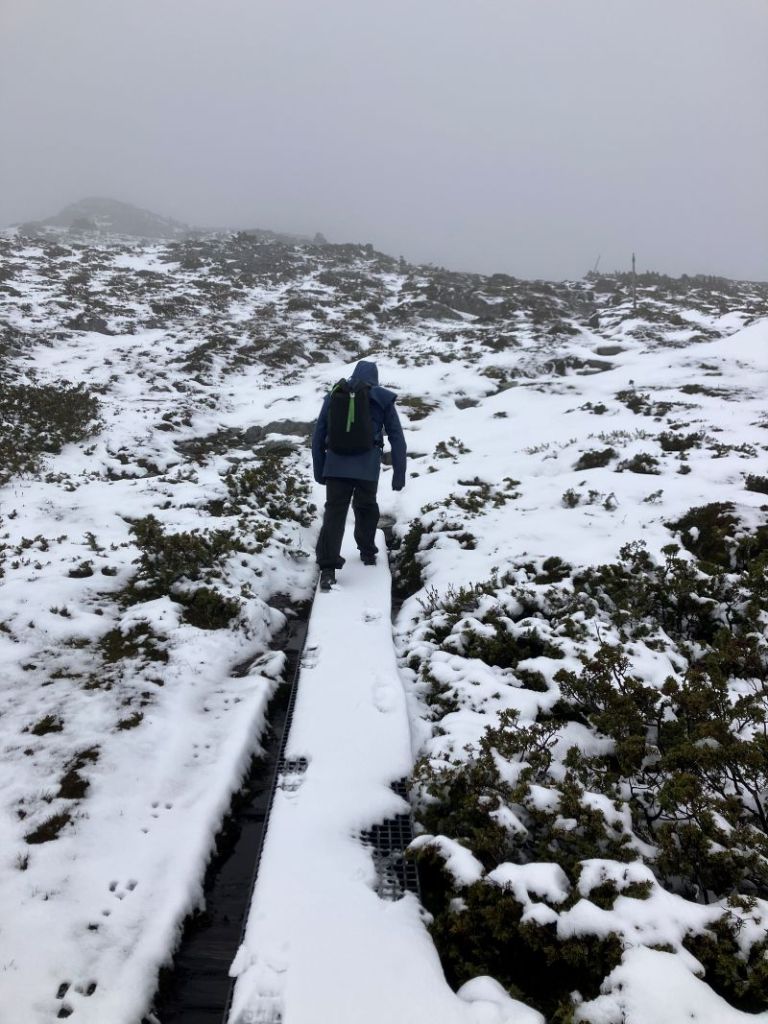
Ten minutes on we were cooling rapidly so it was time to throw on the shoulder monkeys and trundle off, wombat-like, into the deepening drifts. Slow going.
Lake Loane
Something about Snowshoeing:
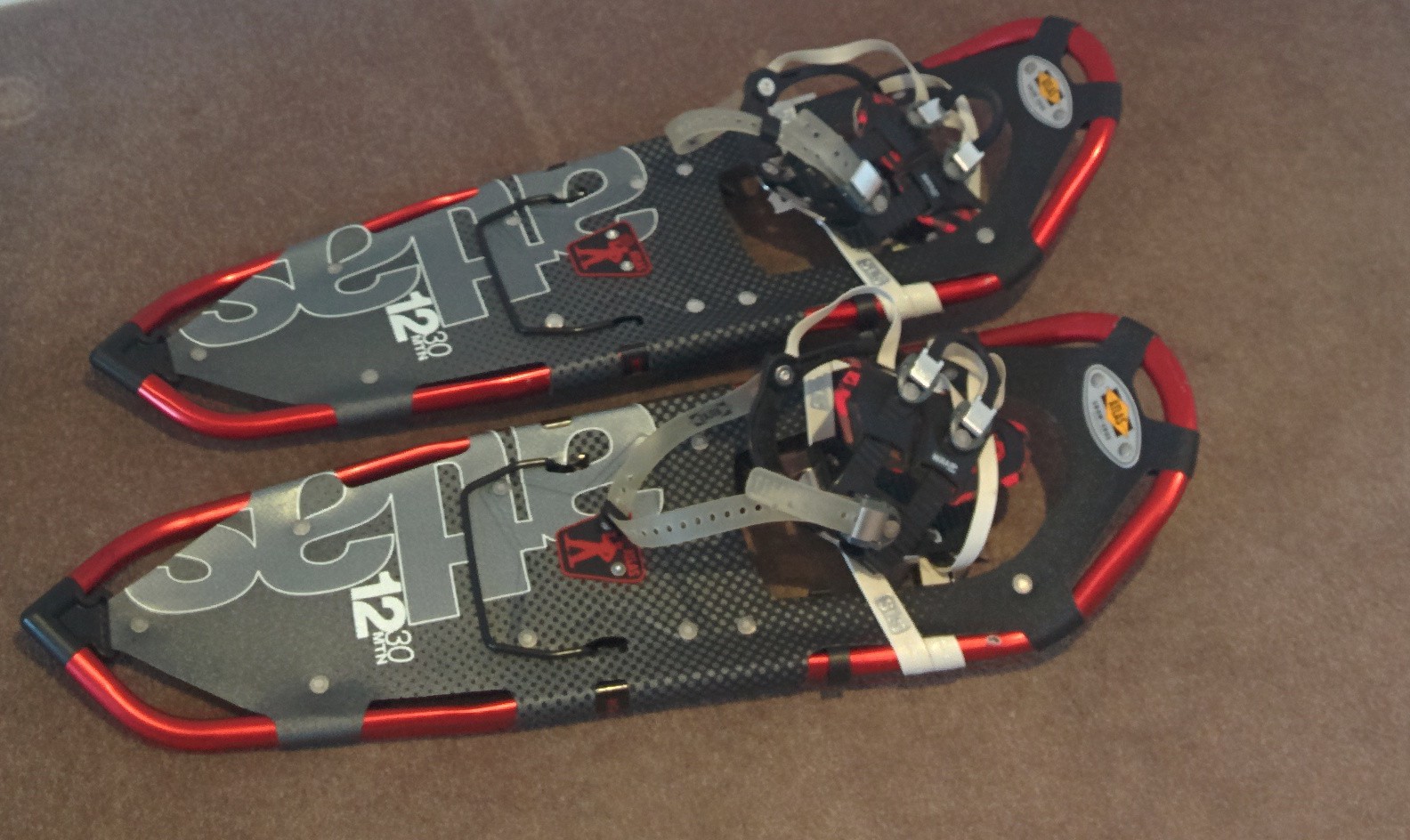
It was not deep enough for snowshoeing but was deep enough to obliterate the track and obscure boulders and scrubs. Underfoot was becoming hazardous. I have read that a walker in boots and loaded with rucksack at a combined weight of 80kgs exerts a surface pressure on the snow of 470 g/cm². You can expect to sink about 20-25 cm into the snow. But if you have strapped on your on skis or snowshoes the ground pressure falls to about 67 g/cm². You should sink only a centimetre or two. We were definitely out of luck in this regard. Our snowshoes remained strapped to our rucksacks.
MSR Snowshoes. Carried strapped to back of rucksack.
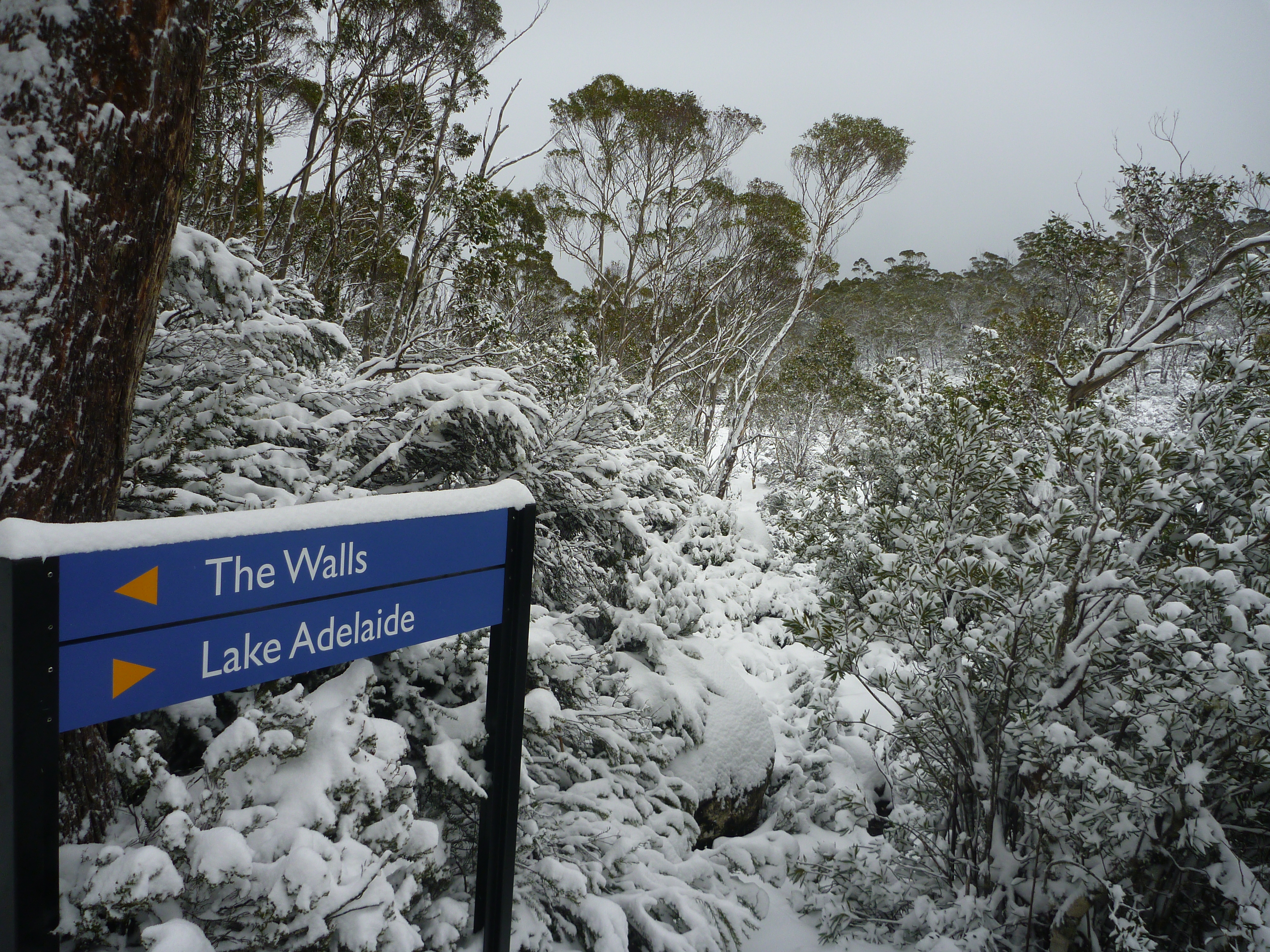
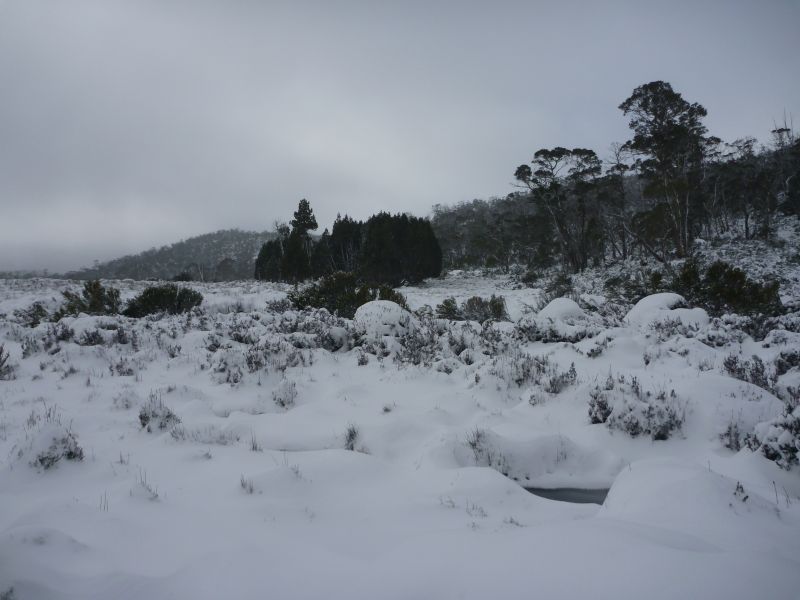
After Trappers we breasted the lower plateau at 1100 metres and located the junction of The Walls track and Lake Adelaide track by way of new and very garish sign. Even under a blanket of snow, in poor visibility, the scenery did not disappoint. A monochrome landscape of lakes, massive dolerite cliffs, pencil pine forests and clumps of snow gums. Definitely worth the discomfort of being out in these conditions.
New signage at Walls of Jerusalem
The Walls of Jerusalem: Geology:
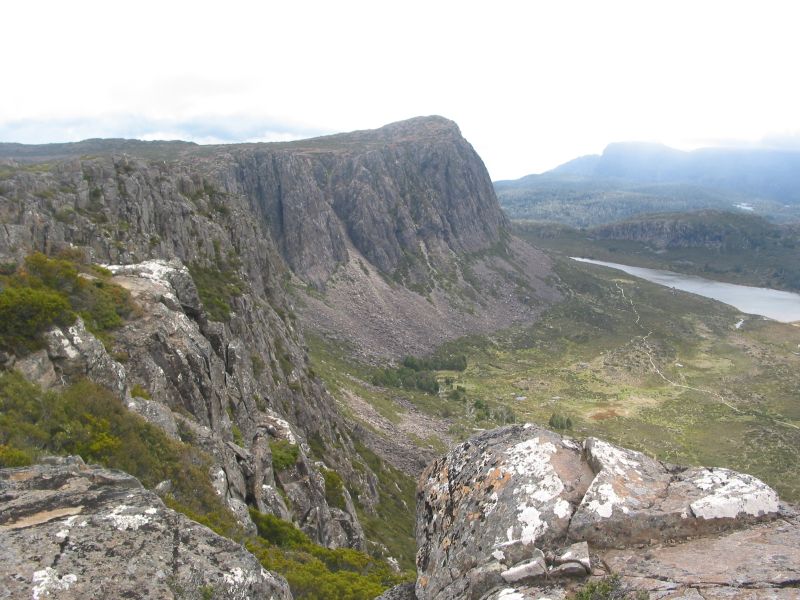
The Central Plateau is a surface of horizontal flows of dolerite, some 300 metres thick, formed during the Jurassic. Dolerite is a dark heavy rock, crystallizing as magma cooled beneath the earth’s surface. The present landscape is the result of a small Pleistocene ice-cap scouring this dolerite surface. Thus, the innumerable lakes of the Central Plateau are depressions left by glacial erosion. By and large the ice cap rode over most of the plateau except where it thinned and flowed around high points, gouging steep sided walls like The West Wall and The Wailing Wall.
The West Wall
The Walls of Jerusalem: Plants:
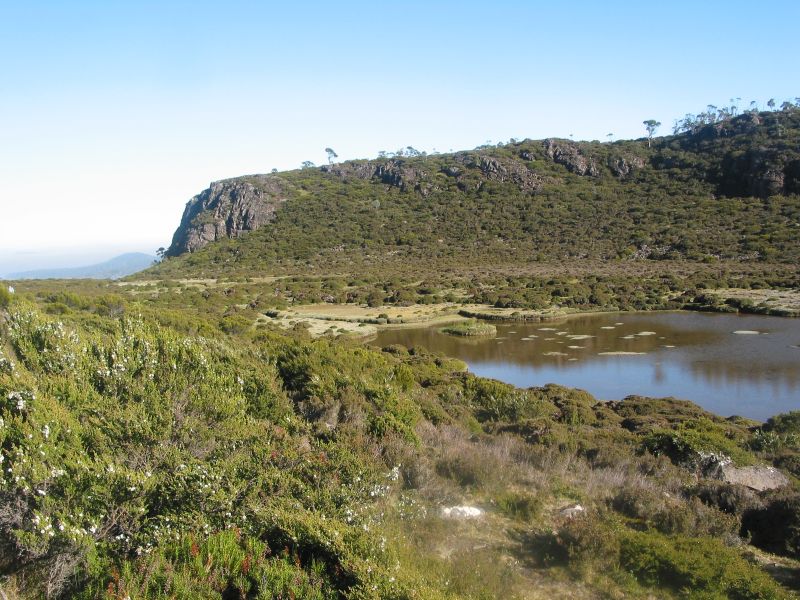
The vegetation highlights of The Walls include magnificent stands of the ancient Pencil Pines, the cushion plants and Tassie’s own snow gum, Eucalyptus coccifera. The very slow growing Pencil Pines (Athrotaxis cupressoides) prefer wet soils, hence are characteristically found on flat ground at the edge of tarns, lakes and watercourses. Athrotaxis usually grows as an isolated plant hence the extensive copses near Lake Salome, Pool of Siloam and in Jaffa Vale are very unusual. Unfortunately, it is highly susceptible to fire and may be under threat if the climate continues to warm.
Stand of Pencil Pines
Stand of Pencil Pines: Summer
Cushion plants are alpine species that develop dense, ground-hugging forms. In Tasmania all but one is endemic. They form narrow ‘rivers’ along drainage lines or be scattered through alpine heath or sedgeland. They are at their most spectacular where they form extensive sheets on thin soils on rocky alpine plateaux like the Walls Of Jerusalem.
Cushion Plant: Walls of Jerusalem
After the junction sign, minor hick-up ensued as we puzzled over our forward direction. We quickly sorted this with that good old stand-by, a map and compass: Mr Magellan rendered inarticulate under the heavy sky. Alex confidently led off SW towards Herods Gate, breaking ground in the fresh snow. A human track logger. Our line of travel approximating the summer track and our ongoing progress confirmed by an occasional marker, so faded and tatty as to be nearly invisible.
Heading for Herods Gate
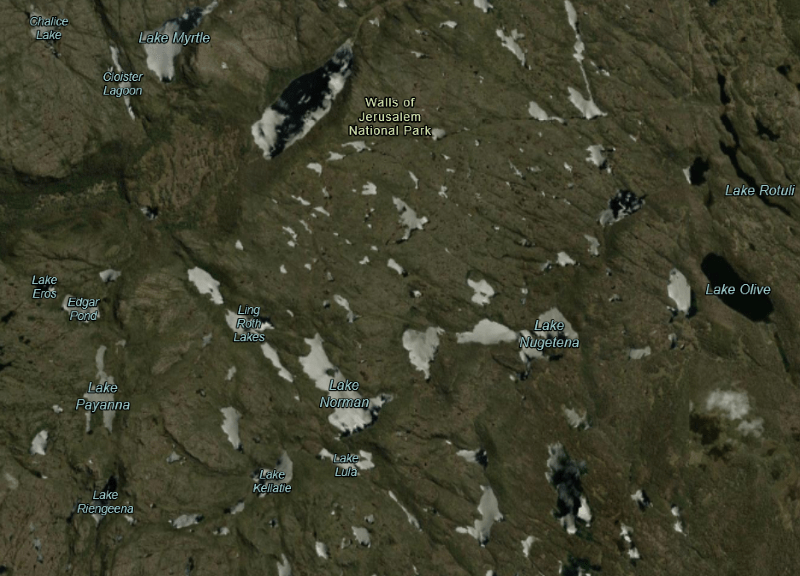
Ahead were Solomons Jewels, a myriad of small lakes, but a mere handful of the 4000 or so lakes that dot the Central Plateau.
Solomons Jewels
The Lake Country:
Sometimes called the Lake Country, this landscape is a legacy of the Pleistocene Glaciation when a 65 kilometre wide ice cap covered much of the Plateau. This was the only known Pleistocene ice cap in Australia. Glacial ice gouged and scraped numerous rock depressions and dumped piles of moraine. As the ice retreated 10,000 years ago, sheets of water filled the depressions to form the lakes that we see today.
Pool of Bethesda: Summer view
Something about clothing:
By early afternoon the winds had ratcheted up and a coating of snow flurries now permanently covered our jackets and rucksacks. The wind chill temperature stood at about -8°C. Daggy as I may have looked, my old Queensland bushwalking clobber kept me amazingly snug: old woollen balaclava, possum fur gloves from NZ, outer ski gloves, thermal top and pants, Dry Gear long sleeved shirt, heavy duty windproof polar fleece coat, long gortex rain jacket, a pair of cheapskate nylon rain pants and Quagmire gaiters to complete my ensemble. Tucked away in a dry bag were a duplicate set of après ski clothes including down jacket and ski pants. And if you were an Alex, a pair of hut booties would be de rigeur for evening wear.
Rigged for the cold windy weather
Unable to deploy the snowshoes our forward progress was pretty ordinary. By 2.00pm we were still short of Wild Dog Creek and our ambitious plan to overnight at Dixons Kingdom Hut had all but evaporated. Dixons is only a few hours from Trappers in summer conditions. But we weren’t in the race, so working on the precautionary principle, a night under canvas at Wild Dog Creek was our safest option.
Wild Dog Creek
Wildlife:
Nary a wild dog in sight, but instead a resident clutch of Tasmanian Bennett’s Wallabies (Macropus rufogriseus) sheltering forlornly under tree branches near the tent platforms. You have to be pretty impressed by the survival these furry little fellows. A number of factors are in play to ensure their survival in the snow. The snowcover in Tassie is pretty short lived, so food scarcity is only temporary. High country mammals become torpid in cold conditions when food is scarce. They survive by reducing their metabolic rates by 5-30 percent of their normal basal rate. Finally, the Wild Dog campsite is, no doubt, a favourable feeding site with an abundance of hand-outs. But one lives in hope that there are not too many walkers feeding the local wildlife.
Bennett’s Wallaby
Wild Dog Creek Campsite:
Parks Tassie has done a sterling job at Wild Dog: wooden tent platforms, outstanding views even in the snow, water taps (currently frozen), a composting toilet (door frozen shut) and our own backyard Australia Zoo. But best of all we found a tent platform that was sheltered from the wind.
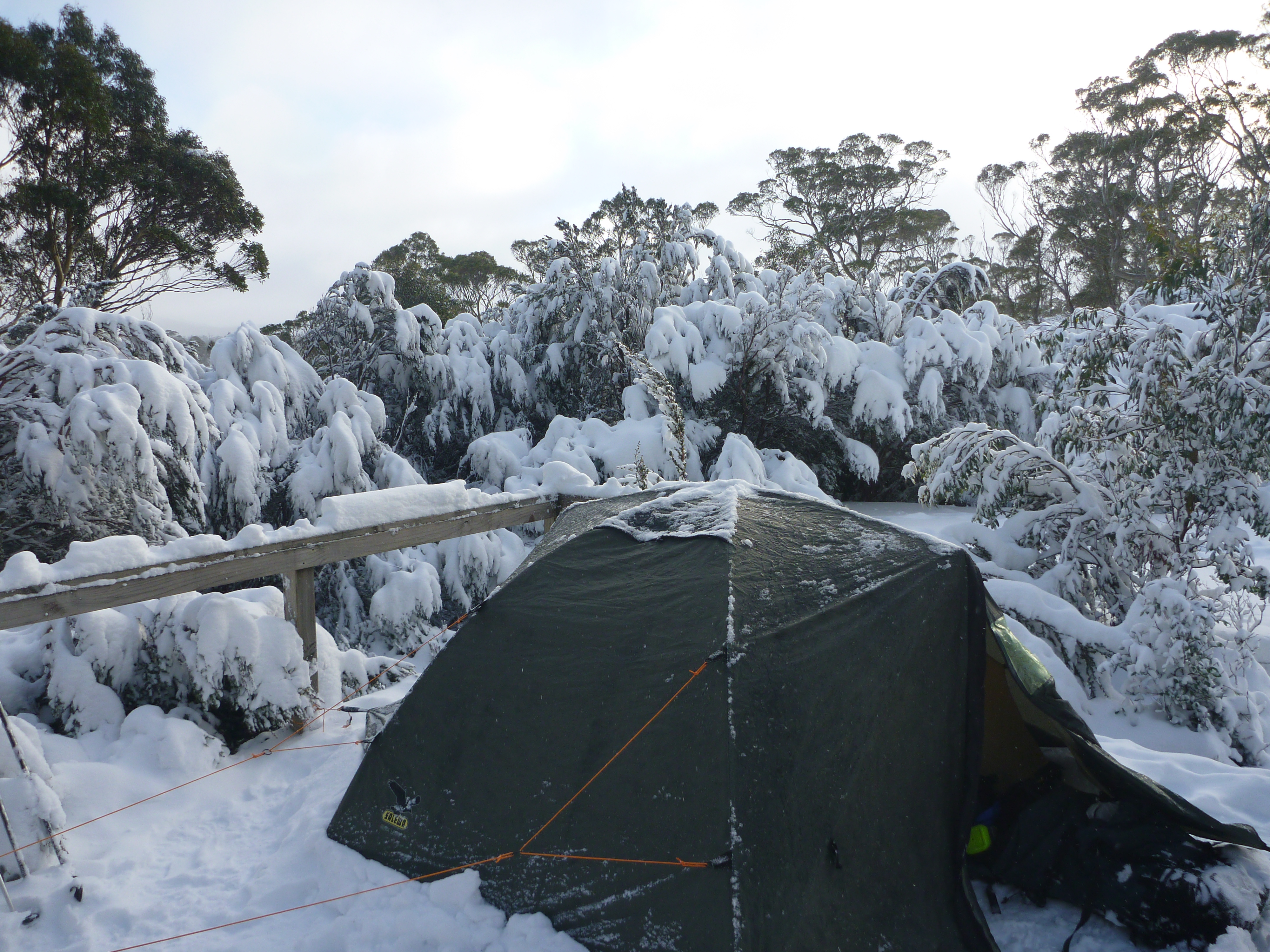
Tent Platform: Wild Dog Creek.
We downed rucksacks and extracted my ever faithful two man Salewa Sierra Leone. Wrangling the tubby Salewa on the snow covered platform called for some advanced engineering know-how. Alex’s, not mine. The snow hadn’t packed down so our ice pegs were useless. Instead we resorted to a spider’s web of spare cordage and spare bootlaces to guy out our little abode.
Salewa Sierra Leone.
A long night:
Then it was into the tent, followed by a long-winded process of changing into warm dry clothes and finally submerging into a snuggly sleeping bag. A long night stretched ahead: 15 hours as sunrise was north of 7.20am. Cooking a meal in the tent annex is never an option that I particularly relish. It is far safer to fire up the stove outside. But with a bit of care we managed the annex and an entrée of Dutch curry and rice soup; for mains Back Country Cuisine’s Spaghetti Bolognese fattened up with Deb Instant Mash; a dessert of Rum and Raisin chocolate finished off with Choc Orange drinking choc fortified with sweetened condensed milk. The night was interminable, spiced up by discussions on things technological and exits to shake snow from the fly sheet and deal with the unwanted attentions of a marauding common brush-tail possum (Trichosurus vulpecula). It is with good reason that their species name is derived from the latin meaning ‘little fox‘.
Come 7am, still in darkness, snow still drifting down, I was drawn out of the Salewa and up to the little house on the hill, the composting toilet: its latch and door frame firmly sealed by ice. Tighter than the zip on a Scotsman’s wallet. Having left the blow torch at home I resorted to desperate pecking with my pocket knife. By a dent of sheer persistence I burst in. A close run thing.
Back at camp we brewed up substantial bowls of porridge laced with handfuls of muesli and swimming in condensed milk and then considered the situation. Outside the wind had eased to 60 kph gusts but had swung to the WSW bringing colder temperatures, -2°C but lighter snowfall.
We opted to leave the tent erected with our gear still dry inside and check out the inner Walls above Herods Gate. Once through Herods Gate at 1200 metres the prospect was, bluntly put, bleak but also beautiful in a monochromatic sort of way. An iced-up Lake Salome was visible. To our right King Davids Peak and the West Wall were intermittently visible but Damascus Gate and The Temple (1446 m), a mere two kilometres away, were shrouded in cloud and snow.
Lake Salome and The Temple
After poking around in pretty cold conditions, a wind chill of -8.5°C, it was time to re-trace our route, retrieve the tent and gear at Wild Dog and bump out. We had run out of time, needing to be in Hobart on the morrow.
Descending from Herods Gate
By 3pm at the car park the wind had eased back to a lazy 20 kph and the temperature had racked up to a balmy 2°C. Murphy’s Law. But for all the minor discomforts I wouldn’t trade my winter walks with Alex for anything. Then it was off to collect Judy from Hobart and onward to Adventure Bay on Bruny Island. A chance to check out an epicentre of Australia’s early maritime history: Abel Tasman(1642) Tobias Furneaux(1773) Captain Cook (1777) and William Bligh with Matthew Flinders in 1792.
More Reading:
Green, K and Osborne, W: Field Guide to Wildlife of Australia’s snow-country. Reed New Holland1994.
Tasmanian Parks Service: Welcome to Wilderness: Bushwalking Trip Planner.
Map: Walls of Jerusalem 1:25000. Land Info Service.
Phil Collier : Alpine Wildflowers of TasmaniaSoc. Growing Aust. Plants 1989.
Carol Booth: Chill Strategies Wildlife Australia Winter 2015 Vol 52 No 2.
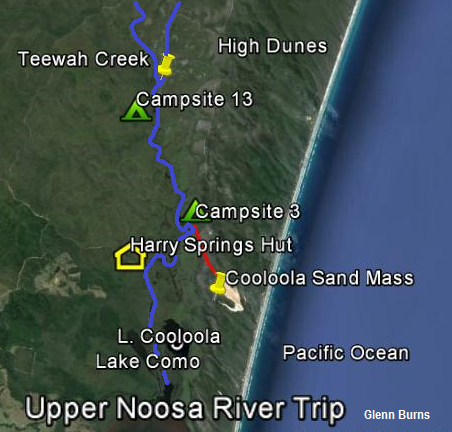
In early May four of my bushwalking friends and I took to the water; swapping packs for paddles, Leki poles for lifejackets and snakes for sharks. We set out on a four day kayaking trip in the upper Noosa River. My kayaking guidebook, Andrew Gregory’s “Kayaking around Australia” describes the Noosa River as a “paddler’s paradise…black water under a canopy of paperbarks”.
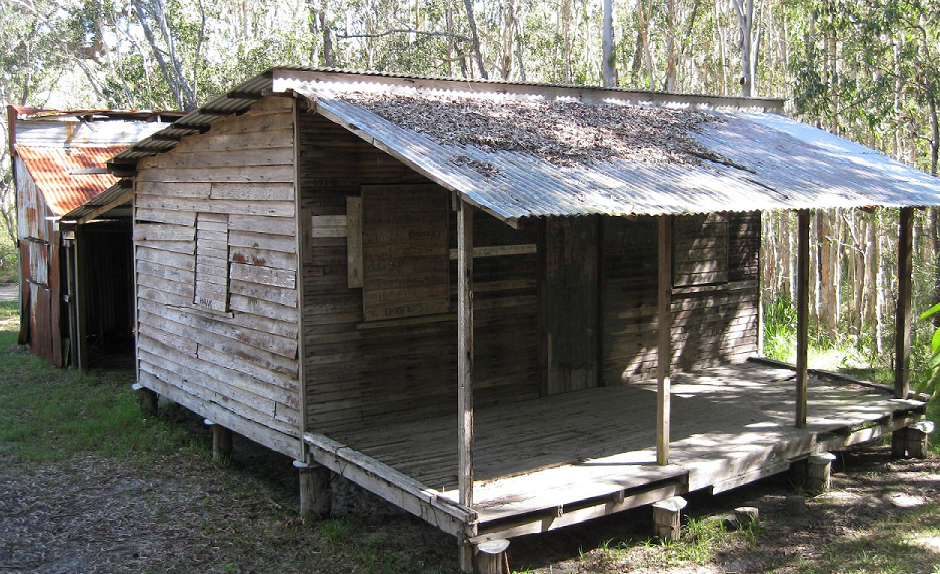
As is the custom with many of our trips this year, the weather prognosis was decidedly dodgy. But my companions Ross, Linda, Damien and Eva were unfazed. So our mini flotilla assembled mid morning at Harry Springs Hut. Built in 1957, the hut has had varied usage, first as a base for many of the region’s timber cutters and then as the weekend fishing retreat of local Cooroy pharmacist Harry Spring, who was rewarded with a lifetime lease on the hut once the land was proclaimed a national park. He passed away at the age of 94, but Harry’s little piece of history is now a protected cultural heritage site.
Harry Springs Hut
Damien did a bit more assembling than the rest of us – he put together his three metre Folbot: think of those fold up commando kayaks from World War II or the collapsible canoe that the writer Paul Theroux used to paddle around the SW Pacific in writing his book “The Happy Isles of Oceania”.
The Folbot
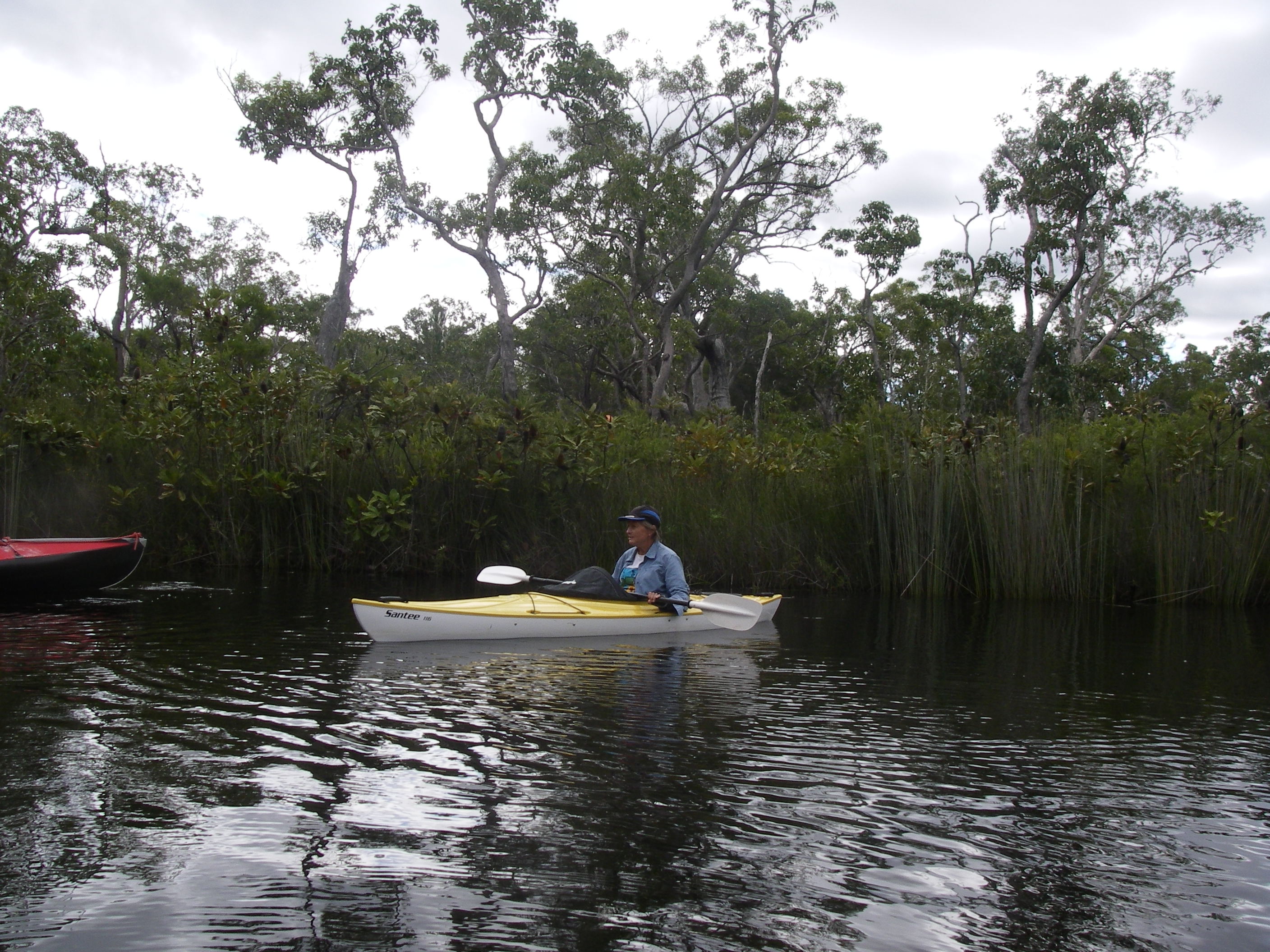
Eva appeared punctually at our launch site after having done some hard yards the previous day, paddling up from Elanda Plains in her little Santee river touring kayak.
Eva’s Touring Kayak
Photo Gallery: Upper Noosa River.
Ross in his Barracuda Kayak
Jetty at Campsite 3
Upper Noosa River
Teewah Creek
Kayaks on Upper Noosa River
Upper Noosa River
Linda’s Barracuda Kayak
The three hour paddle to campsite 13 was dampened somewhat by the arrival of the promised rain. But these were mere showers … a minor irritant as we settled into the spacious campsite 13 with our own sandy beach front, private swimming pool and, no doubt, the occasional lurking bull shark. Tarps kept the evening showers at bay, but not the miasma of mossies. Ever prepared for all eventualities we circled up the mossie coils…which did the trick.
Tuesday dawned fine, cool and slightly cloudy. Ideal kayaking conditions. We ventured upstream to check out Teewah Creek and the head of the Noosa River. Teewah Creek rises in the high dunes just south of the Rainbow Beach road and does a lazy meander in a SSW direction to its junction with the upper Noosa. I have occasionally encountered hardened paddlers coming down Teewah Creek, having launched their canoes at Coops Corner about 5 kilometres upstream. Their reports of log jams, fallen trees and portages have not enamoured me of the idea of launching at Coops and paddling downstream. Instead, for us, there was an undemanding but beautiful enfilade paddle up the pristine waterway of Teewah Creek as far as our craft could go.
Teewah Creek
The creek is deeply incised into the swampy sand plains west of the Cooloola High Dunes. Its tannin stained waters ripple over white sands in a kaleidoscope of colours: sometimes clear, sometimes brown but mostly with a reddish tinge. Back at campsite 13 we had a leisurely lunch on our own Costa del Cooloola followed by a lazy afternoon on the beach lounging in our Helinox deck chairs reading and chatting.
Beachfront at Campsite 13
Wednesday: Today we earn our keep. A one and a half hour paddle back to campsite 4 then the 7 kilometre hoof up to the Cooloola Sand Patch (225m). After lunch on top, reverse the whole process. But what a day for it: sunny, clear blue skies with just a vague whisper of a cool autumnal breeze. And my well rested friends were in fine fettle for the longish paddle on the glassy Noosa waters.
The Cooloola Sand Patch
The Cooloola Sand Patch dominates the scenery of this part of Cooloola. Migratory white sands of the patch are derived from siliceous oceanic sands blown up into a giant mobile dune by the predominant south-easterlies after the last ice age (about 6,000years ago). During our wanderings over the sand patch I was lucky enough to spot a small aboriginal lithic flake. Not an unusual find for the sand patch. Although I have never found an aboriginal campsite on the sand patch where more artefacts are likely to be found. Minor aboriginal artefacts like these flakes can be photographed but should be left in situ.
Aboriginal Flake
I have been to the Cooloola Sand Patch innumerable times and views from the sand patch never fail to impress. Don’t forget your map for identifying topographical features (Cooroy 1:50k). Directly below were Lakes Como, Cooloola and Cootharaba. In a sweep from south to our west were volcanic sills and plugs of Mt Tinbeerwah (265m), Mt Cooroora (439m), Mt Cooran (279m) and Mt Pinbareen (346m). Directly west, the Wahpunga Range topping out at Sheppersons Hill(282m), a vantage point known to all walkers on the Kin Kin Trail Network. And so back to our camp with a sighting of Rainbow Bee-eaters to add pleasure to the haul back.
Thursday. We bade farewell to campsite 13 and commenced our downhill run in perfect conditions: sunny cool and still. Past a pair of resident Sea Eagles, past a jolly armada of pink-skinned paddling backpackers and onward to Harry Springs Hut to retrieve our parked vehicles… wheels still attached. Of course, no Burnsian trip is complete without a post paddle feed and a ginger beer; this time at the Kin Kin watering hole on the way out.
One of my favourite places in Australia’s high country is Long Plain in Kosciuszko National Park. The subdued topography of this open grassy plain in Northern Kosciuszko presents a marked contrast to the 2000 metre whaleback mountains and alpine ridges of Southern Kosciuszko.
by Glenn Burns
On a recent trip to Northern Kosciuszko we camped at the Long Plain Hut and also hiked in to Hainsworth Hut, an old grazing hut, via the Mosquito Creek Trail.
Long Plain in autumn: headwaters of the Murrumbidgee River
Long Plain: A High Plains Landscape
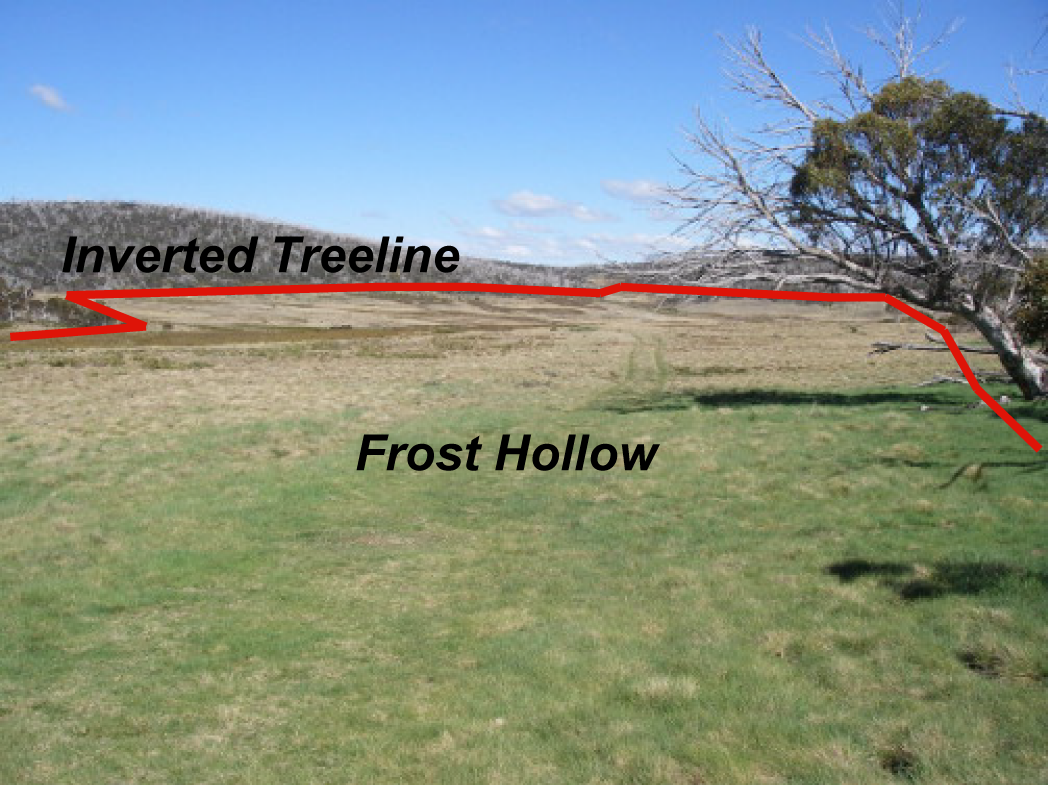
Long Plain, in Kosciuszko NP, is one of the many high frost plains between the Brindabellas and Kiandra, all mostly above 1300 metres. These are called frost hollows or cold air drainage basins and are naturally occurring treeless plains formed when cold heavy air drains into depressions along the valleys of creeks and rivers.
The pooling of frosty air suppresses the growth of tree seedlings and consequently the plains are bereft of trees, even the amazingly hardy snowgums. Instead, the snowgums and black sallees grow on the ridges above the valleys: thus an inverted treeline.
Inverted Treeline: Northern Kosciuszko
Long Plain is, as its name implies, a long plain. About 30 kilometres in length between Peppercorn Hill in the north and Bullocks Hill to the south. This is an immense open grassland drained by the upper reaches of the Murrumbidgee River or Murrumbeeja.
Its European discoverer was Charles Throsby Smith who, in March 1821, followed the Molonglo River to its junction with the Murrumbidgee, close to the present site of Canberra.
Seventy kilometres south-west of Canberra, the Murrumbidgee rises on Long Plain in an amphitheatre formed by the apex of the Fiery Range and the Gurrangorambla Range, near Peppercorn Hill.
From here it initially flows south-south-west following the line of the Long Plain Fault, a major structural feature extending from about 25 kilometres north of Brindabella, through Kiandra to just west of Mt Kosciuszko.
The plain is bounded by the Fiery Range to the west and, a few kilometres to the east, a line of 1600 metre peaks: Mt Nattung 1618m, Whites Hill 1597m, and Skaines Mountain 1601m.
Source: Dept. National Dev. Long Plain Geology
Long Plain’s open grassland vistas, a cultural heritage of grazing huts, interesting bird sightings and the possibility of spotting wombats, dingoes and brumbies make for a great walking and camping experience.
Any time between October and May is a good time to visit but access gates are locked in winter as snowfalls blanket these high plains. Other northern frost plains worth investigating include Coolamon, Tantangara, Gooandra, Boggy, Dairymans and Currango.
Long Plain: 1: 250K
An Overnight Hike into Hainsworth Hut
Friday
We had fine warm days and a coolish night for our March overnight trip into Hainsworth Hut. It is an easy walk following the Mosquito Creek Trail which obligingly contours along the lower edge of the sub-alpine woodland for most of the way. The woodland was typical snowgum-black sallee dominant with an understorey of shrubs and snowgrass.
Mosquito Creek Fire Trail
Conveniently placed logs provided opportunities to perch and spy on the local birds. The usual high country customers appeared in due course: Wedgetails, Red Wattlebirds, Crimson Rosellas, Ravens and Flame Robins among the more obvious.
Flame Robin
Although horse riding and mountain bike riding are permitted on the Mosquito Creek Trail we weren’t bothered by either. But the pyramids of horse poo, hoof marks and tributary brumby pads attested to the presence of horses, wild or otherwise. This was borne out in the number of entries in the hut log book mentioning brumby sightings and horse riders clip-clopping in from Ghost Gully or Cooinbil Hut.
Photo Gallery
Australian Alps Walking Trail marker.
Sunrays
Mosquito Ck Trail
Evening clouds over Long Plain.
Hainsworth Hut and Salewa tent
Treeline on Long Plain
The vast majority of visitors come in summer. I found my old entry from a Kiandra to Canberra trip in May years ago. This was the onset of winter and virtually no-one came through after our party until five months later, the spring thaw in October.
But our current trip was in early autumn and the weather was brilliantly fine but leavened with a sneaky alpine breeze. We pitched our two-man Salewa on the cropped grass and had a very comfortable night under canvas.
The general rule is that huts should only be used for emergencies in bad weather.
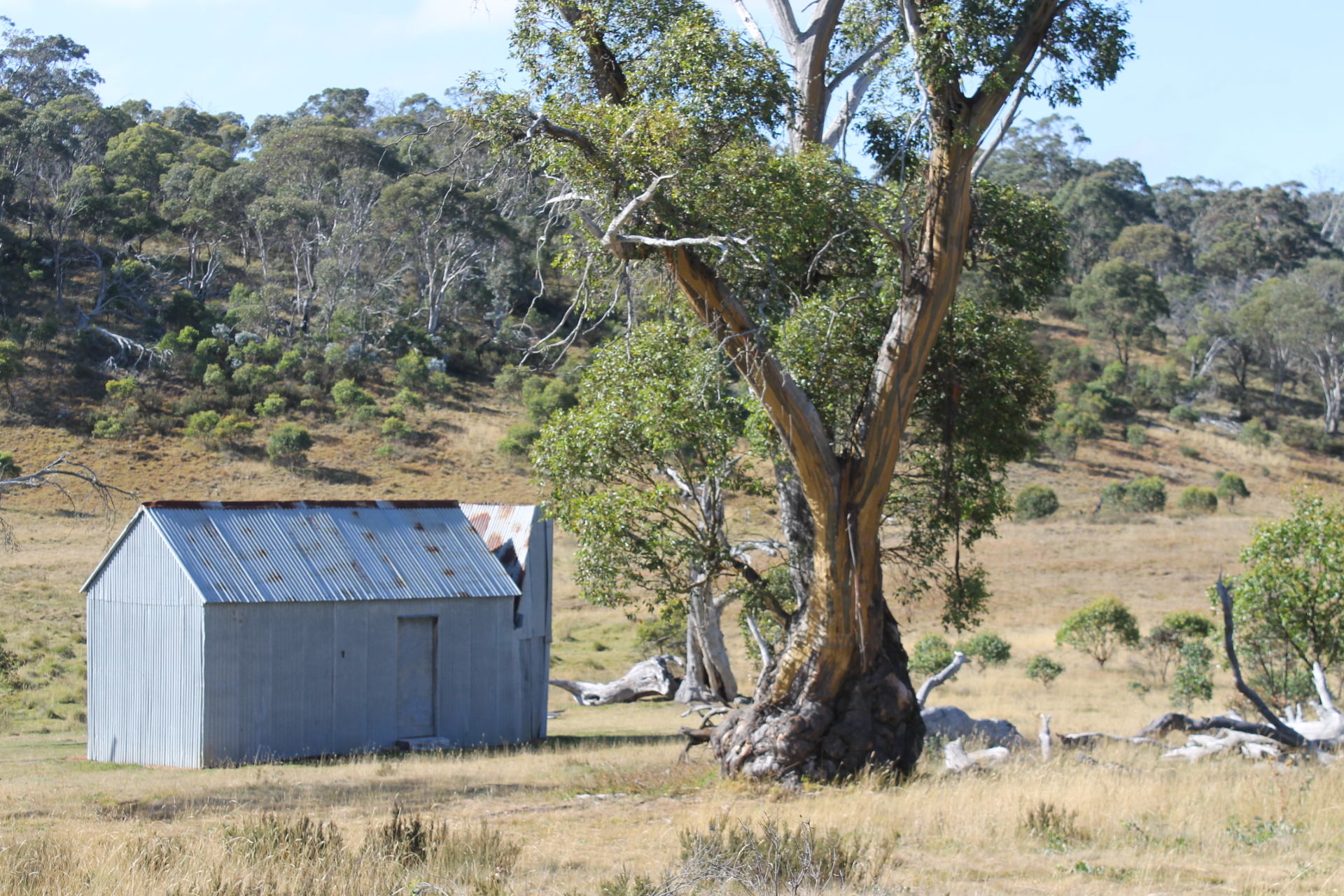
Hainsworth Hut on Dip Creek
Hainsworth was one of a string of grazing huts built along Long Plain. Others included Long Plain Hut, Millers Hut, Jannets(ruin), Cooinbil, Peppercorn (ruin), Little Peppercorn(ruin) and Pethers (ruin).
Klaus Hueneke in his well researched and interesting reference book Huts of the High Country estimates that there could have been up to 20 huts across the plain at the peak of grazing. For the mountain hut afficionados among you I can recommend books or articles written by Klaus Hueneke and the Kosciuszko Huts Association website.
Hainsworth or Landrover Hut is a simple two-roomer, a bedroom and a kitchen. It was built in about 1951 by Hainsworth and Corkhill as a summer grazing hut. The hut is clad in corrugated iron, has two doors and two hatch windows, an open fireplace and solid wooden floor.
Like most of the high country huts it is well sited: sheltered from westerly winds, close to a supply of water and timber, with magnificent views over grassy flats and a morning sun aspect allowing the hut’s inhabitants to thaw out. Hainsworth Hut has an excellent location overlooking the grassy flats of Dip Creek.
Dip Creek below Hainsworth Hut
Miles Franklin: The Author.
Miles Franklin’sChildhood at Brindabella is recommended reading for all high country enthusiasts like myself. Stella (Miles) Franklin was born at Lampe Homestead, a grazing property at Talbingo near Tumut in 1897. She went on to write 21 Australian books. Miles Franklin spent the first ten years of her life at Brindabella only 50 kilometres to the north east from Hainsworth Hut. Childhood at Brindabellais an excellent snapshot of the life and the landscapes of Northern Kosciuszko and the nearby Brindabella Ranges at the turn of the 20th century.
Miles Franklin Memorial, Talbingo, NSW
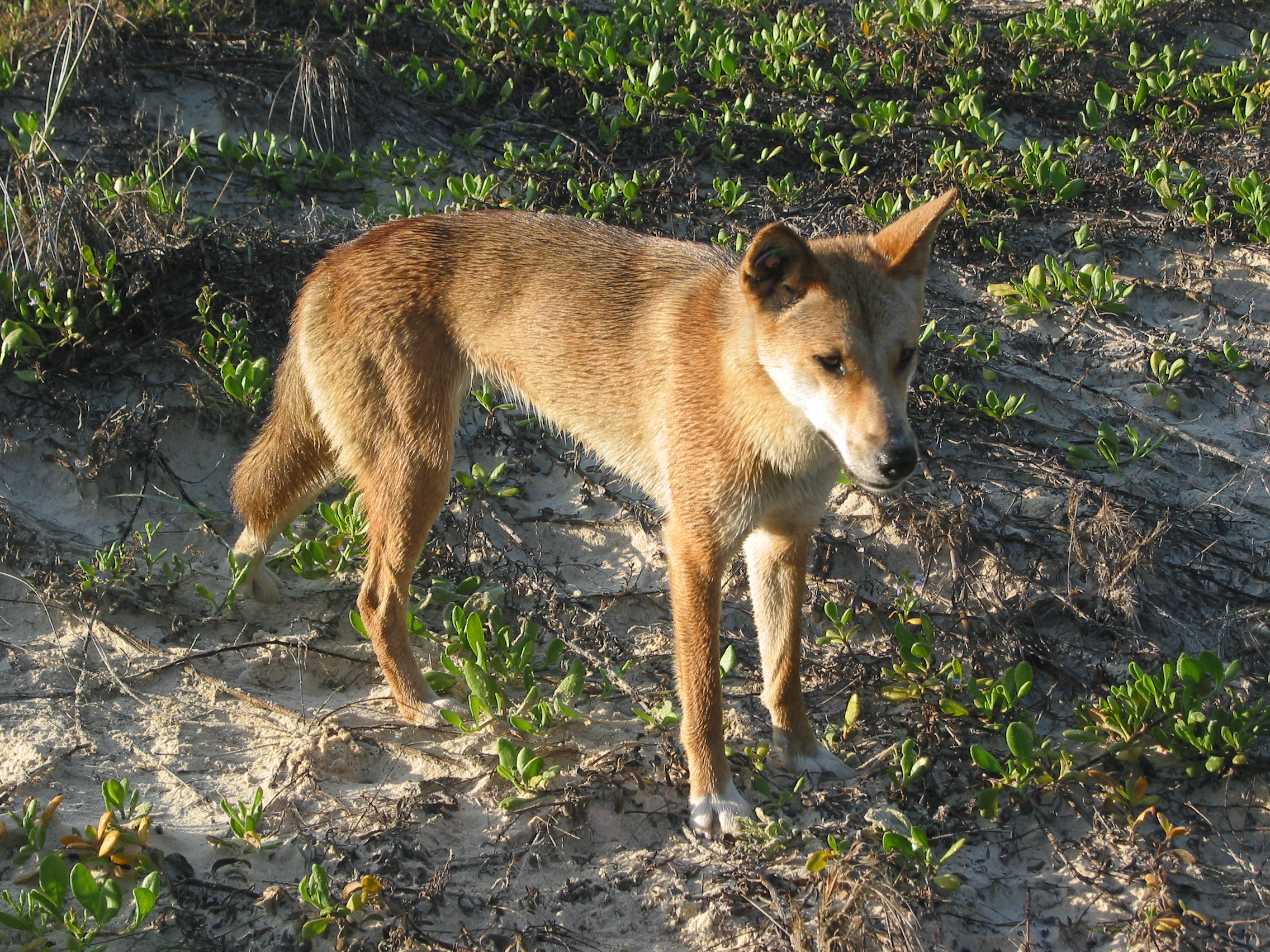
Sixty years ago the creek flats below us would have been alive with grazing sheep. A record in the log book by Bill Hainsworth’s daughter noted that up to 3000 sheep would graze around the hut and its environs. But we had to content ourselves with the lone fat and prosperous dingo that cruised along the treeline opposite our vantage point in the doorway of the hut.
The Alpine Dingo
We watched for quite a while as it went about its doggy business scoping out various burrows and tunnels. Judging by the prevalence of rabbit burrows, our dingo would have no difficulty in getting a decent feed for tonight.
In all my walks in the high country I have had only two previous encounters with this splendid apex predator, a subspecies of the grey wolf. My dingo bible, Laurie Corbett’s The Dingo in Australia and Asia, says that the alpine dingoes are a distinct subspecies, one of three in Australia.
They feast on rabbit, wallaby, wombat with the occasional brumby foal thrown in as a special treat. They are actually quite lazy hounds, rarely travelling more than two kilometres a day and their territories are small ellipsoids, with the long axis only twelve kilometres in length.
Pure bred Dingo.
On dusk just as we were drifting off to sleep I heard an ever so light drumming of hooves outside the tent. I peered out through the Salewa’s nifty little plastic window. Below, on the creek’s edge, a mere hundred metres away, a solitary brumby drank from Dip Creek.
Brumbies
In Australia, non-domestic horses are generally known as either brumbies or wild horses or feral horses. The term brumby is attributed to James Brumby, who released his horses to run free on his land in NSW when he was transferred to Tasmania in the 1830’s.
There is no doubt that horses have played an important part in Australia’s recent history as they have been involved in exploration, mining, racing, transportation, grazing and droving, and as part of the mounted police and Australian Light Horse Regiments.
Photo: Peter Fowler:Brumbies in Northern Kosciuszko
So for most people a brumby sighting is always exciting. Australians have a great emotional attachment to horses, and I can relate to this. But the hard reality is that brumbies are feral horses, with the same status as foxes, cats, goats, deer and pigs.
Thus, ecologically, they have no place in these fragile alpine ecosystems. In the Australian Capital Territory, Western Australia, Northern Territory and Queensland they are culled, usually shot from helicopters, but in New South Wales and Victoria herds of these hayburners from hell cavort over the snowgrass plains with seeming impunity: brunching on the juiciest wildflowers, carving out innumerable tracks through the scrub and pugging alpine streams and swamps with their hooves. Numbers in Kosciuszko are have been well over 19,000, and were escalating each year.
In 2023 the Australian Government’s Threatened Species Scientific Committee warned that feral horses could be a crucial factor in the final extinction of six critically endangered animals and two critically endangered plants.
A recent approach adopted by the NSW Parks Service has been trapping the brumbies then removal from the park. Not all that effective as I have observed from my extensive walks in Kosciuszko.
Culling of feral horses started again in October 2023, with over 5,539 killed by aerial shooting. Another 427 were removed by trapping, rehoming and ground shooting. This is the first time that more horses were removed than their annual population growth.
Their days appear to be numbered.Under NSW legislation, the government must reduce the number of feral horses in Kosciuszko to 3000 by 2027. Still too many.
Superfically, it seems to me that trapping is a reasonable solution, in that it balances conservation of alpine ecosystems and the desire on the part of horse lovers to maintain their high country grazing heritage. However, numbers removed by trapping are very modest. Insufficient to keep up with natural increase of brumby populations. A great read about all these issues can be found in Australian Geographic Vol 130.
Brumby Trap on Cascade Trail
Saturday
Saturday dawned fine and cool. Ideal conditions to putter back along the Mosquito Creek Trail to our ute, still standing unmolested under a grove of shady snowgums at Ghost Gully. After a gourmet meal of crusty bread, cheese, cheesy Ched biscuits and lemon barley cordial we made tracks for the Long Plain Campground.
Long Plain Hut
The Long Plain Hut and Campground
The hut occupies a beautiful spot in a stand of gnarled old snow gums and sallees, overlooking Long Plain.
It is accessible by 2WDs and has a day use area and two very pleasant low key campgrounds; one for car camping and one for horse camping. The spacious horse camp, on a small knoll, has its own set of horse yards with a stream nearby. This is where we camp.
Campsite at Long Plain Hut
Unregulated grazing started on Long Plain as early as 1830 and by 1900 there were 22 large snow leases in the high country. In 1909 Arthur Triggs of Yass leased a big chunk of the plain, about 28,300 hectares.
Later, when the lease was subdivided, a Dr Albert Campbell of Ellerslie Station, Adelong obtained several thousand hectares of the old Long Plain Lease. In 1916 he had this sturdy weatherboard grazing homestead built by Bobby Joyce. The timber was milled at Jack Dunn’s sawmill at nearby Cumberland Mountain and drayed to the site by Peter Quinn of Kiandra.
Like nearby Coolamine Homestead, Pockets Hut and Old Currango, Long Plain is a far more substantial structure than most of the pokey summer grazing huts.
It is a massive 13 metre x 7 metre building consisting of a central hall, four large rooms clad with tongue and groove, four windows, a partly-enclosed back verandah and two fireplaces. During its first winter the shingles on the roof split and were eventually replaced by corrugated iron.
It was variously known as Campbell’s, Dr Campbell’s, Oddy’s and Ibbotson’s, depending on who occupied the hut. The final occupants were Jessie and Fred Bridle, fencing workers who lived in the hut in the 1960’s.
Long Plain: Rabbit Trapping and Gold Mining
Long Plain was also the focus for rabbit trapping and shooting as well as gold mining. Rabbit trappers lived in the Long Plain hut during the depression years of the 1930s when rabbits had reached plague proportions across much of Australia. Rabbiting provided a source of income during the depression.
Source: Phyllis Dowling Collection. Rabbit skins drying on verandah of Long Plain hut. Circa 1939.
Another activity on Long Plain was gold mining. Joseph York worked a small mine just to the north of Long Plain hut until his death in 1898.
Later operators of the mine were Tom Williams ( in the early 1900s), Tom Taylor and Bill Harris in the 1930s. These pioneers are remembered in the naming if two creeks just north of the hut: Yorkies Creek and Taylors Creek.
Reading:
Australian Alps Liaison Committee: Explore the Australian Alps. 2007
Green, K and Osborne, W: Field Guide to Wildlife of Australia’s snow-country.
Hueneke, Klaus: Closer to Heaven: Aust. Geog.93.
Smith, B:Dingo relationships:Wildlife in Australia.Spring 2009.
The 130 kilometre, 10 day, Kiandra to Kosciuszko walk is the premier alpine walk of mainland Australia. It traverses the highest and most scenic of our subalpine and alpine landscapes, all of it above 1500 metres.
While it is, for the most part, a thoroughly enjoyable walk, it is very exposed. Summer conditions are generally benign but even a beautiful summer’s day can change, with storms, sleet and snow sweeping over in the space of a few hours. Being caught out in a summer thunderstorm on the Main Range is an experience I recommend you avoid.
Map of our hike from Kiandra to Mt Kosciuszko on the Australian Alps Walking Track.
Kiandra to Kosciuszko was originally conceived as a ski touring route in July 1927 between the Kiandra gold fields and Perisher Valley’s Kosciuszko Hotel built in 1909. This was accomplished in three days by four members of the Ski Club of Australia.
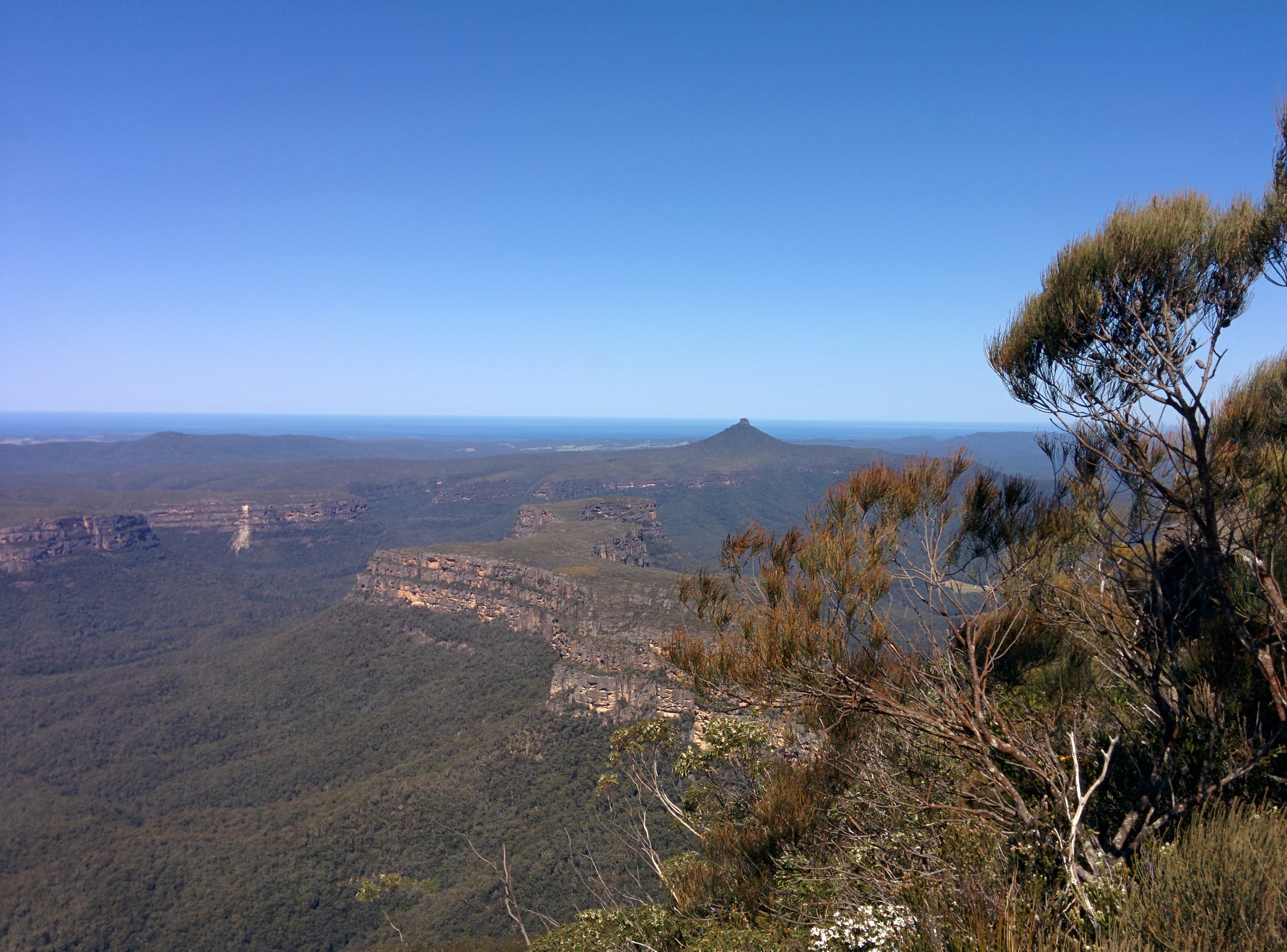
The modern bushwalking route which we followed was, with some off-track variations, basically along the line of the Australian Alps Walking Track (AAWT) and included climbs of some of Australia’s highest peaks:
Jagungal: 2061 m
Gungartan: 2068m
Anderson: 1997 m
Anton: 2010 m
Twynam: 2196 m
Carruthers: 2145 m
Townsend: 2209 m
Mt Lee: 2106 m
and the highest of all, Kosciuszko: 2228 m.
As well, it traverses the very scenic and open alpine ridges of the Kerries and the Rolling Grounds. My long suffering and ever helpful companions on this high country adventure were Sam, John, Lyn, Joe, Ross and Linda.
They may have been disconcerted at the cold, wet and windy conditions at our Kiandra trail head, but if they had any thoughts of abandoning ship and returning to Canberra with my son Alex, they kept quiet and wandered off disconsolately into the damp gloom.
A cold and wet start from Kiandra.
Photo Gallery: A selection of photos taken by fellow walker Lyn Hewitt:
The Weather: Kiandra to Kosciuszko Hike
Overall enjoyment of this extended 10 day walk was always going to depend on the vagaries of the weather. Happily for this leader, we got very lucky. While planning the walk a check of Snowy Mountains online climate statistics suggested eight rain days for November, with average falls up to 150 mm along the Main Range.
Anticipated average temperatures on the Main Range were maximums of 12°C and minimums of 2.6°C. Perfect temperatures for hiking.
As it turned out the only difficult day was our first. A salutary awakening for our high country new chums.
As we popped out of a cosy people mover at Kiandra, freezing drizzle (6°C) whipped into our faces, propelled along by 40 kph wind gusts. By my reckoning a wind chill temperature of about -8°C.
Welcome to high country bushwalking. But hey, no swarms of those infernal biting horse flies, aka Vampire flies aka March flies that have plagued us on previous high country walks.
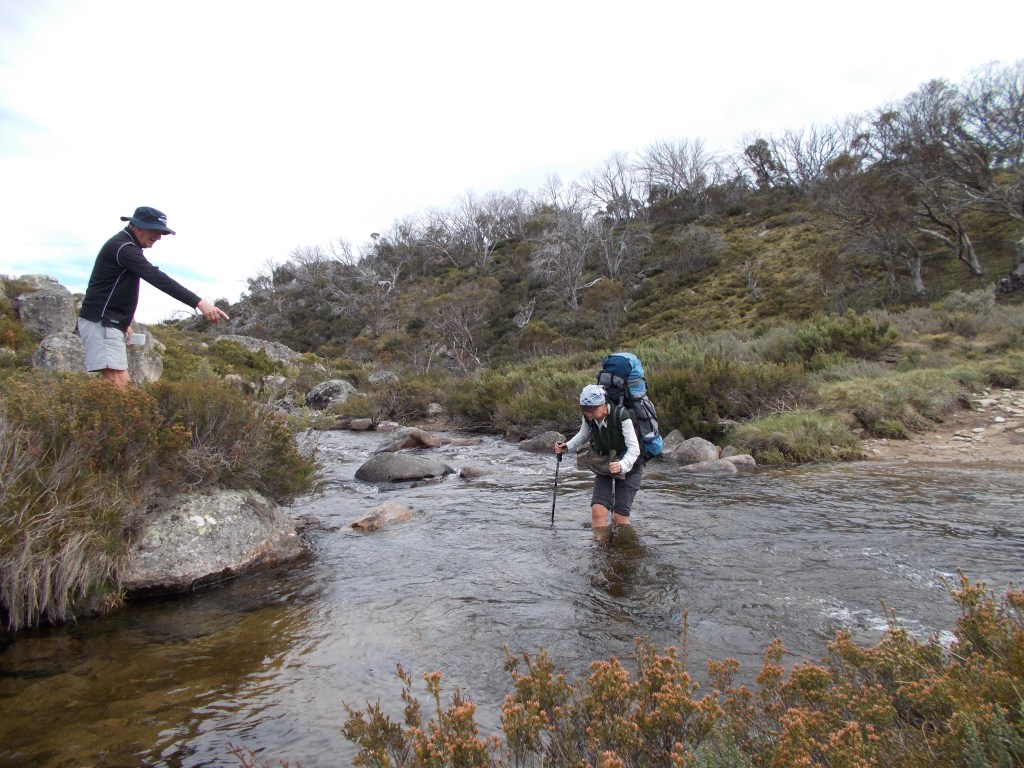
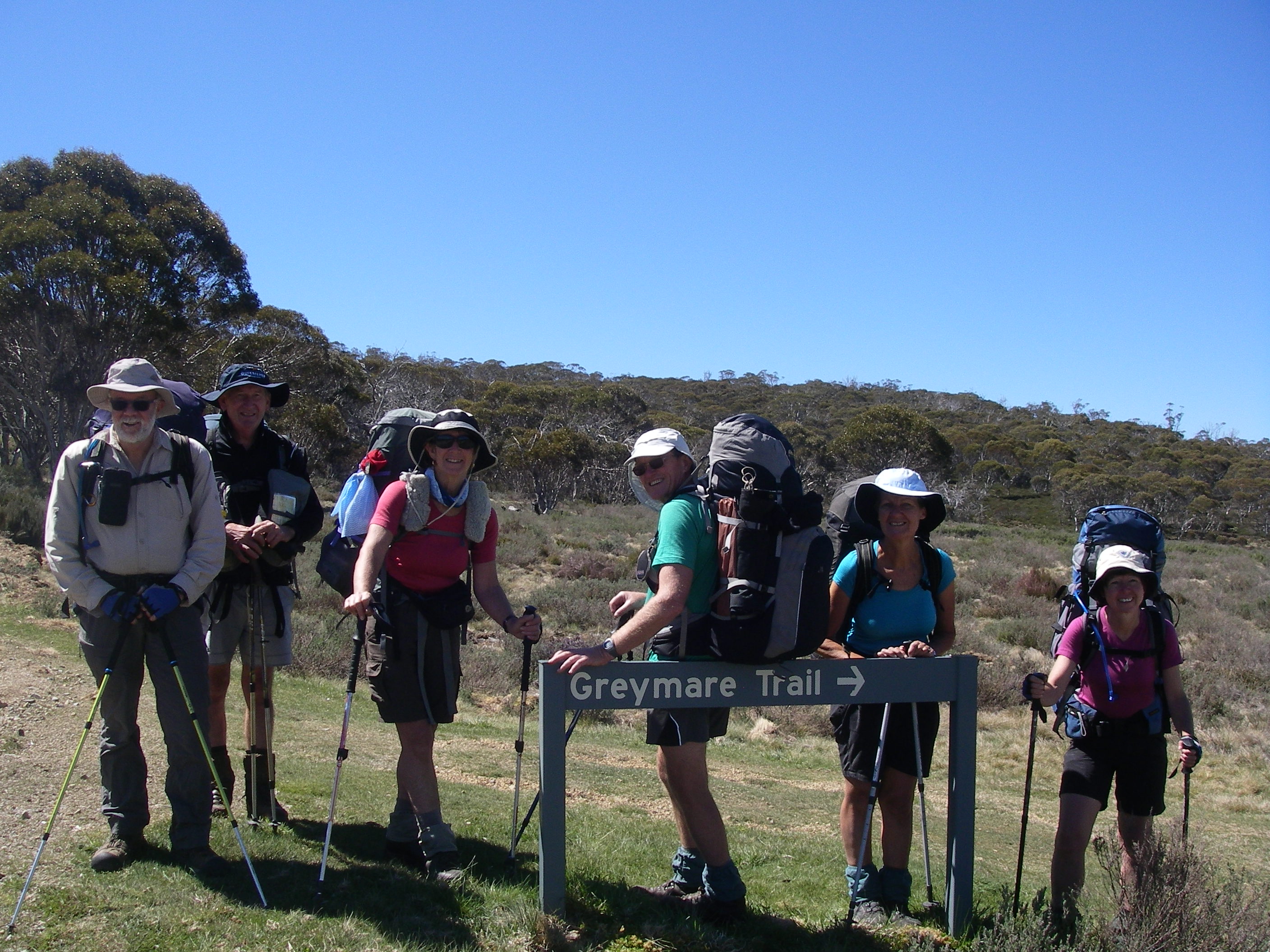
Still friends.. on the Grey Mare Trail
By way of a total contrast, in early December 2006 on an earlier trip, we started at the same Kiandra trail head with temperatures hovering in the low thirties, gusting northerlies and an enveloping smoke haze from bushfires raging south of Kosciuszko. The area has about 100 days annually of high to extreme fire danger and is one of the most fire prone areas in the world.
Vast swathes of Kosciuszko’s sub alpine zone had been burnt out in 2003. Since then the dominant snow gums (Eucalyptus pauciflora spp.niphophila) have been suckering vigorously from their lignotubers forming a dense woodland community that is sometimes difficult to push through.
This time frosts greeted us most mornings followed by superb walking conditions with very pleasant rambling temperatures averaging out at 12°C. A surprising number of large snow banks persisted as we climbed onto the high Kerries Ridge, the Rolling Grounds and Main Range. But these presented no real difficulties to our passage as the surface ice had usually softened by mid morning and was safe to walk over.
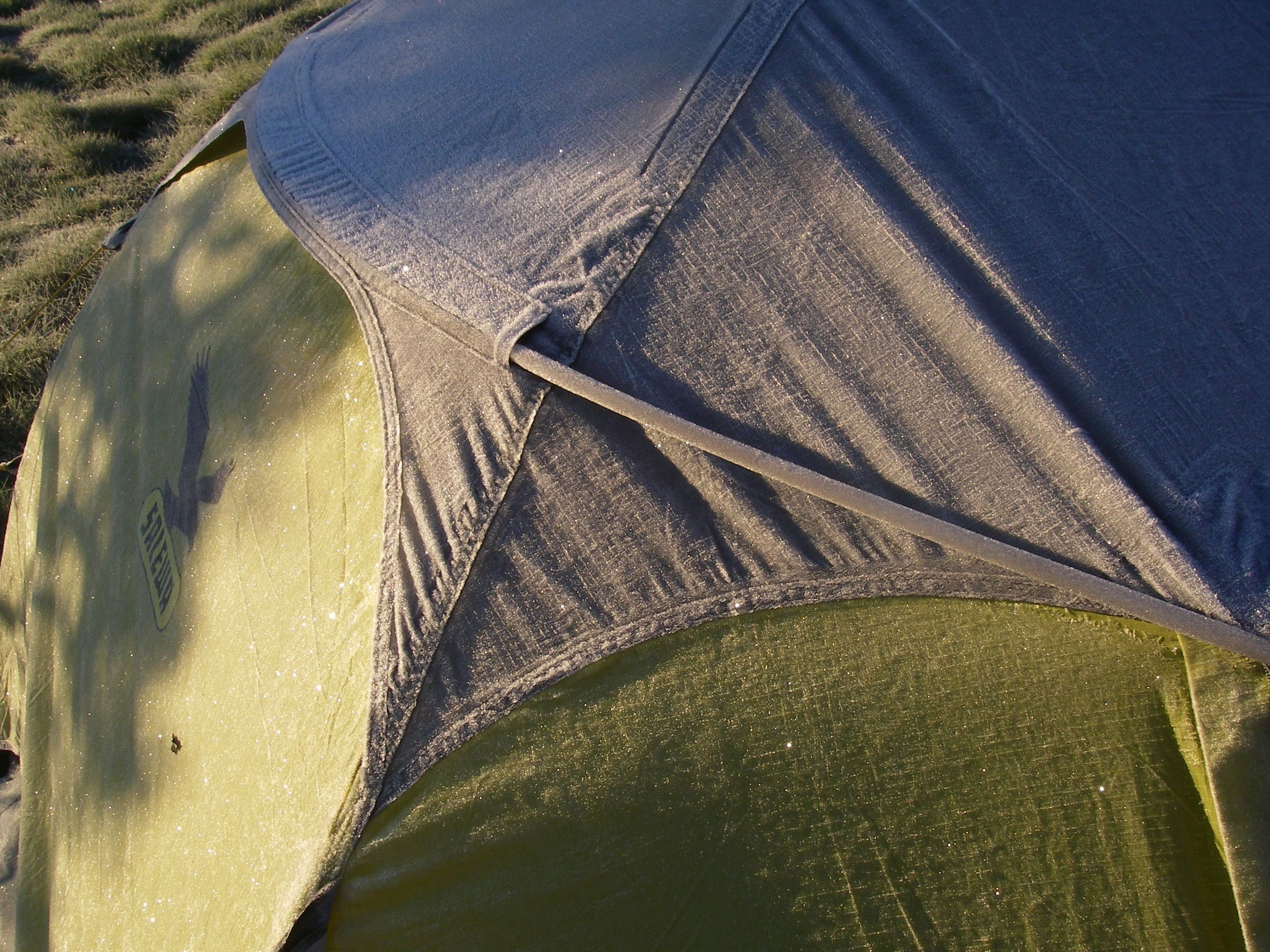
Early morning frost on our tent.
Our penultimate day along the crest of the Main Range was a tad problematic. Although conditions were fine and clear, blustery westerlies ripped over the tops gusting up to 75 kph (severe gale). Nowhere to hide in this lot and certainly no possibility of erecting tents.
Surprising as it may seem, I had a plan. A drop into Wilkinson Valley for our overnight camp or as a last resort, a long detour to Seamans Hut. The decision made easier for me by four young throughwalkers who claimed that conditions were infinitely calmer in the Wilkinson. Not quite, but reasonable enough behind some granite boulders.
Clothing Requirements & Hypothermia : Kiandra to Kosciuszko Hike
I was conscious of the reality that even in summer there have been cases of hypothermia or exposure in Australia’s high country. I was hiking with Queenslanders, a little inexperienced in high country weather conditions. Just in case you think that talk about hypothermia is a bit overblown, read this comment from theBushwalking Australia website about a ‘summer’ experience:
“I was caught out the first time I camped up on the Main Range (just under the Abbotts, on the Wilkinson Ck side – Christmas morning I woke up to strong winds, thick cloud and heavy snow. By the time I crossed the creek the stuff was six inches deep. By the time I reached Rawson Pass, more than half the walkway was hidden by a foot of snow; much deeper in places. It was snowing on and off all day, even in Thredbo, but even while I was walking out and down, there were people going up on the chairlifts in shorts and t shirts.”
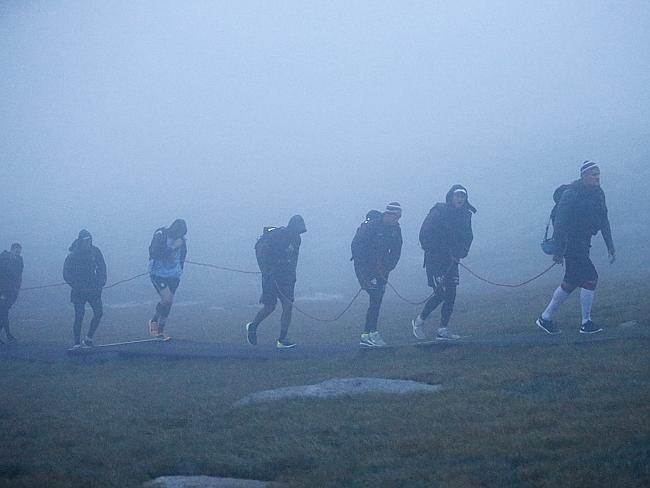
Still not convinced? How about this Manly Sea Eagles summer boot camp at Thredbo one month after our trip when a 25 kilometre hike ended with a trainer being shipped off Mt Kosciuszko with a serious dose of hypothermia. A storm generating a wind chill of -10°C swept in and the hike was called off after only seven kilometres. To quote one player:
“If we didn’t leave we would have got smashed and there is no way we would have survived”.
Apparently even designer Manly Sea Eagle footy shorts, socks, skins, caps and rain jackets weren’t up to this job. Perhaps the final word should go to one player who described the experience as“…6 hours of hell.”
Hypothermia is entirely preventable, needing appropriate food and clothing. Members of our party ferried along boat loads of clothing for layering: typically thermal undergarments, fleece coats, rain jackets, rain pants, beanies and gloves.
To my mind the jury is out on non-proofed down jackets: I prefer a thick windproof polar fleece jacket if conditions are going to be cold wet rather than cold dry. Add to this a good quality -5°C sleeping bag and you will sleep snug. Mostly.
For several nights I bunked down in my sleeping bag with four top layers, a beanie, thermal longs and rain pants to stay snug. But when caught out in the wet cold stuff, my advice is: head for the nearest hut.
Well rugged up walkers on Gungartan
Huts: Kiandra to Kosciuszko Hike
Given the potential for bouts of foul weather I arranged overnighters near old grazing/mining huts each night, until the Main Range, where there are only two shelters. Neither of these Main Range huts were on our line of travel .
Mountain huts in Australia are dingy and basic but all provide a fireplace or cast iron stove and firewood; great bolt holes in an emergency. We always cut our own firewood using bush saws and Joe stepped up as chief stoker to ensure a toasty fire every ‘hut’ night.
Gathering firewood was a group imperative and everyone fanned out from the huts bringing back cart loads of firewood. John even clambered up into dead snow gums, bush saw in free hand to harvest the larger limbs.
On some evenings, meals over, fire banked, we settled in for some reading or an evening of TED on the Trail presented by Sammy and Lyn. Health lectures on creepy diseases that you wouldn’t wish on your worst enemy.
On our north-south traverse we pulled into Four Mile Hut, Happys Hut, Brooks Hut, Mackeys Hut, O’Keefes Hut, Derschkos Hut, Grey Mare Hut, Valentines Hut, Mawsons Hut and Whites River Hut.
Much of the upkeep and restoration of these huts is done by various ski clubs and the Kosciuszko Huts Association whose website has a wealth of information about high country huts. Well done to all these volunteers.
Whites River Hut
Navigation on Kiandra to Kosciuszko Hike
Sections of the walk follow marked fire trails (Tabletop, Grey Mare, Valentines and Schlinks) where one would be hard pressed to get lost as long as you have a decent map and a modicum of spatial awareness.
Going off track, in poor visibility, is a different proposition. Thus walkers venturing out in mist or sleet/snow must be proficient navigators.
A map and compass is a must have and a GPS with preloaded maps and waypoints is invaluable in such conditions. It is worth knowing that your GPS batteries could fail in the cold.
In 2006 we got caught out on the Kerries Ridge in dense cold mist. My journal of the time records:
“Unfortunately the mist closed in again and our afternoon was spent slowly compassing in a pea soup mist from rock to rock…Brian and Andy fossicked ahead while Di and I bellowed directions to keep us on our compass bearing before they vanished from view…By 3.00 pm a GPS check located us still a disappointing two kilometres short of our objective, Gungartan. Brian made the sensible, inevitable decision to abandon ship and we exited downhill to the Schlink Hilton.”
Snow banks on The Kerries
For this trip, as leader, I hauled along ten laminated strip maps at 1:25000 scale as well as a 1:50000 Rooftop Map covering the whole of Kosciuszko.
My photocopied notes from the excellent Chapman guidebook:“Australian Alps Walking Track” while being the go-to guidebook, it reads south to north. As this took reverse deciphering I only dipped into the notes for the historical information and occasional navigation issues.
Ross and Joe had GPSs with hut locations as waypoints and, ever cautious, I had my Android phone preloaded with georeferenced and detailed 1:25000 map files.
All massive overkill.Having done the walk several times, a good set of maps and a compass should suffice.
Butfor the GPS geeks among us, help is at hand. Every square centimetre, every pixel of the AAWT has been waypointed, track logged, geocached, and route marked to within a whisker of its digital life and a number of apps and bushwalking websites provide this data free.
To reiterate: A good set of maps and compass and one GPS with spare batteries will suffice.
Geeking
River crossing on Kiandra to Kosciuszko Hike
As anticipated, the spring thaw peak flows had waned by early November. By my reckoning only the Tumut, Tooma and Geehi Rivers and maybe Valentines and Back Creeks would be a challenge. But all the crossings proved a doddle.
On arriving at a river Ross, John and Joe would wander thither and yon, upstream and downstream until a potential crossing was located. Then we would scuttle across, one after the other, leaping from boulder to boulder. Hopefully arriving at the opposite bank in mostly dry boots and socks.
Forward scout Joe negotiates the Valentine.
The Alpine Landscapes of Kosciuszko National Park
Our traverse of the Kosciuszko Plateau took in a major chunk of the Australian Alps Bioregion, the only truly alpine environment in NSW as well as the only part of the Australian mainland to have experienced Pleistocene glaciations.
Over our 10 days we started off by crossing the subalpine woodland landscapes of Kiandra, Happy Jacks Plain and the Jagungal Wilderness and then climbed onto the exposed alpine ridges of the Kerries, the Rolling Grounds and finally the Main Range.
The ‘alpine’ landscapes of the Australian Alps are obviously quite different to those of the Himalayas or New Zealand’s Southern Alps in that they are much lower, flatter, rounded and far more benign.
Kosciusko National Park is predominately a rolling plateau surface, the remnants of a low mountain chain resulting from the splitting of the Australian plate from Gondwana and Zealandia. Splitting is a much more muted tectonic force than the crustal collisions that are, as we speak, thrusting up the Himalayas and the Southern Alps.
The lack of significant alpine peaks is also attributable to the small extent of the Kosciuszko ice caps and valley glaciers at glacial maximums during the Pleistocene. That said, the winter snow fields of Australia cover an area of 11,500 square kilometres, said to be greater than the combined snowfields of the European Alps. A myth actually. But that applies to only a few months of the year.
Main Range landscape in summer.
Our first four days took us across subalpine woodland interspersed with open grasslands. This zone has a continuous snow cover for one to four months and minimum temperatures below freezing for six months. Typically it lies in a tight zone between 1450 metres and 1850 metres.
Here the mainly basaltic ridgelines and slopes are dominated by snow gum re-growth with a dense understorey of prickly shrubs. The snow gums are usually stunted, multi-stemmed and gnarled close to the alpine zone but are taller and straighter lower down where they form an association with another hardy eucalypt, the black sally.
Snowgum woodland
But the most striking feature of the subalpine landscape is the extensive treeless grasslands found in the valley floors. Immense treeless plains form because of the pooling of cold air which rolls off the high ridgelines and ponds in the valleys on cold frosty nights. These low points are known as frost hollows. Even the hardy snowgums can’t grow on these grasslands.
The valley floors often are also areas of impeded drainage hence can be wet and decidedly boggy. Camping there anytime but high summer is not recommended.
Happy Jacks Plain
The Alpine Zone : Kosciuszko National Park
The second half of our walk was truly alpine in the zone above the treeline, found above 1850 metres. A landscape of frost shattered granite boulders and alpine meadows, technically, tall alpine herbfields.
Where special conditions apply there are also small pockets of heath, bog and the windswept feldmarks. The tall alpine herbfields are botanically very rich, rivalling in diversity and showiness similar communities in the European Alps, Southern Alps and Rocky Mountains.
It was one of the great pleasures of this walk to amble through vast herbfields of Silver Snow Daisies, Yellow Everlastings, Snow Grass, glossy Yellow Buttercups and the conspicuous Australian Gentians.
Alpine flora: Pale Everlastings.
Over the last few days I was able to check out the glacial landforms of the Main Range. These are relics of the Pleistocene glaciations when an ice cap and valley glaciers covered a small area of the Main Range of about 20 sq km to a depth of maybe 100 metres.
In the area between Mt Twynam and Mt Kosciuszko it wasn’t difficult to identify obvious landforms like cirques, lateral and terminal moraines, hummocky moraine dumps, U-shaped valleys and glacial lakes.
But with the wind flapping our ears around there was no temptation to chase down the more cryptic features like glacial striations, polished rock surfaces, roches moutonnes and boulder erratics.
Saturday, November 1: Kiandra to Four Mile Hut: 6 kms.
Son Alex deposited us onto a vast treeless snow grass plain at Kiandra, our starting point for the 10 day walk, the Tabletop fire trail. All in all a desperate place on a wet and windy afternoon like this. Alex, returning to Canberra in the people mover, seemed positively chirpy about our predicament.
But my fellow walkers, although somewhat nonplussed by the cold and wet, are a keen lot and we were soon beetling on our way, following the Tabletop Trail as it wiggled its way up and over Dunns Hill.
A dark and stormy summer afternoon
Our first stop and overnighter was Four Mile Hut, several hours away. The Four Mile or Hughes Hut was our introduction to high country huts on this trip.
I’m guessing if you are visualizing huts from your diverse wanderings along The Overland Track or perhaps New Zealand or even those swanky mountain refuges of Europe, you would be badly let down.
Four Mile is a ‘one man’ hut built by Bob Hughes in 1937, the last active miner in Kosciuszko. Bob had been manager of the nearby Elaine Mine and when it closed he salvaged alpine ash tunnel timbers and flattened ten gallon drums to build himself a fossicking and rabbiting hut on Four Mile Creek.
The Four Mile Hut is Lilliputian, with a stove, a table, a wooden floor and room to sleep two at a pinch. Until 1981 it even boasted a box of gelignite under the bunk bed. But given conditions outside on our night at Four Mile, it proved attractive enough for Sam, Joe and Lyn to commandeer. Ordinary ranks… outside under the wildly cracking canvas.
Four Mile was burnt down in the 2019/2020 summer bushfire season. It has since been rebuilt 2024 by NPWS and Kosciuszko Huts Association volunteers. It was re-opened in 2024. Well done to all.
Drying at clothes at old Four Mile
Our arrival coincided with the drizzle lifting but dark clouds banked aloft and gusts of wind swept over the open plains of the Four Mile. We took advantage of the pause in the drizzle and put our wet clothes, socks and boots out in the brisk wind to dry.
Meanwhile Joe fired up the stove and soon had the hut warm and toasty to finish drying our clothes and defrosting numb fingers, toes and noses.
Sunday 2 November: Four Mile Hut to Happy Jacks Plain via Mt Tabletop: 15 kms.
A sub zero but clearing morning greeted us. The route from Kiandra to Mt Tabletop (1784m) along the Tabletop Trail is one of the oldest pathways in Kosciuszko National Park.
I know nothing of its use by the aborigines but it was followed in the 1860s by gold miners and since then by generations of cattlemen, skiers, bushwalkers and now the rumbling diesels of the Park’s service 4WDs.
It generally follows high basalt ridges at 1600 metres, part of Australia’s Great Dividing Range. Along its spine is an old fence line dividing the two old grazing leases, Nine Mile to the west and Broken Dam to the east.
Soon after Four Mile we crossed the headwaters of Nine Mile Creek. Both Four Mile and Nine Mile abounded in relics of gold mining. In the 1860s the Nine Mile was home to over 1400 miners, six stores, two bakeries, three butcheries, a jail, a blacksmith and, of course, four hotels.
Nearly 10,000 miners swarmed to the Kiandra Goldfields in 1859 to endure severe winter blizzards hunkered down in canvas tents. Some miners even constructed primitive shelters of sod, rocks and branches. The rush was short-lived, the shallow alluvial deposits worked out and attempts to find the main reef proved fruitless.
After the 1860 winter only 150 miners hung on. Even with down jackets, four season sleeping bags and tents, staying warm in the 21st century was still an issue.
Kiandra 1898
A kilometre on, we passed the headwaters of Scotch Creek where hydraulic sluicing from about 1860 to the 1920s had scoured the hillside in a final search for gold. Head races or water races collected water from the range and fed it into pipes fitted with nozzles. The hillside scar is still there, a 700 metres long, 100 metres wide and 15 metres deep.
Interestingly, I could see beds of lignite in the exposures. There are about 200 kilometres of water races to be seen all over this part of the country; faithfully following their own gently dipping contours to the sluice site. They were cut, not by pick and shovel wielding Chinese labourers but by bullock powered ploughs.
Onwards to Mt Tabletop or Tackingal. The name Cabramurra was given to the actual trig point on top, borrowed from the tribal area of Cabramurra from nearby Eucumbene River.
The track to Tabletop follows the line of an old race line which fed water down to the Nine Mile sluicing. Tabletop is a flat topped basalt mesa rising 150 metres in local relief, the remnants of a Tertiary volcano.
Tabletop and nearby Round Mountain are the likely sources of the lava that covered much of this part of Northern Kosciusko. Tabletop’s summit is just above the tree line and is a mass of wildflowers like Billy Buttons (Craspedia leucantha) and the ubiquitous Silver Snow Daisy ( Celmisia spp.) which we would see all across the alpine zone.
Billy Buttons
The view from the summit was fabulous: the Monaro Plains to the south east, Mt Jagungal (tomorrow) to the west and the snow capped northern Main Range to our south and a shimmering Lake Eucumbene off to the east.
The 25 kilometre long finger of Lake Eucumbene is part of Australia’s huge post World War Two Snowy Mountains Scheme designed to provide hydro power and to divert water for irrigation into the westward flowing Murray and Murrumbidgee Rivers.
The town of Cooma has a must see display of the construction phase of the scheme at the Snowy Hydro building. This all sounds hunky dory but the Snowy Scheme came at some considerable environmental cost to the eastward flowing Snowy River.
A little after three kilometres from Tabletop we swung off the trail and plunged downhill through dense snow gum woodland heading on a southerly bearing for Happys Hut, which has a reputation of being difficult to find.
Fortunately not this time, for after about one kilometre of scrub bashing, compass glued to my paw, I sighted the hut in a stand of snow gums on the edge of Happy Jacks Plain.
Happys, also known as The Dip, Montagues or Boots was built by in 1931 by W. Montague as a grazing hut. It has a verandah, corrugated iron walls and roof, a wooden floor, stone hearth and iron flue.
A cold morning at Happys Hut
Monday 3 November: Happys Hut to Mackeys Hut via the Grey Mare Trail: 17 kms.
Up at first light. Another frosty morning with a thick coating of ice on the tent. My little pack thermometer showing -2°C at sunrise. No surprise there.
I had on full rigging of thermals, shirt, long trousers, polar fleece coat, beanie and gloves. Fortunately Joe too had been forced out early and had conjured up a fire in the hut. With all this ice around our two middle aged delinquents, John and Ross, were soon engaged in an iceball free-for-all.
With tents down and hut cleaning supervised by the eagle-eyed hut commandant Sam, we were on the frog and toad by 8.30am; walking in brilliant sunshine and a pleasant but nippy wind.
Our heading was vaguely south east for three kilometres, across the hummocky snow grass of Happy Jacks Plain. Navigation was easy enough: keep Arsenic Ridge to the starboard and Arsenic Creek on the port and simply contour along the tree line until a crossing of Arsenic Creek is made just short of Brooks Hut.
The Brooks Hut or V Hut was torched in the 2003 fires but rebuilt in 2007.
The original hut was built by Cliff and Bill Brooks in 1945 as yet another mountain grazing hut. It stands at the edge of Arsenic Ridge overlooking the extensive Happy Jacks Plain, a much favoured summer cattle and sheep grazing area in days of yore.
New Brooks Hut
After a quick snoop inside we loped off on an old 4WD track towards Happy Jacks Road (2WD accessible). The angst of crossing Happy Jacks Creek by way of a ‘fallen power pole’ didn’t eventuate.
Instead we strode jauntily across by way of an impressive culvert. Too easy. At Happy Jacks Road we pulled in for a morning tea stop; notable for its lack of privacy for those needing a comfort stop on the these vast grasslands. But hey… none of those maddening horse flies to bite vast acres of naked flesh.
After a good feed and the pit stop it was simply a matter of following the Grey Mare Trail for the next two days, first to overnight at Mackeys Hut and then on Tuesday into the Jagungal Wilderness and Mt Jagungal.
Not a grey mare in sight, nor any brumbies. But first there was the small matter of a few piddling creek crossings at Barneys, McKeahnies and Tibeando Creeks. Good practice for the Geehi River and Valentines Creek crossings later in the trip.
Mackeys, Tibeando or Mackays was built in 1944-5 by Norm and Sam Mackay for their grazing lease. It is a classic mountain hut, a two-roomer with verandah, corrugated iron walls and roof with a timber floor.
The stone hearth was always a bit of a smoker but since the NPWS rebuilt the chimney in 2010 it draws much better. All grazing leases in Kosciuszko National Park have been revoked; the Mackeys lease in 1958.
In the days of the transhumance of sheep and cattle from lowland properties to the high summer pasture there were usually two musters. One at the beginning of autumn and a few weeks later a mop up of the strays still munching away in some hidden valley. Everyone chipped in to help with the final sorting of stock; usually finished on the lowlands.
All the mustering was done with horse and dog. The cattlemen have gone, the high plains now the province of the skier and the bushwalker and occasional Parks rangers. The ‘Man from the Snowy River’ way of life is no longer. But the spirit lives on in the resistance to brumby culls in Kosciuszko National Park.
Mackeys Hut
Tuesday 4 November: Mackeys Hut to Derschkos Hut via Jagungal: 18 kms.
A change of plan. With rain predicted on the morrow I decided to squeeze in the climb of Mt Jagungal today on our way to Derschkos Hut.
I have noticed that all this lot were very efficient packers: Lyn, Ross and Linda in particular, so it was an early 7.30 am start heading south on the Grey Mare on yet another fine morning.
Across a strongly flowing Doubtful Creek thence up to Farm Ridge. Nothing much is left of this alpine farm but the information board recorded the basics:
“Part of a substantial alpine grazing lease, Farm Ridge was constructed in the 1890s by A J Rial. At its peak the homestead formed the central focus point amid outbuildings and a set of sheep and cattle yards. There was a telephone connected to Adaminaby. Grazing ceased during the 1960s.”
Several kilometres on we ducked into the re-built O’Keefes or Bogong Hut, the original burnt down in the 2003 bushfires, but not before its masonite ceiling had been vaporized by a megafaunal resident possum.
The original hut was built by A.S. O’Keefe in 1934 as …yes, you guessed it…another summer grazing hut. As O’Keefe had materials carted in from Old Adaminaby (expensive) he cheapskated on roofing iron, so the old hut had minimalist eaves and a inconvenient tendency to allow snow to waft in during blizzards.
The new O’keefes Hut
But I was a man with a mission now. A demon bushwalker of the worst kind, a peak bagger. Jagungal or bust. J agungal is best accessed from its south west ridge, a 220 metres climb to Jagungal Summit at 2062 metres.
The Roof of Australia, not quite, but near enough for this neck of the woods. But my companions engaged in a gender based insurrection and while the males shuffled wearily off towards the summit the female of the species headed off at brisk trot for the luxury of Derschkos Hut some two kilometres to the north west on the Round Mountain Trail.
Jagungal is instantly recognisable from over much of Kosciusko. A reassuring landmark for bushwalkers and skiers alike. A beacon…. an isolated black rocky peak standing above the surrounding alpine plains.
It is Australia’s most northerly and easterly mountain above 2000 metres in height. Jagungal forms the headwaters of several major rivers: the Tumut, the Tooma and the Geehi. It was known to cattlemen as The Big Bogong but appears on Strzelecki’s map as ‘Mt Coruncal’, which he describes as ‘crowning the spur which separates the Murray and Murrumbidgee Rivers’.
The aborigines often called mountains in the alpine zone Bogong, indicating a food source, the Bogong moth. Europeans applied their own nomenclature to differentiate the ‘Bogongs’: Rocky Bogong, Dicky Cooper Bogong and Grey Mare Bogong.
Mt Jagungal
Unlike most of the other Bogongs whose granitic origins are revealed by their characteristic whaleback profiles, Jagungal’s summit is distinctively peaky. It sports a reptilian frill of vertical rock towers, some intact, other lying in jumbled heaps.
Jagungal is different because it is capped by amphibolite, a black igneous rock more dense than granite, formed by the metamorphosis of basalts. The basalts, on cooling, crystallise into massive hexagonal pillars creating the black rocky spine on which we were now standing.
Jagungal was ascended by Europeans in the winter of 1898 when a party from the Grey Mare Mine climbed it using primitive skis called ‘Kiandra Snowshoes’. Ours was a much less adventurous walk, but we still savoured our time on the summit.
Especially magnificent were the views south to the snow capped Main Range, four days away. Away to our north was Mt Tabletop and far, far away, the Brindabella Range in the Australian Capital Territory. It was so clear that we could even discern Victoria’s Mt Bogong on the far southern horizon.
I had noticed on a previous trip and again on our ascent today, huge raucous flocks of Little Ravens cawing around the steep summit cliffs. I had seen the same phenomenon on Mt Alice Rawson near Kosciuszko. Inexplicable at the time.
Recently, I came across an explanation. The Little Ravens gather to feed on Agrotis infusa, the drab little Bogong moth, found only in Australia and New Zealand. To escape the summer heat, Bogongs migrate altitudinally and set up summer holiday camps in the coolest places in Australia, the rock crevices of the alpine summits.
They come in millions from western New South Wales and Southern Queensland, distances in excess of 1500 kilometres, often winging in on high altitude jetstreams.
The Bogongs settle in crevices and caves, stacked in multiple layers, 17000 of them in a square metre, where they undergo aestivation ( pronounced east-ivating) or summer hibernation. The migrations seem to be a mechanism to escape the heat of the inland plains and they gather in the coolest and darkest crevices on western, windward rock faces. A tasty morsel for our corvid buddies.
With the ravens came the aborigines, from Yass and Braidwood, from Eden on the coast and from Omeo and Mitta Mitta in Victoria. All intent on having a good feed and a good time. Large camps formed with as many as 500 aborigines gathering for initiation, corroborees, marriage arrangements and the exchange of goods.
It is thought that advance parties would climb up to the tops, and if the moths had arrived they would send up smoke signals to the camps below. The arrival of the moths is not a foregone conclusion. Migration numbers vary from year to year. Some years they are blown off course and out into the Tasman Sea.
1987 was a vintage year, but in 1988 the bright lights of New Parliament House acted as a moth magnet, and the Bogongs camped in Canberra for their summer recess.Bogong Moth numbers appear to be declining rapidly. No-one knows why.
Aboriginal men caught the moths in bark nets or smoked them out of their crevices. The moths were generally cooked in hot ashes but it is thought that women sometimes pounded them into a paste to bake as a cake.
Those keen enough to taste the Bogong moth mention a nutty taste. Scientists say they are very rich in fat and protein; this diet sustained aborigines for months and the smoke from their fires was so thick that surveyors complained that they were unable to take bearings because the main peaks were always shrouded in smoke.
Europeans often commented on how sleek and well fed the aborigines looked after their moth diet. Edward Eyre who explored the Monaro in the 1830’s wrote:
“The Blacks never looked so fat or shiny as they do during the Bougan season, and even their dogs get into condition then.”
At summer’s end, with the arrival of the southerlies, moths, aborigines and Little Ravens all decamped and headed for the warmer lowlands.
As did Joe, Ross, John and I. Except that we headed to Derschkos where the girls had not been idle, as I had suspected they might have been. Neatly stacked outside was an immense heap of firewood. Derschkos is one of the best maintained and cleanest of the huts.
It was built by the Snowy Mountains Authority in the 1950s and occupied by Derschko, a SMA hydrologist. It sports double glazed windows, a pot-bellied stove, a living room and two bunk rooms. An irresistable lure for all but the hardiest of campers among us.
Derschkos Hut
Wednesday: 5 November: Derschkos Hut to Grey Mare Hut: 16.7 kms.
An easy day, goofing along the Grey Mare in cool, cloudy conditions. None of the predicted rain yet. As we cut through the Strumbo Range with only a few kilometres to the Grey Mare Hut a massive bank of mammatus clouds hung suspended above us.
The name is derived from the Latin: breastlike. Were we in for a heavy drenching? No, as it turned out. Mammatus appear more threatening than they actually are. They typically form on the rear side of a storm and associated cumulonimbus clouds and appear as the storm is weakening.
So our afternoon was beautifully fine. Plenty of time for an extended feed, collecting firewood, washing clothes and selves at the old cast iron outlet pipe from the gold mining days.
Mammatus cloud.
Grey Mare was a miner’s hut. Gold was discovered in the vicinity in 1894, but flooding of shafts ended the first sequence of occupance in 1903. A second phase of mining started in 1934 with an adit blasted to get to the reef. The ruins of a hut on the creek flats below dates from this period.
A final attempt to get at the gold came in 1949 when the present hut was built and the gold crushing plant was brought in. The bush around the hut is littered with all kinds of mining knick-knackery: a crusher, a steam engine, a huge flywheel weighing more than two tonnes and a shambolic tin dunny teetering over the abyss of an old mine shaft.
John, on one of his late afternoon strolls found even more mining bits and bobs strewn across the nearby landscape.
Old boiler at Grey Mare Hut
The six berth hut is of the high country hut vernacular but large and comfortable with a huge fireplace and the best hut views in the park.
From our doorstep we had views up the grassy valley of Straight Creek and peeking above Strumbo Hill, the crouching lion, Mt Jagungal. The original hut was built in 1934 but re-built in 1949 by Jack and Jim Bolton using some of the original materials. It is famous (or infamous) for its murals of nudes drawn by Rufus Morris in 1954-1955, now badly faded. Some say scrubbed out by wowser skiers and bushwalkers.
Grey Mare Hut
Thursday 6 November: Grey Mare Hut to Mawsons Hut via Valentines Hut: 10.8 kms.
Woke to heavy cloud banks in Back and Straight Creeks, but these had dispersed before we wandered off, at 8.00am. Today we would follow the Valentine Fire Trail for the eight kilometres to Valentines Hut. The flies in the ointment were a suspicious build up of rain clouds and the creek crossings of Back Creek, the Geehi River and Valentines Creek, all flowing strongly.
The crossings were slow going, what with spying out crossing points, then getting seven walkers across, teetering from boulder to boulder. But it all ended well… dry boots all round. Happy hikers.
Valentines Hut is decked out in a fire truck red livery which stands out against a grey skeletal forest of dead snow gums. Valentine’s is my all time favourite high country hut, decorated with a frieze of six valentine hearts. Hence the name Valentines Hut, but I’m not sold on this theory.
Another ex-SMA hut, this natty little four person weatherboard hut, maintained by a Ski Club, has a clean airy feel, with table, bench seats and a wood stove in its kitchen. A home away from home. Valentine’s has been painted inside and out, has ample windows and, for added creature comfort, a newish corrugated iron dunny close by.
Valentines Hut
From Valentines our line of travel was cross country over snow grass plains heading for Mawsons Hut, our next overnight stop and starting point for tomorrow’s walk across the Kerries Ridge, weather permitting.
My strategy of contouring around intervening hills was a mite slow and drawn out but I resisted pressure from the GPS brigade to go up and over.
The three-roomed Mawson’s Hut (1800m) was built in five days in 1929 by Herb Mawson, manager of Bobundra Station, not Sir Douglas Mawson, Antarctic hero, as generally supposed
Again it is typical of cattlemen’s summer huts built all over alpine and sub-alpine Australia: corrugated iron walls, corrugated iron roof, wooden floors and a granite fireplace. Mawsons now boasts a NPWS issue ‘Ultimate 500’ cast iron stove blasting out mega BTUs of hot air as Joe had already got its measure and had nutted out its many irritating idiosyncrasies.
Mawsons Hut
The view from the hut is pretty impressive. Across the valley to our west was Cup and Saucer Hill named for…its resemblance to an upturned cup placed on a saucer. To the north, Jagungal.
John drifted off for his usual twilight ramble and returned excited by his exploration of the snow grass plains and small waterfalls on the upper reaches of Valentine Creek as well as a sighting of those rabbits of the ranges… a herd of brumbies.
The Australian Geographic magazine Vol 130 has a comprehensive article by Amanda Burdon on the Australian brumby. Well worth chasing up if you are a member or can access a hard copy. In the same issue are photos by Jason Edwards.
Brumbies on Kosciuszko High Plains.
Friday: November 7: Mawsons Hut to Whites River Hut via the Kerries Ridge: 12 kms.
The Kerries Ridge is an outstanding alpine walk all above 1900 metres; we needed three days of fine weather to complete our traverse of the alpine zone of the Kerries Ridge, the Rolling Grounds and the Main Range.
And so it came to pass. Friday dawned fine and cool. I could shelve the wet weather plan. John led us up the access ridge that he had ferretted out the previous evening.
Kerries Ridge.
Stretching away to the south was the open rolling ridge of The Kerries. A magnificent walk across trackless wildflower meadows dotted with frost shattered granite boulders, alpine bogs, mountain streams and lingering banks of snow.
But this seemingly benign landscape can change dramatically in bad weather and walkers need to be reasonable navigators to find the safety of Mawsons, Schlinks or Tin Hut in a whiteout.
No such problems today: perfect weather, a happy crew, not too difficult navigation, plenty of rests and snowballs to throw at each other. We mooched along for several hours just enjoying the walking.
Ahead, Gungartan, a nunatak-like jumble of granite boulders and a trig station which had seen better days. At 2068m this is the highest point north of the Main Range.
Here we propped for lunch and enjoyed speccy views to Guthega, the Brindabellas in far off ACT, the Bogong High Plains in Victoria and directly opposite, The Granites and the Rolling Grounds; tomorrow’s objective. Weather permitting.
From Gungartan looking south to The Main Range.
We descended steeply onto the Schlink Trail and followed it for half a kilometre or so to Whites River Hut, for yet another night of throughwalking luxury.
White’s River was built in 1935 by sheep farmers Bill Napthali and Fred Clarke who grazed their flocks on the high alpine meadows of the Rolling Grounds in summer, retreating to protected Snowy River stations for winter.
Constructed of sheet iron, Whites has sleeping bunks, another NPWS ‘Ultimate 500’ cast iron stove, a wood store, a tatty table, bench seats and an outdoor dunny.
The hut is also the summer residence of the notorious Bubbles, and Bubbles Jnr, bush rats extraordinaire: legends of High Country Huts as walkers and skiers record their exploits of marsupial derring-do and innate native rat cunning at avoiding all manner of water traps and flying footwear.
As with our previous visits we spent much of the our evening ‘Bubbles’-proofing our gear; all rucksacks and food bags were then suspended on the nails belted into the huge transverse hut beams. Which seemed effective as there were no nocturnal disturbances from the Bubbles outfit according to my hut hugging companions.
Photo: Sam Rowe:Whites R. Hut.
Whites River was memorable for reasons other than rat attacks. Notably, it was our first sighting of other walkers. In the distance, late afternoon and heading north on the Schlink Trail, were five bushwalkers, probably heading for the Schlink Hilton to doss down for the night.
As our Kerries Ridge traverse had been such an outstanding day of alpine walking John produced a wee dram for a toast to “The Kerries”.
And finally, after many trips to the high country I was able to confirm that Little Ravens, after feeding all day on Bogong moths, don’t roost among the granite peaks and cliffs as I once supposed, but leave the high peaks just on dusk and fly down to the snow gum woodlands for their night’s kip.
Saturday 8 November: Whites River to Mt Anderson Saddle via the Rolling Grounds: 12 kms.
As always the troops were up early, bright-eyed and bushy-tailed and trackside by 7.00 am. Today would be our hard day, a distance of only twelve kilometres and a vertical ascent of about 328m… but give or take a few pretty major ups and downs.
And the wind was picking up. But the most problematic part was our traverse over the Rolling Grounds, which are described in the Chapman and Siseman guidebook thus:
“Known as the Rolling Ground it is a featureless region of huge granite tors and little vegetation. On a fine sunny day, this part of the Great Dividing Range is best described as bleak. What it is like in a blizzard is left to the imagination. The Rolling Grounds are notorious for difficult navigation in bad weather.”
Fortunately the day was fine and clear, but quite windy. By mid- morning near gale force westerly winds were gusting at around 50 kph. Still, in the scheme of Main Range walking, even these conditions were pretty much ideal for crossing these high level alpine meadows and bogs.
I thought our traverse over the Rolling Grounds was absolutely brilliant walking. The Rolling Grounds is a high altitude plateau above the tree line at 1900 plus metres, cold, exposed but spectacular. But a modicum of navigational care is needed to find Consett Stephen Pass, our access onto the Main Range.
It is said that The Rolling Grounds are so called because in the days of cattle grazing, stock horses would make their way up to roll in the numerous depressions between clumps of snow grass.
The Rolling Grounds
We exited The Rolling Grounds at Consett Stephen and began the tedious haul up to Mt Tate, 2028 metres and the start of the Main Range.
Our final leg of the Kiandra to Kossie walk was underway. But another three days of fine weather would be a bonus. Mt Tate was named after Ralph Tate, Professor of geology at the University of Adelaide.
From Tate’s trig summit we looked down to Guthega Pondage, Guthega Village and across the valley to the confrontingly named The Paralyser, The Perisher , Back Perisher and the oddly named Blue Cow Mountain.
Mt Perisher was named by an early pastoralist, James Spencer, who, while chasing lost cattle with his stockman, climbed to the top of the 2054 metre peak for a better view. On the summit he was met by scuds of snow and an icy blasting wind, upon which he commented: “This is a bloody perisher.” Later they climbed the adjacent peak and the stockman remarked,“Well, if that was a perisher, then this is a paralyser.
Onwards to Mt Anderson (1997m) and below its eastern flanks our overnight campsite in the Anderson saddle. A beautiful alpine meadow but bereft of any cover; sunny and exposed to the wind, but we made ourselves comfortable on our springy snow grass pads.
From Anderson summit we had unrivalled views over the tangled western fall of the Main Range; a good place to steer clear of. Just as Snowball Sam sensibly steered clear of John, Joe and I for the remainder of the day after initiating a sneaky underhanded snowball attack as we sat in quiet contemplation of the glorious view over our little campsite far below.
The Snowy Mountains are notorious for turbulent wind conditions, caused by air masses sweeping out of the Great Australian Bight, across the vast flat lands of southern Australia, and then uplifted over the western ramparts, rising 2000 metres in short order to wreak havoc on any harebrained bushwalkers who stray onto the range on a windy day. Fortunately Anderson saddle was relatively speaking, ‘protected’ and the tents stayed up.
Mt Anderson Saddle.
Sunday 9 November: Mt Anderson to Wilkinson Valley: 14 kms.
Woke to another fine day but a massive bank of cloud had gathered off to our east. I knew thunderstorms were predicted later but it was still fine and windy aloft on the Main Range and with this wind blowing the chances were that it should stay fine.
The walking pad, such as it was, disappeared intermittently under snow banks. So it was a matter of picking our way around the snow or punching steps across where it was soft enough to be safe. By 7.30 am the wind was really gusting and most of us were still swaddled in beanies, thermals and coats.
I had on two thermal layers and my windproof rain jacket. Meanwhile 14 kilometres to the south the Automatic Weather Station (AWS) at Thredbo Top Station recorded a maximum gust of 74 kph, but generally the wind trundled along at an annoying 30 + kph.
An old soil conservation track from the 1960s or 1970s can be followed from Mt Anderson saddle all the way to the Main Range tourist track.
Despite the wind it was still an outstanding alpine walk along Australia’s highest points: Mt Anton (2010 m), the long crawl up Mt Twynam (2196 m), then down onto the Main Range tourist track, back up to Mt Carruthers summit (2145 m).
Mt Carruthers was named after Sir Joseph Carruthers, a Premier of NSW, who instigated the construction of the Kosciuszko Road and the old Kosciuszko Hotel. We hunkered down for lunch behind a shelf of rocks overlooking Club Lake, one of the many moraine-dammed glacial lakes in Kosciuszko.
Ahead were Mt Townsend and Mt Kosciuszko, our final peaks. During the Pleistocene, small mountain glaciers ground their way down the valleys now occupied by glacial lakes. In recent historical times, during summer, huge flocks of sheep and later herds of cattle grazed these steep alpine slopes, fouling the pristine snow fed lakes below: Club Lake, Lake Albina, Hedley Tarn, Blue Lake and Lake Cootapatamba. The sheep and cattle were shown the door in 1963. Good riddens.
Lunch over we slapped on another gallon of sunscreen, a meteorological trigger, just like the butterfly flapping its wings in the Amazonian jungle, for as surely as day follows night the wind ratcheted up another cog.
Walking was now redolent of pacing the decks of Wild Oats11 on a bad day in Bass Strait… one was never quite sure where the feet would land.
The tourist track by-passes first Mt Lee then Mt Northcote (2131 metres). Between them is Northcote Pass, an area of windswept feldmark growing on shattered Silurian sedimentaries. This very specialised plant community covers only 28 hectares in the whole of Kosciuszko, hence is the rarest of its plant communities.
Somehow it survives on this cold wind blasted rocky ground. An information board allows interested walkers to identify feldmark plants: Alpine Sunray (Leucochrysum albicans spp alpinium), Coral Heath (Epacris gunnii), Feldmark Grass (Rytidosperma pumilum) and Feldmark Eyebright (Euphrasia collina spp lapidosa). But given the relentless wind no one wanted to play botanist.
Feldmark zone overlooking the Western Fall and The Sentinel.
Instead we pushed on, sidling along a narrow defile on the western flanks of Mt Northcote from which we had unparalleled views into Lake Albina, another moraine dammed lake. This was a popular destination for skiers and bushwalkers, but with the removal of the Albina Hut by the Parks service in the early 1980s together with several other Soil Conservation Huts, few of our latter-day trail-bound walkers bother to descend to Lake Albina.
Lake Albina. Moraine dammed lake
My original plan had been to leave the tourist track at Muellers Pass and climb over Muellers Peak thence for a highlight camp on the snow grass meadows around Alice Rawson Peak (2160 metres). But the wind put paid to this plan as there was little chance of tents withstanding the blast.
And so, acting on information given by four young hikers we dropped into Wilkinson Valley for our last night on the trail. Here we could shelter behind massive granite boulders which lined the edge of the former cirque valley.
Camping in Wilkinsons Valley.
Monday 10 November: Wilkinson Valley to Mt Kosciuszko via Mt Townsend: 14 kms.
An early 6.30 am start, rugged up but packless, to climb Mt Townsend, at 2209 metres, Australia’s second highest peak. After a bit of pussy-footing around with snow banks we scrambled up to the summit trig station.
Mt Townsend, named after a Surveyor General of NSW, has a very rugged skyline profile, suggesting that its glacial erosion processes were somewhat different to the more rounded whaleback Main Range peaks, like Kosciuszko.
I am reminded of the nunataks of Antarctica, those craggy peaks projecting above the Antarctic ice cap.
For my money Townsend is a far more spectacular mountain than Kosciuszko with a summit ridge of huge shattered boulders and its tailing spine of the Abbott Range drifting off to the south west.
Below, with 1600 metres of fall, and to our north was the Geehi River which we had crossed days ago at its headwaters. Over to the north east were the almost perpendicular walls of The Sentinel and Watsons Crags. Out to the south west the precipitious Western Fall Wilderness dropping abruptly 1500 metres to the Swampy Plains River. And there, across Wilkinson’s Valley, was Mt Koscuiszko, our final ascent.
Mt Townsend
Back in the Wilkinson Valley, a hasty pack up of tents and gear and we were off to Mt Kosciuszko, across more devilish snow banks just for good measure.
Mt Kosciuszko was named by the Polish explorer Count Paul Edmund de Strzelecki who spent four years travelling in Australia. In February 1840 Strzelecki climbed to the highest point of the Snowy Mountains and decided to name it after his fellow Pole, General Tadeusz Kosciuszko, who had distinguished himself in the American War of Independence and had led an uprising in 1794 against Prussian and Russian control of Poland.
Strzelecki gave two reasons for using the name ‘Kosciuszko’. Strzelecki pointed out that in Australia he was “amongst a free people, who appreciate freedom” hence the name of the Polish liberation fighter was an appropriate choice. Another reason he gave was that the profile of Mt Kosciuszko resembled the memorial mound that honours Kosciuszko on the outskirts of Krakow.
An interesting side line to this story is that Kosciuszko authorised the sale of all his Ohio (U.S.A.) property to buy freedom for slaves and provide them with an education.
Here we were then, perched on The Roof of Australia, one of Australia’s outstanding wilderness areas. The weather was fine and what could be more picturesque than the snow draped peaks of the Main Range under a clear blue sky? A megapixel and mobile phone heaven.
Mt Kosciuszko Summit.
Remember Clement Wragge? Back in 1897 a snow covered Kosciuszko summit was the scene of another great alpine adventure. Clement Lindley Wragge, meterologist to the colonial Queensland Government, convinced the pollies that the best place to investigate upper atmospheric disturbances in Australia was from an observatory on the summit of Mt Kosciuszko. Accordingly, Wragge and three offsiders stepped onto the summit on 1 December, 1897.
But Wragge’s bullock dray of alpine kit failed to appear, so our intrepid field party spent their first few days in an arctic purgatory. With no sleeping bags, no primus stoves and a thin calico tent they piled on all their clothes.
Eventually, days later, the bullocks hove into view and up went the arctic tent and the Observatory opened for business on Wednesday 8 December, 1897. On 11 December the wily ‘Inclement’ Wragge decamped, heading for the warmer climes of coastal Merimbula, leaving behind a Captain Iliff in charge of B. de Burgh Newth, Bernard Ingleby and Zoroaster, Ingleby’s pooch, a well-fed and rascally St Bernard .
It is claimed that the always sleek Zoroaster dug a secret tunnel to the expedition’s meat cache and his master was considerably exasperated and finally perplexed by Zoroaster’s reluctance to wolf down his daily ration of dog biscuits.
Clement Wragge’s Observatory 1897: Mt Kosciuszko. Graham Scully Collection
Two months later a howling gale flattened the arctic tent, blew most of the gear off the mountain, and forced our weather observers to crawl back to the safety of the Crackenback River. Wragge, ever the entrepreneur, weaseled £400 out of the Premier of New South Wales to construct a sturdy summit hut, which was duly completed in May, 1898.
Summit life was never dull. Despite the hardships of their location the observers reported enjoying the experience immensely. A stampede of visitors poured in on clip-clop style tours, on foot and even on bicycles. Our obliging observers greeted visitors, gave conducted tours, and demonstrated downhill snowshoeing (skiing).
But this was still a tough gig and the observers were as hard as nails. These were proper mountain men, not like the new age active wear bushwalking and MTB specimens who waddle up Kosciuszko these days.
Wragge’s previous berth had been as weather observer on Scotland’s Ben Nevis, the UK’s highest mountain. Every day for five months he would climb this 1344 metre peak to take readings, whatever the weather.
Wragge nearly lost his life on Ben Nevis when he tried to climb it during the worst gale of the 19th century. Not to be outdone, our Antipodean meterologists contended with 160 kph blizzards that rocked the hut.
Low clouds, charged with electricity, sent flames flying from the teeth of a cross-cut saw; freezing clouds settled over the summit for 26 days straight in June 1898; and the winds were so fierce that observers had to be tethered by a safety rope to save being blown down into the Geehi.
Eventually, in 1914, lightning stuck the hut and it burnt down, never to be rebuilt. An entertaining description of Observatory life was written by H.I. Jensen, who over-wintered in 1898.
And so on a windy Monday afternoon, 10 days since leaving Kiandra, seven malodorous walkers swung onto the Kosciuszko ski lift for the ride down to Thredbo, followed quickly by a priority Kosciuszko Pale Ale and hot potato wedges.
But the AAWT wasn’t finished with us yet. Just for good measure the final 500 metres took us up three banks of steep steps to the Thredbo YHA for hot showers, a soft bed and warm digs.
Thanks to my easy going and ever helpful fellow walkers. It was a pleasure to share with you the delights of Australia’s highest places.
If asked to name some of Australia’s World Heritage sites, most of us could probably stump up the Great Barrier Reef, Ningaloo, Fraser Island, the Blue Mountains, Kakadu, Shark Bay and the Sydney Opera House. One less well known site is the Washpool-Gibraltar Range World Heritage area, which is part of the World Heritage listed Gondwana Rainforests of Australia. Washpool-Gibraltar protects the largest area of unlogged coachwood (Ceratopetalum apetalum) forest in the world.
The Washpool-Gibraltar World Heritage Walk offers an easy four to five day, 45 kilometre wilderness hike through this magnificent landscape. The walk follows a network of 4WD tracks, roads and walking trails. Radiating from the main circuit walk are any number of varied side trips, a handy additional 20 kilometres for walk leaders who need to keep those eager beavers happily engaged.
And so, two vehicles bulging with eight bushwalkers and their assorted clutter docked at Mulligan’s Campground on a blustery Sunday afternoon in late August. My hardy and experienced walking companions were Chris, Sally, Eva, Leanda, Brian, Bernard and Peter. And they needed to be hardy given the unseasonable late winter weather.
The Landscape:
Gibraltar Range National Park is predominately a typical granite landscape ( Dandahra granites), the exposed tops of the New England Batholith, a massive granite intrusion that stretches 400 kilometres from Tamworth to Stanthorpe. Gibraltar averages about 900 metres in altitude and displays a mosaic of rainforest, dry sclerophyll forest and interesting sub-alpine swamps.
Gibraltar Range Landscape
Washpool National Park, on the other hand, is made up of basalt and metamorphics. It is clothed in rainforest and wet sclerophyll forest where Coombadjha Creek and Washpool Creek have incised deep gorges into the eastern escarpment of the Great Divide. Washpool contains some of the world’s best remaining stands of Gondawanan rainforests and was the site of significant conflict between loggers and conservationists in the late 1970s.
Perhaps the best description of the walk comes from an out of print NSW National Parks and Wildlife Service brochure: A Walk on the Edge of Wilderness:
” Dramatic and diverse changes in the landscape are typical along the walk. Dry sclerophyll forests, set amidst a broken collection of ridges and granite tors, surround a mosaic of sub-alpine swamps. In more dense country, lush rainforests safeguard the largest area of coachwood in the world. Within these ancient pockets of wilderness, waterfalls plummet from a lacework of streams and wild rivers. They offer refuge to a rich variety of wildlife including many rare and endangered species. In spring and summer the heathlands, swamps and open woodlands erupt in a colour display of wildflowers.
Against such a magnificent array of wilderness landscapes the Gibraltar-Washpool World Heritage Walk is an experience not to be missed.”
Camping Facilities:
Our first and last nights were spent at Mulligan’s Campground, very comfortable. It is decked out with a clean tiled amenities block, gas BBQs, a cavernous kitchen/picnic shelter sporting stainless benches, picnic tables, tap water, and ample pre-split firewood. Did I mention the cold showers? Not that anyone displayed any enthusiasm for showers with minimum overnight temperatures hovering between 0°C and 3°C.
The Shelter @ Mulligans
Washpool’s Bellbird Campground was similarly well appointed, lacking only the tiled amenities block, so no cold showers and flushing toilets. But if you are particularly well insulated you could duck off to have a swim in one of the many pools in nearby Coombadjha Creek. A word to the wise: remember to pack your food away every night. Even Bernard’s bombproof Bear Bag wasn’t up to the predations of the local nocturnals. Although the bag wasn’t ripped open, our furry friends mulched his cereals and nuts through the bag’s fabric. The kitchen shelters at Mulligan’s and Washpool were a godsend, dry refuges from unseasonal evening drizzle.
Shelter Shed @ Grassy Ck.
Grassy Creek is a wilderness camp but has the luxury of a picnic table, a fireplace and ample water from nearby Grassy Creek. Ten kilometres to the south, Boundary Falls Campground is more than adequate for hikers: picnic tables, long-drop toilets, fireplaces and firewood provided. Just be prepared to share it with four score and twenty Winnebagos.
Grassy Ck Campsite
When to go:
Much of the Washpool-Gibraltar walk is on high range and plateau terrain with an elevation of over 950 metres, consequently expect some cold wet weather. I was impressed with my walking crew: even the -11°C temperatures recorded earlier in winter or the rain bucketing down on the day before our departure had not deterred them. But reality gripped on the first day of hiking with westerly winds gusting up to 74 kph and the maximum temperature creeping up to a miserable 8°C. Maximums on the rest of the walk struggled to reach 15°C. Late August is typically dry and sunny with cold nights but we experienced the full gamut of weather conditions: sun, drizzle, wind and frost. Fortunately it stayed dry during the day’s walking and we had fires every night for warmth. No real hardship for this lot. Early September, wildflower season, is a good time to go.
Maps and other references:
Visitors Guide: Washpool & Gibraltar Range. (NSW National Parks and Wildlife Service).
J. Cavanaugh: Waratahs and World Heritage. (Wild Magazine, no.71, 1999).
DVD: Best of Australia: World Heritage rainforests of northern NSW. ( Aust. Geog.)
Q. Chester: Early warning. (Aust. Geog. Vol 91. 2008).
C. Twidale: Structural Landforms. ( ANU Press. 1971).
Map: Walks in Washpool & Gibraltar Range National Parks. 1:50,000. GDA94. This is an excellent PDF map available from Glen Innes office.
Map: World Heritage Rainforests of Nth NSW. 1: 850, 000. (Aust. Geog. Vol 91. 2008) .
The Walk:
Our walk was in an anti-clockwise direction beginning and ending at Mulligans Hut Campground.
Monday: Mulligans to Bellbird Campground via The Needles and Granite Lookout: 12 kms.
Reality gripped early Monday morning with the gusting westerlies and the daily maximum temperature creeping up to a miserable 8°C. Fortunately help was on hand, for, just on daybreak, Brian was already rattling around, stirring up our camp fire and dispensing mugs of steaming hot tea. Soon after 8.00 am we toddled off on our little adventure, pulling up a mere five minutes later at Mulligan’s Hut, a slab construction on the banks of Little Dandahra Creek. The building that remains is actually a set of stables with the original hut wiped out in the bushfires of 1964. Bill Mulligan was a business man who proposed a hydro-electric scheme in the Dandahra catchment in the 1920s. He hoped to use the hydro-electricity to power a copper mining operation at the base of the escarpment. Perhaps that says something about the rainfall regime of this area.
The climatic regime is influenced by the position of the two parks on the eastern fall of the Great Escarpment with some areas receiving 1200 to 1300 millimetres annually. Afternoon wind flows are often from the east coast, laden with moisture so that afternoon and evening drizzle/rain and thunderstorms are a feature of spring-summer weather patterns.
In the same area as Mulligan’s Hut was a memorial bench seat to Roly Paine. I first came across his name as co-author with Margaret Hodgson in our family copy of Field guide to Australian Orchids. Roly served for many years as Superintendent of Gibraltar Range National Park and later as a Publicity Officer for NSW Parks. He also became well known for his wildlife photos.
Our first major stop was at The Needles, six granite pinnacles rising to about 80 metres above the valley sides. Initially the track follows the original stock route used from the 1860s to the 1970s. It then joins an old logging track that accessed stands of valuable temperate rainforest. Softwoods from these stands were logged and sent down the range to ply mills at Grafton. The stock route was revoked on the declaration of the national park and the logging ceased at the same time. An aboriginal legend suggested that The Needles were six sisters who were turned to stone by the curse of an unsuccessful pursuer. An oft repeated theme in aboriginal mythology.
The rest of the morning’s ramble took us through rainforests and out to the Gwydir Highway thence to the Granite Lookout (1065m) for spectacular views of Mt Warning(1156m) nearly 150 kilometres NNE. Mt Warning or Wollumbin in the aboriginal language of the Bundjalung people, is the plug of the massive Tweed Shield Volcano, thought to have risen two kilometres above sea level and have had a diameter of 100 kilometres. It was named Mt Warning by Captain James Cook when he sailed along the northern NSW coast on 16 May 1770. But much, much closer to us I could see The Haystack (1160 m), which we would climb two days hence.
After a leisurely lunch hunkered down in the shelter shed out of the wind, we backtracked to Coachwood Drive and wound steeply down to our campsite in the Bellbird Camping area. Another five star home away from home, set deep in the rainforests of Washpool National Park.
Washpool National Park was declared a wilderness in 1985 but it had a long history of logging dating back to the 1800s when red cedars(Toona ciliata var. australis) attracted timbercutters with their axes, cross-cut saws and bullock teams. The late 1970s saw protest action from conservation groups to protect the Viper and Willowie Scrub, by then under pressure from a now highly mechanized forestry industry. Willowie being the largest undisturbed rainforest in N.S.W. as well as having the largest stand of unlogged coachwood in the world.
Tuesday: Bellbird Campground to Grassy Ck Campsite via O’Haras Gap: 10 kms and The Washpool Walk: 8.5 kms.
Another shortish day. After getting myself tangled up in some argy-bargy with the troops about the early starts we agreed on a civilised departure time of 8.30am for the remainder of the walk. But first, a not to be missed side trip on the 8.5 kilometre Washpool Walk. This is definitely the showcase walk for Washpool. It starts in warm temperate rainforest at about 800 metres and climbs through subtropical rainforest, wet sclerophyll forest before topping out in dry sclerophyll forest at about 900 metres.
This walkis a great introduction to the Gondwana Rainforests of Australia. When the Australian continent finally broke away from Gondwana about 50 million years ago, it had on board plant families and fauna that it shared with other southern continents of Asia, Africa and South America. Today, remnants of this Gondwanan Ark can be found in the rainforests of Tasmania, NSW and Queensland.
As a Queenslander familiar with subtropical rainforest, I was keen to see Washpool’s warm temperate rainforest. Typically it grows on poor soils and is characterized by relatively few canopy species with slender trunks lacking buttressing ( coachwood and sassafras). Large vines and epiphytes are present but not abundant. Large palms and stranglers are rare but small palms and ferns are a common feature of the understorey. The warm temperate rainforest usually occurs at altitudes of 450 metres to 1200 metres under a higher rainfall regime.
Another interesting find of this walk was remnant stand (about 10 trees) of the towering red cedars, untouched by logging operations. They had been found by Athol McKinnin and Don Running from the nearby Boundary Creek Sawmill in the late 1960s. These cedars were left because of the high royalties payable on them and the lack of volume market for red cedar.
We walked this circuit track in a little under three hours, taking in waterfalls and stands of red cedar but I would recommend spending at least half a day or more on this walk and staying an extra night at Bellbird.
Waterfall on Washpool Walk
Bellbirds aside, the star of the avain world for us was the Superb lyrebird (Menura novaehollandiae). Several were sighted and certainly their scratchings easily found. The lyrebird is known to most Australians by reputation. Few have seen them in the wild. But all Australians know that this bard of the bush can mimic a range of sounds including other birds, mobile phone ring tones, camera shutters, axes, chainsaws and motorbikes.
Noisy but much rarer, and a declared vulnerable species, is the Rufous scrub-bird (Atrichornis rufescens). which we did not see. Its range has been significantly reduced by logging, clearing and burning of habitat. Washpool-Gibraltar Range World Heritage area protects habitat for this elusive mountain dweller.
The Moogem Trail
The reminder of the day is spent winding up through rainforests and sclerophyll forest on the Moogem and North West Trails to O’Haras Rocks and O’Haras Gap (1002 m), an altitude gain of only 200 metres, but it seemed an eternity. O’Haras Rocks were a tad disappointing. This jumble of small granite tors was not the lair of some 19th century bushranger but merely a campsite for grazier John O’Hara who camped there with his cattle in 1873. O’Hara was looking for an easy droving route across Gibraltar Range to the east coast. Peter made full use of O’Haras Rocks for some impromptu bouldering.
Lunch at O’Haras Rocks
With showers threatening we raced on to the old gold mining area of Grassy Creek, possibly known as Deannes Prospect which operated as shafts and shallow pits from 1899 to 1902. Tents up, Peter and I went for a sniff around and found an abandoned shaft and other mining knick-knacks. Apparently there is an old stamping battery and boiler from tin-mining operations in the 1870s. I couldn’t find them but now, on reflection, I wished that I had tried harder. Grassy Creek would be brilliant in sunny weather but was a tad bleak in the inevitable drizzle that rolled in late afternoon.
What am I ? Found next to a small mine shaft.
Wednesday: Grassy Creek to Boundary Falls Campground via The Haystack and Duffer Falls: 12 kms.
A sunny start to the day as we continued along the North West Trail passing several sub-alpine swamps. These swamps or bogs are areas of impeded drainage where vast slabs of granite form an impervious layer, restricting the downwards flow of water. The bogs have comparatively few species, principally Baeckea omissa, Epacaris obtusifolia and Leptospermum arachnoides, all of which are highly restricted to these high altitude wetlands.
Sub-alpine swamp on NW Trail
After three kilometres we dumped packs and clambered up onto The Haystack (1160m), an inselberg from which we had views over the granite landscapes of Gibraltar Range to Old Mans Hat (1085m), off to the south east.
The Haystack on NW Trail
Our lunch stop was Duffer Falls. Possibly a reference to cattle duffing? Not to the three elderly gents seen creaking down the goat track to the base of the falls.
An old duffer ?
But my real reason for checking out Duffer Falls is that its western fall gives clear views of the Demon Fault. For you earth science buffs, I discovered from my favourite earth science blogger, that Demon is a transverse fault with a movement of about 17 kilometres in this vicinity, the eastern block moving south relative to the western block.
Demon Fault
And onwards to Boundary Falls Campground just in time for our evening dose of light drizzle. Fortunately Brian was able to work his old pyromaniacal magic and kept our camp fire ticking over. Boundary Falls Campground is the site of the old Ben Wade and Sons sawmill.
Our campsite @ Boundary Falls
Thursday: Boundary Falls Campground to Mulligans Campground: 17 kms.
Our final day on the track. Clear skies again. An easy walk through Gibraltar’s granite terrain following Tin Ore Creek Trail out of camp, across the Gwydir Highway, thence to the swampy Surveyors Trail and finishing along the Little Dandahra Creek Trail. The highlight of the day for me was the sighting of several platypuses frolicking in Little Dandahra Creek while we spent our lunchtime watching them and getting heaps of photos.
Yes, there is a platypus here. Somewhere.
By early afternoon we swung into Mulligans Campground. Our walking trip through this little known World Heritage site was over. But the drizzle wasn’t. Thank goodness for shelter sheds.
On a recent 15,000 kilometre road trip around Australia, Judy and I discovered the Ark on Eyre project on South Australia’s Eyre Peninsula. Eyre Peninsula has 1318 plant species, 107 reptiles and 40 mammal species. Many of these species are found only on Eyre Peninsula, making it a modern day “Noah’s Ark”. Unfortunately, 23% of mammal species have become extinct since the beginning of European settlement. At Cape Labatt, about 50 kilometres south of the village of Streaky Bay is a colony of the now rare Australian sea lion.
The Australian sea lion ( Neophoca cinerea )is one of the world’s rarest seal species and is Australia’s most endangered marine animal. It is also one of the cutest, having a face like a Labrador dog, floppy dog-like ears and hair rather than fur. Sea lions are endemic to Australia’s southern and western shores, living in small colonies in remote and mainly inaccessible areas, like Cape Labatt.
Cape Labatt is part of a rugged cliffed coastline, predominately limestone, rising to about 50 metres above the wild swells of the Great Southern Ocean. It is subject to a succession of cold fronts sweeping across the Great Australian Bight. We visited the colony on an overcast and squally winter’s day: so windy and exposed that our heavy ute rocked with each gust. Cape Labatt’s remoteness and exposure probably offers some protection to the sea lion colony and certainly deters camera toting visitors from getting too close and friendly. Fortunately Parks SA has built a viewing platform that provides excellent views down onto the colony removing any temptation to scramble down the cliffs onto the beach for that closer view.
Cape Labatt.
Directly below us, on a wind and surf swept outcrop of pink granite were about twenty sea lions. And further out in the breaking swells were another four, surfing and frolicking in the heavy conditions. Although ungainly on the land, in the ocean sea lions are excellent swimmers and divers. They feed close to the sea bed, at times diving to a depth of 300 metres. Their diet includes fish, squid, octopus and lobster. But, in turn, the young pups and weak sea lions are predated on by sharks, like the Great White Shark. So swimming near sea lion colonies is never an intelligent move.
Cape Labatt sea lion colony
The name sea lion originated with early mariners who saw the light-coloured “mane” of the mature males, the bulls. The bulls have brown hair with paler hair on their backs and necks. The smaller females are a silvery-grey colour with a creamy tummy. Sea lions have hair, similar to a dog, and don’t have the dense, soft fur of other seals. Thus sea lions were hunted for meat and leather rather than fur, so much so that by 1836 they were close to extinction. Even now the total world population may be only 10,000 and possibly just stable.
Australian sea lion
Population recovery has been hindered by deaths from entanglement in gillnets set for shark fishing. Fortunately, the Australian Fisheries Management Authority (AFMA) stepped in to save the sea lion. Gillnetting has been banned around breeding colonies and AFMA imposes closures in other areas when a defined number of sea lions have been killed there. Before the bans some 300 or more were killed each breeding cycle. Another factor in the population dynamics is the slow reproduction rate: 18 months to produce one pup. The pups are then still partly dependent on the mother’s milk for another twelve months.
It was a great privilege to see these animals in the wild. Parks and Wildlife SA and AFMA are to be commended for their management of this endangered species, hopefully pulling it back from the brink of extinction.
And as for Cape Labatt, it wasn’t named after any of the French sailors on the Baudin expedition of 1801 as I initially expected. A little bit of research revealed a more prosaic derivation: J.H. Labatt was the Assistant Engineer of the Harbours’ Board of South Australia.
We looked out over the wide sandy bed of the Flinders River. On the opposite bank, a line of high white sandstone cliffs rose abruptly to the sky. And nestled on our side of the river, shaded by huge she-oaks and eucalypts, an encampment of seven pup tents. Our home for the next six days.
Campsite on Flinders River
Inland from Townsville are the North Queensland Highlands, a remote and heavily dissected plateau rising to about 700 metres. This is the most extensive upland region in Queensland and forms the watershed of the eastward flowing Burdekin River, the southward flowing Thomson River and three rivers, the northward flowing Flinders, Norman and Gilbert, which empty into the Gulf of Carpentaria. The Flinders River, at 840 kilometres, is said to be the longest river in Queensland.
Cartography: Glenn Burns
The White Mountains lie in the far SW corner of the highlands, 350 kilometres west of the coastal city of Townsville and just north of Hughenden, the home of the Flinders Discovery Centre which houses an impressive display of fossils from around the world including the local Muttaburrasaurus langdonii, a herbivore which roamed these parts nearly 100 million years ago. Hughenden is equally famous in paleontological circles for the Hughenden Pterosaur, a winged reptile that cruised the skies above seas and lakes of ancient Australia.
Muttaburrasaurus roaming the main street of Hughenden
Near its headwaters the Flinders River has cut down through an uplifted block of soft Mesozoic sandstones, capped in places by a harder layer of Tertiary basalt flows. The resulting landscape is a maze of sandstone gorges, chasms, cliffs and clefts now protected in the 108,000 hectare White Mountains National Park. For much of the year this is an arid landscape, but when a good wet season arrives, vast swathes of native grasses turn green and the Flinders River becomes a torrent. The Flinders River was named by Lieutenant Stokes RN of The Rattlesnake in 1841 in honour of the great British navigator Matthew Flinders who completed one of the earliest maps of the coastline of Australia.
Mesozoic Sandstones capped with a hard basalt layer.
The White Mountains are part of the Desert Uplands Bioregion which accounts for about 4% of the area of Queensland. This not a true desert but has a semi-arid climate, thus has some desert-like characteristics particularly its low and highly variable rainfall regime. The annual average rainfall is a scant 490 mm, three quarters falling in summer from November to March. The period May to September has virtually no rain. The variability of rainfall can be described as extreme with annual totals as high as 800 mm when a good wet season kicks in. In a dry year the rainfall can be as little as 130 mm. Average maximum temperatures are a very hot 36°C in summer and a very warm 25°C in winter. Bushwalker John Milne, who was one of the first walkers to see the potential of the White Mountains wrote in the 1967 issue of Heybob (UQs Bushwalking Club Magazine) that:
“ Central North Queensland is a marvelous place, but see it in winter. The view in summer is hazed by clouds of bush flies and black native bees. The heat is intense on the treeless plains and the still, airless river flats are rather uncomfortable.”
Our walk was in early May, just after the summer rains had topped up the waterholes in the Flinders. But even in May walking on some days was still uncomfortably warm especially in the latter part of the week when maximum temperatures were consistently above 30°C.
The landscape is a mosaic of range, plateau and scarp terrain formed on undeformed coarse-grained Mesozoic sediments. The rock type is mainly siliceous sandstone and conglomerates; the freshly broken sandstone is white, hence I imagine the name, White Mountains. When wife Judy and I first looked over into this terrain a decade ago from a lookout above the nearby Porcupine Gorge I was so intrigued by this remote and wild landscape that I hoped that I could return one day.
So in 2014 I was back again with my hiking friends, Noel Davern (leader), Joe Kirkpatrick (chief organizer and 2IC), and the usual motley walking crew of Don Burgher, Alf Moore, Sally Clem and ‘straight–line’ Brian Manuel. This was a great opportunity to do some real exploratory walking in this remote and rarely visited part of Queensland. A combined Australian Geographic and Royal Geographical Society scientific expedition in 2001 described the White Mountains as a biological black hole, so little was known about the area.
L to R. Glenn, Sally, Noel, Joe, Brian , Alf. Don behind the camera.
It had all the hallmarks of exciting off-track exploring: isolation, great geology, aboriginal art sites, a fauna and flora very different from our home territory in SEQ, and a documented history of the brief early contact period between European settlers and the local Quippenburra clans.
I was particularly keen to see the rock art as it was still largely unknown until the 1980’s when Michael Morwood undertook some extensive field work in the Porcupine and Prairie Creeks, nearby tributaries of the Flinders. Close to our camp Noel had records of several sites of petroglyphs and stencil art.
Petroglyphs: animal tracks.
Monday 5 May: Hike into base camp on Flinders River.
Our little convoy of two 4WDs set off on a ten hour drive into a cattle grazing property abutting the White Mountains National Park. After dropping off some fresh fruit for Jacko, the owner, and rigging up grass-seed netting over the radiators we puttered off, swerving frequently to dodge termite mounds which were sprouting up everywhere, even on the station tracks. An hour later we pulled up near an old cattle loading ramp, our starting point, about a kilometre short of the get-down over the escarpment. Lugging heavier than usual rucksacks we trundled off across a basalt strewn plateau clothed with open woodland: a sprinkling of ironbarks, kurrajongs and a dense ground cover of native grasses. The descent over the escarpment needed a bit of care but with an hour left before dark we found our campsite, rigged up our tents, collected wood and drinking water and then settled down around the now blazing fire on the sandy river bed. Noel and Joe entertained with tall tales of life in North Queensland involving characters with monikers like Peter No-Neck, Push-Bike Pete, Piggy or Bones and some names I wouldn’t care to repeat here.
Tuesday 6 May: The Rock Art Sites: 14 kms.
Awake to a cool clear morning. Noel was taking us to Aboriginal Rock Art sites that he knew about, one stencil site and one engraving site. At 8.00am sharp we set off upstream along the sandy bed of the Flinders River. Striated pardalotes “chip…chipped” from the river banks, a wedge-tailed eagle circled overhead, and a few hundred metres away a dingo lapped warily from the water’s edge before ducking into the undergrowth as we approached.
The first art site was a sandstone overhang decorated with a number of simple red ochre hand stencils, including a child-sized palm. These were similar to hand stencil art I have seen at Carnarvon Gorge, Moolayember Gorge, Mt Moffatt and Carnarvon Station, all in the Central Queensland Sandstone Belt. But hand stencilling is found over found over much of mainland Australia. Although in the Carnarvon and Mt Moffatt sites there are much more complex stencils including a full man stencil at The Tombs in Mt Moffatt. Nearby excavations from the Prairie Creek-Porcupine Creek systems show that aborigines occupied the White Mountains from at least 11,000 years BP.
Hand stencil
After morning tea we explored up a minor tributary where Noel led us to an outstanding art site, the highlight of my trip, a sandstone shelf on a permanent waterhole. The site, 150 metres long by 20 metres wide was covered with hundreds of pecked engravings or petroglyphs. I recognized emu tracks, kangaroo tracks, boomerangs, snakes, hafted stone axes, human footprints including a scarily huge footprint. But most impressive were two large humanoid figures, one male and one female. The only engraving I was unable to identify was a star shaped symbol.
Humanoid figure
These were lightly pecked engravings where the surface patina had been pecked through to reveal lighter rock underneath. The presence of the hafted axe peckings indicate that the engravings are relatively recent, dating from less than 3,700 years BP.
But the traditional way of life halted abruptly around 1874, after a period of mutual violence by aborigines and settlers. Thus anthropologists have only sketchy information about the local Quippenburra clans. Michael Morwood’s Visions from the Past is an excellent reference book for anyone interested in Aboriginal Rock Art and it includes a detailed chapter on the White Mountains.
Wednesday 7 May: The Owl and The Red Fort: 11 kms.
Creatures of habit we swung out of camp at 8.00am. Another fine, warm day for our explorations. Immediately opposite our campsite we climbed up to The Owl, two oval shallow caves separated by a wall of dark sandstone… An owl? Well maybe, with some imagination.
The Owl
Leaving The Owl on its roost we spent a very satisfying day probing our way southeast, along the high sandstone ridge which climbed to over 600 metres. With no time pressures we had ample opportunity for checking out the intricacies of weathering on this soft sandstone, stopping at spectacular vantage points for Noel to point out landmarks and for our photo buffs to do their thing.
The landscape was reminiscent of the Precipice Sandstone terrain of Central Queensland, but significantly more dissected and rugged. We were standing on exposed outcrops of Warang Sandstone (named after a nearby property) which were deposited in the Galilee Basin (think coal measures) during the Triassic some 235 million years ago. Consequently White Mountains is a landscape of sandstone cliffs, deep ravines, rocky ridges, overhangs, caves, arches and columns. On reflection, it also brings to mind the landscapes of Utah and Arizona in the USA.
Typical White Mountains Landscape.
I had read in an Australian Geographic article that hiking in the White Mountains is restricted mainly to the sand choked valleys, but Noel had a different take on this exploration business and carted us off along the high ridgelines, accessing areas seen by few bushwalkers.
The Red Fort, a small rocky outcrop or butte, is clearly visible from kilometres away. It is a residual of laterised sandstone emerging from the Warang Sandstone layer. During the Tertiary starting 70 million years ago, much of northern Australia was subjected to a humid tropical climatic regime. Under these high rainfall conditions iron accumulated steadily in surface rocks as other minerals are leached out, so that a hard iron rich crust developed, in a process called laterisation. The hard capping is sometimes called duricrust. These flat, hard capped sediments resisted erosion, hence The Red Fort now stands above the surrounding softer Warang Sandstones.
The Red Fort
Roast lamb and baked veggies for dinner? On a hike? A culinary coup pulled off by Noel and his sous chef, Joe. But first, the small matter of hoofing back up the escarpment to the cars and returning with a cast iron camp oven, a leg of lamb, a bag of veggies, more wine, a mini shovel and the kitchen sink. Meanwhile, back at the ranch, Don had stoked the fire to ensure a good bed of coals. In my absence Alf supervised operations from my comfy Helinox hiking stool (a big hit with the rest of the crew), while Sally polished off yet another Sudoko. And our bush chefs rustled up the perfect camp oven roast leg of lamb complemented with potatoes basted in a sauce of meat juices and garlic.
The Camp Oven Roast
Thursday 8 May: The Sphinx: 7 kms.
Awake early enough to see Venus still blazing brightly in the eastern sky. Another exploratory day, or to put a Noelian spin on it: “An easy walk along the ridges once we find an easy way up.”
But really nothing is straightforward or easy in this country. Our preferred mode of travel was along the SE trending open ridge lines but these are always bisected by the headwaters of deep erosion gullies which require some scrambling to bypass. The sandstone surface is crumbly and brittle and at the higher elevations capped by a sedimentary layer of abundant loose conglomerates. Just perfect for skidding on, as my bum found out.
Warmish conditions along the ridges today at 30°C plus, meant that Noel copped more than the usual ribbing about our walking conditions:
“Hey Noel…where’s the button for the aircon?”
“Hey Noel…what happen to our short breather?”
“Hey Noelie…how’s about a water stop?”
I have noticed that Noel’s smokos, morning tea breaks, lunch breaks, water stops or rests were always “breathers.” A North Queensland term perhaps? But always less than our regulation ten minutes.
After a good sticky-beak around, peering down into deep gorges, checking out all manner of sandstone arches, columns, overhangs, tunnels and the outcrop of The Sphinx, we scuttled back to base for a loafy afternoon of swims, clothes washing and copious mugs of black sugary tea and soups. Young Noel was clearly unfazed by the morning’s warm exertions and after a quick swim, beetled off up the escarpment carting back to the vehicles the heavy camp oven and his huge 20 litre magic pudding tucker box. This container would appear every meal time, and all manner of goodies would emerge. Milo and sachets of some dubious coconut rice concoction seemed to be a big mealtime hits with Noel. Like me, a lightweight hiker Noel is not.
The Sphinx
Just on dusk a young dingo, Canis lupus dingo, emerged onto the river bed, paused and sniffed the air taking in the scent of our potatoes roasting in the coals of the fire. But before I could grab my camera it turned and trotted off downstream, jaunty like. While it had the usual dingo attributes( see photo below) of erect pointy ears, long muzzle, bushy tail and lean musculature, its coloration was very dark. Not the typical yellowish or ginger tinge. According to my dingo bible, Laurie Corbett’s “The Dingo”, black dingoes are quite a rarity. It appears that in the early years of European settlement black dingoes were more common, but are now less frequently seen. We had seen plenty of dingo tracks in the sand but no evidence that they were mooching around our camp at night. Still, I took particular care to park my hiking boots in the tent at night. There is that persistent hikers’ myth of dingoes loping off with walkers’ unattended boots in the dead of night, much to the dismay of the bootless hiker the next morning.
Dingo
Friday 9 May: Exploratory: 14 kms.
For a change, an overcast and cool start. Noel carefully emphasized that today’s walk was: “exploratory…so take plenty of water and expect to be out all day.” We headed upstream for a kilometre, then swung up onto one of Noel’s easy ridges, searching out territory that Noel hadn’t explored on his previous visits. After a few kilometres of ridge-crawling came a pleasant discovery. We looked down into a very deep gorge system bounded by massive cliffs of Warang Sandstone. This we called The Chasm, on, naturally, Chasm Creek. Naming rights are one of the benefits of walking in remote areas with few features actually charted on available topographical maps. Here was a morning tea spot without parallel: clean rock slabs to sprawl out on, a cool breeze and impressive views vertically down into The Chasm. But don’t stand too close to the pie-crust thin cliff edges.
The Chasm
From here we worked our way northwards along the ridges, hoping to link up with a known exit ridge to get us back to the campsite via The Aerofoil and The Owl. Our plan nearly came unstuck. Ahead was a seemingly unbroken line of crumbling sandstone cliffs. Unsurprisingly, ‘Straight-line’ Brian sloped off to the nearest launch point closely followed by Noel. Hmmm… now what exactly did Noel say about coming prepared? I must have missed the bit about the 50 metres of climbing rope, helmet, harness, grappling hooks, Spiderman suction caps, plasma pack, spare body parts and the voucher for a free Royal Flying Doctor service evacuation. But, after checking out a couple of dubious lines, Brian declared it was a “no-goer.” A sigh of relief from the anxious troops perched on a nearby knoll. Naturally, a mere 100 metres further along the cliff line was a gully giving us an easy ride up and out onto our exit route.
The Aerofoil
We wandered off, line astern, without much thought to navigation. Inevitable consequence. Our landmark, The Red Fort, appeared on the skyline several kilometres to the SW of where we expected it to be. Fortunately, Noel and Joe are of new age navigator ilk, both incorrigible GPS “track loggers”, and had recorded a section of the return trip from a previous day’s walk. And so, late in the afternoon we pulled into camp and found that Alf, on an RDO (Rostered Day Off), had stacked all of our firewood into neatly graded billets and had the fire underway…sort of.
Saturday 10 May: Exit to Porcupine Gorge.
Our last morning at White Mountains. We set off back up the escarpment, turning at the top to look back over the territory we had covered over the past five days. And then it was off on the final stretch of our White Mountains odyssey, striding out across the high basalt plateau. But lurking in wait were several of Jacko’s long-horned scrub bulls. Ornery looking critters who trotted long with us, stopping every so often to eyeball the nearest walker.
An Ornery Scrub Bull
Joe, who has clocked up many a kilometre in this cattle country, knew the drill and suggested we should release our rucksack chest and waist buckles ready to take the bolt for the nearest tree. The tree part puzzled me. What trees? There is a reason why botanists describe this landscape as open woodland. Hectares of tufted Flinders grass but not much in the way of trees. No matter, I wasn’t overly concerned as Noel was decked out in his favourite red bushwalking shirt and on his back, a dark red One Planet rucksack. These were, as the saying goes, like a red rags to a bull. And so ended a most satisfying exploratory walk in the White Mountains leaving us with another week to explore nearby Porcupine Gorge and closer to Townsville, the intriguingly named Puzzle Creek. But more of that another time.
Useful References:
Australian Geographic: White Mountains. Apr-Jun 2001.
Geoscience Australia: White Mountains 1:100,000 map.
Geoscience Australia: Hughenden 1:250,000 map.
W. Willmott: Rocks and Landscapes of National Parks of Nth Qld. (Geol. Soc. Qld, 2009)
D. Osmond: Ten Days in under 10 kg. Outdoor Mag. Feb-Mar 2005.
M. Morwood: Visions from the Past. (Smithsonian Institution Press, 2002).
Geographic Section Dept. National Development: Burdekin-Townsville. Resources Series. (Canberra 1972)
For many years walkers have headed to Western Australia to tackle the famous Bibbulman, a 965 kilometre long distance track. But now, for those of us with more modest ambitions, there is the coastal Cape to Cape, a 135 kilometre walk from Cape Naturaliste in the north to Cape Leeuwin in the south. This is an outstanding walk, renowned for its coastal scenery, wildflower displays, remote and wild surf beaches and maritime history. It follows a reasonably pristine cliffed coastline interspersed with headlands, long stretches of beach and backed by dune topography. For added variety there are several inland loops, including a welcome diversion into the Boranup Karri Forest.
But before you rush off on that cheap five hour red-eye flight to Perth, prospective walkers need to understand that the Cape to Cape is not a push-over. Our experience was of lengthy trudges through soft soupy sand; the weather was decidedly fickle during our autumn walk while high summer and the depths of winter would be best avoided; on our three warmish days (up to 30°C) with no cooling sea breezes, the exposure on beaches, dunes and cliff tops was pretty intense.
Picking our way along exposed rock platforms
On the plus side, the scenery is varied and spectacular; if you have a modicum of interest in natural history, this is the place to be, one of the earth’s 34 bio- hotspots. Usually, cool on-shore breezes make for comfortable walking. With some careful planning it is possible to mix comfortable overnight stops in small coastal villages with the hikers’ campsites. The track is well marked and a comprehensive guidebook is available.
Sunday: The Warm Up: Cape Naturaliste back to Dunsborough YHA via Meelup Track: 16 kms.
Perth- based son Dave and daughter-in-law Steph dropped our contingent, Brian, Sam, David, Lyn, Sally, Di and this scribe/ leader at Cape Naturaliste lighthouse in time for a walk around the Cape and the obligatory tour of the lighthouse. But by mid morning it was off on the shake-down walk back to Dunsborough YHA following the coastline. A wake-up call that we shouldn’t take this walk too lightly. The scenery was, indeed, outstanding: the blue seas of Geographe Bay, red gneiss outcrops, limestone cliffs and long white beaches. Even a few seals spotted by Lyn “Hawkeye” Hewitt. Lyn, I discovered, has outstanding distance vision. Just the ticket for spotting our dolphins, seals, sharks, elusive whales, shore birds and obscure track markers.
Limestone Cliffs
Although only 25°C max today, it seemed much hotter along beaches and clifftops. In fact, by midday, we were definitely hanging out for any modicum of shade for our lunch break. Even happier, when late in the afternoon Dave and Steph intercepted us shambling along the never ending Dunsborough foreshore walk. Out came a six pack of the local Eagle Bay ale. Cheers Dave ‘n Steph.
Cartography: Glenn Burns
Monday: Cape Naturaliste to Yallingup: 14.2 kms.
A short day to ease into things. Our already heavy packs were now topped up with two to three litres of water. The Perth transport corps kindly dropped us at the track head at Cape Naturaliste soon after 8.30am. A typical WA day: cloudless, a light SSW breeze to take the edge off the already warming conditions.
Cape Naturaliste Lighthouse
For the next seven days we would travel southwards along a wild and rugged coast. Much like Nicholas Baudin’s French maritime expedition of 1800-1803 in the Naturalise and Geographe. This expedition named many of the coastal headlands that we would see on our walk: Cape Naturaliste, Cape Clairault, Cape Mentelle, Cape Freycinet and Hamelin Bay. Except that Baudin made landfall at Cape Leeuwin and then sailed north. Strangely, Baudin’s name rarely features on Australia’s charts except for a minute coral cay in Shark Bay, WA and a small rocky outcrop off the coast of Tasmania.
There is a good reason for this. Baudin was a cautious mariner, much despised by his crew for standing the Naturaliste and Geographe well offshore, rarely landing, frustrating the scientists on board. The British navigators mocked this lame approach to exploration as “exploring by telescope”. By contrast, the great British navigator Matthew Flinders produced superbly detailed charts of the same coastline by hugging the coast. Baudin died before reaching France and the reports and maps of the explorations were prepared by his tormentors Peron and de Freycinet. Baudin was excised from the reports and most of his place naming was changed. Cape Naturaliste, for example, was originally named by Baudin as Cap de Mecontents, Cape of Discontent. One sub-lieutenant Picquet had disobeyed Baudin’s instructions hence Cap de Mecontents. Peron later changed the name to Cape Naturaliste and went further, rewarding our wayward sub-lieutentant by naming a nearby promontory Point Picquet. Personally, after walking this treacherous, rocky coastline and experiencing the size of the surf, I’m with Nicholas B. All you boaties should stay well offshore.
The Naturaliste and Geographe
The Cape to Cape Trackfollows the Leeuwin-Naturaliste Ridge, a major geologic feature between the two capes which reaches a very subdued maximum of 200 metres in height. It is composed of two different rock types: a Precambrian granitic gneiss ( 1.5 billion to 655 million years old) which forms the basement of the ridge and is best seen outcropping at the many headlands we clambered over. These were the relic core rocks of an ancient mountain range that formed when India collided with Australia. Overlying the gneiss is the much younger Tamala Limestone which consolidated from windblown (aeolian) sand dune deposits formed in the last two million years. In places along the coast we found old rounded gneiss boulders cemented into the limestone to form conglomerate.
Our Yallingup accommodation was not under canvas but in the salubrious surroundings of a Yallingup Caravan Park cabin. Green and clean. Glamping. The Caves House Hotel built in 1904 for the local caves tourist trade, supplied our evening meal, the clincher being the $20.00 Seniors’ buffet in an art deco dining room. The choc slice was delicious. The like of which kept re-surfacing over the next several days at morning tea breaks. Bread rolls and tubs of butter had also been hoovered into doggy bags to reappear at lunchtimes.
Tuesday: Yallingup to Moses Rock Campsite: 20 kms.
Superb coastal scenery today but in the warm conditions our walk degenerated into an eight and a half hour marathon. Much of the day was slogging along sandy 4WD tracks and long beaches with nary a skerrick of shade. I now know why West Australians are called Sandgropers. In the soupy sand Samantha ‘Twinkletoes’ Rowe set a perky pace, hotly pursued by Sally and David. As for the Usain Plods, the trick was to walk in the compacted footsteps of those in front, or better still in the occasional 4WD tyre tracks.
Trudging in the never ending sand.
Eventually we descended to Quininup Beach where the creek, called a brook in WA, had backed up behind the beach. A very welcome cooling dip and a rock outcrop to provide some shade. I flopped in fully clothed. Quininup Beach area has several aboriginal heritage sites and the track skirts around these. Aboriginal occupation dates back to at least 40,000 years before the present. Local placenames are aboriginal in their derivation. For example: Boranup is place of the dingo; Yallingup means place of love and Cowaramup refers to the place of the parrot or purple-crowned lorikeet.
Just on 3.30pm we lobbed into Moses Rock Campsite, the large group site already annexed by an elderly German couple, so we settled into what spots we could find in the scrub. Moses Rock was a pretty grungy campsite cut into the wind-shorn scrub. But I shouldn’t complain. We had the luxury of picnic tables, a clean toilet, fresh water and ocean views only a minute’s walk from the campsite.
Wednesday: Moses Rock Campsite to Ellenbrook Campsite: 22 kms.
Another 7.15am start. Cool early on, but firing up as we ploughed ever southwards along Willyabrup Beach, Cullens Beach, past the Margaret River surfing spots of The Gallows and Guillotine thence to Gracetown for a general store pit stop. Here we tanked up on beer, ginger beer, fruit juice: anything to slake our thirst. The afternoon leg took in more surf breaks with more weird names, like The Womb and Left Handers and onto Ellenbrook Homestead. To me, these surf beaches look pretty formidable, mainly dumpers and rips. Giant swells rolling in from thousands of kilometres across the Indian Ocean. One surfing website cautions that: “The Womb has sent more than one Pro Surfer to the hospital after sampling the innards of this beast.”
Built in 1857, Ellenbrook was the first homestead between the two capes. It was the home of Alfred and Ellen Bussell who farmed there for eight years before moving. Its shady, grassed surrounds looked just peachy for pitching our tents. But the National Trust, owners of Ellenbrook, were having none of this hiking riff-raff squatting on the property, so we were off another kilometre or so to our overnighter.
This time occupied by an amiable Canadian backpacker. He was one strong lad. Didn’t need a can opener, simply whacked his evening meal, a can of baked beans, with a rock and it popped open. Our co-camper departed early the next morning with a massive rucksack as well as toting a 10 litre jerrycan of fresh water. He certainly hadn’t used any washing himself. His legs were caked with black sand, reminiscent of those thick black stockings that school girls used to wear in the 1960s. As Brian quipped: “He’s going to need a Gurney to get that lot off.”
Thursday: Ellenbrook Campsite to Prevelly Caravan Park: 13 kms.
The natives were on the move at 5.30am. I have no idea why, as we only had a 13 kilometre stroll today. As a bonus a cool change had swept in. The track trended inland at first over some 80 to 90 metre dunes. Easy walking in these cooler conditions. Eventually we bobbed out onto Kilcarnup Beach ending at Cape Mentelle (named after Edme Mantelle the French geographer). It was on this beach that we got our best sightings of shore birds: sooty oystercatchers on the rock shelves, pied oystercatchers patrolling the beach, pied cormorants and even a pair of the endangered hooded plovers, endemic to southern Australia. These little fellows wander through the inter-tidal zone in a stop-start fashion, grabbing any morsels that take their fancy
We rounded Cape Mantelle and ahead was the famous Margaret River and our overnight destination, Prevelly. Fortunately, the Margaret River estuary had closed, the river dammed behind a beach barrier. Just the place for Di and I to have another refreshing dip. The overnight accommodation was in two “Fibro Majestic” fishing cabins, 1960s style, but spacious and more than adequate for our purposes.
Our Fibro Majestic Beach Cabin.
Here also was an opportunity to experience some of that much hyped Margaret River cuisine: “…the choices of mouth-watering culinary possibilities are limited only by your imagination.” Limited too by the contents of your wallet. A feed of local fish and a sprig of salad weighed in at thirty dollars. We settled for a lunch of Burger ‘n Chips and Spare Ribs ‘n Chips. And very tasty they were too. So bring on the evening meal. Gastronomically a fizzer according to Brian. His Margharita Pizza was, quote: “A few slices of tomato, a drizzle of cheese plonked on a pizza base resembling a dry biscuit.”
Friday: Prevelly Caravan Park to Conto Campground: 18.5 kms.
Showers overnight with the prospect of a cool overcast day. Today’s walk took us to Boodjidup Brook which wends its way through the coastal dune system and out to the ocean. A great spot for a swim, but not today. Another long stretch of perversely steep and soft beach followed. Not a problem for the Phar Laps but a bit of a downer for the poor old Dobbins hobbling faithfully behind. Much of the rest of the day is spent above the beaches, scouting along low limestone cliffs, checking out limestone caves with a final three kilometres high above the ocean on a realigned and contoured track with fabulous views along the entire coastline.
And so to Conto. A shady, well-appointed campground with an info centre, tables, water, clean toilets, a kitchen shelter, fireplaces and a total fire ban. Pity about the arrival of a fleet of Vikings who dropped anchor where we were camping. International uni students from Norway, Denmark and Sweden, apparently. They were studying in WA but had spent the day rampaging through the Margaret River vineyards. Unfortunately at the campground two Aussie toolies attached themselves to the group. This lot had no intention of obeying camp rules about music and grog. Entreaties to the two boofheads and their hangers-on didn’t cut it. Most of the female students were far more considerate and went to bed. But by 2.00am even our tenacious ‘friends’ had run out of steam or grog or playlists or all of the above and retired to get some shut-eye.
Saturday: Conto Campground to Hamelin Bay Caravan Park: 22.5 kms.
A 5.00am wake-up and some packing-up noise seemed in order. Come 7.00am, a final jaunty toot toot from Brian’s old scout whistle and we were scuttling out of Conto and down the track towards Hamelin Bay. From Conto the track swings inland to cut through the Boranup Karri Forest, a green and shady contrast to much of the rest of the Cape to Cape. The vegetation is a mixed woodland of marri, jarrah, karri, peppermint, wattles, banksias and Xanthhorrea. Boranup is re-growth forest having been cut over for nearly 115 years.
The dominant tree is the karri (Eucalyptus diversicolor). Its light grey bark peels in autumn exposing the new bark, which can be yellow, brown or orange. In the 1870s karri became a popular timber, favoured for bridges, wharf scantlings and mine poppet heads. Much of it was hauled out of Hamelin Bay, our overnight stop.
Boranup Karri Forest
Hamelin Bay was named after Captain Hamelin, commander of the corvette The Naturaliste. It was a thriving timber port in the late 1800s with a long timber jetty built in 1882. However Hamelin Bay is not a sheltered inlet and like much of the Leeuwin-Naturaliste coast it is littered with shipwrecks: Agincourt (1882), Chaudiere (1883), Katinka (1900), Norwester (1900), Lovspring (1900) and Toba (1930). Today little is left of the jetty, a caravan park has been built where the timber yards stood and Hamelin Bay is now a very popular swimming, fishing and diving spot.
Hamelin Bay
At beer o’clock, just before sunset, flocks of caravanners, lagers in hand, head for the foreshore. Happy hour you ask? Dolphin feeding perhaps? or maybe some real excitement with some whale watching? None of the above. The entertainment is in watching the fishermen and divers returning in their tinnies and their oft ineffectual attempts to manoeuvre said tinnies onto their trailers.
Sunday: Hamelin Bay to Deepdene Campsite: 10 kms.
A late 9 o’oclock departure. We made our way to the Foul Bay Lighthouse. A Lilliputian construction at only 3.9 metres, it is still fully operational. And given the nature of the rocky coastline around Hamelin Bay it isn’t hard to understand why. The original lighthouse was built in 1937 on the nearby Hamelin Island, the remains of which are still there. It was moved to its present position in 1967 and stands 80 metres above the sea.
From the lighthouse we dropped back to the shoreline, on to a limestone platform leading to our proposed lunch spot on the granites of Cape Hamelin. This platform was a pretty wild place with Indian Ocean swells crashing up and over the limestone. The platform was a microcosm of karst topography. Deep solution hollows made for active blow holes as the waves rushed in and out; the whole surface was carved into large blocks delimited by deep crevasses, known as clints and grikes. At the micro level the exposed limestone surface wasn’t smooth but was pitted, grooved and fluted giving a very rough and intricately detailed surface called rillenkarren.
Fretted Limestone
Deepdene campsite is a smallish site cut into coastal scrub and dunes about 500 metres inland. Even with our late start we had heaps of time for an arvo of washing clothes and bodies; eating, always a favourite activity on throughwalks; and walks along the beach from which we could see the Cape Leeuwin Lighthouse, our final destination. Two young German hikers, Alexander and Toby, wandered in late in the afternoon and occupied the other tentsite which we had left vacant for them.
Deepdene Beach
Monday: Deepdene Campsite to Cape Leeuwin: 17 kms.
Our final day of walking. Quite overcast with occasional showers, fortunately most of them scudding along just offshore. Another long beach haul, about eight kilometres ending in a scramble over a rocky cliffline. The final section of track wends its way through low scrub well above the Augusta Cliffs, now with clear views across to Cape Leeuwin lighthouse.
Cape Leeuwin
Cape Leeuwin is the extreme SW point of Australia and was named by Matthew Flinders in 1801, taking its name from the adjoining land which had been called Leeuwin’s land by the Dutch navigators when the Leeuwin (The Lioness) rounded this cape in March 1622. The Cape Leeuwin Lighthouse dates from 1896 and guards one of the busiest sea lanes on the Australian coast. It is here too that the Indian Ocean and Great Southern Ocean meet and where we finally made our landfall at the southern track head of the Cape to Cape after eight days on the hoof. After a major tuck-in at the well-stocked kiosk we took our leave by taxi and car and headed for our well earned R&R at the nearest town, Augusta.
Girraween National Park has long been one of my favourite bushwalking haunts. Its springtime wildflower displays, rugged granite landscapes and frosty climes make for superb walking adventures.
Nestled in the western section of the park, abutting the Queensland-New South Wales border is what I consider the best of Girraween: spectacular granite domes rising to over 1200 metres, extensive swamps, creeks cascading down smooth rock slabs, wildflowers in profusion, and always the possibility of sighting a Superb Lyrebird, or perhaps a solitary dingo, or maybe, just on dusk, a wombat trundling across creek flats.
The name Girraween, “place of flowers” dates back to the 1960’s when a public naming competition was held for the enlarged national park (11,800 hectares). A prize of $50.00 was offered and the winning name was “Girraween”. Disappointingly, it is not a word in a local aboriginal dialect, even though a number of aboriginal groups appear to have lived in and travelled through the area: the Kambuwal, Jakamabal, Kwiambal, Ngarabal and the Gidabal.
The Stanthorpe district was thought to have been on a significant trade route from the western plains to the east coast, and on a north-south pathway to the Bunya festivals in South East Queensland. The Park info centre displays a few aboriginal artefacts collected locally including axe heads, grinding stones and even a stone implement that had been bartered from remote Papua New Guinea.
Thankfully, several place names in Girraween are aboriginal in origin and some are retained on maps: Bookookoorara Creek, for example, is said to refer to the noise made by a possum and the original name for The Pyramids was Terrawambella, changed, regrettably, to the more prosaic The Domes in 1902, and finally The Pyramids in 1920.
Sunday: Castle Rock Campground to Racecourse Creek: 11 kms.
And so, on a warmish Sunday afternoon at the tail end of September, six walkers, Sam , Peter , Brian , Eva , Joe and their worthy leader, yours truly, set off on the first leg of their 58 kilometre walk through the backblocks of Girraween National Park.
Today’s 11 kilometres would take us to our overnight campsite on Racecourse Creek; but not before stashing supplies for a final night BBQ bacchanal at Castle Rock Campground. Several of my walking companions, who should know better, were foxed by the early start to spring and had strategically downsized to lighter sleeping bags and coats.
Meanwhile, Peter and I ditched our rain gear, gambling on the Bureau of Meteorology’s promised forecast of fine weather until week’s end.
The easy part of the afternoon was walking the tourist track to Mt Norman. But once on the flanks of the mountain I imprudently let Peter convince me that crawling through a 50 centimetre wide crack between massive vertical sheets of granite would be a cool bushwalking thing to do.
Speleologists would call it ‘a squeeze’. For the svelte Sam, trim Eva and even the lean and hungry Peter, this was no drama. But for the three somewhat pudged-up and ageing track dogs, getting irretrievably wedged was a distinct possibility.
Predictably my size 12 Rossi boots got stuck. Comrade Rowe’s suggestion that I should re-arrange my feet ballerina style was a stretched tendon too far. But all in all, it was, as Peter predicted, great fun.
Life in the Fowler fast lane careered on. Peter, Brian and Sam took leave from their more cautious companions and shimmied up a rock slab, teetered along a dodgy looking ledge, hauled up on a sapling and then disappeared from view, heading for Mt Norman’s summit (1267 m).
Some half hour later three bottoms appeared and my friends gingerly lowered themselves one by one onto said ledge. To my considerable relief.
The Squeeze: Mt Norman
As the sun dipped low to the western horizon we beetled off to find an overnight campsite. On dusk, the sun gone, and the temperature plummeting, we settled into a bush camp on Racecourse Creek where it flows between Twin Peaks and Billy Goat Hill. To my knowledge the only billy goats around were the two-legged variety, minus their down jackets and minus warm sleeping bags.
Monday: Racecourse Ck Camp To South Bald Rock via West Bald Rock: 14.2 kms.
After an early morning jaunt up Billy Goat Hill (1118 m) to defrost (1°C), we shouldered our 15 kilogram monkeys and headed south, following Racecourse Creek upstream towards the Roberts Range and the QLD-NSW border.
It was gaiter central. We puddled along, winding in and out of creek-side thickets and ducking to and fro across the swamp’s edge. Slow progress this. But like all decisive leaders, I had “a” solution. Brian “The Bulldozer” Manuel was recalled to a temporary leadership role and pressed into service at the front, pushing his way through the dense whipstick re-growth.
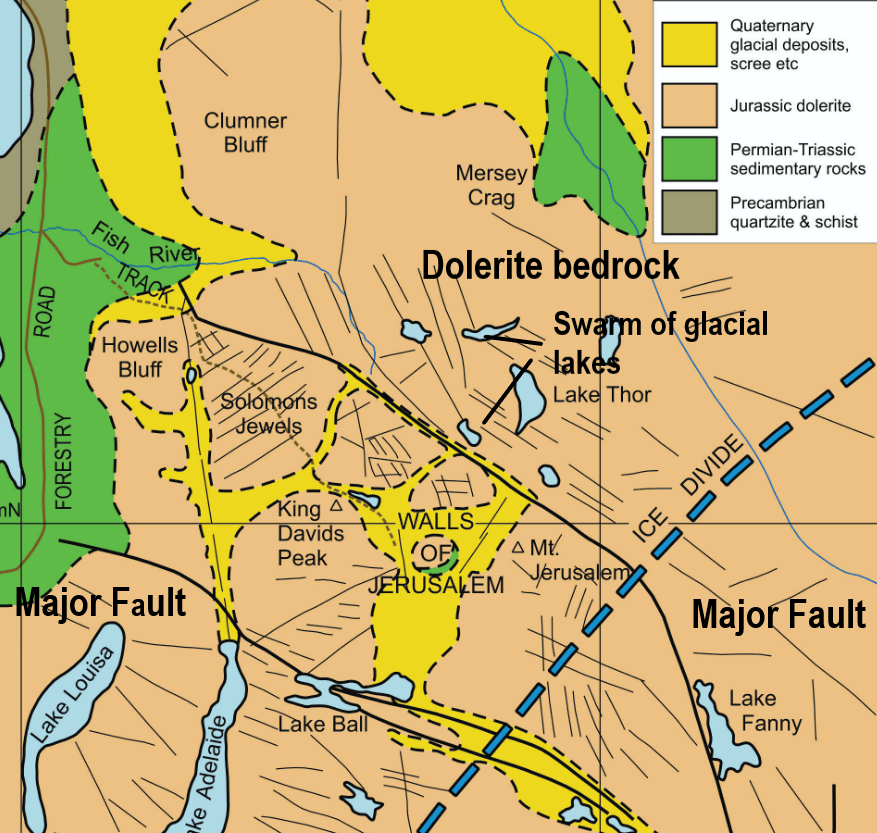
This is precisely why we keep Brian on the payroll. Strangely, no-one challenged him for pole position. So, with his conga line of five walkers now in tow, Brian led us up Racecourse Creek, executed a hard left hand turn out of the boulder and thicket -choked creek bed and finally stepped out onto the West Bald Rock fire trail.
Not before Eva’s leg tangled with a deep bog-hole in the swamp. But, as I discovered, Eva is a walker of considerable tenacity and she strode on, without complaint, for the remaining 47 kilometres nursing a bruised shin and a wonky knee.
The Navigators
A pre-lunch climb led us to the summit of West Bald Rock (1210 m), rewarding us with hazy views across to our destination for today (South Bald Rock) and on the morrow (Bald Rock in NSW).
And then the highlight of the whole trip. Brian and I wanted to re-locate a nearby border cairn which, it is claimed, had been erected by Surveyor Roberts in the 1860’s during his survey to fix the QLD-NSW border. Brian had stumbled on it years ago and he and I were keen to find it again, although I had suspicions about the commitment of our fellow amateur historians to this venture.
Despite the warm conditions we padded off across sheets of granite and through belts of scrub, heading about one kilometre to the south. With a bit of fancy bush navigation and some black magic from Joe and his GPS we found a fully intact survey cairn (Roberts No 1375), just where Brian predicted.
Bill Kitson and Judith McKay’s tome Surveying Queensland 1839-1945 has an excellent chapter on Queensland border surveys as well as a photo of the cairn.
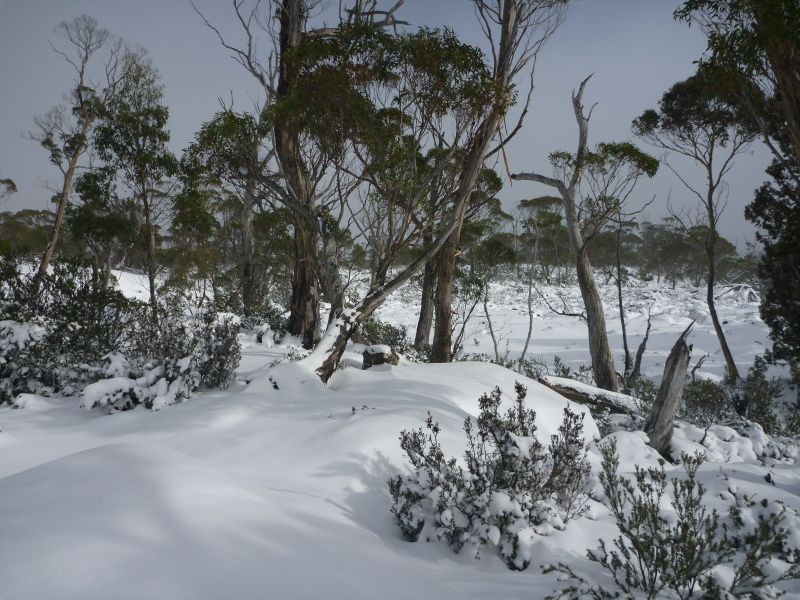
Surveyor Roberts 1860’s Border Cairn 1375
An afternoon of relaxed pootling along slashed fire trails past Middle Bald Rock delivered us to our campsite under the towering slabs of South Bald Rock. This is an outstanding bush campsite: ample shade, flat tent pads and clear running water in nearby Dingo Swamp.
No dingoes, neither seen nor heard . But what was this… horror of all horrors… a campfires prohibited sign. How will Brian, Peter and Joe possibly survive? Fuel stove only tonight.
As the light faded Sam pointed out that the bright stars hanging in the western sky were, in fact, planets. The brightest, Venus, then Saturn and hanging low to the horizon Mercury. Near Mercury was a star, Spica.
On matters of astronomical trivia, on another late September eve in 1990, the Japanese astronomer Mr Tsutomu Seki of Comet Ikeya- Seki fame, discovered a new 4.7 kilometre diameter main-belt rocky asteroid. Naming rights were given to his friend and colleague in Australia, one Mr Kato who lived near Stanthorpe.
Thus we have asteroid 15723 Girraween, named for Girraween National Park. A more detailed account of asteroid Girraween can be found on the excellent website: www.rymich.com/girraween/.
Tuesday: South Bald Rock To Bald Rock Campsite: 14.35 kms.
Tuesday morning, warmer, a balmy 6°C, causing King Kookaburra, aka Brian, to bestir from his pea-pod yellow tent earlier than usual, soon after 4.30 am according to one of my bleary-eyed informants.
Conversely, a certain other party stubbornly refused to de-tent from his stately MSR pleasure dome until the more civilized hour of 6.00 am. In any event we were still under way soon after 7.00 am for the easy scramble up to the summit of South Bald Rock (1247 m).
South Bald Rock is the classic granite landform, a huge steep-sided domed mass of hard rock, technically referred to as an inselberg. Girraween lies at the northern end of the New England Batholith, an extensive plume of molten magma that cooled slowly deep below the earth’s surface, allowing the formation of rocks with large crystals, adamellite.
Good for boot traction. It is said that the Stanthorpe granites represent one of the most spectacular assemblages of granite landforms in Australia. For the geology buffs among you, an excellent and more detailed account of Girraween’s landscapes can be found in Warwick Willmott’s Rocks and Landscapes of the National Parks of Southern Queensland.
After descending South Bald Rock, we rounded up our now lighter monkeys and ambled off along the shady border trail towards Bald Rock. On this particularly enjoyable morning’s ramble through the shrubby open forest Peter sighted a Lyrebird scratching around in the leaf litter.
The wildflowers were a kaleidoscope of colours: the pinks of Boronias, and Kunzeas; yellow Gomphlobiums and Donkey Orchids; red and yellow pea flowers, and absolutely stunning white and yellow sprays of flowering rock orchids, the mighty kings of the orchid world, Dendrobium speciosum.
As the trail paralleled the border on occasion we played the game of stepping back and forth across the border, QLD-NSW-QLD-NSW-QLD.
Orchid: Dendrobium sp
Bald Rock Campsite, popular in school holidays, is operated by the NSW Parks Service and offers a well appointed camping ground: a shelter shed with BBQs, toilets, picnic tables, taps, dusty rock-hard tent pads and a big red TOTAL FIRE BAN sign which had Brian, Peter and Joe crying into their beers. Three cans of which Brian had somehow fandangled from a generous Victorian camper, another AFL tragic.
The main feature of the National Park is, of course, Bald Rock (1277 m), Boonoo Boonoo as it was known by local aborigines, meaning ‘big rock’. It is claimed to be the largest inselberg in Australia and also the Southern Hemisphere. We took the refurbished Bungoona Walk to the summit via the well manicured tourist track, only to be nearly blown off the top by a gusting 40 km/h westerly.
Wednesday: Bald Rock Campsite to Castle Rock Campsite: 17 kms.
Warm weather predicted (30°C) for our 17 kilometre walk back to Castle Rock Campsite. We followed the border trail initially, and then swung off-track to follow Paling Yard Creek northwards before fetching up at the Underground Stream (Bald Rock Creek) and the start of the tourist track.
The walk back was relatively easy: traversing open granite slabs, across dry swamp meadows, down Paling Yard Creek and finally connecting with the system of 4 WD management trails that led to the Underground Stream. Paling Yard Creek has some beautiful reaches where it riffles over sheets of granite, and trickles gently down cascades and over small waterfalls to fill tranquil pools below. We propped on one of these for morning tea.
As a finale, we could do no better than the Underground Stream. This is geologically interesting and well worth a visit. Here the creek has eroded swirling spa-like potholes deep into the granite bedrock.
Below, a jumble of massive boulders has choked the creek; the water disappears from view, hence the ‘Underground Stream’. In times of low flow it is possible to climb down and through the boulders.
Nearby granite slabs have been scored by dykes. These are usually narrow linear depressions or ridges in the granite bedrock. They are the result of liquid magma being squeezed along planes of weakness in the bedrock. The magma cools very quickly to form a rock which can be either softer or harder than the contiguous bedrock.
A four kilometre trudge down The Pyramids Road to the Castle Rock Campground knocked some of the gloss off our morning’s relaxed perambulations, but with a decent shower, a feed and one of Joe’s beers to slake our thirst, who could complain.
Late in the afternoon, we saddled up again and headed off for the three kilometre round trip to climb The Pyramid (1080 m). Finally, for those of you who are familiar with this walk, I can report that the famous Balancing Rock is still firmly glued in situ despite Samantha’s determined efforts to unseat it.
On the Border Trail
More information
B.McDonald et al The Flora of Girraween and Bald Rock( Qld Department of Environment and Heritage Brisbane 1995)
The Green Gully Track is a relatively new 65 kilometre loop walk in the Oxley Wild Rivers National Park in northern NSW. Oxley Wild Rivers takes its name from the explorer John Oxley who passed through this part of NSW in 1802. It offers a brilliant four day throughwalk into the remote Green Gully Creek, a tributary of the Apsley River. The walk lies on the eastern fall of the New England Tableland where the rivers have extensively dissected the escarpment creating a tangled wilderness of gorges, waterfalls and rapids.
And guess what? You can leave behind your tents, therma-rests, stoves and other cooking paraphernalia. The Parks service has refurbished three cattle mustering huts and lashed out to provide stretchers, comfy mattresses, gas stoves, enamel cooking pots, kettles and basic sets of crockery and cutlery. But before you post off your dosh, a $120 booking fee, it is well to remember that this is a trek with several daunting ups and downs, some off-track sections, rock hopping and numerous creek crossings. It is described in that excellent publication of the NSW Confederation of Bushwalkers TheBushwalker as “challenging”. It really isn’t all that hard physically and it is well within the capabilities of any fit walker. But for those of you interested in Australia’s cultural and natural history, this is definitely a walk for you. Parks NSW is to be congratulated on developing this outstanding walking experience in the World Heritage-listed Oxley Wild Rivers.
Green Gully Track
Tuesday 4 September: Cedar Cottage
Four crusty old track dogs, Brian Manuel (leader), Don Burgher, Richard Mottershead and this scribe travelled to Cedar Creek Cottage at the start of the track, some two hours from Walcha, and south-east of Armidale in New South Wales. It is recommended that walkers stay at Cedar Cottage overnight to ensure a good night’s sleep before embarking on the first 17.5 kilometre leg to Birds Nest Hut. But this is no hardship. It is five star bushwalkers’ accommodation also serving time as a base for NSW firefighting teams. Cottage is a misnomer as it is, in reality, a very comfortable farm house with all modcons including slow combustion stove, hot showers, bunk beds, flushing toilet, fully equipped kitchen, and a smoke alarm with irritable bowel syndrome.
Cedar Cottage at start of Green Gully Walk
Wednesday 5 September: Cedar Cottage to Birds Nest Hut: 17.5 kms: 6.5 hrs.
We creaked out into a brisk – 4°C morning, heading north-west on the Kunderang Trail. This 4WD management track meanders up and down along a 1000 metre ridge which forms the drainage divide between Kunderang Brook and Birds Nest Creek, reaching 1100 metres at its highest point for the day. Kunderang is an aboriginal name, a clan group of the Thungutti who still maintained a close connection with their land even as recently as the early 1900s, working as stockmen and domestics on nearby properities. It is said that the Green Gully area still has evidence of aboriginal occupation: stone tools, flakes, blades, scarred trees and evidence of occupation in a cave in the nearby Kunderang Valley.
Our first stop was Kunderang Lookout, sporting an excellent information board, the first of many. We peered down into the valley of Kunderang Brook, but it was now wreathed in dense smoke haze from bushfires pushed along by north-westerly winds gusting up to 70km/h.
Bushfire in Kunderang Valley
But this was a fleeting cause for concern compared with the sighting of our first snake, a sleek track-side tiger snake which seemed in no hurry to wriggle off into the undergrowth. Mid afternoon we dropped into Brumby Creek, a tributary of Green Gully Creek and site of Birds Nest Hut at about 900 metres. This was the first of three mustering huts and their extra heavy duty cattle yards. They are an integral part of the story of cattle grazing in these remote and rugged ranges and gorges.
Birds Nest Hut was but one of a system of huts and yards built by the O’Keefe family in the 1950’s to manage their 12500 hectare cattle property, Green Gully. It became part of the Oxley Rivers National Park in 2004, ending another era, that of the cattle stockmen. That is why it is so pleasing to find that the Parks service has maintained the stockyards, fences and huts as a tribute to these hardworking people. And so to relax on our stretchers and mattresses lulled to sleep by the croaking of the endangered Barred Stuttering Frogs in nearby Brumby Creek.
Birds Nest Hut
Thursday 6 September: Birds Nest to Green Gully Hut via Birds Nest Trig: 15 kms: 7.5 hrs.
We woke to a coolish 6°C morning, the wind chill from gusty north-westerlies driving the temperature down even further. The first leg of today’s walk is off-track, climbing up a three kilometre ridgeline to 1202 metres, an altitude gain of about 300 metres over one and a quarter hours. An easy enough walk navigationally and physically. Birds Nest Trig was the highest point on our walk and is, in fact, the highest point in the entire Apsley-Macleay system. From here we linked onto The Rocks Trail, a groomed management track. This is a superb walk downhill through Eucalypt forest with a verdant understorey of shrubs and ferns. Here we found a number of large owl pellets, possibly from the Powerful Owl according to my Scats and Tracks book. The trail brought us to The Rocks Lookout, our lunch stop. An opportunity to peer down into Green Gully Canyon some 400 metres below as well providing us with good views of the isolated outcrop of The Rocks at 900 metres and Tooth Rocks (700 metres) across Green Gully Valley.
View into Green Gully
Our post prandial leg was one of the hardest of the walk: a 500 metre altitude loss down a long steep ridge line to Brumby Pass and Green Gully Hut. Jelly legs stuff. Perversely, conditions on the open woodland ridgeline were surprisingly hot, despite the wind idling along at 40km/h. But our reward at the end of a hard day was a hot shower, a very comfortable hut and another evening relaxing in front of a blazing log fire. And here was the chance to pick over the obligate knick-knackery that always seems to infest these huts: rusty horseshoes, a drum of Morrison’s Neatsfoot Oil, assorted grimy billies and faded agricultural calendars illustrated with rural scenes or decorous ladies dressed in the matronly styles of the 1960s and 1970s.
Green Gully Hut
Friday 7 September: Green Gully Hut to Colwells Hut: 13.5 kms: 8.0 hrs.
Overnight the gusting wind had not relented but other things had changed. It was time to swap boots for volleys or track shoes and take to the freezing water. One entry in a hut log book whined on about frost forming on walkers’ legs as they waded upstream. Today’s ‘walk’ up Green Gully Creek involved kilometres of rock hopping, inspecting huge boulders of red jasper, wading through a gorge, 41 creek crossings and dodging five more snakes, several being of the best -avoided large red-bellied black kind. And one aggro little sod intent on trying to sink its fangs in, chased me across the rocks. In my hurry to back-pedal away I fell over. Fortunately my rucksack cushioned the fall. Not a good place for an injury or snake bite. But our best sightings were Brush-tailed Rock Wallabies (Petrogale penicillata). This furry fellow with a paintbrush style tail was once abundant in the mountainous parts of Australia but is now an endangered species. Seventy five percent of the remaining colonies of Brush-tails are right here in northern NSW. For more info on our furry friends chase up an article by Inger vandyke: Securing the Shadow Wildlife Australia. Autumn 2009 Vol 46 No 1.
Photo R. Motteshead: Brush-tailed Rock Wallaby
And so to Colwells Hut. A smallish mustering hut. Realistically accommodating only four adults. If you swing by with five or six, then park the excess under the open-sided shelter. There wasn’t enough room for Don to swing Richard’s much doted on cat in this hut and sleeping outside was definitely not a good option on the night we stayed there; it was still very windy with rain threatening. We were driven inside soon after four o’clock by the cool wind but the rain was a total fizzer, a few spits. This was the last of the mustering huts built in The Oxley Wild Rivers, constructed in 1994 by Ian and Nev Colwell to replace Alan Youdale’s 1950s post and bark humpy.
Colwells Hut
Saturday 8 September: Colwells to Cedar Cottage: 17.5 kms: 7.5 hrs.
Our final day on the track. With a 700 metre climb out of Green Gully this is said to be the most challenging part of the walk. But it is on a 4WD management trail and with light packs it is not too arduous for walkers who have retained some functionality of their knees and ankles. From high up on a 900 metre ridge we looked down into one of the patches of dry rainforest, remnant communities that have species from the great Gondwanan continent. These have survived in cool inaccessible gullies, protected from the ravages of heat and fire. Soon we regained the Kunderang Management Trail and set sail for our final berth at Cedar Cottage. And thus came to an end a most satisfying throughwalk: rambling along through wild high country forests, with spectacular views, remote gorges, Brush-tailed Rock Wallabies and a landscape steeped in the history of cattle grazing.
Photo Gallery
Green gully track
Green Gully Walk, NSW
On the track
Green Hood Orchid
Colwells Yards
Birds Nest Trig
View across Green Gully
Brumby Pass
Yards @ Green Gully Hut
Extra Info:
Cauldwell, Dave: Green Gully: Gorge Raiders. Wild 124.
Green Gully Track Notes. Wild 132.
Inger vandyke:Securing the Shadow. Wildlife Aust. Autumn 2009. Vol 46 No 1. This is an article about the Brush-tailed rock wallaby.
Tucked away on the far south-western fringes of Australia’s Arnhem Land Plateau is Nitmiluk National Park, a 2928 square kilometre little brother to the World Heritage Listed Kakadu. Nitmiluk, named by a dreamtime ancestor, Nabilil, for the drumming sound of the cicada…Nit! Nit! Nitnit! This landscape belongs to the Jawoyn, freshwater people. It is also home to a major Northern Territory tourist destination, Katherine Gorge. Less well known is Nitmiluk’s 58 kilometre Jatbula Trail, one of the most spectacular remote area track walks in Australia. This outstanding walk climbs up onto the Arnhem Land Plateau and features magnificent views across 17 Mile Creek Valley, Aboriginal rock art, waterfalls, gorges, rapids and secluded rockpools. The Jatbula honours Peter Jatbula, a former drover and aboriginal custodian, who fought to have Nitmiluk returned to its traditional owners in the 1970s and 1980s. It was finally handed over to its traditional owners on the 10th September 1989.
Savannah Woodland
Crystal Falls
17 Mile Falls
Sweetwater: Edith River
Campsite: Biddlecombe
For my money, the Jatbula showcases some the best that Arnhem Land has to offer and even the most blasé trekker will be captivated by its landscapes. And to walk over country that resonates with human occupation stretching back at least 20,000 years is especially pleasurable. The trail is officially ‘challenging’ but for most bushwalkers, once conditioned to the warmer days, it is really quite easy. In the parlance of our leader, Kiwi Ross, it is a ‘spiv’ walk. The first two days traverse the high “stone” country above the escarpment, each day dropping down to a campsite beside placid rockpools, running cascades and roaring waterfalls. The final three days take walkers into the headwaters of the Edith River and then downstream to the campground at Leliyn (Edith Falls).
Cartography: Glenn Burns
Wednesday 27 June: Nitmiluk Visitors Centre to Biddlecombe Cascades: 8 kms. So here we are. Ten throughwalkers sardined into a snub-nosed punt, nudging up to the northern bank of the Katherine River, Jatbula’s trail head. A stone’s throw away on the opposite bank the circus was in town. This was the Nitmiluk Visitors Centre and Campground. A tourist bedlam, bustling with all manner of backpackers, flashpackers, campers, glampers, trampers and tattooed Territorians rubbing shoulders with jaded German jetsetters: all 200,000 of them, most arriving in the five months of the Northern Territory’s cooler dry season.
Our 5.30am campground starts are not universally welcomed. But things could only get better for long suffering fellow campers. And they did. For a start, we vacated the campground soon after 7.00 am allowing our neighbours to catch another ten winks before sunrise. Meanwhile, we had lined up for a surprisingly bargainous breakfast, a poolside buffet. Our chef arrived fashionably late, Top End time. Chef piled our plates with lashings of sizzling sausages, gooey eggs, crispy bacon, crusty toast and sachets of jam and vegemite all washed down with multiple mugs of tea and coffee. Brilliant.
Back on the northern bank our party of eight disembarked: Kiwi Ross, leader; those sirens of the savanna: Linda, Di, Lyn and Sally; Don, an experienced track dog from way back and Brian, his silver-tail sidekick from Peregian Springs. And finally, this pudged-up scribe. Our companion walking party was a couple from Brisbane: George and Mildred. Or was that a TV show from my youth? Graham and Mildred? By walk’s end my brain had it sorted: Marion and Charles or mostly just Charlie. And the best of track companions.
Our first section struck out across a baking savanna woodland heading for the cool oasis of the Northern Rockhole some four kilometres from the drop off. Already the day was firing up to be a stinker. An early departure is the key to enjoying this country and the trick is to trek in winter, start early, drink plenty of water and swim often. We learnt to leave our campsites by 7.30ish when temperatures are a mild 12-14°C and complete the day’s walk by early afternoon. By midday, temperatures are hovering around the 28-30°C mark. Remember that these temperatures are measured in the shade. It is said that above the escarpment, on the stone country, temperatures rise by a further 5-10°C, a fact which I wouldn’t dispute.
Water is the second key element of walking in the Territory. Initially I had hoped to do the daily ten to fifteen kilometres from camp to camp sneaking along on a litre of water. But after our experience in the open savanna on the first morning most of us elected to carry at least two litres from camp to camp. Another useful trick was to dunk hats, heads, shirts and bodies into any rockholes that crossed our path.
Northern Rockhole, Jatbula Trail,NT
Speaking of rockholes, the Northern Rockhole was our first morning tea stop-over. This is a large waterhole where a creek tumbles 50 metres over the escarpment to a deep green plunge-pool below. Distinctly crocodilian. I resisted the temptation to take a dip. Not that I’m aquaphobic but swims could keep until I was over the escarpment and on the plateau. Safely out of the clutches of any peripatetic croc out on a day walk from the nearby Katherine River. Rule Numero Uno of Top End swimming is that pools on top of the escarpment are safe, because crocs can’t, in theory, climb. Pools at the base of the escarpment should always be treated with some suspicion, especially as I had spotted a croc trap while paddling down the Katherine Gorge the previous day.
From the Northern Rockhole the trail follows a 4WD service track as it climbs a long spur up to the plateau at 200 metres, walking us through a snapshot of 1650 million years of Arnhem Land geology. First, past outcrops of volcanics to finally reach the Kombolgie Sandstones which outcrop across vast swathes of the Arnhem Land Plateau. But more of that on the morrow.
Savanna Woodland, Jatbula Trail, NT.
We were now meandering through open woodland and spinifex grasslands, sometimes called savanna woodland. This is a harsh dry environment with surface water draining quickly into the sandstone. Scruffy vegetation has adapted to thin and poorly developed soils. Occasional high level bogs and swamps covered with reeds, banksias, grevilleas and even sundews provided a contrast, a pick of green in the drab landscape and fed the permanent streams like Biddlecombe Cascades, our first overnight stop.
We heard the cascades before we saw the campsite, mostly shady with grassy tent sites. And here was our introduction to Mukkul, the green ant. Don pointed out two large arboreal leafy green ant nests woven together with their silky exudates. From here columns of ants marched down the tree trunk and fanned out across the campsite in search of food and human trespassers. Ian Morris in his book Kakadu has an entertaining description of their behaviour: “Green Ants are not particularly tolerant of humans and will respond to a disturbance…. by swarming over the intruder. Their multiple bites are mostly nuisance value…. but their habit of directing a fine jet of acid up to eight centimetres can cause extreme discomfort if it hits the eye.” According to Ross, the Mukkul is a Jawoyn delicacy, much like the honeypot ants of Central Australia or the chocolate-coated ants that my sister had an expensive addiction to. Never one to pass up a good feed, Brian, a well practiced trencherman, chose a large meaty ant but didn’t back up for his usual seconds. And he baulked at squishing their nests which is supposed to make a nice zesty drink when added to water.
Biddlecombe Cascades, Jatbula Trail, NT.
The cascades were named after an early gold miner, Biddlecombe. But prospecting was last thing on our minds; we were more interested in seeking out a prime spot for a cooling dip in the numerous and private rockpools and spas that abounded above the falls. And so the pattern of our days was set. Start early, walk in the cool, campsite in time for lunch and then a long afternoon of sloth and swims.
Thermarest banana lounges appeared and we settled for some reading in the shade. The quiet time short lived. Brian again, not agitating this time for his afternoon walk but batting ineffectually at the bushflies roosting on his scaly legs. Now, it is nothing unusual for Brian to be flourishing some sort of suppurating bushwalking wound or three, but the weeping dog’s disease spreading over his scaly shanks was an entirely different kettle of fish. Barcoo Rot was my diagnosis. A chronic skin infection right up there with Sandy Blight as an affliction best avoided on long bushwalks. But Nurse Di and Nurse Lyn took a more measured view of his predicament and applied various ungulates and a goodly dose of tough love “Don’t think you can buzz for attention whenever you feel like it tonight, Brian.” Kiwi Ross, a softer touch, took pity on an old walking mate by providing a few metres of fly veil which he rigged up to drape around Brian’s fly-blown legs, noting: “You’d look good in a tutu Brian, but the legs spoil it.”
By late afternoon the Biddlecombe Campsite was full. Our eight, Marion and Charlie and finally four young walkers who blew in late afternoon, having driven from Darwin in the morning and walked in the heat of the afternoon. Mad dogs and Territorians.
Thursday 28 June: Biddlecombe to Crystal Falls: 10.5 kms. Out in the pre-dawn darkness. To the east a brilliant astronomical display for early risers. Shining closest to the eastern horizon was Aldebaran, brightest star in the constellation Taurus. Then two very bright planets, Venus and Jupiter. But the real gem of the morning sky was an open cluster of stars, The Pleiades or Seven Sisters. The star names are taken from classical mythology and are the seven daughters of Atlas who were pursued by Orion. Zeus, taking pity on them, placed them in the heavens as stars but even there Orion continued his chase. The brightest is called Alcyone who was daughter–in-law to Lucifer, the light-bearer, the star that brings in the day. In fact there are hundreds of giant blue stars in this cluster but only seven are visible to the naked eye.
We were all up, fed and track side by 7.45am closely followed by Marion and Charlie. Here’s the thing about this pair. Both were elderly and Charles had a disability, a problem with his leg. The rocky track and river crossings would have been difficult for Charlie but they were obviously experienced walkers and really dogged. We would swan past, but no sooner had we pulled up for a break in the shade than Marion and Charlie would glide effortlessly past leaving us scrambling to play catch up.
First up was the boots-off crossing of Biddlecombe Cascades, then we followed the track snaking up through increasing rocky terrain; this was the Stone Country. Much of Arnhem Land is made up rocks of the Kombolgie Formation. This formation was first described at Kombolgie Creek a tributary of the South Alligator River. The Kombolgies are mainly sedimentary: sandstones and conglomerates which formed about 1650 million years ago (mya) when huge braided rivers spread at least a one kilometre thickness of the coarse and poorly sorted sediments over the area that we now call Arnhem Land. By 1000 mya the sediments had hardened and compacted to form the
The Stone Country, Jatbula Trail, NT
Kombolgie sandstones. We found plenty of examples of ripple marks and cross-bedding testifying to their origins in shallow fluvial or lacustrine environments. The main bedding planes in the Kombolgies are horizontal, reflected in the level surfaces over much of the Arnhem Land Plateau. Interleaved with the sedimentaries are two episodes of volcanic activity, the dark basalts which we saw yesterday as we traversed Seventeen Mile Creek Valley and on the climb up onto the escarpment.
The Jatbula follows in part old droving trails but more significantly it follows the ancient song lines of the Jawoyn. These were landscapes created in a time known as Buwarr, The Dreaming, when the ancestors journeyed across Nitmiluk bringing to life its plants and animals, visiting rock shelters and leaving important artwork. This land was created by Bula, a saltwater being. Bula, accompanied by his two wives, the Ngallenjilenji, journeyed across Nitmiluk creating and naming the landscape as he went. Another dreamtime ancestor was Nagorrko, who told the Jawoyn what skin names they should have and taught them about proper behaviour and marriage relationships. Other creation ancestors included Garrkayn, the brown goshawk; Ngarratj, the white cockatoo; and Barrk, the black wallaroo.
So it wasn’t surprising to find art sites at several of the rock outcrops that we passed on our morning’s travel. The rock art was predominately simple in design: for example, a red ochre hand print, representative of the earliest art work. Other motifs included human stick figures with large headdresses and skirts; larger human figures in red ochre; and highly ornamented figures in motion, the dynamic style. But there was a paucity of animal designs or animals in hunting scenes. These art styles are typical of Pre-Estuarine Art (50,000 – 8,000 years before present); a time when the earth’s climate was cooler and drier and a land bridge existed between Northern Australia and New Guinea.
For the remainder of the morning the trail paralleled the escarpment edge. We cut across six major streamlines, all tributaries of Seventeen Mile Creek and all aligned at roughly 90 degrees to Seventeen Mile, indicative of the strong structural control over the drainage patterns in Nitmiluk. Eons ago, regional crustal tensions cracked and faulted the Kombolgie Sandstones and overlying Cretaceous sediments, often at right angles, forming orthogonal cross joints across the plateau surface. Streams later followed these surface weaknesses and faults leading to the spectacular gorges and rectangular drainage patterns we see today.
Soon after midday we pulled into Crystal Falls, a pokey hot campsite saved only by its proximity to perfect swimming holes and spas. Di and I took to the largest pool immediately while the rest drifted hither and yon in a desultory fashion hoping to unearth a half-way decent tent pad. Trust me, there were none. I moved several times…too hot…too dusty…ant ridden…too close to crocs… before settling on a make-do campsite. The four youngsters drifted in, had a swim then headed off to 17 Mile Falls, ten kilometres hence. Spartans. Late in the afternoon three older walkers sweated it it having walked through from Katherine Gorge in the heat. Clearly shattered. As was our solitude.
Crystal Falls, Jatbula Trail, NT
A helicopter chuttered in low over the campsite and settled on the emergency helipad set high on the ridge behind us. A genial Kiwi pilot appeared bearing a picnic hamper, all apologies for the intrusion. Two guest appeared. One, a matchy matchy matron from Tassie. Her fellow passenger: unkempt, decked out with dreadies. In fact, badly in need of a major zhooshing up.
In any event they disappeared out to the cascades to enjoy their picnic. In due course our new best friend, the pilot, returned, clutching a barely touched bottle of bubbly and scrumptious left-overs from the hamper. Compliments of his guests. Stand aside Usain Bolt. It was a winner-take-all scramble back to the tents for mugs.
By 4.30 pm our helicopter and its occupants had departed leaving behind a campground of slightly blootered hikers and a tube of perfumed aloe vera ungulate for Brian’s legs. Time for an afternoon explore, a look at the falls. Fortunately, as was often the case, Marion and Charlie had already scouted out the best vantage point: a superb view of the falls and in the other direction, a look down into water foaming through a deep, dark slot canyon.
Friday 29 June: Crystal Falls to 17 Mile Falls via The Amphitheatre: 9.5 kms. We were now well into our daily walking rhythm. Packed and ready to rock and roll by 7.00 am. Wading across the cascades first, then the 80 metre climb up onto the plateau. Today we would finish our northward march before swinging west towards the Edith River catchment tomorrow. Tonight’s campsite at Seventeen Mile Falls is a titch over the half way point on the Jatbula. This was going to be very easy walking across a stony plateau cut by the occasional dry gully and boggy swamps, still spongy from the wet season.
Laterised surface near 17 Mile Falls, Jatbula Trail, NT.
We were motoring along at a respectable pace when Brian ground to a halt. A blowout in the driver’s side boot. No RACQ service here. So he jury-rigged a temporary fix, thick rubber bands and electrical tape. Interestingly, Ross and a walker from another group also had boot problems. Possibly boot glues drying out in the low humidity. Something to be checked on before extended walking in the Territory.
By mid morning we were traversing burnt out open woodland, a moonscape of rocky pavement covered by ironstone. Since Biddlecombe, on the very highest ridges at about 300 metres we found nodules and cappings of ironstone or ferricrete. These nodules were formed by the laterisation of the Cretaceous sandstones which overlie the Kombolgie Formation. During the Tertiary starting 70 million years ago, much of northern Australia was subjected to a humid tropical climatic regime. Under high rainfall conditions hydrated oxides of iron and aluminium accumulate steadily in surface rocks as other minerals are leached out, so that a hard iron rich crust develops.
The track led out to the escarpment’s edge where we pulled up at a horse-shoe ring of cliffs, The Amphitheatre. Below in its basin was a cool clear stream trickling under the dappled shade of a pocket of sandstone monsoonal rainforest.
The Amphitheatre,Jatbula Trail, NT. A major site for aboriginal art.
The rainforest canopy is dominated by Native Apple Tree (Syzygium spp.), Leichhardt Tree (Nauclea orientalis), Carpentaria Palm (Carpentaria acuminata), Native Nutmeg (Myristica insipida) and the White Paperbark (Melaleuca leucadendra). Nestled in their shade were numerous ferns and flowering shrubs like Melastoma polyanthum. These pockets are considered to be relict plant communities from a time when much of the Top End was covered by rainforest.
Jarwoyn Lady, The Amphitheatre, Jatbula Trail, NT
There are said to be 420 rock art sites in Nitmiluk, but one of the best is along the walls of The Amphitheatre. Three main panels display a mixture of Pre-Estuarine and Estuarine Art styles. Early designs of hand stencils, emus, emu tracks, long-necked turtles mixed with later art styles from the Estuarine Period (8000 to 2000 BP). These included Yam Figure Style, X-ray art, and most spectacularly, a large humanoid figure of a Jawoyn Lady wearing nose bones, breast girdles, bracelets, waist and knee bands.
From the coolth of The Amphitheatre it was onward across the baking savannah, at least 32°C and hardly a breath of wind for the three kilometres to our campsite. Interestingly, despite the high temperatures I heard no cicadas for most of the trip. Perhaps the humidity was too low (generally below 20%) for hatching. The track quickly wound out to another lookout, this time for a view of Seventeen Mile Falls, the highest single-drop fall in Nitmiluk. Half an hour later we trailed into Hades, our godforsaken burnt-out campsite above the falls. Still, with an excellent rockpool just below the campsite, one was actually in heaven. Lunch in the shade, sprawled out on a rock shelf, washing of clothes, swims, and more swims. A whole afternoon of general lethargy stretched ahead. Lying on the rocks, books in hand. Ross and Linda engrossed in Michener’s Hawaii; Di, Lyn and I delving into Jodi Picout’s 19 minutes; Sally lounging in the water; Brian still fussing away over his bodgy boots and Don, an afternoon of rockwalling his tent site in an effort to keep out the passing campground riff-raff.
Late in the afternoon Marion and Charlie again slipped silently away from the campsite, off on another of their evening rambles. I waited and watched. Sure enough, they re-appeared on a rocky outcrop high above the campsite, overlooking the falls. I knew I could count on them to ferret out the ideal eyrie for a look at the falls and down Seventeen Mile Creek. We formed up and wandered up to join them.
Another warmish evening. No campfires allowed, but we sat around chewing the fat while the moon rose. Too bad about the moonshine, for it is said that the glow of the lights of Katherine are visible to the south west.
Saturday 30 June: 17 Mile Falls to Sandy Pool Camp: 16.5 kms. Our longest day, sixteen kilometres. Sunrise came soon after 7.00 am, a blood-red sun shrouded in a curtain of smoke haze. The iconic Top End sunrise. Fire is an integral part of Nitmiluk’s landscapes and its aboriginal custodians and Parks staff burn off during Malaparr, the early dry season from May to June. It is then that the grasses still contain a little moisture and the burn-off will be low intensity and will generally falter at watercourses, swamps and rock pavement. For much of our walk we encountered patchworks of burnt and unburnt areas, presumably to suppress the possibility of a major wildfire along the track and at campsites.
Our last hours on the stony plateau country, again travelling on the high laterised surfaces. We were now on the drainage divide between the Edith River and Seventeen Mile Creek. As always termite mounds abounded, one of the most ubiquitous features of the Northern Territory landscapes. Right up there with the favourite Top End images of crocs, waterfalls and red sunsets. Here the surrounding termite mounds took on a distinctly reddish tinge in contrast to the lighter coloured mounds we encountered elsewhere. Wherever there is grass in the Top End, there are termites, which is everywhere.
During the long dry season it is so dry that other important recyclers like earthworms cannot survive. So termites are known as the ‘earthworms of the tropics’. The termite is an ancient order of insect which has been ranging the earth for as long as crocs, some 30 million years. Its nearest relative is the cockroach, not ants. Hence the name ‘white ant’ is a misnomer. Most termites have simple appetites, content to graze on dead grass, seeds and wood, converting cellulose directly into glucose for energy. But the most primitive group, the Masto termite, endemic to Australia, is not so particular and has been found happily munching through old car battery cases, bitumen highways, PVC, lead sheathing on Telstra cables and demolishing a three bedroom house in a single 10 week feeding frenzy; much like our pre-trip poolside breakfasters.
Our route took us westwards off the stone country into an unnamed swampy headwater tributary of the Edith River. The Edith River was named by William McMinn in 1871 during the construction of the Overland Telegraph Line. Lady Edith Fergusson was the wife of the South Australian Governor, Sir James Fergusson.
Edith River Soaks, Jatbula Trail, NT.
Here was a different landscape, a mosaic of swampy grasslands, riverine forest and open woodlands. The vegetation around us marked the change, now pandanus, melaleucas, banksias and grevilleas. We had reached the Edith River Soaks, a landmark for drovers which signalled that they had finally left behind the harsh stone country for the succulent grasses of the Edith River floodplain. Some three hours of early morning hard yakka paid off as we cruised into the Edith River Crossing and a well-earned dip. Here the Jatbula shifts to the western bank all the way downstream to Leliyn. A quick feed and we took off on the six kilometre hop to Sandy Camp Pool hoping to beat the heat as my pack thermometer was fast cranking up, a mid-morning 32°C. Sandy Camp is one of the highlights of the walk, easily the most picturesque of Jatbula’s pools. The campsite nestled on a sandy beach under shady trees. A few metres from my tent I launched into the deep clear waters of Sandy Camp Pool. Fantastic.
Sunday 1 July: Sandy Camp Pool to Sweetwater: 10 kms. Awake with the pre-dawn howling of dingoes, another clear piccaninny dawn for our penultimate day. Trackside by 7.45 am but a slight delay as we bumbled hither and yon looking for those nifty blue Jatbula triangles. Eventually someone got smart and realized that if we headed downstream we would soon find the trail. Just so. Much of the morning’s walk is through dense swathes of high grassland. I’d hate to walk this stuff without the well-defined pad that we were following. Above our heads, old flood debris had caught in the scattered shrubs and trees, obviously not a good place to be during the late wet season. We puttered along in the balmy tropical morning and just before
Sweetwater, Jatbula Trail, NT.
mid-day we rounded up onto a low river bluff overlooking the Sweetwater. Below, those toads of the trail… day trippers. Four of the cheeky blighters frolicking in the cascades above Sweetwater Pool. Our throughwalking solitude was over. Sweetwater is easily accessible to day walkers so we could expect to see legions on the move in our final 24 hours on the track.
A final lux afternoon of swims, rambles around the Sweetwater, botanising, checking out the sandstone ripple marks, more reading and brew-ups. Having exhausted these possibilities for the productive use of my time, I turned my attention to niggling Don about his ongoing refusal to buy a Thermarest banana lounge. After many years of badgering he finally caved in and agreed to try one out and grudgingly conceded it was “…comfortable”. But stubbornly unconvinced. Thence to Brian, whose beloved ancient hike tent stood agape where several zips now refused to close, its flaps cobbled together with a network of safety pins. “It’ll see me out.” With dingoes serenading in the near distance we drifted off to our beds, but not before peering into the dark then pulling our boots into our tents and finally zipping the doors firmly closed. We left Brian to his fate.
Monday 2 July: Sweetwater to Leliyn: 4 kms. A cool 11°C start for our final two hours on the track, Leliyn being a mere four kilometres away, passing numerous rapids and the Longhole on our way through. We were now a pretty subdued bunch. After such an outstanding trip I wouldn’t have minded a few more days on the track. All good things come to an end and we pulled into the well-appointed Leliyn campground soon after 10.00 am. But we quickly perked up when the campground manager threw open the chuck wagon and we tucked into a truck load of pies, sausage rolls, potato chips, chocolates and soft drinks. An afternoon of general slacking around and desultory walks completed a memorable six days of walking with great companions and excellent leadership provided by Ross and co- organizer Linda.
Related Articles:
A. Davison The Jatbula Trail Wild Magazine Issue 110