The Pipers Creek Track in Kosciuszko National Park is a little known management track that provides access to an aqueduct system feeding Guthega Pondage, part of the Snowy Mountains Hydro Scheme.
by Glenn Burns
It is also an easy and very pleasant seven and a half kilometre ramble that winds in and out of patches of snow gum woodland and alpine grasslands providing vistas across the Snowy River valley to Rolling Grounds and the peaks of the Main Range.Nothing strenuous and ideal for families; as a bonus it isaway from the hustle and bustle of the Snowies Alpine Walk and the Kosciuszko Summit Track.
Although it is not on the radar of most bushwalkers, I have hiked it a number of times with family and friends and I never tire of this walk. My most recent walk was a summer trip with friends Joe, Chris, Garry and Neralie.
We started at a very civilised 8.30 am after depositing Garry’s ute on the Guthega Road for transport back to our starting point later in the morning. The walk starts about three kilometres north-east of Smiggins Hole where Dainers Creek and Wragges Creek join Pipers Creek. There is a smallish car park on the Kosciuszko Road where you can safely tuck a car.
Map of Pipers Creek walk. Source: Kosciuszko Alpine Area map. 1:50,000
Pipers Creek. Who was Piper?
Who was Piper? Here is the origin of the name according to Klaus Hueneke in his book ‘Huts of the High Country’:
‘James Spencer, when taking his cattle up to summer pastures, used to take a bullock team. The lead bullock called Piper was particularly powerful and at night would often break loose. He would be found next morning down the creek, hence Pipers Creek.’
From the road a short descent takes you to an easily crossable ford on Pipers Creek where it executes a tight ninety-degree turn to flow north west. A reflection of the rectilinear drainage common in this section of Kosciuszko National Park.
The path we followed is a very obvious 4WD management track. It commences in the valley of Pipers Creek on grassy flats called ‘frost hollows’. These are grassy plains which are the result of dense cold air draining from high tops and pooling on creek flats below. Usually totally devoid of shrubs or trees. The otherwise ubiquitous snow gums are unable to thrive in these freezing conditions but are found higher up on the nearby hillsides.
Pipers Ck Management Track
Our path dipped through this grassy plain before climbing steadily to the 1600 metre contour. After a kilometre we entered the first of several patches of snow gum woodland. At each gap in the woodland we had superb views out to the north, over Guthega Pondage in the Snowy River and the Main Range in the far background.
Belts of snow gum woodland.
Aqueducts in Kosciuszko National Park
Following the 1600 metre contour line our track paralleled the Guthega Pondage aqueduct. The track providing the necessary access for maintenance purposes. It wasn’t long before Garry and Joe discovered the various sluices, channels and pipes that make up the aqueduct infrastructure. Their favourite engineering activity was to lift the sluice gate and allow any built-up sediment to flow downslope in a small rush of water, thereby flushing out any silt.
Aqueduct channel near Pipers Creek Aqueduct Shelter.
Aqueducts are but a minor part of the engineering masterpiece that is the Snowy Mountains Scheme. The Pipers Creek aqueduct intercepts and collects water from tributaries that might otherwise bypass the Guthega Dam. Even though the aqueducts and earthen diversion channels were constructed from 1953 to 1956, they still appear to be well maintained and functioning as intended. With some help from passing bushwalkers.
Guthega Pondage.
Snowy Hydro’s Munyang Power Station fed by Guthega Pondage.
I have come across other aqueducts before on my journeys across the Kosciuszko landscape. A few years ago, I followed another aqueduct track, the Munyang -Guthega Aqueduct track, to get from Whites River Hut to Horse Camp Hut thence to Munyang Power Station on the final day of a hike out of Bluff Tarn. It was an unexpected find and great alternative to the ups and downs of trudging back along the Munyang-Geehi road aka Schlink Highway.
Snowy Hydro Hut on Munyang River
More on Racelines aka Water Races aka Head Races
On one of my Kiandra to Kosciuszko hikes in 2007 we crossed the headwaters of Nine Mile Creek about three kilometres after the Four Mile Hut turnoff and climbed towards Tabletop Mountain. We were following the Tabletop Fire Trail on the Australian Alps Walking Track (AAWT).
In the 1800’s earthen racelines were built to collect water from the flanks of Mt Tabletop and direct the flow to a sluicing header dam for the Empress gold operations.
The current AAWT track follows the line of these racelines. Soon after Nine Mile Creek the AAWT ascends steadily to the headwaters of Scotch Creek where hydraulic sluicing from about 1860 to the 1920’s had scoured the hillside in a final search for gold. The head races, water races or racelines collected water from the high range and fed it into pipes fitted with nozzles of decreasing diameter to increase the pressure. Here is a description provided in 1887 by the Government Geologic Surveyor of how a Kiandra raceline worked:
Hydraulic sluicing. New Chum Mine Kiandra.1895. Charles Kerry. nla-obj 141601148.
‘With average rainfall sluicing operations can be carried on at this claim almost all the year round. A constant supply of water is obtained from a dam which the Company has made in the Three Mile Creek. The water is conveyed in a race for a distance of three miles to the workings. The race comes in on the top of the face and the water is conveyed from it, first in 22-inch pipes, and then in 15-inch pipes to the bottom of the cutting, where the pipes are reduced to 13 inches. This size pipe carries the water to the nozzle, which has a diameter of five and a half inches. The pressure of the water at the nozzle head is 120 lbs to the square inch. The system is capable of throwing a stream of water for a distance of 150 feet. The system is duplicated and there are two sets of pipes from the race outlet to the bottom of the workings. In 1885 the amount of gold obtained from these workings was 1,100 oz.‘
The hillside scar was still there, 150 years later, 700 metre long, 100 metres wide and 15 metres deep.
Nearly 10,000 miners swarmed to the Kiandra Goldfields in 1859, enduring severe winter blizzards hunkered down in canvas tents. Some miners even constructed primitive shelters of sod, rocks and branches. Not much different to the tented work camps of the Snowy Mountains Scheme in the 1950’s.
The Kiandra gold rush was short-lived, the shallow alluvial deposits worked out and attempts to find the main reef proving fruitless.
After the 1860 winter only 150 miners hung on. For these modern day pampered bushwalkers passing through the Nine Mile with our down jackets, four season sleeping bags and tents, staying warm in the 21st century was still a tad difficult.
The Caped Crusader, a Mountain Katydid
Meanwhile, back at a summery Pipers Creek the day had warmed up. Now swarming grasshoppers and katydids had appeared on the grassy verges, especially in the snow gum woodlands. Two species seem prevalent.One, a chunky squat katydid, had a distinctive startle warning, making it easy to identify. Except it looks like a beetle if its wing covers are closed. Don’t be fooled.
Normally this species is a nondescript mottled grey-brown colour. But, if disturbed, it raises its wing covers, arches its abdomen and reveals shiny crimson and blue bands. I identified it as the Mountain Katydid (Acripeza reticulata).The female can’t fly but it feeds on fireweed and other plants that may make it distasteful to predators.
They are called katydids because the male makes a sound like it is saying “katy-did’.
The Spotted Mountain-grasshopper (Monistria concinna) is another alpine insect that is easy to identify. It is large, flightless with a body that is usually olive-brown with a dense splatter of yellow or cream spots. It is very cold-tolerant, hence its ability to survive in our high alpine areas. It is said to have its own version of an anti-freeze.
Its bright colours may serve as warning to any passing lizard/bird that its body contains noxious chemicals. It is possible that the chemicals are derived from its main forage plant, the alpine mint bush (Prostanthera sp).
To me, the aqueduct trackappears like a reptilian heaven. With long weeping grass, clumps of tussocky snow grass and warm sunny nooks for a sunbathing snake or three, I am evervigilant. Logic and experience tell me that snakes, dragons and skinks aren’t well suited to these cold conditions and there are only two species of snakes that hang out at this altitude. I reflect on this, but at the last minute I always pull on my trusty gaiters… just in case.
The two snakes are the venomous copperhead and the mildly venomous white-lipped snake. Both feed on frogs and skinks. The docile copperhead grows to respectable 1.7 metre while the slim white-lipped can only manage a paltry 45 centimetres in length.
Withno snakes to disturb my equilibrium,I was lucky to see an excellent specimen of a Blotched Blue Tongue lizard (Tiliqua nigrolutea)which quite likes these tussocky grasslands. They emerge from their overnight accommodation in rocky crevices or deep litter for an early morning sun bake before heading off to forage onthe odd beetle or caterpillar that passes by.
Blotched Blue Tongue Lizard trackside.
Further on I sprung two nondescript Skinks cavorting in the undergrowth. The most likely ID is the Mountain Log Skink (Pseudemonia entrecasteauxii), the most abundant reptile in alpine areas where it occurs at all altitudes. Their skin was not glossy which helps distinguish them from the Southern Tussock Skink , (Pseudemonia pagenstecheri), a close relative.
Mountain Log Skinks.
But the real prize would have been a sighting of the endangered Guthega Skink (Liapholis guthega). This is the highest occurring skink in Australia, found only in Kosciuszko National Park and the Victorian Alps above 1600 metres up to about 2100 metres. Its habitat is rocky outcrops, tussock grasslands and damp heath.But no luck today.
Guthega Skink. Source: NSW Parks. Bec Byrnes.
Wildflowers
It was well past peak wildflower season but I was still able to find few specimens to satisfy my botanical itches: a Sunray (Leucochrysum sp) Australian bluebells (Wahlenbergia sp), bidgee widgee (Acaena anserinifolia) andbilly buttons (Craspedia uniflora), amongst others.
Sunray. Leucochrysum sp.
Australian bluebell. Wahlenbergia sp.
Bidgee widgee. A nuisance plant with spines that love your socks.
Billy buttons. Craspedia lamicola.
Pipers Creek Aqueduct Shelter
Some three kilometres into our Pipers Creek walk the track descends to ford an unnamed creek. Below the ford the creek drops over a small waterfall that is worth a photo or two. But if you head upstream a little you should be able to find the Pipers Creek Aqueduct Shelter, a still operational Snowy Hydro hut. It is hidden in a patch of snow gums above the creek. Look carefully for a barely discernible pad on your left, 200 metres upstream from the ford.
Pipers Ck Shelter.
The shelter was built in the 1950’s by the Snowy Mountains Authority (SMA) for aqueduct maintenance. It is still used by Snowy Hydro, which explains why it is locked to keep out any of thosebushwalkingorskiing riff-raff who swing by.Or worse still those dastardly E- mountain bikers.
It is a smallish wooden hut with a corrugated iron roof, vertical slab wooden walls and wooden floor. The whole structure sits on huge wooden sleds. I imagine that it had been dragged into position by a bulldozer.
Here is an ideal morning tea spot, equipped as it was with a huge wooden bench along the entire length of its sunny eastern wall. A bonus was the hut’s wall providing a comfortable back rest. The nearby aqueduct infrastructure an added incentive to linger, giving the lads some final moments of delectation.
An ideal spot for morning tea.
A good feed, some more sparkling engineering chit-chat about sluices and channels and we waddled off back downhill to the ford. From here the track climbs again to the 1600 m contour. The next section provided even better views out to the north-east over the extensive snow grass plains of Pipers Creek valley. Aptly named on my map as the ‘Plains of Heaven’.
Snow grass plains on Pipers Ck Track.
We soldiered on, contouring around to a point on my map marked as ‘Perisher Camp’, some 2.5 kilometres from the ford. No remnants of a work camp though, much to my disappointment.
SMA Work Camps
The SMA had some 100 work camps scattered across Kosciuszko. I haven’t been able to find any information relating to this one. Although there was a Perisher Camp, but to add to my confusion, it is marked at various locations on other maps. During the construction period of the Snowy Scheme, the SMA managed over 100 camps and 8 towns, housing 100,000 workers, many of them migrants from Europe.
Early camps were rows of canvas tents with mess halls for communal dining, recreation and basic washing/toilet buildings. Initially there was no electricity or running water. Not much fun in winter I would think. Here’s a description of winter living conditions for SMA workers that I found in Brad Collis’s ‘Snowy. The Making of Modern Australia’:
‘The winters in the primitive conditions of the Snowy camps and towns imposed a harsh existence…. Little attempt was made to modify the style of housing for the conditions. Prefabricated weatherboard cottages, which would have served perfectly well in Central Australia, were simply transplanted into the mountains… the most precious household resource in winter was water. Pipes often froze and burst, leaving the house without water for cooking or washing. Mothers with babies had a terrible time… Nappies and sick babies and no water made life very hard… frozen washing outside in two metres of snow meant an or so of digging to get the snow away from a clothesline.’
SMA Survey Camp. Source: National Archives Australia.
Back in summer land we reached a junction. Here the track bifurcates. Be sure to check your map… I’m assuming you carry one. Follow the track which bears north and descends steeply through woodland and exits out onto the Guthega road.Otherwise you will be carted off and exit with a long dreary walk back to your car.
Some three hours after we started we were reunited with Garry’s jalopy which had been stashed near the old SMA quarrywhere I purloined a good hand sample of Mowambah granodioriteof Silurian age (443.8 to 419.2 Ma).
Mowambah Granodiorite
Like granite, granodiorite is a plutonic igneous rock with large crystals visible to the naked eye. I use the cue of its ‘salt and pepper’ appearance to differentiate it from granite. The dominant mineral crystals are quartz (white) and biotite (dark).It outcrops extensively over much of Kosciuszko National Parkand was a source of road base and construction material for the Snowy Mountains Scheme.
Mowambah granodiorite was formed in a deep pluton, part of the Kosciuszko Batholith during the Early Silurian.A batholith is large igneous intrusion with a surface area of over 100 square kilometres.
Garry’s ute was waiting patiently for our return. Windscreen wipers, aerial and wheels still attached, ready to transport us back to our starting point.
In 2018 construction started on the 55 kilometre Snowies Alpine Walk. The NSW Government boasted it would deliver ‘ a world-class, multi-day walk across the alpine roof of Australia in Kosciuszko National Park.’ The twelve kilometre hike from Perisher to Bullocks Flat is the final section of this longer walk. The hike traverses Kosciuszko National Park’s high alpine zone before descending hundreds of metres through snow gum woodland and dense eucalypt forest to the Thredbo Valley.
Snowies Alpine Walk near Snowy River
In its entirety, the Snowies Alpine Walk (SAW) connects Charlotte Pass, the Main Range, Guthega, Perisher and Bullocks Flat. The Perisher to Bullocks Flat section was the last part of the Snowies Alpine Walk to be constructed and was opened in the summer of 2024. Just in time for me to test drive it. And I was impressed.
It starts in the village of Perisher and finishes at the Thredbo River near Bullocks Flat. The track takes walkers from the alpine zone to a lookout high above the Thredbo River valley before a steep descent of the Crackenback Fall to reach the swiftly flowing waters of the river. From here the track follows the Thredbo upstream to Bullocks Flat, a popular day use area.
Board walk track climbing up to highest point at 1800 metres on the Perisher – Bullocks Flat track.
Perisher Village, my starting point, Is a small alpine village. In winter it is a picture perfect mountain village with architecturally interesting ski lodges, manicured snow runs, lifts and surrounded by snow-capped mountains. It takes its name from from one of these mountains, Mt Perisher.
Winter ski slopes at Perisher
Mt Perisher was named by an early pastoralist, James Spencer, who, while chasing lost cattle with his stockman, climbed to the top of the 2054 metre peak for a better view. On the summit he was met by scuds of snow and an icy blasting wind, upon which he commented: “This is a bloody perisher.” Later they climbed the adjacent peak, The Paralyser and the stockman remarked,“Well, if that was a perisher, then this is a paralyser.
Perisher, in summer, is a less attractive proposition. Yet another man-made blot on an otherwise outstanding alpine landscape. Its development as a ski resort took off at the time of the Snowy Mountains Scheme.The Snowy Mountains project provided access roads, work camps including one at Perisher and an influx of skiing mad European migrants to work on the scheme. Perisher was born.
As my erstwhile walking companions, sons and grandchildren, had already deserted for greener pastures, I was on my lonesome for this section. My wife provided the vital taxi service connecting my drop off point at Perisher Village with Bullocks Flat. A road trip of some 50 kilometres. Otherwise, it is a return hike to and from Perisher of some 24 kilometres and 740 metres of altitude gain.
Source: NSW Parks and Wildlife.
I had the track basically to myself. There were two other walkers that day, young women who had walked the Charlotte Pass to Perisher section the previous day. And this was peak summer walking: great walking weather, wildflowers galore and school holidays. In my experience, the other sections of the SAW were always busy in summer. But, today, not the Perisher to Bullocks Flat track.
I started early, about 8.00 am. Blue skies and a very pleasant 8oC greeted me, without the blustery winds of previous days. It is an ideal half day walk winding through a magnificent landscape of alpine heath meadows, snow gum woodland, and a montane Eucalypt forest including stands of alpine ash. The track weaves in and out of huge granite tors before descending to reach the pristine waters of the Thredbo River. As a bonus there is the Thredbo lookout perched some 600 metres above the valley floor.
Alpine heath along the Perisher to Bullocks Flat walk.
The walk starts at the Perisher village track-head sharing the Charlotte Pass/ Porcupine Rocks track. After a few hundred metres my path cleaved south east following Rocky Creek.
Bridge over Rocky Creek at Perisher track head.
The track then climbs steadily through Snow gum woodland with occasional patches of alpine heath. As I crossed the last of the heath, my map showed the line of the Ski Tube tunnel … under my boots, but some hundreds of metres below.
Steady climb through snow gum woodland
Ski Tube
The Ski Tube is a Swiss designed electric rack railway that connects Bullocks Flat and Blue Cow via Perisher village. It departs from the Bullocks Flat terminal (1134 m) before entering the Bilson tunnel that ascends to Perisher Villager (1720 m), with another tunnel connection to Blue Cow (1910 m). The 5.9 kilometre section from Bullocks Flat to Perisher was opened in 1987, while the 2.3 kilometre Blue Cow section opened in 1988.
From a high point at 1800 metres the track begins its long descent, initially through snow gum woodland, towards the Thredbo River. Some 3.5 kilometres from Perisher is the Thredbo Valley Lookout. This vantage point gives extensive views into the Thredbo Valley some 700 metres below with the Monaro Plain off to the east. Klaus Hueneke in his excellent tome “Huts of the High Country” gives this derivation of Monaro: ‘ Aboriginal for gently rounded woman’s breasts like the undulating country around Cooma. Also spelt Monaroo,Miniera Maneiro, Meneru and Monera’
View from Thredbo Lookout east to Monaro Plain
It was here that I came across the two young women again who were lounging on the lookout deck having a bite to eat. They didn’t seem in any hurry to leave and not wanting to intrude, I wandered off to find a sunny morning tea spot of my own. A nearby elevated slab of granodiorite at 1700 metres with equally spectacular views fitted the bill. Perfect.
View up the Thredbo River valley from my morning tea spot.
From here the track descended gently north east for 2.5 kilometres to the 1500 metres contour before switch-backing south west to drop steeply for 3.5 kilometres to the Thredbo River at 1100 metres. This was more in the category of a bushwalker’s pad rather than the heavily engineered tracks found on other sections of the SAW. The descent from the lookout takes you over the Crackenback Fall, a major geological feature of Kosciuszko National Park.
Crackenback Fall
From the lookout the Crackenback Fall drops 700 metres to the Thredbo River valley. This spectacular fall can be explained by a combination of tectonic uplift (called the Kosciuszko Uplift) during the Tertiary (66 to 2.6 mya) and the rapid downcutting of the Thredbo River into the shattered bedrock along the straight line of the Crackenback Fault. The Crackenback Fault dates back to a major tectonic contraction during the Lachlan orogeny some 390 to 380 mya.
View over Crackenback Fall to Thredbo Valley.
Klaus Hueneke in : “Huts of the High Country” writes: “stockmen who brought cattle and sheep on to the main range from the Thredbo valley over difficult terrain often said ‘it would Crack-your-back.’ Others said you had to crack the whip across their backs to get them up there.” The name was applied to the river, the Crackenback River which was later changed to the Thredbo River.
Position of Crackenback Fall
Map showing the Crackenback Fall, the Crackenback Fault and the rectilinear drainage pattern of the Thredbo River.
Vegetation Zones of the Crackenback Fall
As you descend the Crackenback Fall the vegetation changes from tall alpine herbfields on the high tops through a belt of snow gum woodland, thence to mixed Eucalypt forest before finally reaching a riparian shrub zone on the banks of the Thredbo River.
Tall Alpine Herbfield
The tall alpine herbfields are the most extensive of all Kosciuszko’s alpine plant communities and are found on well-drained and deeper soils. They are found on Kosciuszko’s highest peaks, plateaus and ridges, in conjunction with swathes of grassland, low heathland and bogs. These apparently delicate plants must withstand freezing rain, sleet, blanketing snow, howling winds, as well as heat and extreme UV radiation. Maybe not so delicate.
This plant community is the most diverse of all the high alpine vegetation types in terms of number of species. Showy wildflowers grow in a matrix dominated by the genera Celmisia (daisies) and Poa (snow grasses).
Tall alpine herbfield.
Wildflowers which I recognised included: silver snow daisy (Celmisia astelifolia), Australian bluebells (Wahlenbergia spp), star buttercups (Ranunculusspp), bidgee widgee (Acaena anserinifolia), Australian gentians (Gentiana spp), eyebrights (Euphrasia spp),billy buttons (Craspedia uniflora), andviolets(Viola betonicifolia).
Australian bluebell. Wahlenbergia sp.
Snow Gum Woodland
The low growing snow gum woodland is found above 1500 metres, the winter snowline. It is dominated by snow gums or white sallee (Eucalyptus pauciflora). Its growth habit is low, twisted, stunted and bent away from the prevailing winds. Snow gum woodland is invariably clothed in a dense scrubby understorey of beastly spikey plants like Bossiaea, Epacris, Hakea, Grevillea, Oxylobium, and Kunzea. These are usually waist high with tough whippy branches. This, presumably, an adaptation to withstand the weight of snow or overly rotund bushwalkers without breaking.
Snow gum woodland with dense scrubby understorey.
Mixed Eucalypt Forest
Below the tree line zone which is dominated by pure stands of snow gums, comes a mixed Eucalypt forest of snow gum, mountain gum (E. dalrympleana), Tingiringi gum (E. glaucescens), candlebark (E. rubida), manna gum (E. viminalis), and alpine ash (E. delegatensis).
Mixed Eucalypt Forest with a stand of Alpine Ash on Perisher to Bullocks Flat Track.
On your descent through the zone of Eucalypts you will encounter some nearly pure stands of alpine ash. This species is typically found between 1200 to 1350 metres on wetter south and south-easterly facing aspects. It is an unusual Eucalypt in that it does not have any specialised fire survival techniques (such as epicormic growth) and regenerates from seed after fire has destroyed surrounding heavy leaf litter which usually inhibits seed germination.
Ferny understorey in mixed Eucalypt forest
Riparian Shrubland
A diverse plant community of mainly shrubs occupies a narrow a strip alongside the Thredbo River. The main canopy species is an olive-green trunked gum called black sallee (E. stellulata). Occasional pockets of mountain gum and black sallee grow together. But the main botanical action is in the shrub layer which provides a profusion of wildflower displays in early summer.
Dense thickets of shrubs in riparian zone along the Thredbo River
Along the track as you work your upstream towards Bullocks Flat, here are a few to look out for: poison rice-bush (Pimelea pauciflora) with small slender leaves, creamy flowers and orange fruit; mountain tea-tree (Leptospermum grandifolium) with 5 petalled white flowers, forming dense thickets along the banks, and close to the river, alpine bottlebrush (Callistemon pityoides) with its distinctive brush flowers.
Alpine bottlebrush. Callistemon pityoides.
Useful reference book on plants in the Thredbo Valley
This handy little guide to plants in the Thredbo Valley won’t take up too much space in your rucksack(15 cm x 21 cm).
Thredbo River aka Crackenback River
On reaching the Thredbo River, the track closely parallels the river for a further one kilometre to Bullocks Flat, which is accessed by the Ski Tube bridge over the Thredbo River near the Ski Tube carpark. An eyesore of monumental proportions. How the Parks service gave planning approval for this hideous monstrosity is a mystery. Or maybe not. The slimy hands of NSW politicians would be at play in boosting ski tourism in the national park. A pattern of pandering to the ski industry that is repeated across most of Australia’s alpine ski fields.
But moving on from this well-ventilated gripe of mine. If you look upstream and downstream from an opening onto the river bank you will see how straight the course of the Thredbo River is. In fact, it flows in a reasonably straight line from Dead Horse Gap to Lake Jindabyne. A consequence of the structural control exerted by the Crackenback Fault.
Straight course of Thredbo River looking upstream towards Bullocks Flat
The course of the Thredbo River presents an interesting drainage pattern when viewed on a map. It is described by geomorphologists as a rectilinear drainage pattern, where the main bends of the Thredbo River change direction at right angles. In the case of the Thredbo, it initially flows south-east, then turns south-west, then north-west and finally into the main Thredbo valley which runs in a straight line north-east to Lake Jindabyne.
Faults show clear evidence of differential earth movements. The Crackenback Fault is a 35 kilometre long, south-west to north-east trending strike-slip fault between the Jindabyne Thrust Fault (at Jindabyne) and Dead Horse Gap.
Rectilinear drainage pattern of Thredbo River and position of strike-slip fault, the Crackenback Fault
A strike-slip fault has horizontal movement of the earth’s surface with little vertical displacement. It is along this straight fault structure that the Thredbo River flows towards Lake Jindabyne.
Other well-known strike-slip faults include New Zealand’s Alpine Fault, the Dead Sea, and the San Andreas fault in North America.
Strike-slip or horizontal fault. Source: Longwall & Flint: Introduction to Physical Geology.
Enter the World of Willie the Wombat
The walk upstream is an opportunity to keep your eyes open for signs of those bulldozers of bush and plain, wombats. You have to be lucky to chance upon a trundling wombat during the day, but their massive burrows, or their very distinctive cuboid poos are easily spotted. The common wombat (Vombatis ursinus: bear- like) is of tank-like stature: about 100 cm long, 30 kilograms in weight, short stubby legs and thickset body. The fur is coarse and of a grey, black or brown colour.
Wombat grazing
They are herbivores grazing on grasses, roots and fungi. Their teeth grow continuously to accommodate their gnawing on rough herbage and roots. In summer they leave their 10 to 15 metre long burrows on dusk and graze through the early part of the night. On one trip to Kosciuszko we spent quite a long time at dusk in the nearby Thredbo Diggings area hoping to spot a wombat for our little boys. A futile venture as it turned out. Plenty of fresh poo and burrows, but alas no Willie Wombat.
Distinctive cubes of wombat poo.
The preferred habitat for wombats is woodland or grassland but they can be found foraging above the tree-line. One was spotted ascending Mt Townsend at 2209 metres, Australia’s second highest peak.
Prime wombat territory on Thredbo River flats.
Bullocks Flat and Bullocks Hut
Bullocks Hut is on the banks the Thredbo River near that ugly Ski Tube car park. Quite a contrast. This is an enticing site of grassy flats and the picturesque fast flowing Thredbo River. Bullocks Hut was built in 1934 for Dr Bullock as a fishing lodge and used by the family until about 1950. A kitchen was added in 1938 and a garage and stables in 1947. The hut was resumed by the NPWS in 1969 and renovated in the 1990’s.
It is described in various publications as ‘built like a fortress’. As it is. The walls are constructed of cement blocks with the floor of tiles over a cement base. The original roof was constructed of shingles cut by a Snowy Mountains local identity, Bill Prendergast. The roof was later covered by sheets of iron. The chimney is made of cement. The use of cement has resulted in the hut being fenced off & declared out of bounds. Due to an OHS issue… silica dust contamination.
Bullocks Hut
The Crackenback Gold Rush
Bullocks Flats was just one of the many river flatsand river banks (like the nearby Thredbo Diggings campground) that were dug and sluiced for gold. The Crackenback gold rush took off in the 1870’s when small tributary streams were worked over by gold miners. The diggings were so remote that it took two months for bullock teams and drays to bring supplies from Sydney.
The last remaining miner was Alf Tissot who worked the area until the late 1930’s. Like many miners, he preferred to walk rather than ride the 20 kilometres into Jindabyne to get his supplies.
Look carefully and you will see flecks of gold and silver in the sandy riverine deposits. Unfortunately for you, this is merely ‘Fools’ Gold’, aka Pyrite or Chalcopyrite or Mica.
Iron Pyrite (Iron sulphide) looks like gold but is a pale brassy colour and isn’t malleable. Also pyrite forms perfect cubic crystals and if you scrape pyrite down a scratch plate it leaves a geenish-black powder rather than flakes of gold. Pyrite gets its name from the Greek ‘pyr‘ meaning fire, because it emits a spark when struck by iron.
Pyrite aka Fool’s Gold
Chalcopyrite (Copper pyrite) is a bright, brassy-yellow mineral, which tarnishes to a dull gold colour. Unlike gold it is brittle and breaks easily.
Mica is very common in the Thredbo River. and is derived from the local granitic bedrock. Any gold sparkles are the first two, but the silvery or yellowy-brown sparkles are most likely mica.
It is easily identified. You won’t be fooled for long. When split, mica cleaves into thin sheets or laminae which sparkle silvery or vaguely gold in sunlight. It has a wide variety of uses including in the manufacture of electronics, paints, plastics and cosmetics.
Platy flakes of mica
In the 1910’s and 1920’s Ned Irwin’s sawmill operated on the opposite bank from Bullocks to source the towering hardwood eucalypts, especially the alpine ash. Bullock teams dragged the timber into nearby towns for housing materials. There is supposed to be an old steam engine and flywheel in the area, but I didn’t see them.
Rutledges Hut
Several kilometres upstream from Bullocks Flat is the site of Rutledges Hut, now removed, another fisherman’s lodge. This was built in 1935 by a Colonel Rutledge and his fellow fishers Mr McKeown, Brigadier Broadbent and a Mr Burns. It was a long hut constructed of sheet iron and had a wooden floor. It was removed by the NPWS in the 1980’s, deemed unsafe. The NPWS was pretty keen on removing huts for a while.
Rutledges Hut 1982. Source: B. Powell. KHA.
In 1979 the NPWS issued a draft huts policy which created a huge, well-deserved backlash. They recommended removal of all huts in the summit area (except Seamans) and in the Whites River corridor (except Disappointment and Whites River Huts). In addition, the demolition of O’Keefes, Grey Hill Café and Tantangara were pencilled in. They were forced to back off, but removed Albina and Rawsons, the sacrificial lambs.
Fortunately, times have changed and the NPWS together with the Kosciuszko Huts Association is now heavily invested in conserving these heritage shelters for the use of bushwalkers and skiers needing a place of sanctuary in the oft changeable alpine weather.
Fishing on the Thredbo River
Fishing has a long history in the Snowy Mountains, especially fly fishing. The quarry was not the native mountain trout (Galaxis olidus) which struggles to reach to 10 cms in length, but the introduced North American Rainbow trout (Oncorhyncus mykiss) and the European brown trout (Salmo trutta). These were introduced in the 1890’s and are restocked regularly from the Gaden Trout Hatchery further downstream. An unfortunate outcome of these introductions has been a profound change in the local aquatic ecosystems with Galaxias missing from streams inhabited by trout. They are now confined to a few high alpine streams and lakes.
Native mountain trout: Galaxis sp.
By midday, my walk on this final section of the Snowies Alpine Walk was over. I found a bench seat in a sunny spot near Bullocks Hut and waited for the wife taxi and accompanying lunch supplies to arrive. A pleasant warm spot for us to eat, chat and, ever the inveterate cartography nerds, check off the landmarks from our map: the Rams Head Range, The Porcupine at 1921 metres, the Thredbo Lookout and the entrance to the Bilson Tunnel.
Sketch of Rams Head Range from Thredbo River Valley.
Aboriginal Occupation Of Thredbo Valley
Long before the unthinking predations of gold miners, loggers, fishermen, and cattlemen the Thredbo River valley was traversed by aborigines. Lithic scatters have been found near Bullocks Flat and other sites in the along the Thredbo. These scatters including stone hammers, scrapers and flakes. Waste lithic material accumulated in favourite campsites and these can be found if you are alert. Though they must be left in-situ.
During summer the Wogal tribe gathered in the valley, along with other tribal groups to feast on the bogong moth. Moth feasts were a great occasions for gatherings of friendly tribes. They were summons by message sticks to join the feasting, corroborees, trade, settling of disputes and marriage arrangements.
The gatherings took place at the foot of the mountains.The aborigines came from Yass and Braidwood, from Eden on the coast and from Omeo and Mitta Mitta in Victoria. All intent on having a good feed and a good time. Large camps formed with as many as 500 aborigines .
It is thought that advance parties would climb up to the tops, and if the moths had arrived they would send up a smoke signal to the camps below. The arrival of the moths is not a foregone conclusion. Migration numbers vary from year to year.
A tasty morsel. the Bogong Moth.
Some years they are blown off course and out into the Tasman Sea.1987 was a vintage year, but in 1988 the bright lights of New Parliament House in Australia’s bush capital, acted as a moth magnet, and they camped in Canberra for their summer recess, unlike our political masters.
Men caught the moths in bark nets or smoked them out of their crevices. They were generally cooked in hot ashes but it is thought that women sometimes pounded them into a paste to bake as a cake. Those keen enough to taste the Bogong moth mention a nutty taste.
Scientists say they are very rich in fat and protein; this diet sustained aborigines for months and the smoke from their fires was so thick that surveyors complained that they were unable to take bearings because the main peaks were always shrouded in smoke.
Europeans often commented on how sleek and well fed the aborigines looked after their moth diet. Edward Eyre who explored the Monaro in the 1830’s wrote: “The Blacks never looked so fat or shiny as they do during the Bougan season, and even their dogs get into condition then.” At summer’s end, with the arrival of the southerlies, the moths and aborigines all decamped and headed for the warmer lowlands. As did I. Back to the the heat and humidity of Queensland.
Should you want to read more about aboriginal moth hunters , then you should delve into Josephine Flood’s ‘Moth Hunters‘.
For me, it wasanother brilliant walk in Australia’s high country done and dusted.
Mt Stilwell (2054 m) is, for me, probably one of the best short walks in Kosciuszko National Park. At only 1.8 kilometres from Charlotte Pass, on a clear day, it gives unsurpassed views of the Snowy River valley, the peaks of the Main Range and in season, brilliant wildflower displays.
A bonus of the Stilwell hike is that it is ignored by most of the walking fraternity. Out of the summer school holiday period you will have this part of the park to yourself. It’s Kossie or bust for most hikers, trail runners and, in recent years, flocks of mountain bikers, all heading for Rawsons Passand Mt Kosciuszko.
But for those of us with more modest ambitions and time to spare, one can have a thoroughly enjoyable ramble to the top of Stilwell. And, should you have time, you can explore the extensive alpine meadows of upper Wrights Creek and Merritts Creek, duck across to nearby Little Stilwell, check out the ruins of the Stilwell Restaurant (aka the Ramshead Restaurant) or maybe head off along Kangaroo Ridge. Endless possibilitiesfor the enterprising bushwalker.
Boulders and meadows on Kangaroo Ridge
Our fifteen kilometre summer ramble would take us to Stilwell Trig, thence off-track, contouring along the eastern flanks of Kangaroo Ridge. Followed by a gentle overland descent towards the Merritts Creek crossing on the Summit Walk from Charlotte Pass to Mt Kosciuszko. From here it’s a short hop over the Snowy River then uphill to Seamans Hut. The return trip is downhill along the Summit Walk to Charlotte Pass.
Map showing Mt Stilwell to Seamans Hut hike
Based on map: Perisher 1: 25 000
And so, soon after 9 am on a blustery summer’s day, I set off with my ever keen walking companions, Neralie, Chris, Garry and Joe. Stilwell bound. Another cool 10O C but with the monotonously regular north-westerly idling along. Ideal walking conditions in my book.
From Charlotte Pass the track climbs through a belt of snow gum woodland to the rusting relics of Australia’s first mechanical ski ‘hoist’.
Snow gum woodland at start of Mt Stilwell walk
The Pulpit Ski Hoist
In 1938, the New South Wales Government Tourist Board (NSWGTB) built Australia’s first long ski tow from Charlotte Village to Kangaroo Ridge. It resembled a modern T-bar with steel cables suspended from wooden posts.
Way back in 1937-1938 it was a difficult build. The long poles for seven A frame towers were cut in Wilsons Valley and had to be carted and then assembled on a very steep slope. The wooden towers supported the heavy steel cable to which were attached non-OHS compliant J-bars for the skiers to hang on to.
But it was a very welcome addition to Australia’s skiing scene. Although it had a few issues. Rick Walkom in his wonderful book ‘Skiing off The Roof’ has this description:
‘Skiers experienced plenty of lengthy stoppages. The hangers travelled at no more than walking pace, and the build up of ice often caused derailments. Sometimes the J-bars would get caught up in the rocks or, worse still, the heavy hangers would fall off the cable.A veritable army of skiers was needed to lift the cable back onto the pulleys.’ All part of the fun.
Relics of old Pulpit Chairlift. Kangaroo Ridge. The NPWS removed the roof and cladding.
Some 600 metres further on is the Charlotte Village to Kangaroo Ridge Triple Chairlift, which does not operate in summer. Here, at 1920 metres, is a Cortan steel lookout with unimpeded views to the Main Range and Mt Stilwell, capped by its trig tower. An information board acknowledges indigenous links to Kosciuszko:
Triple Lift from Charlotte Pass Village to Kangaroo Ridge
‘The local rainmaker, Dyilligamberra, represents all the rain, snow and water from these mountains to the sea. His relatives make wind and cloud. They are very powerful, so we show our respect by going quietly in the mountains.’ Rod Mason. Aboriginal Education Officer.
The lookout platform provides a brilliant skyline view of the Main Range. On a clear day like this, all the high peaks are visible and you can identify them from the labelled panorama on the information board. From east to west (L to R): North Rams Head, Mt Kosciuszko, Mt Clarke, Mt Townsend, Mt Lee, Carruthers Peak, Mt Twynam, Mt Anton and Mt Tate. A Who’s Who of Australia’s highest peaks.
Main Range panorama
But the Stilwell summit beckoned. We were now in Australia’s true alpine zone. In Kosciuszko this equates to about 1850 metres ASL. Here the average summer temperatures are less than 10 C, too cold for even hardy snow gums to survive. Hence snow gum woodland is replaced by tall alpine herbfield.
Tall alpine herbfield
The tall alpine herbfields are the most extensive of all Kosciuszko’s alpine plant communities and are found on well-drained and deeper soils. These herbfields occur on a variety of bedrock types, suggesting that lithology has a negligible influence on location. Here, the bedrock is Mowambah granodiorite which erodes to form sandy and well-drained soils. Obviously perfect for wildflower meadows.
Crossing tall alpine herbfields under Mt Stilwell
This plant community is the most diverse of all the alpine vegetation types in terms of number of species. Showy wildflowers grow in a matrix of snow grasses (Poa caespitosa) and sedges (Carex sp). Technically, it is an association dominated by the genera Celmisia (daisies) and Poa.
As we were walking in late summer the wildflowers were well past their prime. Later the same year in mid-December the display was spectacular.
Meadow of silver snow daisies (Celmisia astelifolia). Mt Stilwell.
Here is my mid-December list: silver snow daisy (Celmisia astelifolia), Australian bluebells (Wahlenbergia spp), star buttercups (Ranunculus spp), bidgee widgee (Acaena anserinifolia), Australian gentians (Gentiana spp), eyebrights (Euphrasia collina spp), billy buttons (Craspedia uniflora), spoon daisy (Brachyscome sp), yellow Kunzea (Kunzea muelleri), tall rice-flower (Pimelea ligustrina), alpine mint-bush (Prostanthera sp), alpine Stackhousia (Stackhousia pulvinaris), mountain celery (Aciphylla glacialis) trigger plant (Stylidium montanum), purple alpine Hovea (Hovea montana), and violets (Viola betonicifolia).
Silver snow daisy. Celmisia astelifolia.
Bidgee widgee. Acaena anserinifolia. A pesky prickly plant if it attaches to your socks.
Gentianella muelleriana spp alpestris. An endemic to Kosciuszko.
Mountain celery. Aciphylla glacialis.Recovering well from overgrazing.
Eyebright. Euphrasia collina spp glacialis. Endemic to Kosciuszko.
Alpine trigger plant. Stylidium montanum. The trigger is a hammer shaped column which springs closed on the backs of foraging insects.
Alpine wildflower guide for your rucksack
Alpine wildflower guide. Small enough to go in your day pack. 15 cm x 21 cm.
A bushwalkers’ pad climbs up through these meadows and is very exposed. It was windy, the UV index was off the scale but the walking was brilliant. We crossed meadows, seepages and weaved in and out of the outcropping granodiorite boulders.
Seepages and boulders on the old bushwalkers’ pad to summit of Mt Stilwell.
Xenoliths
If you keep your eyes open, you will see large patches of foreign rock or minerals embedded in the granodiorite. These are Xenoliths. There is some argumentation over the origins of Xenoliths (Foreign Rock). At its simplest, it is thought they are fragments of existing country rock caught in the molten magma as it cools.
Xenolith in Mowambah granodiorite. Mt Stilwell
As usual, I couldn’t gee up much interest in Xenolith spotting, so we pushed on to the summit. It is topped by a trig tower atop a spine of heavily frost-shattered rock. With the summit photo shoot completed, we retreated to the lee of the summit. To a pleasant sunny spot that Garry and Neralie had secured for our morning tea, out of the wind.
Summit trig station. Mt Stilwell
Frank Leslie Stillwell
It is likely that Mt Stilwell was named after Frank Leslie Stillwell (1888 – 1963).
Stillwell (note spelling shift) was an Australian geologist and Antarctic Expeditioner (1911-1914). He served under the famous Douglas Mawson. Stillwell’s later career took him to the mining provinces of Broken Hill and Kalgoorlie.
Frank Leslie Stillwell. Antarctic Expeditioner & Geologist.
On the eastern side of Mt Stilwell, just below the summit, if you look carefully you should be able to find a massive vein of milky quartz embedded in a boulder of Mowambah granodiorite. Milky quartz is a very common mineral. I have sat here many times for morning tea, but 2024 was the first time I clocked this huge outcrop.
Sill of milky quartz. Mt Stilwell
Also nearby, if you peer hard enough off to the south east, there are the ruins of Top Station or Ramshead Restaurant. It is located near a biggish outcrop on the Rams Head range about 1.5 kilometres across the marshy valley of Wrights Creek.
Ramshead Restaurant looking across Wrights Creek. Restaurant to left of main outcrop
The World’s Longest Chairlift
A restaurant and lift transfer station were built at the highest point on the line of the Thredbo valley to Charlotte Village chairlift. Purportedly, the ‘World’s Longest Chairlift’. It was built in 1964-1965 at the junction of the two chairlifts. One from the Thredbo valley and the other from Charlotte Village.
The old terminal station at Charlotte village. Now accomodation for village workers.
Building the chairlift was a major engineering feat. Work started in 1963 on a ‘Sedan’ style chairlift moving 350 skiers per hour in both directions. The sedan seat was enclosed by a fibreglass cupola.
There were high hopes for the popularity of the chairlift which was to glide five kilometres over the freezing roof of Australia. As a bonus, punters could drop in for a feed at the Stilwell/Ramshead Restaurant. At 2057 metres touted to be the highest in Australia.
Rick Walkon in ‘Skiing off the Roof’ has this description of the chairlift’s history:
‘The chairlift was a disaster from the start.
The Snow gods wasted no time in showing disdain for the sea level engineers. With the first snow falls in 1964, a variety of design faults became glaringly obvious… Incessant strong winds on an extremely exposed plateau hit the chairs at right angles, causing them to swing violently and nearly collide with towers.
More often than not, a busload of sightseers complete with high-heeled shoes, cameras and bags ended up dangling in icy winds awaiting rescue. Inevitably a few passengers fell out of the chairs’.
Apparently, a blizzard started in July 1964 and lasted 31 days. At the time wind gauges registered 180 kph and eventually blew away. Chairs were ripped from the cables and towers buckled. More blizzards followed.
Ramshead Restaurant.
Understandably,rumours of frozen corpses arriving at the Top Station did not engender confidence in a ride on the World’s Longest Chairlift. Suffice to say, the chairlift closed after only two seasons.
For those of you keen about skiing and the history of skiing in Australia and Charlotte Pass in particular, look no further. Rick Walkom’s ‘Skiing off The Roof‘ is jammed packed with facts, anecdotes and hundreds of historical photographs. This book is a treasure.
Rick Walkom ‘Skiing off The Roof.’ 4th edition 2022. Broadcast Books.
But we were on a different mission. After a bite to eat, we headed off, travelling south west, paralleling the summit skyline of Kangaroo Ridge on the 2050 metre contour. What followed was an outstanding alpine walk. Our route had us crossing alpine meadows and ducking in and out of fields of granodiorite boulders.
Kangaroo Ridge
Several kilometres along we intersected the soggy headwaters of Merritts Creek. From here we swung north west, staying high but paralleling Merritts to where it crosses the Summit Track. This is a section of the Australian Alps Walking Track (AAWT) that joins Rawsons Pass (below Mt Kosciuszko) to Charlotte Pass.
On the Summit Track. Part of the Australian Alps Walking Track
We had stepped through into a parallel universe. From the solitude of Kangaroo Ridge we hit the teeming AAWT. Swarms of hikers and mountain bikers bustling along. All intent on summitting Mt Kosciuszko, at 2029 metres Australia’s highest mountain.
A short trot took us across Merritts and then the mighty Snowy River. We stood a mere two kilometres from its topmost seepages.
Snowy River crossing on Summit Track. Australian Alpine Walking Track
Headwaters of Snowy River above the Australian Alps Walking Tack crossing
Seamans Hut
From the Snowy, the AAWT climbs up a steep pinch onto Etheridge Ridge and Seamans Hut.
Seamans Hut with Etheridge Ridge in background.
Seamans is a nifty stone shelter on the Summit Trail below Rawsons Pass. The 7m X 3m granite stone hut was originally named the Laurie Seaman Memorial Chalet. A bit of a mouthful, so now is universally known as Seamans.
Seamans Hut
It was constructed in 1929 to commemorate W. Laurie Seaman who perished in a blizzard with his fellow skier, Evan Hayes. Seaman’s body was found leaning against a rock near the present site of the hut.
The two skiers had departed under blue skies but got caught in an afternoon blizzard while skiing off the summit of Kosciuszko. The men separated and Hayes’ body was found above Lake Cootapatamba. Lying on his skis. A cairn of stones marks the spot. He was found about one kilometre north of the hut on the side of Mt Kosciuszko.
Lake Cootapatamba. A benign summer’s day.
An emergency shelter was built near Lake Cootapatamba c 1952 as an emergency hut for Snowy Mountains Authority Hydrologists on Cootapatamba Creek for a proposed diversion of its waters via aqueducts and tunnels to the Kosciuszko Reservoir on Spencers Creek. The Koscuiszko Reservoir proposal was abandoned in about 1965.
Cootapatamba emergency hut. Mid winter. The ‘chimney’ is to allow entry into the hut during winter.
Seaman’s camera was retrieved and the processed photographs showed them standing next to Kosciuszko’s summit cairn.
Laurie’s parents travelled from the USA to visit the site where their son was found. They contributed 150 pounds to build a memorial shelter. The full story of the tragedy can be read in Nick Brodie’s ‘Kosciuszko’.
The hut now serves as an emergency shelter for skiers and bushwalkers caught out in Kosciuszko’s fickle alpine weather.
We ducked into Seamans for lunch and to dodge the westerlies that had been plaguing us all week. A quick bite, a gander at the hut’s log book and info board and we were off again. With the whiff of the finish line in the air, Chris, Neralie and Garry loped off, leaving Joe and I to wend our way back, at a pace more suitable for elderly gentlemen. A mere six kilometres downhill.
We fell in with happy throngs of summiteers. These ranged from two young turks who had just completed a 10 peaks challenge to a very stylish hiking couple. The latter, still to summit, were heading uphill at 2.30 pm, untrammeled by the weight of the basics like waterbottles, backpacks, rain gear and spare warm gear. Just Hokas, sunnies and light-weight outdoor apparel to speed them on their way to a sunset viewing from Kosciuszko summit.See photo below.
Storm clouds brewing over the Main Range late afternoon
The Ten Peaks Challenge
I hadn’t heard about this 10 peaks lark, but I discovered later that it is a 64 plus kilometre peak bagging ‘challenge’ involving ascents of the highest Main Range peaks over a 24 hour period.
Mt Kosciuszko 2228 m
Mt Townsend 2209 m
Mt Twynam 2195 m
Rams Head 2190 m
Etheridge Ridge Peak 2180 m
Rams Head North 2177 m
Alice Rawson 2160 m
Abbot Peak 2159 m
Abbot Peak East 2145 m
Carruthers Peak 2145 m
All of which I had climbed with bushwalking companions over the decades, but certainly not in 24 hours. Commmercial operators offer two/three/four day packages if you are not confident about this alpine stuff. Our two young friends being made of sterner stuff, had completed the feat over a weekend.
Joe and I gladly soaked up the easier downhill pace and the enjoyment of extensive views down the Snowy River Valley far below us.
So ended another brilliant day out and about in Australia’s Snowy Mountains with my fellow Kosciuszkians Joe, Neralie, Garry and Chris.Mt Stilwell is a short walk but if you look around, there is much to interest even the casual hiker.
My bushwalking friend Brian is nothing if not persistent. And so it was that we were off again to walk the length of The Kerries Ridge, said to be ‘some of the finest walking in Kosciusko National Park.’ He for a third attempt and me for a second. Our previous encounters had taught us that The Kerries ridge was not a good place to be in bad weather.
by Glenn Burns
This time we were accompanied by a surprisingly favourable weather report and that trio of venerable track dogs: Richard, Joe and his walking mate from Townsville, Noel . As an added inducement Brian had suggested that we should check out The Brindle Bull.
My initial thoughts on The Brindle Bull turned to one of Brian’s après-walk high country watering holes: a schooner of cold Kosciuszko Pale Ale or perhaps a Razorback Red Ale….. Who could resist?
Later, far too late, while poring over some Kosciuszko maps on the flight down, I discovered that The Brindle Bull was, in fact, a 1890 m peak in The Pilot wilderness. Just another peak on Brian’s interminable 1000 m ‘to do’ list.
Kerries Ridge with Mt Jagungal, 2062 m, in background
Our initial 90 kilometre circuit, big chunks of it off-track, was a grand tour of some of Australia’s highest peaks and ridges: Disappointment Ridge, Gungartan, The Kerries, The Rolling Grounds, Mt Tate, Mt Anderson, Mt Anton, Mt Twynam, Mt Carruthers, Mt Lee, Mt Townsend, Alice Rawson, The Rams Head, South Rams Head and at 2228 m, the biggest bogong of all, Mt Kosciuszko.
View of Main Range from Charlotte Pass.
The final four days would follow The Main Range, also called the Snowy Mountains, over 2000 m, well above the tree line.In fine weather this is one of Australia’s premier walks, but it is very exposed and the weather highly changeable. Storms and even sleet are not unusual in February so walkers need to be well prepared.
The Main Range from the north-western side. 1867 lithograph by Eugene von Guerard.
Part of Kosciuszko’s Main Range area. Ethridge Range 2150 m on a fine, though windy day .
Map of Hike to Kerries, Rolling Grounds and Main Range
Map showing saunter #1 over The Kerries, Rolling Grounds and Main Range.
Sunday: Munyang (Guthega) Power Station to Disappointment Ridge: 8 kms
Our people mover piloted by sons Alex and Ian discharged its cargo of old fellows at Munyang (Guthega) Power Station (1300m) soon after 9.00 am.
Munyang (Guthega) Hydro Power Station
MUNYANG (Guthega) hydro power station is the start of many of my favourite walks in Kosciuszko.
Munyang was also the start of the construction of the first major project of the Snowy Scheme in 1951. The Guthega project was awarded to a Norwegian firm Ingenior F. Selmer. A serious player in global dam and hydro construction.
Selmer were required to construct a dam (Guthega Pondage) 30 metres high and 107 metres long; a 5 km tunnel with a penstock pipeline and power station producing 60,000 Kw, the smallest output of the Snowy power stations.
Opening of Guthega Project on 23 April, 1955 by PM Robert Menzies.
The bulk of the workers were Norwegians (450, mainly labourers) from the rural areas of the Arctic Circle.
Norwegian workers on the Guthega Project.
On the 21 February 1955 , only a few weeks behind schedule, electricity flowed from Munyang. Like my fellow bushwalkers the Snowy Scheme had sprung to life.
The wordMunyang or Muniong derives from the First Nations people. When camped on the Eucumbene Valley, they would point to the snow covered Main Range and repeat the word ‘Munyang’ or ‘ Muniong’ . Said to mean ‘big’ or’ high mountain’. Also’ big white mountain’.
What followed was a salutatory introduction to alpine walking: hauling our backpacks, bulging with tucker for seven days and piles of warm clothing, four kilometres uphill on the Disappointment Spur fire trail to Disappointment Hut (1640 m).
Disappointment Spur Hut: Source P. Hoskins.
Disappointment is spiffy little four berther ex-Snowy Mountains Authority Hut set in a grove of snow gums and had been spruced up with a lick of green paint. Built as a survey hut in the 1950’s by the Snowy Mountains Authority, it is of weatherboard and iron roof construction with wooden floor. Cosy as.
Disappointment Spur is said to have been named by a group of stockmen travelling from alpine meadows near Gungartan through to Jindabyne. They followed the ridge down only to be ‘disappointed” at not being able to cross a raging Snowy River. Or so the story goes.
Any thoughts I had of settling in for a comfy overnighter in the hut were quickly scotched by our over-eager leader, ever anxious to press on. But not before tucking into a hearty al fresco lunch prepared by Joe and Noel: fresh Thredbo Bakery bread rolls packed with generous slabs of Jarlsberg cheese and slices of salami. A decent lunch time feed for a change.
The afternoon’s off-track climb onto Disappointment Spur was a fair bugger, pushing uphill through whip-stick thickets of scrubby re-growth from the 2003 fires. At 3.30 pm we hove to. Thank god Eager Beaver wasn’t at all keen on the extra three kilometres over Gungartan to Gungartan Pass.
The make-do campsite at 1940 m on the picturesque alpine herbfields of Disappointment Ridge was no hardship. Tickety-boo, in fact: springy snow grass bedding, speccy views north to Gungartan and Jagungal, nodding pastures of yellow billy buttons, silver snow daisies, Australian bluebells and white gentians all topped off by the promise of fine weather for our passage across The Kerries on the morrow.
Campsite near Gungartan Pass 1940 m.
Bidgee-widgee: Acaena novae-zelandia.AAprickly nuisance that loves your socks.
Monday: Gungartan, The Kerries to Mawsons Hut: 9 kms.
Despite Brian’s daily assurances that there was ‘no hurry’ to pack up each morning, soon after 5.15am we heard the familiar zzzzzzzzip from his green hutch and Brian would, wombat like, reverse out on all fours into the crisp, crepuscular dawn.Air temperature hovering at barely 1°C according to my pack thermometer. A quick breakfast of weet-bix, muesli or maybe hot porridge, washed down with a mug of piping hot coffee or tea. Our departure was invariably before 8.00 am. No hurry.No pressure.
First up, Gungartan, a jumble of granitic tors and a trig station which had seen better days. At 2068 m this is the highest point north of the Main Range. Stretching away to its north was the open rolling ridge of The Kerries (2040 m). A magnificent walk across trackless wildflower meadows dotted with granite boulders, alpine bogs and mountain streams.
Trig on Gungartan, 2068 m
As with much of the Kosciuszko plateau, the Kerries Ridge has been eroded to form a small peneplain. It’s surface is capped by granitic ( granodiorite) boulders rising only a 50 to 100 metres above the general landscape. Like much of the Main Range , the underlying rock is Silurian Mowambah Granodiorite, some 430 to 400 million years old. Granodiorite, superficially similiar to granite, is also a coarse grained intrusive igneous rock. But, there are important differences in mineral composition. I generally differentiate from granite by the greater abundance of dark mineralsin granodiorite.
But this seemingly benign landscape can change dramatically in bad weather and walkers need to be competent off-track navigators to find the safety of Mawsons, Schlinks or Tin Hut in a whiteout. No such problems today: perfect weather, duelling GPSs, a twin-set of maps, a cart load of compasses and the lads keeping two wayward old-school navigators on a tight reign. Although the mushrooming cumulo-nimbus clouds suggested wet bums if we mooched around too long enjoying our sojourn on The Kerries.
Lunch on The Kerries
Mawsons Hut
The three-roomed Mawson’s Hut (1800 m) was built in five days in 1929 by Herb Mawson, manager of Bobundra Station. Not Sir Douglas Mawson, Antarctic hero, as generally supposed.It is typical of cattlemen’s summer huts built all over alpine and sub-alpine Australia: corrugated iron walls, corrugated iron roof, wooden floors and a granite fireplace.
Generally dark, dirty and dingy but a welcome refuge when the weather turns bad.As it did. Fortunately we were snugly ensconced in Mawsons with our NPWS issue ‘Ultimate 500’ cast iron stove blasting out mega BTUs of hot air once Brian and cub stove technician Joe nutted out its many irritating idiosyncrasies.
Mawsons Hut
As the rain eased, ‘Ken from Canberra,’ docked at Mawsons. A bespectacled public service mandarin type; pleasant, intelligent company and a mine of local bushwalking information.
Apparently Ken was road testing his born again status as light-weighter. A three day shake-down cruise to Mawsons Hut and The Kerries thence to Tin Hut on the Brassy Mountains with brand new Golite pack and pup tent of some new fangle dangle wafer-thin nylon stuff.
Ken joined us inside for an evening of tall story telling by those travelling troubadours, Joe and Noel… wild and woolly tales from Far North Queensland .Of the ‘now I know you don’t believe me but it really is true’ genre, and populated with characters with names like Gorilla Biscuit, Half a Cowboy, Pedal Pete, PVK…
Collecting water near Mawsons. Cup and Saucer in background
Tuesday: Mawsons Hut to Whites River Hut via Valentine Hut. 13 kms.
An easy day starting with some minor off-tracking from Mawsons to Valentines Hut.
Cross country Mawsons Hut to Valentines Hut
Valentines Hut
Valentines Hut has to be my all time favourite hut. A small weatherboard ex-SMAer, coated in cherry red paint and decorated with a frieze of six valentine hearts. Hence the name Valentines Hut. Cute. Maintained by the Squirrel Ski Club, it is always kept clean inside and out.
After a brief pit stop at Valentines, the rest of the morning was spent in a pleasant ramble through a tunnel of snow gums along the Valentine fire trail before finally popping out onto the Schlink trail, just in time to flag down the passing Snowy Hydro 4WD.No luck hitch-hiking here.
Valentines Hut
Meanwhile, still on the hoof, The Schlink ‘Hilton’ appeared for us soon after midday. None too soon as it was warm, windy and the high country horse flies were driving us batty. We ducked inside this fly-free nirvana for lunch.
March, Horse or Vampire Flies
No horse flies, nor their sneaky little bush-fly buddies, nor any of those Lilliputian black ants that swarmed over us whenever we propped on tussocks of snow grass or rocks for a break. Horse or March flies are known by southern bushwalkers as Vampire flies.For good reasons. These bug-eyed pests lurk in piles of wet wombat and brumby poo waiting to pounce on any bushwalker foolish enough to be out and about without a full suit of body armour.
Source: CSIRO. March , Vampire or Horse fly. Family: Tabanidae.
It also behooves me to inform the reader that it is the female who bites and draws blood. She lands on a likely victim, unfurls her proboscis and silently inserts it through multiple layers of clothing, canvas gaiters or even nylon rain pants to suck out your vital juices.
Meanwhile the real heroes of this story, the male horse flies, quietly go about their business, productively spending their days zooming from flower to flower, hoovering up nectar for a feed and pollinating those pretty alpine wildflowers as a sideline.
On the Schlink Trail : Australian Alpine Walking Track near Schlinks Hut
The Schlink Hilton was named after Dr Bertie H. Schlink who, in 1927, was the first to complete the 150 kilometre Kiandra to Kosciuszko ski run. Built in 1960, it is another ex-SMA hut, a massive 11 roomer maintained by The Gourmet Walkers Club.Sign me up.
Schlinks Hut
Whites River Hut
And so onto Whites River Hut, which was burnt down by some dumb-cluck skier in winter 2010.The original hut was built as summer grazing hut in 1935 by Bill Napthali and Fred Clarke. It has been rebuilt in the mountain hut heritage style and the Kelvinator, a white annex, has been removed.
Whites River Hut
Whites River is now the official summer residence of Bubbles and Bubbles Jnr, bush rats extraordinaire.The mayhem and pandemonium caused by our two furry friends is well known to anyone who has ever checked out the hut log book or tried to snatch forty winks at Whites River.
As with our previous visits we spent much of the our evening ‘Bubbles’-proofing our gear; all rucksacks and food bags were then suspended on the nails belted into the huge transverse hut beams. Which seemed effective as there were no nocturnal disturbances from the Bubbles outfit but plenty from my hut mates who seemed to spend their night streaming outside to gaze at the brilliant star show, or so they would have you believe.
Whites River Hut Logbook rendition of Bubbles.
Wednesday: Whites River to Pound Ck via Mt Tate: 11 kms.
Today would be our hardest day, a distance of only eleven kilometres and a vertical ascent of 328 m… give or take a few major ups and downs. But the most problematic part was our traverse over the Rolling Grounds, which are described in one guidebook thus: ‘Known as the Rolling Grounds…. on a fine sunny day it is best described as bleak. What it is like in a blizzard is left to the imagination. The Rolling Grounds are notorious for difficult navigation in bad weather’.
Whites River Hut with Rolling Grounds in background.
Fortunately the day was fine and clear, ideal conditions for crossing these high level alpine meadows and bogs. Just absolutely brilliant walking. It is said that The Rolling Grounds are so called because in the days of cattle grazing, stock horses would make their way up to roll in the numerous depressions between clumps of snow grass.
The Rolling Grounds
Rolling Grounds. Never truly lost. The Granites in mid-ground.
By 10.30 am we reluctantly vacated The Rolling Grounds and dropped into Consett Stephen Pass to begin the tedious haul up to Mt Tate, 2028 m and the start of the Main Range.
Descending into Consett Stephen Pass. Guthega pondage in the distance.
The lads were in seventh heaven, an orgy of peak bagging for the next four days.
Walking the Main Range
The Main Range. We were now in the Alpine Zone, well above the tree line, travelling at an average elevation of 2000 metres. Here are Australia’s highest peaks: Tate (2068 m), Carruthers (2145 m), Alice Rawson (2160 m), Ram’s Head (2188 m), Twynam (2196 m), Townsend (2210 m) and Kosciuszko at 2228 m. The Main Range is predominately granitic, an intrusive rock formed deep within the earth’s crust by the slow cooling of molten magma. The overlying rocks have been eroded away through eons of time. But a belt of older belt of Lower Ordovician sedimentaries sneakily outcrops for parts of the Main Range walk. Much of the granitic bedrock along the Main Range has been subjected to great stresses and thus has a layered appearance, and is called gneissic granite.
These highest of our mountain peaks are typically rounded humps, bearing little resemblance to the typical pyramidal alpine peaks of Europe or the Himalayas. It is possible that this rounding took place in an early stage of the Pleistocene when a large ice cap covered much of the Main Range, extending as far south as Mt Bogong.
Later glaciation was valley glaciation. Temperatures now average 10C in summer and -5C in winter, too low for tree growth and most plants require special adaptations to survive. We needed four more days of fine weather to traverse the Main Range back to Thredbo.
Mt Tate was named after Ralph Tate, Professor of Geology at the University of Adelaide. From Tate’s trig summit we looked down to Guthega Pondage near where we had started three days ago and across the valley to the confrontingly named The Paralyser and The Perisher.
View along Main Range from summit of Mt Tate, 2028 m
Onwards to Mt Anderson (1997 m) and below its southern flanks our overnight campsite in the headwaters of Pound Creek.This campsite was bereft of any cover, sunny and exposed, but we made ourselves comfortable on the snow grass and tumbled into our tents before 8.00 pm.Knackered.
Camping in upper Pound Creek.
Thursday: Pound Creek to Wilkinson Valley: 12 kms.
Brian’s original plan had been to walk through to Alice Rawson (2160 m), camping high up on the saddle between Alice Rawson and Mt Townsend. But such is the nature of high country walking that the prudent leader always has a contingency plan. For much of our trip we had been plagued by 20-30 kmh winds that showed no sign of abating. In fact, they were about to get a lot worse.So with the nor’westerlies idling along at 40 km/h and maximum gusts hitting 61 kmh it was decided that camping in the relative shelter of Wilkinson Valley under Mt Kosciuszko was our best option.
Early morning in Pound Creek looking towards Mt Anton, 2010 m
Despite the wind it was still an outstanding alpine walk along Australia’s highest points: Mt Anton (2010 m), the long crawl up Mt Twynam (2196 m), down onto the Main Range tourist track, back up to Mt Carruthers (2145 m) summit where we didn’t linger longer.
Instead we hunkered down for lunch behind a shelf of rocks overlooking Club Lake, one of the many moraine-dammed glacial lakes in Kosciuszko.
Club Lake. A moraine- dammed glacial lake.
During the Pleistocene, small mountain glaciers ground their way down the valleys now occupied by glacial lakes. In recent historical times, during summer, huge flocks of sheep and later herds of cattle grazed these steep alpine slopes, fouling the pristine snow fed lakes below: Club Lake, Lake Albina, Hedley Tarn, Blue Lake and Lake Cootapatamba.Fortunately, the sheep and cattle were shown the door in 1963.
Source: NLA. Frank Hurley: Cattle grazing in the Snowies.
Mt Carruthers named after Sir Joseph Carruthers, a Premier of NSW, who instigated the construction of the Kosciuszko Road and the old Kosciuszko Hotel.
Between Mt Carruthers and Mt Lee the track dips onto a sharp exposed ridge formed when valley glaciers cut back towards each other (a col). This is windswept Feldmark, location of the rarest alpine plant community. Plants here must survive on a wind blasted ridge where the soil has been blown away, leaving only cold rocky ground. A fortuitously located info plaque allowed us to identify Alpine Sunray (Leucochrysum albicans spp alpinium), Coral Heath (Epacris gunnii), Feldmark Grass (Rytidosperma pumilum) and Feldmark Eyebright (Euphrasia collina spp lapidosa) and Feldmark cushion-plant (Colobanthus pulvinatus).
Far below was the basin of Club Lake, a moraine dammed glacial lake, the water held behind unsorted glacial debris. The track mercifully by-passed Mt Lee (2019 m) and skirted along the flanks of Mt Northcote (2131 m) and then descended into Mueller’s Pass. Descending further, we came to rest in the boulder strewn but picturesque Wilkinson’s Valley.
Blue Lake. The only cirque basin lake in Kosciuszko National Park.
Hedley Tarn. A moraine dammed lake downstream of Blue Lake.
Lake Albina. A moraine-dammed glacial lake.
Campsite in Wilkinson Valley
During the evening a pussy storm cell swept past accompanied by the roll of distant thunder, light rain and a lightning display of sorts.Which is just as well as I wouldn’t like to get caught out on this open valley in a bad electrical storm. But it was enough to confine the lads to their tents for half an hour before a dose of tent fever broke out and they poured out to watch the last vestiges of sunlight fade over the Abbott Range.
Storm building over Abbott Range. View from Wilkinson Valley.
A blood red sunset from smoke haze drifting from the Victorian bushfires just 80 kilometres to our south west.
Friday: The Main Range and The Rams Head Range: 9 kms.
With the tents left up to dry, Brian herded his two-legged flock up Mt Townsend (2209 m) and Alice Rawson (2160 m) as a sort of a warm-up for what was to come later in the day. Minus our packs it was too easy, a brisk 45 minute trot to Townsend summit and then a pop over to Alice Rawson which had the more interesting views: down into Lake Albina and into the very precipitous western fall of Lady Northcote Canyon.
Summit of Mt Townsend , 2209 m.
Source NLA: Frank Hurley: The Portal, Mt Townsend
We stood on Mt Kosciuszko( 2228 m) by midday. Sharing the summit was the usual crew of day walkers, grey nomads, young international backpackers and five debonair track dogs who, with a certain degree of satisfaction and nonchalance, would point out to any unsuspecting tourist type who would listen, the mighty Gungartan, where we had stood five days prior.
Kosciuszko Summit, 2228 m
Tadeusz Kosciuszko
Mt Kosciuszko was named by the Polish explorer Count Paul Edmund de Strzelecki who spent four years travelling in Australia. In February 1840 Strzelecki climbed to the highest point of the Snowy Mountains and decided to name it after his fellow Pole, General Tadeusz Kosciuszko, who had distinguished himself in the American War of Independence and had led an uprising in 1794 against Prussian and Russian control of Poland.
Thaddaeus Kosciuszko. Source: NLA.
Strzelecki gave two reasons for using the name ‘Kosciuszko’. Strzelecki pointed out that in Australia he was “amongst a free people, who appreciate freedom” hence the name of the Polish liberation fighter was an appropriate choice. Another reason he gave was that the profile of Mt Kosciuszko resembled the memorial mound that honours Kosciuszko on the outskirts of Krakow. An interesting side line to this story is that Kosciuszko authorised the sale of all his Ohio (U.S.A.) property to buy freedom for slaves and provide them with an education.
Should you wish to read more about Tadeusz Kosciuszko, you could do no better than to have a gander at Anthony Sharwood’s tome: Kosciuszko, the Incredible Life of the Man behind the Mountain.
Then it was a dodder down to Rawsons Pass for lunch, hopefully sheltered from the near gale force 50 kmh wind gusts.After lunch we headed up onto the Rams Head Range but the boys were, strangely, more interested in finding a sheltered campsite than climbing North Rams Head.
The wind was now whipping across the open alpine meadows.Come 3.30 pm we called it off for the day and guyed our wildly flapping tents down behind a jumble of granite boulders.Evening showers drifted over, chasing us into our tents to cook our dinners only to re-emerge later to watch yet another red sunset.
Campsite under North Ramshead
Saturday: Rams Head Range to Thredbo. 10 kms.
Our last day on the track.We woke to a sky laced with thin wispy cirrus cloud, the harbinger of rain predicted for Sunday. Our route would take us over The Rams Head (2188 m) and South Rams Head (1931 m), descend to through snow gum woodland to Dead Horse Gap and follow the Thredbo River back to Thredbo.
Rams Head Range
As we approached South Rams Head a shaggy black swamp wallaby bounded past, closely pursued by a salivating dingo, closing fast. But this was one wily wallaby. On spotting us it saw its chance, performed a nifty u-turn, and headed back towards our group, placing us between it and the dingo. My last sighting was the swampy disappearing up into the pile of granite boulders behind us.
From South Rams Head trig we saw The Pilot Wilderness stretching off to the distant south: the Thredbo River Valley, Cascade Trail, The Pilot, Little Pilot, The Chimneys, Paddy Rushes Bogong and the Brindle Bull, masquerading as a mountain.These were some of the landmarks that we would visit after a rest day in Thredbo, but more of that some other time.
View from South Rams Head. Looking towards upper Thredbo River
Meanwhile, a flock of Australian Ravens cawed overhead. These fellows were chasing the Bogong Moths that hibernate in vast numbers during summer in rocky crevices on our alpine peaks.
A final bush bash led down to Dead Horse Gap (1582 m).So named because a herd of brumbies perished there when trapped in a blizzard.
Photo of old Dead Horse Gap Hut. Built in 1932 by Nankervis family. Destroyed by fire in 1972.
Then came a four kilometre dash down the Thredbo River trail, arriving at Thredbo just ahead of the first light sprinkles of rain. The first part of our summer Snowy Mountains adventure was over.It seemed to me that I had well and truly earned that schooner of Razorback Red. Which way to the Brindle Bull, Brian?
Nestled high up in Kosciuszko National Park’s Jagungal Wilderness Area at about 1850 metres is Bluff Tarn. It is a small alpine lake set in an extensive landscape of alpine ridges, swiftly flowing rivers and the vast swamps that make up the area loosely called Australia’s High Country. Robert Green in his book ‘Exploring the Jagungal Wilderness’ describes Bluff Tarn as “…one of the prettiest spots in the mountains”.
On an early November afternoon I set off with five bushwalking friends, Sam, David, Joe, Richard and Brian on a seven day, 60 kilometre cross country circuit from Guthega to Bluff Tarn on the upper Geehi, then to Tin Hut on the headwaters of the Finn River.
Our route started at Guthega Power Station and took in Whites River Hut, Gungartan (2068 m), The Kerries Ridge (2000 + m), Mawsons Hut, the Cup and Saucer (1934 m), Bluff Tarn, the Mailbox (1900 + m), the Brassy Mountains (1972 m), Tin Hut, the Porcupine (1960 m), and Horse Camp Hut via the Aqueduct Track.
Left to Right: Brian, Joe, Richard, David, Sam. On snow patch under Gungartan
THE WEATHER
The alpine forecast wasn’t quite what this leader was hoping for. Showers most days, starting with a possible thunderstorm for our first day on the track. Temperatures would be pretty friendly though: 7°C to 18° C . Apparently, our luck really would desert us on Friday, 6 days hence. A 90 % chance of 20 to 40 millimetres.
Upgraded later in the week to 100 millimetres. I was disinclined to hang around to test out that old saying that ” there is no such thing as bad weather, only unsuitable clothing”.
Novemberis my preferred alpine hiking month. The weather is starting to settle; night temperatures are bearable, day temperatures are just perfect; and even light snowfall makes for magical walking. Water is abundant and easy to find.
Wildflowers are blooming but best of all, those nuisance bush flies and their high country cousins, the biting Horse/ March/ Vampire flies have yet to descend on the unsuspecting walker.
Horse or March flies appear as adults almost unvarying in the second week of December and hang around all the way through to February. Although theyare called March flies theyare rare in alpineareas in March.
These are large members of the Family TABANIDAE (genus Scaptia). March flies, at 25 mm, are the largest of our biting dipterans. The female does the blood sucking bit, while the benign male is content to feed on nectar and pollen.
On one mid-December Kiandra to Kosciuszko trip in 2006 with my friend Brian, March fly numbers were truly appalling. There was no escape from these pests. They operated on a sunrise to sunset roster and were so bad that it was unpleasant to stop for the vitals like meal breaks, water stops and even navigation checks.
They attacked with persistence and determination, and could bite through clothing with impunity. We often tried to find huts for meal breaks, but failing that, donned fly veils, rain jackets and long trousers or rain pants to keep the blighters at bay while we ate.
As Queenslanders, our preferred hiking apparel is usually shorts and short sleeved shirts, not thick rain jackets and long trousers. On the warmish December days the rain jacket/rain pants garb was not for the faint- hearted.
The heavens about to open. Early morning at Whites River Hut
Alpine Wildflowers: Photos by Sam
Royal Grevillea: Grevillea victoriaeAlpine Hovea: Hovea montanaAlpine Marsh Marigold: Psychrophila introlabaOvate Phebalium: Phebulium ovatifoliumReddish Bog Heath: Epacris glacialisSilver Snow Daisy: Celmisia longifoliaClick on photo to enlarge view
More Information
Map: Geehi Dam: 1:25000.
Map: Jagungal: 1:25000.
Map: Tim Lamble: Mt Jagungal and The Brassy Mountains: 1:31680.
Green, K and Osborne, W: Field Guide to Wildlife of Australian Snow-Country. (New Holland 2012).
Hueneke, K : Huts of the High Country (ANU Press 1982).
Codd, P , Payne, B, Woolcock, C : The Plant Life of Kosciuszko. (Kangaroo Press 1998).
McCann, I: The Alps in Flower. (Victorian National Parks Assn 2001).
Map of Bluff Tarn: Jagungal Wilderness : Kosciuszko National Park.
Sunday: Guthega Power Station to Whites River Hut: 8 kms.
With cars stabled at the Guthega Power Station we wandered off, ever upward. Sam, David and Richard setting a pretty lively pace under a low leaden sky. There were just enough irritating spots of rain to encourage the old laggards creaking along in the rear to lift our pace.
Mid-climb, a squadron of two-wheeling weekend warriors swooped around a blind corner. Braking furiously, some nifty controlled slides, a spray of gravel, and they were off again, pedalling downhill at speed. Eat my dust, Boomer.
Our mountain biking friends also anxious to reach cover before the heavens opened. Given my weighty rucksack, I too, could be sucked into this mountain biking game.Though I’m pretty sure that I would end up pushing said mountain bike up the current 250 metre ascent.
I may curse my heavy rucksack but mostly I am grateful for the good things its contentsmake possible: a snug downysleeping bag, the protective cover of my little Macpac one-man tent, a comfy sleeping mat and a generous supply of crystallised ginger and chocolate licorice bullets.
By 3.30 pm we landed at Whites River Hut, disconcerted to find four tents moored on the creek flats below the hut. The tents belonged to a bunch of hikers from the Newcastle Ramblers Bushwalking Club, apparently intent on doing much the same circuit as we had planned.
No sweat. Plan B. They were no shirkers, these Novocastrian types. Instead of lolling around the hut for the afternoon (as I would have happily done), they struck out on a somewhat damp stroll across the tops from the Rolling Grounds to nearby Dicky Cooper Bogong (SMA 0113: 2003 m). The place name ‘Dicky Cooper Bogong’ recognises the the traditional Aboriginal custodian of this mountain, one Dicky Cooper.
Aborigines inhabited these highlands as far back as 21,000 years ago with evidence of their occupation coming from Birrigal Rock Shelter in Tidbinbilla Nature Reserve and many sites in the upper Snowy River. Small stone scatters can be found in the alpine landscapes with the highest being a collection found near the saddle of Perisher Gap (1800m).
It is well known that aborigines travelled to these highlands in the summer months to collect and eat the abundant Bogong Moths which were found sheltering in the rocky crevices of all the major outcrops in the Snowy Mountains. I have written extensively about this in my trip report Kiandra to Kosciuszko.
Aboriginal stencil art. Yankee Hat site. Namadgi National Park
Many place names in the Alps have been derivedfrom local Aboriginal languages: Jagungal, Jindabyne, Talbingo, Yarrangobilly, Suggan Buggan, Mitta Mitta and Tumut. It is not hard to find many otherexamplesfrom your maps. Apparently the Geographical Place Names Board of NSW was considering giving Mt Kosciuszko a traditional Aboriginal name (Kunama) which would sit alongside its current name. But it hasn’t happened.
White River Hut in fine weather.
On dusk the predicted showers finally arrived, as did a damp and dishevelled clutch of boys and their teachers from Bathurst. No hanging out in comfortable huts for this lot: they pitched their tents in the rain, had a quick feed then quietly settled down for the night.
Meanwhile back at the ranch, Brian’s traditional first night treat of bangers and mash seemed to have spread like some medieval contagion. Most of my fellow hikers had succumbed to this dubious culinary delight and were enthusiastically whipping up dollops of instant mash leavened with green peas, sun-dried tomatoes, and heating neatly folded alfoil cylinders containing pre-fried bangers: beef for preference but maybe lamb & rosemary for those with more delicate taste buds.
Monday: Whites River to Mawsons Hut via Gungarten and The Kerries: 11.5 kms.
Showers overnight but with the mist lifting from The Rolling Grounds and Gungartan, things were on the up and up, weather wise. As were Brian and Joe, clanking about in the dark, soon after 5.30 am. Disturbing my slumber.
Our crafty Newcastle Bushwalkers friends still got the jump on us and had drifted off by 7.30 am. A comprehensive report of their walk can be found in the Kosciuszko Huts Association Newsletter: No 178 Autumn 2018. But we were soon hot on their heels desperate not to be pegged as a bunch of idle slackers.
Today’s walk would take us to Schlink Pass thence to Gungartan, down into Gungartan Pass, up along The Kerries to Mawsons Hut, tucked in a thicket of snow gums at the northern end of The Kerries. But first, the 300 metre climb from Schlink Pass to the Main Divide through snowgum forest.
David in Schlink Pass
The Kerries Ridge (2000 m), a spur of the Great Dividing Range, offers open alpine walking at its very best… in fine weather. This trackless ridge is a landscape of huge granite outcrops and vast alpine meadows. Suffice to say by the time we were well into The Kerries traverse, we watched a succession of storm cells sliding along the high peaks to our north and west, heading our way.
Come lunchtime we hunkered down in the lee of a granite boulder, sheltering from the rain that Hughie dropped over us . I’m always a bit disconcerted to be caught out in the open alpine zone with distant lightning and thunder rolling around.
But my fellow travellers didn’t seem all that concernedas they disappeared into their rain jackets and munched contentedly on muesli bars, dry biscuits and slabs of cheese. The rain eased to light drizzle, and we moved out, heading north, following the crest.
The Kerries Ridge (2000 m) . Storms heading our way.
A further four kilometres of alpine tramping dropped us down to Mawsons Hut. Joe and Richard navigated us off the heights and down to our destination. Pretty much spot on. Being tucked into a grove of snowgums, the hut can be a tad difficult to find. Mawsons was deserted. A Novocastrian-free zone. When we last saw them ambling across Gungartan Pass, they were heading for Tin Hut on the Finn River. Another afternoon thunderstorm and hail swept through, driving us into the hut to finish drying our gear and have a feed.No fry up tonight. It was strictly dry rations for the rest of the weekfor this lot.
Mawsons Hut
Photo: Sam: View to Mt Jagungal from our front yard at Mawsons Hut.
Tuesday: Day Walk to Cup and Saucer, Bluff Tarn and The Mailbox: 7 kms.
Fine weather and an easy day walk called us to the hills on our third day. From Mawsons we would cross the Valentine River; scamper up the Cup and Saucer; cut across the grasslands of the upper Geehi to Bluff Tarn; returning to Mawsons via The Mailbox. That was the plan and for once I stuck to it.
We left Mawsons in brilliant weather. A superb day of walking beckoned. We dropped down to the Valentine which still flowing strongly from the spring thaw but we sussed out a partly exposed gravel bed. Richard, Brian and Joe volunteered to check it out. Sacrificial lambs. I am told thatthere is nothing so grumpy as a leader with wet boots this early in the day.
Valentine River with Cup and Saucer in background
The Cup is a granitic dome ( Happy Jacks Monzogranite: < 20 % quartz) sitting on its saucer, a shelf of nearly horizontal granitic rock. This Silurian granite is 444 to 419 my old and dates from a time when the Earth entered a long warm phase which continued for another 130 million years.
Oceanic life flourished and vascular plants increased in size and complexity. The supercontinent Gondwana drifted south and extended from the Equator to the South Pole. Australia was located in the Equatorial zone.
From a distance the Cup and Saucer are well named and form an unmistakable landmark for kilometres in all directions. Topping the Cup is an old Snowy Mountains Authority Trig 133 standing at 1904 metres. This was our first objective. From the top of the Cup we should be able to see a line of travel across to Bluff Tarn.
Crossing swampy ground enroute to the Cup and Saucer
It was only one and a half kilometresto the Cupbut swampy ground made our approach more circuitous than I anticipated. My original plan was to clamber up the long south western ridge to reach the Trig. But the final steep and damp and moss encrusted granite slabs thwarted all but Brian. Unsurprising really. His friends call him “Straight Line Brian”.
Contouring or backing off isn’t part of Brian’s bushwalking lexicon. But the rest of us were content to retreat and scarpered up the more accessible northern face … without any further difficulties.Where upon we settled on the rock outcrops to take in the landscapeand enjoy a leisurely morning tea.
Sam atop the Cup and Saucer
From the summit of the Cup and Saucerunfolded a vast alpine panorama. To the east rose up the high range of the The Brassy Mountains, part of Australia’s Great Dividing Range system. To oureast was the valleyof the Geehi River and its tributary, the Valentine River.
Directly to our east and just below our vantage point is the Big Bend. Here the Valentine swings off its northerly course to flow south-west another six kilometres to its junction with the Geehi. No doubtthe granitic dome of the Cup and Saucer forms a structural control over the direction of flow of the Valentine.
Photo: Sam: View south from the Cup and Saucer ( 1900 m ) .
To our north , less than a kilometre across the swampy headwaters of the upper Geehi valley was Tarn Bluff (1900 m) with Bluff Tarn tucked somewhere still out of sight.
Bluff Tarn
Bluff Tarn.
Bluff Tarn certainly met our all our expectations. It is, indeed, “one of the prettiest spots in the mountains”. But is is not, strictly speaking, a tarn. Merely a lake. My inner pedant would tell you that a tarn is “a small mountain – rimmed lake, specifically one on the floor of a cirque”. No cirque here. But quibbles over geographical precision couldn’t detract from the beauty of our surroundings.
While Bluff Tarn is a small lake, it is fed by a major headwater tributary of the Geehi, with the stream cascading through and over large rounded boulders. The lower reaches of the cascades were still covered by a thick snowbank, even though we were only a few days short of the start of summer.
I’m not sure of the origins of Bluff Tarn, but it appears to be formed as a shallow poolfed by the cascadesdropping over a shelf of harder rock. Its outlet was restricted by a prominent bank of coarse, unsorted gravels. It would have been interesting to spend more time checking out Bluff Tarn but the worms were biting and my fellow walkers had lost interest in playing in the snow and my geological musings. They were itching to move on for their lunch break.
Our lunch spotwas Mailbox Hill about a kilometre due east of Bluff Tarn … first though, one of Brian infamous uphill flat bits to raise a sweat and develop a healthy appetite for lunch. The Mailbox or Mailbox Hill, your choice, is a series of rounded outcrops standing at about 1910 metres. It was named The Mailbox because, I guess, mail was collected there by the cattlemen in the days of summer grazing.
The Kosciuszko Huts Association, my alpine bible, have researched the origin of the placename: Post was delivered to the men on the lease by a Mrs Bolton. She was engaged to deliver the mail on horseback to the Grey Mare Mine, travelling the old dray route from Snowy Plain across to Strumbo Hill. Ernie Bale recalled that on Mailbox Hill “there was a clump of rocks and they had shelves in them and sheused to leave the mail for Mawsons Hut – it was always known as the Post Office – she used to leave the mail and put a rock on top of it“.
After a leisurely lunch spent sprawled on slabs of rock well out of the reach of those pestilent little black alpine ants, we wandered off towards Mawsons keeping a weather eye on the clouds building over The Kerries. But not before some male argy bargyabout its location.
Later in the afternoon our Newcastle friends arrived from Tin Hut while the males were down at the creek having sponge-downs. We spent a very congenial evening around the campfire trading tall tales, listening to their hiking stories from far flung parts of the globe andgetting some very handy gear tips from Shayne.
Photo: Sam: Mawsons Hut on dusk.
Wednesday: Mawsons Hut to Tin Hut: 8.5 kms.
A pleasantly cool and clear high country morning. By 8.00 am we were packed and on the road. Our route would take us across to the western bank of the Valentine then a gentle 80 metre climb following an old fence line that is marked on my old Tim Lamble map.
Tim’s maps, if you can get hold of one, provide a plethora of details useful to the bushwalker and skier: rock cairns, old fence lines, posts, old yards and even magnetic bearings. Anyone interested in maps will appreciate the quality of Tim’s cartography.
An extract from Tim Lamble’s Jagungal & Brassy Mts map
We followed the fence line up to a low rocky knoll overlooking the north-south trendingBrassy Mountains (1900m), directly in front of us. Klaus Hueneke in his well researched Huts of the High Country(ANU Press 1982) gives an explanation of the naming of Brassy Mountains .. “named in the early days on account of the reflection from running water over rocks. At certain times this resembles polished brass and can be seen from up to 16 kms away.”
Brassy Mountains.
A navigation huddle soon sorted out our next moves. The Brassy Peak (1900 m) was directly in front of us while The Big Brassy (SMA Trig 1972 m) was off to our south east, directly behind The Brassy Peak. But between our eyrie and The Brassy Mountains were the swampy headwaters of Valentine River.
I had originally planned to follow the main divide of the Brassy Mountains south to Tin Hut. But an easier option was simply to cross the swamp and then contour along the western base of the Brassies keeping the thick heath just to our left but staying above the fens and bogs of the Upper Valentine to our right ... sound strategy in theory.
Crossing the upper Valentine, heading towards the Brassy Mountains
But before we trundled off towards Tin Hut there was plenty of time to clamber up to the rock cairn sitting atop The Brassy Peak. From here we looked westward over the vast network of fens and bogs of the upper Valentine to the craggy outline of the Kerries Ridge which we had traversed three days ago.
Bogs and Fens
The upper Valentine is a wide alpinevalley of impeded drainage: a fluvial landscape of bogs and fens. A fen is a specificgeomorphic and botanical entity: namely still clear, pools of standing water with ground-hugging matted plants and the easily recognisable Tufted Sedge, Carex gaudichaudiana.A number of small but showy flowering plants manage to thrive in these waterlogged conditions: the pale purple Mud Pratia (Pratia surrepens), the pale cream or white Dwarf Buttercup (Ranunculus millanii) and the white Rayless Starwort (Stellania multiflora).
Photo: Sam: Bogs and Fens of the upper Valentine River.
Bogs are areas of wet, spongy ground also found in areas of impeded drainage. Floristically bogs are dominated by Spagnum Moss (Spagnum cristatum) and associated with a variety of rushes and sedges, especially the Tufted Sedge. Bogs are associated with the decomposition of organic matter which will ultimately form peat.
These high alpine valleys are commonly underlain by peats formed by the decomposition of plant material after the last glacial period (15000 years ago). The peats are important for absorbing and regulating waterflows in alpine Australia, thus are listed as protected communities under both State and Federal legislation. (PS: tell that to the brumbies).
So with sodden boots and a sense of achievement we pulled into Tin Hut after a full morning’s hiking; just in time for another well deserved bite to eat.Always looking for the next feed. Tinhas a bit of reputation for being difficult to locate in bad weather and is hidden in a belt of snowgums. But with fine , clear skies this was no issue for us.
Tin Hut
Tin is the oldest hut in the High Country built specifically for ski touring. Its origins go back to Dr Herbert Schlink’s attempt at the first winter crossing from Kiandra to Kosciuszko. Schlink needed a staging post for his final push along The Great Divide. In the summer of 1925/1926 a bespoke hut was built on the site of an old stockmans’ camp at the head of the Finn River. As 2017 was the 90th anniversary of its construction, our visit was timely.
Tin Hut on the headwaters of the Finn River
It is called Tin Hutbecause the roof and walls are constructed of corrugated iron. Some of the timber and iron for its construction was packed in by horseback across The Snowy Plain and The Brassy Mountains. It had a wooden floor and was lined with tongue and groove with the door opening to the east. Initially it was stocked with a horse rug, 24 blankets, a stove, tools and firewood. When Schlink’s party arrived from the south, a blizzard trapped them in the hut for three days, forcing them to give up the 1926 attempt.
On 28 July 1927 Dr Schlink, Dr Eric Fisher, Dr John Laidley, Bill Gordon and Bill Hughes skied out of Kiandra to reach Farm Ridge Homestead on the first night. Excellent snow cover allowed them to reach Tin Hut by 1.00 pm on the second day. They pressed on to the Pound Creek Hut (now Illawong Hut) on the second night. They completed the first winter traverse finishing at Hotel Kosciusko on the third day.
In 1928 Tin Hut served as the base for two winter attempts to Mt Jagungal. The party led by Dr John Laidley skiing to the summit…. for just the second time in history.
In 2017 restoration work on Tin commencedwith a partnership between the Parks Service and the Kosciuszko Huts Association. Men, gear and materials were helicoptered in for the major facelift. One KHA member, Pat Edmondson, eschewed the helicopter ride and walked in from and out to Schlink Pass. Pat was over 80 years old. I can only hope that I can still climb from Schlink Pass to Gungartan when I turn 80.
Afternoon stroll: Tin Hut to The Porcupine & Return: 5.5 kms.
Brian, ever keen on filling in his (and our) afternoons, decided that we shouldn’t waste time hanging around the hut. A more productive use of our time would be a quick jaunt over to The Porcupine, a nondescript alpine ridge (SMA 0109 :1960 m) which separates theFinn River from the Burrungubugge River.
From the hut we climbed the long ridge behind the hut to a knoll from which we could look across to the Trig on The Porcupine. Unfortunately, a very steep drop into a saddle then a climb back up to the Trig separated us from our quarryon this decidedly warmishafternoon.
Brian and his co-conspirators Richard and Joe were still keen as mustard, happy to descend and climb up again onto The Porcupine Ridge. David and Sam seeing the lie of the land, sensibly returned to Tin Hut for an afternoon of leisure. The walk to Porcupine is a scenic enough walk, buton reaching The Porcupine ridge I observed that the heat was getting to them and so the lads weren’t pushing me to go any further. Bless their little hot socks.
View from The Porcupine (1960 m ) west to Kerries Ridge and Gungartan
We waddled back, avoiding the dreaded climb back up the knoll and reached Tin about 4.00 pm and set about a major rehydration, downing multiple cups of tea, soups and choc-au-laits.An evening perched around the campfire finished off a very satisfying day.
Thursday: Tin Hut to Whites River Hut : 7.5 kms
The troops about to leave Tin Hut for Whites River Hut.
The easiest route to Whites was to climb the long ridge which separates the Valentine and Finn Rivers, keeping Gungartan to our west. An ascent of a mere 200 metres vertical, but with dense knee-high heath and the odd snake or ten lurking underneath, it seemed endless.
One snake had decorously drapedits ectothermic body across the top of a heath bush, obviously hoping to warm up in the feeble sunlightand frighten the bejesus out of a passing bushwalker.
Once on top of the Great Dividing Range we bypassed Gungartan, skirting around its rocky spine until we had a view of Guthega Village.
Richard and Joe looking south down the Munyang River Valley
Time for a snack stop, perched atop huge boulders. A well tested strategy to keep out of the clutches of the maurading hordes of those little black alpine ants that swarm over any rucksack carelessly tossed on the ground. More disconcerting is their ability to overrun boots, climb up gaiters and finally ascend the thighs of any alpine rambler. Trying summer camping in Wilkinsons Valley and tell me how it goes.
Alpine Ants: Iridomyrmex sp.
The ants are probably Iridomyrmex sp, whichmy copy of Green and Osborne’s Field Guide to Wildlife of the Australian Snow-Countrytells meare ‘ a conspicious part of the fauna in a few habitats, such as herbfield and grassland…. this omnivorous ant is the only common ant species in the alpine zone.’
It nests in waterlogged areas such as bogs, fens and wet heaths, and raise their nests above the water surface by constructing a mound of plant fragments in low vegetation. They are also found in tall alpine herbfield and dry heath.”
From our rocky eyrie we were treated to superb views across this small patch of Australia’s alpine wilderness.Time alsofor a weather update from duelling smartphones. Tomorrow: (Friday): 90 % chance of 20 to 40 mm. Maybe 100 mm. No arguments about pulling out a day early.
After a good laze around we skirted Gungartanand commenced thelong descent to Schlink Pass (1800 m). Landing in the pass, a mutiny of the “are you stopping for lunch ? “ typebroke out. Ever the considerate leader (probably not) , I caved in and we propped for lunch. Whites River Hut only one tantalising kilometre downhill.
Schlink Pass (1800 m)
We reached Whites River Hut soon after 2.00 pm. No interlopers on the radar so we had the place to ourselves. Despite tomorrow’s unfriendly weather report everything here was pretty relaxed. The usual suspects weren’t badgering for an afternoon walk (unusual), the weather was warm and sunny so a lazy afternoon beckoned.
The Wash Down
We enjoyed a quick cat lick in the nearby icy snow-fed creek…. very quick, did any washing then spread clothes out to dry. The rest of the afternoon was filled with consuming cups of tea/coffee/soup; horse trading of leftover goodies, cutting wood, firing up the stove and reading whatever came to hand. Inside the hut were recycled Kosciuszko Hut Magazines and the hut log book.
Over the years the Whites River Hut log has provided us with many hours of very entertaining reading: the adventures of Bubbles the Bush Rat; the trolling of some trip leader called Robin andheaps of verywell executed drawings and cartoons. Mr Klaus Hueneke should write a book about this stuff.
Friday: Whites River Hut to Guthega Power Station via Aqueduct Track and Horse Camp Hut: 10 kms.
I peeked out. Heavy roiling clouds were brewing over Gungartan and heading our way.
Early morning view from Whites River Hut
By 8.00 am we had beetled off along the Munyang Geehi road before swinging off onto the Aquaduct track which crosses the Munyang Rivervia a weir. Nearby is an old SMA hut…locked to keep that mountain biking, skiing and bushwalking riff-raff out.Especially those dastardly mountain bikers.
The Snowy Mountains Authority Hut: Munyang Hut.
The Aquaduct trackis a gem of a walk. It winds above and parallel to the Munyang River, weaving around the hills on the 1800 metre contour.My kind of walking.
Resting on the Aquaduct Track
Mid morning we lobbed into the refurbished Horse Camp Hut for a final feed. I had been to Horse Camp before, returning froman early spring walk to Mt Jagungal with my youngest son. We got to Horse Camp just on dark. I remember how bitterly cold it was, how daggy the hut was and how our evening meal was pretty sparse, even by my standards.
Horse Camp Hut
Since then the Kosciuszko Huts Association and the Parks Service had been very busyand the hut was looking very spruce indeed. Unlike the young guy who had taken up residence in the hut. He was obviously therefor the long haulor maybe the end of the world and had somehow dragged in all manner of heavy duty camping gear.
Horse Camp Hut
Horse Camp is a two room, iron clad hut set in a belt of snow gums under The Rolling Grounds. Its construction history is a bit fuzzy but was built initially in the 1930s as a shelter for stockmen working the snow lease owned by the Clarke brothers. It has the main elements of a traditional grazing era mountain hut with a bush pole frame, steeply pitched gabled roof, clad with short sheets of corrugated iron that could be packed in on horses.
At some stage over the decades it was partitioned into two rooms – a northern bunk room with a pot belly stove and the main kitchen room. A ceiling loft was added as well as a wooden floor and nifty three panel narrow windows.Several of the modifications were done by the Snowy Mountains Authority in the early 1950s.The SMA used Horse Camp as a base for their horseback survey teams working on thefirst Snowy Mountains Project, the Guthega Dam and associated infrastructure.
Esteemed leader: Burnsie lurking in the warmth of the kitchen of Horse Camp Hut
Leavingour young prepper friend to his preparations for the Covid 19 lockdown, we drifted off. A quick descent to the Guthega Power Station to find our vehicles waiting patiently in the car park, wheels and windscreen wipers still attached, and ready to transport us back to Canberra. But not before we detoured into the Parks Visitors Centre Parc cafe in Jindabyne for a selection of their satisfyingly greasy offerings, all washed down with a decent coffee.
As always, a big thank you to my band of merry bushwalking companions: Sam, David, Joe, Richard and Brian. May we enjoy many more rambles in the back blocks of Australia’s magnificent High Country.
With the Easter long weekend closing in, I wasn’t surprised when my bushwalking friend Brian appeared at the front door clutching one of his well-used topo maps and muttering about “getting away from the crowds over Easter.”
Here’s a thing about Brian. He’s a map-man of the old school. There’s nothing much he likes better than to spread out a map, trace a finger along ridge and river and, hey presto a walk is born. Strangely though, I have rarely seen him brandishing a compass and never a GPS.
Photo Gallery
Mt LoftySevern RiverCascadesSkirting a large waterhole on the Severn River, Sundown NP
As more and more wilderness areas fall to incursions of the Great Walk track builders, ‘tell-all’ guidebooks and those viral GPS track logs, it is becoming increasingly difficult to find a throughwalk that still has some tantalising unknowns.
But I can always rely on Brian to trawl through his map cupboard and come up with something decent; in this case an “exploratory” into northern Sundown National Park, south-west of Stanthorpe.
Some say that the name Sundown is said to come from the idea that its valleys are so deep that it’s always ‘Sundown’. Others claim that the name is in keeping with the tradition of using astronomical place names in the area, but I couldn’t find much evidence for this interpretation, apart from references to Comet Creek, Comet Mine, and Arcturus Mine.
Map of Nth Sundown NP
Sundown offers a terrain of deeply incised creeks, gorges, waterfalls and steep stony ridges rising to over 1000 metres on the Roberts Range. As well, it has an interesting cultural heritage of aboriginal occupation, pastoralism and later on, mining.
Brian had nutted out a 54 kilometre walk that had some navigational problems and, not unexpectedly, there was the obligatory physical challenge. It would also give us some respite from camping near raucous Easter 4WDers and was remote enough to be off the radar for most of the latter-day bushwalking fraternity.
4WD campsite at the Reedy Waterhole
Although only thirty kilometres from the well known Girraween National Park as the crow flies, the 12910 hectare Sundown National Park has little in common with the benign rounded tor landscapes of the Stanthorpe Granites.
Early settlers described Sundown’s rugged and rocky terrain as “traprock”, geologically incorrect, but a good descriptor all the same. Traprock is a term originally applied to basalt landscapes in the UK, while Sundown’s lithology is predominately sedimentary which has been partially altered by heat and pressure to form metasediments. These are called the Texas Beds and are of early Carboniferous origin.
What it does share with Girraween is its propensity for cold weather. This is Queensland’s coldest district; eight months have temperatures below 0° C, with -10.6 C° the lowest. Fortunately the average minimum for April is a comfortable 9.5 C°.
The Severn River, named after the Severn River in England, has incised deeply into the traprock and its course is lined with numerous deep permanent waterholes, many bordered by vertical red clifflines. No danger of going thirsty here even though the park lies predominately on the western side of The Great Dividing Range. In fact, at the end of the wettest Queensland summer in 40 years the park ranger reported to Brian that the Severn was still in moderate spate and we could expect piles of flood debris.
One of many river crossings on the Severn River.
Friday : Sundown Homestead site to Severn River via Mt Lofty: 10 kms.
My fellow walkers assembled at the old Sundown Homestead site soon after 1.00 pm, in warm humid conditions.
Old Sundown Homestead.
Peter Haselgrove, The Ranger- in – Charge of Sundown NP for many years remembers the homestead as well as a large weatherboard hay shed ( removed ) uphill from the homestead. The shearers’ quarters were further to the south of the homestead, also no longer there.
Our party was eight in total: Brian (leader), Malcolm and Jenny, Bernard (an uber-fit septuagenarian), Russell (aka Starkie) Leanda, and my fellow ailurophile, Richard. Our immediate task was to sweat up the 260m, three kilometre climb to Mt Lofty, a long whaleback feature topping out at 1067 metres.
Mt Lofty is said to have been named thus as it was the highest point on the road leading to the Sundown Mine, hence it was “Lofty”. Naturally the Law of Diminishing Returns always applies and our efforts ended in an obscure and thickly vegetated summit. View factor: pretty average, though a vast improvement on Brian’s infamous Kerries whiteout . But this didn’t stop Brian bagging it as one of his 1000 metre peaks, celebrating its capture with a wee dram of someone’s hootch.
View from Mt Lofty. 1067 metres.
Then came the descent to the Severn River; a long, roller-coasting two kilometre fire trail that rode up and down over a series of hillocks, ever decreasing in height down to the river at 600m. In fading light a meandering 4WD track carted us off towards our picturesque overnight campsite at Lowe’s Waterhole: an open grassy clearing complete with its own melancholic collection of decrepit yards, a tottering corrugated iron shack and ancient barbed wire fencing.
Lowe’s Waterhole was named for a local selector but it is also called Koinas Tanks, which doesn’t always appear on maps. Koina was a Stanthorpe plumber.
Corrugated iron shed at Lowes Waterhole.
These were relicts of bygone times when Sundown was a pastoral run. It was part of the much larger Mingoola, Nundubbermere and Ballandean Stations, all surviving as parish names on our topographic map, as well as Nundubbermere Falls and Mingoola Trig.
These three holdings were subdivided into smaller leasehold blocks in the late 1800’s and some of the newly created Sundown Run was cleared for fine wool production; hence our grassy campsite glade.
Nundubbermere Station. Painting by Sawkins in 1852. Source: SLNSW.
Bellandian Station & Severn River. Painting by Sawkins in 1852. Source: SLNSW.
Back in the 1840’s these holdings were at the far flung reaches of the Empire; conditions for the shepherds could be spartan, violent and unpredictable.
On nearby PikedaleStation when Chinese shepherds struck for higher wages, the manager was one Mr H. B. Fitz… said to be called Murdering Fitz. Fitz punched the spokesman and killed him with one blow. Fitz surrendered to a magistrate but as there were no white witnesses he was soon released. He is also said to have fed poisoned flour to the Chinese when their annual payments were due.
Meanwhile back in the 21st century our seven tents soon scattered through a lightly forested grove of cypress pines. We were perched on a low bluff overlooking the Severn where it plunged through a rocky choke; occasional camp noises drifted over the roar of the water from the 4WD camp on the northern bank. Secure in our isolation we settled in around the campfire.
Above, the clear sky showed the Milky Way to perfection and such was the clarity that I could easily pick out the dark patches of the Coal Sacks and the misty smudges of the Magellanic Clouds.
Campsite at Lowes Waterhole.
Saturday : Lowe’s Waterhole to Campsite 2: 11 kms.
Today we would track the river westerly past the junction to Nundubbermere Falls and then on a long six kilometre run to the south, stopping somewhere, as yet undetermined, but just short of Reedy Waterhole where quadzillions of 4WD riff-raff would be lurking. A veritable village of camper trailers and safari tents even though access to Reedy and Burrows Waterholes is little better than a glorified goat track. But locals call it the “Sundown Road”.
Perhaps our modern adventurers gliding along in their all-terrain wagons could spare a thought for Sydney Skertchly, a government geologist who visited Sundown in 1897. He wrote:
“ …we had horrible weather, fog, and rain, and though we stayed a day after we had eaten our last bit of food… we were obliged to return to Ballandean, as the rain showed no sign of abating. My horse drowned himself in a waterhole and one of our men had to be sent back ill…yet I never enjoyed myself more. I shall long remember our last night. Four of us had dined of less than half-a-loaf of bread and we sat around the camp fire sipping second-hand tea, while a stockman recited Gordon’s poems as a substitute for supper.”
As for our little band of wanderers, our river outing, although not as extreme, would turn out to be a tad damp, for, as the Ranger had predicted, the river was flowing strongly over a succession of rock bars, chokes and rapids. Nary a sandy beach in sight.
Speaking of survival, several shots from a .22 rifle rang out from the far bank; I glanced around at my companions; business as usual, not a whisker twitched. Men of Steel. Across the river our weekend warriors probably thought they could bag one of the wild deer that roam the park, but failing that, there are plenty of other ferals to choose from: goats, pigs, foxes, rabbits, hares and moggies.
Good riddens many would say, although one of our fellow walkers had to be weaned off a lingering attachment to “cute little deers”. Still I didn’t have heart to mention that the Parks Service conducts regular culls of deer and such like; a recent tally being 190 deer, 580 goats, 8 pigs and 5 foxes.
8.00 am found us skirting along the bluffs that paralleled the river, just upstream of the Nundubbermere Creek Junction. But with steep ridgelines and cliffs dipping into the river ahead it was pretty obvious that we would need to cross; a pattern of travel that was repeated with monotonous regularity for most of the day. Distance elapsed: a fraction under one kilometre from camp. This was shaping up to be one excruciatingly slow walk.
But slow is good. A chance to potter along, immersed in the ever changing riverscape: long stretches of pool and riffle, interspersed with short runs of rock and rapids; the riverine forests of she-oak, river red gums, tea-tree and bottle brush; skinks basking; and pied cormorants perched on logs, wings outstretched.
Looking downstream from near Lowes Waterhole.
Back on the Severn, we continued picking our way along the bluff scanning for a likely crossing point; a nice dry rocky bar would do me just fine. Brian, who gets impatient with this sort of “fraffing around,” finally blew a gasket, pulled over and announced:“We’re crossing here.”
Here, was a line of rapids shooting over a waterfall; a particularly boisterous section of the river if I may say so. Bernard and I, wily old veterans of Brian’s many anti-fraffing campaigns, held back while our safe egress across to the other bank was secured.
Safe being a relative term, but apparently a too-short length of climbing tape, no anchor points, slimy rocks, unwieldy packs, racing water and three burly blokes made it ok. And it was.
In the river bed far ahead I could make out a solitary female figure of ample frame draped decorously over a boulder. Could this be the generously proportioned Mma Precious Ramotswe, proprietor of the Number One Detective Agency.
On closer inspection we revised this to merely a lady scoutmaster who had just released a gaggle of teenage girls, now straggling off into the wild. Grossly under prepared as it turned out, but it is difficult to be overly critical when the girls were out there having a go.
We caught up with the girls soon enough having retrieved one of their cast-offs… Dad’s favourite hike tent. These kids deserved better than to be let loose with ill-fitting day packs trailing an assortment of tents, tarps and those back-breaking blue sleeping mats, known by my sons as“portable concrete”.
Here is the conundrum for all youth leaders. That fine balance between risk aversion and engendering a sense of competence and adventure. The girls had no PLB and were relying on a UHF radio which was, as they soon discovered, pretty much useless in this rugged hilly terrain. But, still, we impressed to see them out there on a fairly challenging walk and, as it turned out, succeeding.
Back on the river we worked our way downstream clocking up a fraction over one kilometre an hour. With numerous crossings and water occasionally lapping at the sporrans of the resident short-arses we quickly got over trying to keep boots and socks dry and took to the water, just like the wood ducks we kept flushing up ahead of us.
As for our three Kiwi tramping companions, all this river walking brought on a nostalgia for things they thought they had left behind in The Land of the Long Black Cloud: wet boots, soppy socks and grossed-up wrinkly feet.
Late in the afternoon, much later than expected, we called it a day and set up our tents at campsite 2, a dank grove on the western bank located between Red Rock Waterhole and Rudders Waterhole, having travelled a paltry 11 kilometres for the day.
Sunday : Campsite 2 to Pump Waterhole 1.5 kms.
As the sky lightened I woke to a muted thumping outside my tent. Two chocolate eggs in terminal meltdown were stacked neatly outside my tent flap. Richard claimed that it was just Starkie pretending to be the Easter Bunny, but you and I know better.
Fortified by a breakfast of porridge and two chocolate eggs sluiced down with lukewarm coffee, I took off on the short hop to Pump Waterhole, our campsite for the next two nights. Our first task was to find a largish, flat, grassy area.
Malcolm and Brian gamely tackled yet another river crossing, foxed up a campsite on the other bank and came back with sly grins and glowing reports of our new home. But truth will out; a poxy campsite at best… if I were feeling generous in my praise, which I wasn’t.
This previously grassy river flat that had been flood-scoured leaving trails of rounded river boulders and debris piles of uprooted she-oaks. Tent sites were in short supply and so pitching our tents required some serious high order spatial sequencing.
Docking first was Bernard’s Barnum and Bailey big-top sporting a quarter hectare footprint; next came Malcolm and Jenny’s canary yellow stately pleasure dome and finally the swarm of one-maners came to rest, wherever.
In the cool of late afternoon and when seen in the lengthening shadows, our quiet little campsite grew on me, but more of that later. I believe the name Pump Waterhole may have derived from its use as a source of water for mining or for watering stock. There are precedents forthis as the Beehive Mine, for example, used a steam pump to lift water 152 metres from a dam on Red Rock Creek.
More river crossings.
After a brief respite, Brian had determined that there would be no skiving off on his watch and directed this slack and idle crew to venture forth and use their R&R time in something productive; like, say, a three or four kilometre walk to the Rats Castle via Reedy Waterhole Campsite.
Reedy was pretty much as expected: a good place to avoid over Easter. Nearby is the much larger Burrows Waterhole campsite which was named after Fredrick James Burrows, a WW1 veteran who suicided in 1934 and his grave is said to be on the northern side of the river, but I didn’t tell Brian that. He is overly fond of chasing down stuff like that.
And so it was onward to the Rats… or should have been, except for the dumb-cluck navigators. Both Brian and I had been to the Rats before but now we were approaching from a different direction.
Our walk this time went awry when the combined efforts of Richard’s GPS, my map and compass skills and Brian’s usually intuitive bump of locality all conspired to direct us down a shady beckoning track and place us on the wrong ridgeline.
View from Rats Castle looking upstream
Rats Castle was tantalizingly close, a mere kilometre as the crow flies but could have been on the Moon as it was now 1.00 pm our final turn-around time. So we propped where we were, savoured our lunch in a cool woodland of white cypress pines perched high above the Severn River valley.
Rats is an interesting geological feature and major landmark on the Severn. It is a ridge of hard fine-grained granite which has intruded into the surrounding metasediments of the Texas Beds, weakened during a major fracturing in the Severn River Fracture Zone. Technically it is a dyke, a vertical intrusion.
Early shepherds called it Rats Castle because when it was first seen it was home to small rock wallabies, then commonly called rats. Retracing footsteps we came to the cleared paddock we had walked through several hours previously but this time stopped to enjoy panoramic views across to Mt Lofty but more importantly Red Rock Falls, tomorrow’s objective. We could even see the ridgeline that we would follow up in the morning.
Heading back to campsite at Pump waterhole
On our return to Pump Waterhole, things were on the up and up. A Sea World style slippery-dip swim, copious supplies of firewood, a now shaded campsite and a good feed and all was well in the circus.
For me at least, but not for a forlorn clutch of teenage girls, weary and sunburnt, who limped through in the fading light; one in tears. Uncle Brian took pity, showed them where they were on the map; reassured them that they were getting close to civilisation and their pick-up point and gently packed them off downstream.
As I watched their little dejected backs disappear over the promontory of rock near our tents it suddenly occurred to me that I was looking at a Rats Castle look-a-like. Closer inspection revealed it was indeed a granitic dyke intruded through the local traprock. Under our noses the whole time; how could that be? I, too, could have wept.
Monday : Pump Waterhole to Red Rock Falls: 7 kms.
An uphill sort of day; but the weather was kind, cool with light winds. Just as well for we faced a slow grind out of the Severn River Valley by way of a succession of high points: 731m, 828m, 995m, 1027m and finally reaching the high tops at 1032m, an altitude gain of 700 metres. No nav stuff-ups allowed.
Richard and I were on the yellow card. But we weren’t taking any chances with today’s route and this time had fed a truck load of waypoints into the GPS just in case the old map and compass led us astray, again.
Morning tea was on an open bald, reminiscent of the Bunya Mountains, but just an old cleared grazing paddock, but with superb views across to Mt Lofty and Red Rock Falls.
View back to the tops of Roberts Range
Our morning’s walk would traverse the Sundown Resources Reserve, a reminder of Sundown’s mining past. The mineral deposits formed where the Ruby Creek Granites contacted the overlying traprock (Texas Beds) or are found in fractures above the granite intrusion. Here there are occurrences of molybdenite, tungsten, copper, arsenic and tin, in fact the first deposit of tin in Australia was found on the Nundubbermere Run in 1854.
The Sundown Tin Mine opened in 1893 and operated until 1923 when it closed only to re-open in 1953 until 1956. It was by far the biggest lode producer in the area but other mines were Carpenters Gully, The Orient, and Beehive. Copper sulphides were worked at The Sundown Copper Mine and nearby Comet Mine. Arsenic was extracted in the early 1900s at Beecroft, Sundown Copper and The Orient mines.
Beecroft Mine
Arsenic was an important constituent in prickly pear poison, cattle dips and a hardener for the lead in bullets. Unfortunately arsenic oxide treatment has contaminated Little Sundown Creek and I have read that walkers are advised not to drink the water in Little Sundown below the mines. Fortunately small lodes, lack of water and poor access makes any further exploitation of the reserve unlikely.
After a climb of 700m over 5.5 kilometres we reached the high range country and were about to re-enter the national park. The Queensland-New South Wales border was a mere 1.5 kilometres to our south and with the lunch worms gnawing we steered to a small shady dam.
Replete we shuffled off to set up camp on Red Rock Creek, one kilometre upstream from Red Rock Falls. We had left the drier woodlands and vine scrubs far behind and our small tent city now snuggled under a tall Eucalypt forest of yellow box, brown box and Tenterfield woolybutt . The climatic conditions at 1000 metres being cooler and moister, are conducive to the growth of this taller forest.
Red Rock Falls are etched into the Ruby Creek Granites and drop vertically a massive 150 metres. Scary. But not to Bernard who teetered, camera in hand, along the rim banging off shot after shot. I decided it was better not to watch his impending demise.
The lip of Red Rock Falls
But look I did, elsewhere… scanning the precipitous clifflines for tell-tale white stains that would signal the presence of Peregine Falcons as promised in the Parks brochure. None, neither seen nor heard. So I turned my attention to the views down Red Rock Gorge to its junction with the Severn; in fact it meets the Severn very close to our campsite of Saturday night.
In the far distance, at ten kilometres to our north west was Jibbinbar Mountain (975m), our sister outcrop of Ruby Creek Granite and also the site of a government arsenic plant in the 1920s. Ruby Creek, the location for the origin descriptor of the granite that bears its name is found on the New England Tableland, close to Gibraltar Range National Park.
Looking down on Red Rock Falls
After more goofing around, we took our leave and clambered up to the tourist lookout above, and did touristy things…. more photos, admired the views anew and read the park info board about Sundown’s mining past and then it was off for our final night out on the track and hopefully a decent feed consisting of more than half-a-loaf of bread and second hand tea.
Tuesday : Red Rock Creek Campsite to Sundown Homestead site: 5 kms.
An easy morning’s downhill canter took us into the old Sundown site, sooner than we thought. By 10.00 am it was all over but the shouting… at Richard’s rascally Land Rover Defender if it refused to start. But it did and within the hour we dismounted at the Stanthorpe Bakery for some substantial victuals: a pie or two, spinach and fetta rolls, vanilla slices, cream buns and such like, all washed down with mugs of delicious hot coffee. Eat your heart out Mr Sydney Skertchly.
Northern Kosciuszko is a subdued 1400 metre landscape of rolling sub-alpine grasslands separated by low snow gum clad hills and ranges rising to a maximum of about 1600 metres.
Can I tempt you with a leisurely 50 kilometre, 6 day walk in the high country of northern Kosciuszko National Park? Nothing too taxing. Imagine stepping out along grassy 4WD tracks as they wind up through snow gum woodlands to low alpine passes then gently descend to vast open plains of swaying tussock grasses. Maybe camping overnight near historic mountain huts?
Throw in showy alpine wildflowers, perhaps a sighting of an elusive wombat, limestone caves, brilliantly coloured Flame Robins, or maybe the eerie nocturnal call of a Boobook as you lie snug in a warm sleeping bag.
With these promises in mind, on a balmy November evening, seven walkers left Ghost Gully Campground on Long Plain to enjoy six days of hiking across the high plains of northern Kosciuszko.
Photo Gallery
Mosquito Creek TrailHainsworth HutBlue Waterholes TrailMcPhersons Creek
Map of Hike Across High Plains of Nth Kosciuszko
The Weather
In the end, it was often about the weather. Our late November trip coincided with the passage of several fronts and troughs gifting us days of unsettled mountain weather. The pre-trip forecast for the week was a tad disconcerting.
Light snowfall at Coolamine Homestead. Max temperature 4.1 C & winds gusting to 91 kph.
Weather statistics from nearest SMHA Automatic Weather Station
DAY
FORECAST
MINoC
MAXoC
RAIN mm
WIND
MON
Cloudy
6.3 C
17.8 C
0 mm
30 kph
TUES
Late Storm
10.8 C
18.3 C
0 mm
57 kph
WED
Rain
10.8 C
12 C
24 mm
63 kph
THU
Snow
– 0.4 C
2.5 C
34 mm
91 kph
FRI
Snow
– 0.1 C
4.2 C
33 mm
70 kph
SAT
Sunny am
1.2 C
8.6 C
61 mm
46 kph
Hypothermia
Hypothermia is an under-estimated hazard for many walkers in Australia’s high country, even in summer. It is usually triggered by being out in cold, wet and windy conditions. Hypothermia can be easily prevented by wearing warm layers beneath wind and rain proof over-garments, by frequent consumption of carbohydrate-rich foods and by seeking shelter in a timely manner.
Our hike was marked by several days of conditions as described above, so I modified the walk accordingly: huts became the default overnight accommodation.
Fortunately for this leader, my fellow walkers, although denizens of the sub-tropics, were all well prepared for cold, wet, and windy conditions. Our party of Richard, Gary and Neralie, Joe, Larry, and Chris trucked in loads of rain jackets, rain pants, and multiple layers of thermals, fleece jackets, puffy jackets, beanies and gloves.
In fact, they seemed excessively bullish about our impending late week meteorological challenge. And this was a big plus as it was a different experience to gallivanting around in shorts and tee shirts.
Dressed for cold wet conditions on Cooleman Plain.
The Landscape
View from Old Currango Homestead across Cooleman Plain towards Bimberi Range in ACT
There are number of high plains in northern Kosciuszko mostly above 1300 metres. Known as frost hollows, frost plains or cold air drainage basins they are naturally occurring treeless plains.
The grasslands are an ecological consequence of cold heavy air draining down into the valleys of creeks and rivers. The pooling of this frosty air suppresses the growth of tree seedlings. Hence they are totally bereft of trees. Even the amazingly hardy snow gums refuse to thrive.
Instead, the snow gums (E. niphophila: Greek = snow lover) and black sallees (E. stellulata) grow on the hill tops above the valleys and the alpine grasses occupy the lower valleys. Thus the tree line here is said to be ‘inverted’.
There are about ten extensive northern frost plains lying between the Brindabellas in the ACT and Kiandra in NSW, including Tantangara, Gooandra, Boggy, Dairymans, Currango, Cooleman, Long, Wild Horse, Nungar and Gurrangorambla. All worthy of a visit.
Huts & Homesteads
The general rule is that the old grazing huts and homesteads should only be used in bad weather as a shelter and for warming up and drying out. But when the weather turns bad, as it often does, the huts become a magnet for skiers and snow-shoers in winter and bushwalkers, mountain bikers and horse trekkers in summer.
Most huts are equipped with a fireplace or stove and a modest supply of dry firewood. Although, I noticed on this trip, that the emergency wood supplies had been ratted and not replaced. Some huts are little better than ruins but those still standing are being conserved by caretaker groups affiliated with the Kosciuszko Huts Association and supported by Parks NSW rangers.
Bill Jones Hut on western edge of the Cooleman Plain.
The mountain huts of Australia’s high country form an integral part of its cultural heritage. In Kosciuszko the huts were often built as shelters on summer grazing leases using the most basic of tools: cross-cut saws, axes and adzes. Construction materials included split slabs, rough bush poles, wooden shingles for roofing, corrugated iron and stone cobbles for fireplaces.
Those of you who have walked in New Zealand, Europe or Tasmania may have misguided notions of the quality of Australia’s mountain huts.
On a fine summer’s day they are often hot and stuffy and not especially clean. Some are home to bush rats or even the occasional snake. White’s River Hut under Gungartan is said to be home to a multi-generational dynasty of pushy bush rats, the infamous “Bubbles the Bush Rat” clan whose mischief regularly features in the hut’s log book.
Personally, I haven’t been on the receiving end but fellow walkers have observed their nocturnal activities: chewing through rucksacks, raiding food bags and munching on the odd plastic torch or two. Although their noisy antics on the hut raftersare never appreciated.
Whites River Hut & Rolling Grounds in background.
The thing about these huts is their stunning locations. Sheltered from winter westerlies by copses of snow gums, close to an ample supply of running water, timber for firewood and magnificent views over grassy flats, the huts are high country gems. At sunrise, sit outside on a log or the door stoop and warming rays will soon have you thawed out.
On our trip we hoped to visit Hainsworth Hut, Old Currango Homestead, Coolamine Homestead, Cooinbil Homestead and the dirt-floored Bill Jones Hut as an emergency if we got caught out on the Cooleman Plain.
Hainsworth Hut on Mosquito Ck Trail on a clear but cold morning.
Brumbies aka Wild Horses aka Feral Horses
In Australia, non-domestic horses are known as brumbies, wild horses or feral horses. It is estimated that there about 400,000 wild horses roaming Australia. Kosciuszko has about 19,000, and they represent an ecological disaster for these fragile alpine ecosystems.
There is no doubt that horses were an important part of the cultural heritage of the high country. Today, the sighting of a herd of brumbies is very exciting, but they are feral animals with the same status as foxes, cats, goats, deer and camels.
Brumbies in campground , Kosciuszko Natinal Park.
In most states they are treated as a pest species being culled by aerial shooting or trapped then euthanaised or trapped and then broken in (rarely). In NSW the shooting of brumbies is a very contentious community issue as horse riding is a very popular recreational activity in northern Kosciuszko. Parks NSW recognises this by providing trails, horse camps, holding paddocks, water troughs and hitching rails.
In an attempt to manage brumbies, a 2016 draft Wild Horse Management Plan recommended reducing numbers in Kosciuszko by 90% over 20 years, primarily through culling.
That would have left about 600 horses in the park. Naturally theNSW parliament ignored the advice of its own scientific panel so there was be no meaningful cull. Instead, the NSW Deputy Premier John Barilaro hatched his own plan: The Kosciuszko National Park Wild Horse Heritage Bill 2018.
The bill would prohibit lethal culling because of the heritage significance of sustainable populations of brumbies. Certainly, the Fishers and Shooters Party and the Australia Brumby Alliance were pretty cock-a-hoop about the legislation but there were still serious questions to be answered about the environmental impacts of brumbies.
The NSW Threatened Species Scientific Committee has described the damage done by brumbies as a ‘key threatening process’. But hey, what would a bunch of scientists know? As a bushwalker who has visited Kosciuszko for many decades I can attest to the more obvious damage caused by brumbies: the pugging of swamps and watercourses, the myriad brumby trails criss-crossing the landscape, the fly infested dung heaps and the increasing incidence of brumby herds clomping through campgrounds at night.
More brumbies in the Bramina Wilderness on the Broken Cart Track, Nth Kosciuszko.
Stop Press: Update on Brumbies after 2019/2020 Bushfire Season
” About 4000 feral horses will be removed from Kosciuszko national park in New South Wales as part of an emergency response to protect the alpine ecosystem after large areas were devastated by bushfires. “ Graham Readfearn. The Guardian . 20 Feb 2020.
As of 2025 culling of brumbies had reduced numbers to approximately 3000 . Although exact numbers are not known. It is expected that culling would continue until numbers reached 300 to 600.
Monday: Ghost Gully Campground to Hainsworth Hut: 3.8 kilometres.
After rescuing Chris from the eerily deserted Canberra Airport, our Hilux convoy converged on Cooma for a quick feed and yet another surreptitious peek at Mr BOM. No joy there.
Then it was on to the Snowy Mountains Highway past Kiandra to Ghost Gully Campground. The old gold mining ghost town of Kiandra is reputedly one of the coldest places on the Australian mainland, coming in at minus 17.8°C, second coldest to Charlottes Pass, something that I apparently neglected to brief my fellow travellers on.
Ghost Gully Campground
According to Parks NSW Ghost Gully Campground is a “small hidden gem tucked away off the Long Plain Road… the site is sheltered and spacious and is surrounded by black sallee eucalypt trees.”
To which I can add that it is indeed as as pleasant as described and has firepits, standard issue long drop toilets and abundant water. For those horsing it in, substantial holding yards are part of the package deal. Ghost Gully is accessible by 2WD in fine weather but the road is closed in winter or any other time of snowfall.
Ghost Gully campground, Kosciuszko National Park.
With four hours until the 8.00 pm sunset we hauled on our monkeys and headed off at a brisk Nerilee ,Gary and Chris trot along the Mosquito Creek Trail aiming for Hainsworth Hut a mere hour’s walk hence. This is an easy walk contouring along the perimeter of snow gum woodland above and the grassy plains below. The weather was, thus far, obliging. We cantered along in warm sunshine, a balmy 17°C with a gentle 13 kph west-south-westerly. Ideal walking.
Departure from Ghost Gully Campground.
Arriving at Hainsworth’s soon after 5.30 pm gave us heaps of time to fan out and collect firewood and water then put up our tents. Some tents pitched with commendable speed and efficiency. Others less so. Larry’s borrowed tent required half an hour of serious male engineering conferencing before it was coaxed upright. Sort of.
With a cheery fire blazing we moved inside to cook meals and sit around listening to Gary’s tall tales but true from his Antarcticadays.
Hainsworth Hut: a typical mountain hut
Hainsworth at 1360 m is one of a string of summer grazing huts built on Long Plain. At the peak of grazing there were up to 20 huts scattered over the plain.
This hut is a simple two-roomer grazing hut with a bedroom, kitchen and open fireplace. It was built in 1951 by Hainsworth and Corkhill and is unusual in its cladding of corrugated iron with two doors and two storm hatch windows. But no pit toilet.
Hainsworth Hut.
Sixty years ago the grassy flats of Dip Creek below Hainsworth Hut would have been crawling with sheep; 3000 of them according to a log book entry by Bill Hainsworth’s daughter. Now brumbies and dingoes roam these flats unmolested.
Photo: Graham Scully Collection: Grazing of sheep in Kosciuszko.
Speaking of roaming, I realised that my hiking cook-set had roamed into my ute’s camping kitchen box now abandoned at Ghost Gully. What to do? Well, the seven kilometre return ramble was firming up as a reasonable option on such a benign spring evening.
Tuesday: Hainsworth Hut to Old Currango Homestead via the Mosquito CK Trail: 9.4 kilometres.
A clear and cool high plains morning. Just as we were about to hit the road Ranger Tom arrived for a quick inspection of the hut and its inhabitants before driving on to Old Currango to give it a lick of paint.
Fortunately, the lads and ladies were wise to this hut etiquette stuff. Hainsworth had been swept clean, the fire doused, ample dry firewood collected and stacked neatly and doors and windows closed. Five gold stars from Ranger Tom.
Our morning’s walk across to Old Currango was one of those satisfying springtime walks, passing through unburnt old growth snow gum woodland climbing gently to 1460 metres at Harry’s Gap.
From here our 4WD track took a course downhill and parallel to Mosquito Creek. After some argy-bargy about where to sit for morning tea we perched on comfy logs provided by Gary while Chris and Larry whipped out hiking chairs which they luxuriated in at every idle moment.
Stepping it out on the Mosquito Ck Trail to Old Currango Homestead.
Old Currango Homestead
With Gary’s cruise control firmly throttled back to a steady four kph we headed off on the final leg towards our overnight camp at Old Currango.
It is the oldest dwelling in Kosciuszko National Park dating back to the 1870s. Old Currango sits on an elevated site at 1275 metres, its back to the treeline but from its front verandah we had spectacular views to the north over the huge Gurrangorambla Plain.
Out to the north-east Mt Bimberi (1913 m) and Mt Murray (1846 m) rose abruptly above the rolling landscape of the high plains.
With an afternoon to spare we lolled on our verandah, taking a leisurely lunch and poking around doing nothing in particular. Around the back Ranger Tom and a contractor beavered away, trying to slap on a coat of paint ahead of the now threatening clouds.
The old girl was, in these final stages of refurbishment, being decked out in heritage pink with a chocolate trim. Old Currango had copped a flogging in a severe wind and hail storm in February 2017. Roofing iron and shingles were ripped off exposing the homestead interior to the weather.
This has since been repaired but the gums on the ridgeline behind still bear testimony to the ferocity of that storm. Tree canopies were lopped and large old growth black sallees were snapped off at ground level. A salutary lesson in the dangers of mountain weather in these parts.
Grazing began in the area in the 1830s when Dr Andrew Gibson moved stock into these high plains. The first hut on the site was a slab and bark job built by Tom O’Rourke in 1851. By the 1870s construction had started on a colonial style homestead.
The current iteration has four rooms, a central hallway and full length verandah. The posts are hand-split; the exterior walls clad in hand-worked weatherboard. The original shingle roof was covered by corrugated iron in the 1890s.
Interior walls are lined with milled Alpine ash and covered in several rooms with newspapers from the 1940s and 1950s. But best of all, the fireplace and chimney has been expertly rebuilt.
Old Currango Homestead with fresh lick of paint and rebuilt fireplace and chimney.
Meanwhile, back at the ranch, the natives were getting restless. No longer content with reading , nana-napping or teasing each other they cast around for ‘things to do’. A wood and water patrol formed up, while Joe and Larry disappeared around the back to pester Ranger Tom to give them some jobs.
On cue, late that evening a band of thunderstorms swept in, bringing lightning, rolling thunder and rain. But, of course, we were high and dry inside Old Currango.
Wednesday: Old Currango. Sitting it out at Old Currango.
As predicted, first light revealed a dank, overcast and windy dawn. Plan B. Watch the world go by from the dry cover of Old Currango’s superb verandah: rain scudding over the plains, brumbies grazing, flocks of sulphur crested cockatoos feeding in the dense grass and Larry digging ditches to drain the pooling water away from the homestead’s foundations.
A scud of rain heading our way from the Gurrangorambla Range ( about 1600 m max altitude)
And behold, from the north a ragtag gang of interlopers. Bedraggled bushwalkers: sodden clothes, soggy footwear and saturated tents. Was there room at the inn for 18 teenage travellers and their 3 minders?
Fortunately, Gary and Joe had spent the morning fussing damp firewood into a satisfying blaze. The kitchen became a makeshift drying room and sauna. All available space taken up as kids piled in to dry out and warm up.
We retreated to the outside. Our new hut companions were year 9 students and staff from the local Tumut High School and what a cheerful, polite and well behaved bunch they were.
Students from Tumut High setting up tents during a break in the weather.
By mid-afternoon the drizzle had cleared and the wind picked up allowing our little buddies to dry their tents and cook an evening feed on the verandah. A teachers’ satellite phone hook-up back to Tumut base confirmed that snow was expected on the morrow.
Thursday: Old Currango to Coolamine Homestead via the Cooleman Plain Karst Area: 14.7 kilometres.
More rain overnight with the possibility of snow today. As we had already blown a day of our itinerary it was important to push on, whatever the weather was doing.
By 8.15 am we drifted out into a fall of light sago: snow with a particle size of less than 5mm. But it didn’t last long and at the Mosquito Creek Trail junction bundles of the fleecy stuff were stripped off. From here we climbed steadily back up to 1300 metres as the trail followed a minor fault line through the Gurrangorambla Range to Blue Waters Saddle.
Morning tea at Blue Waters Saddle
The Gurrangorambla Range is an elevated block of upper Silurian (400 million years ago) granophyres topping out at 1600 metres at Tom O’Rourkes Peak. Granophyre is an igneous rock that crystallises at shallow depths and has a mineral composition similar to granite and like granite forms elevated terrain.
But for much of our walk thus far we had been mainly traversing old Devonian Volcanics (419 to 358 mya). Kelly’s Plains Porphyry underlies the muted topography of the vast grasslands of the previous two days. Porphyry is an igneous rock consisting of large-grained crystals in a groundmass of fine-grained crystals. It forms when a column of magma is cooled in two stages. The initial slow cooling creates the large crystals of more than 2mm, later rapid cooling closer to the surface creates a matrix of small crystals almost invisible to the naked eye.
Ahead lay the flat treeless Cooleman Plain composed of cavernous limestone of Upper Silurian age. The Cooleman was described by explorer/grazier Terrance Murray of Yarralumla, Canberra in 1839 as “a grazing paradise covered with Kangaroo grass stirrup high, as well as snow grass and wildflowers”.
I had planned to camp here for two nights spending time exploring the myriad caverns and gorges of Cave Creek.
Cave Creek. Cooleman Plain Karst area. Site of Blue Waterholes Campground nearby.
But deteriorating weather forced a change of plan again. The wind had kicked up (WNW@30 kph) and the freezing drizzle (0.3°C) intensified making for a wind chill factor of minus 6°C.
So I piked out of the tenting game and headed instead for the shelter of Coolamine Homestead, three kilometres to the north west. But not before a cursory viewing from the Blue Waterholes lookout. Maybe next time. I’ve missed camping at this site on a previous walk from Kiandra to Canberra, again in dodgy weather.
Blue Waterholes.
Cooleman Plain underlain by cavernous Upper Silurian limestones.
At Coolamine our first priority was, as always, firewood and get the fire going. This is what we keep Gary and Joe for. Easier said than done with the mostly saturated firewood.
But persistence pays off and soon a grand fire was banked up and we could start drying boots and socks. But best of all we could luxuriate around the warm fire as snow fell outside and the wind gusted to its maximum of 90 kph just after 6.00 pm, whistling and whining through the numerous gaps in the single skinned walls.
Coolamine Homestead
This extensive Homestead complex lies on an open grassland under the shadow of Cooleman Mountain. Four buildings survive: Southwells House circa 1885, the Cheese Hut built in 1889, Campbell House circa 1892 and a kitchen built at the rear of Southwells. Campbell House was built as a summer residence for the lessee Fredrick Campbell.
Coolamine Homestead complex. Circa 1885.
Campbells and Southwells are both constructed with drop slab walls and corrugated iron roofs. The chimneys are drop slab lined with stone and topped with corrugated iron.
Campbells has five rooms and very wide floor boards. The slab walls have been wall-papered with old newspapers which make for interesting reading. Southwells has four rooms and the same wide floor boards. The Cheese Hut is a one roomer of log construction and a dirt floor and was used for storing food.
PS: Coolamine sports a NPWS long drop toilet in the day use area several hundred metres from the homestead. A bit of a nuisance trek for us old blokes at 5.00 am on a bleak, snowy high country morning.
Friday: Coolamine Homestead to Cooinbil Homestead: 11 kilometres
As anticipated, another overcast and drizzly morning. I had hoped to hang around for a break in the weather but by 9.30 am my fellow walkers were doing the agitated ant thing.
Clearly they thought it was time to move on. And so it was out into the freezing gloom in wet weather gear. The original plan was to go cross country from Harris Hut ruins over the Cooleman Range climbing through a pass at 1560 metres before dropping down to Cooinbil Homestead on the edge of Long Plain at 1377 metres.
But navigating over the Cooleman Range in these conditions wasn’t something to be relished. I took the easier option and followed the Blue Waterholes Trail, past Cooleman Mountain Campground, then out to the Long Plain Road. No chance of navigational boo-boos this way. No unhappy campers either.
Cooleman Mountain campsite in fine weather.
As we approached the junction with the Long Plain Road a 4WD driving ranger appeared in the drizzling mist. The not so bad news was that a fresh front was heading our way. ETA: 5 pm. Estimated precipitation: 100 mm. Take cover before its arrival. Our nearest shelter was Cooinbil Homestead, now a mere five kilometres hence. Ranger’s advice: head for shelter.
The bad news was that a big posse of mountain bikers were rumoured to be closing in on the hut to take shelter. The even worse news was that some had already arrived and had moved in.
And another forty of the wheeled blighters were leaving Canberra on the morrow. We hot- footed it to Cooinbil. A fleet of mud-splattered mountain bikers trundled by, followed soon after by a convoy of Outward Bound 4WDs. All intent on heading for shelter.
I hadn’t planned on sharing a hut with this lot. Fortunately, come late afternoon several of the MTBers saw the error of their ways and used an obliging Outward Bound taxi service to return to Canberra leaving plenty of room for the more deserving bushwalking types and hard-core MTBers.
A heavily overcast afternoon at Cooinbil Hut.
Cooinbil Homestead
Cooinbil or The Retreat is a weatherboard two roomer with an external kitchen/fireplace annex and verandah. It has an iron roof and is floored with wide slabs of wood. The internal lining is of cypress pine planks. The double hearth faces into both interior rooms, a bedroom and interior kitchen. By mountain hut standards it is quite fancy and has a great view over Long Plain from its position high above the Murrumbidgee River.
Cooinbil Hut on a fine , cool day.
Cooinbil was built in 1905 for A. B. Triggs, a Yass grazier, on the site of a pre-existing 1866 hut. In 1912 the homestead and summer lease of 16.690 acres was taken over by Cooinbil Pty Ltd, a Riverina property owned by Fredrick Campbell of Yarralumla, Canberra. Confused? Campbell’s stockmen would walk mobs of 4000 sheep from the Riverina holding up onto the Snowy high country every summer.
In 1934 Ossie Lewis used slabs from Thatchers hut (2km away) to build the verandah. However, in 1987 a falling black sallee demolished the kitchen annex and part of the homestead which were both repaired by 1994. It also sports long- drop toilets as well as horse yards.
The pesky MTBers
The mountain bikers were already hunkered down in the kitchen drying out around a barely flickering fire. Wasting no time we bagged the adjoining as yet empty bedroom which also had a fireplace. Needing to dry out pronto we fanned out in the drizzle scouring the countryside for any remaining fragments of timber. No mean feat given the decades of firewood collection around this hut.
Firewood secured and sawn, we let Gary loose on wet kindling assisted by a fistful of Joe’s dinky firelighters and a container of mountain biker’s metho. Several deep puffs and the fire flared as did Gary’s eyebrows. Meanwhile other MTBers had been pretty busy too, sampling billets of our hard earned firewood from our verandah stockpile. Foolish of me to doss down in a hut with a bunch of mud-splattered Millennials who have abandoned pack and pole for the dubious pleasures of padded pants and pedals.
The only people seemingly unperturbed by doomsday weather reports were the nearby encampments of tough horse people. Adults decked out in Drizabones and battered felt hats yakked around a huge blazing fire. Kids swooped around the paddocks on their bikes and toddlers waddled around in onesies and wellies whooping it up in the rain and muddy puddles. These were tough cookies. I wandered over and had a chat about the weather and ferreted out some info on tomorrow’s route from Cooinbil to Ghost Gully Campground, though I squibbed the brumby conversation.
Saturday: Cooinbil Homestead to Ghost Gully Campground: 10.1 kilometres.
Leaving Cooinbil Hut on a dampish morning with the promise of sunny periods.
Daylight broke to a clearing sky. Our final mornings walk was a cross country effort following a handy horse trail that skirted the lower western slopes of Skaines Mt (1602 m) and dropped into the open swampy plain of McPhersons Creek. From here we would cut up to Mosquito Creek Trail and then gallop the final four kilometres to Ghost Gully Campground.
This was high plains walking at its best: our route wound through low hills wooded with snow gums. Wildflowers aplenty and sightings of brumbies, black cockatoos and wedge-tailed eagles. The weather was just so: a sunny sky, temperature 4°C and a gentle breeze coming across the plains from the south-west.
The swampy plains of McPherson’s Creek
Photo Gallery: Wildflowers in McPherson Creek.
Alpine wildflowers at McPhersons Creek swamp
Back at Ghost Gully the vehicles stood unmolested, waiting patiently to ferry us to Long Plain hut for a blowout lunch of stale hiking leftovers and celebratory ales provided by Joe from his esky (still cold). With clouds banking again we made haste onto the bitumen of the Snowy Mountain Highway just as the first spots of the next rain band fell (60 mm apparently). Next stop, Cooma. That evening the Alpine Hotel, Cooma, was the venue for our final evening’s nosh and drinks together. And many thanks to my walking companions whose good humour carried us through several days of indifferent weather.
Some more of my Hikes in Kosciuszko National Park
Useful Info
Maps:
NSW Dept of Lands: Rules Point 1:25000 & Peppercorn 1:25000
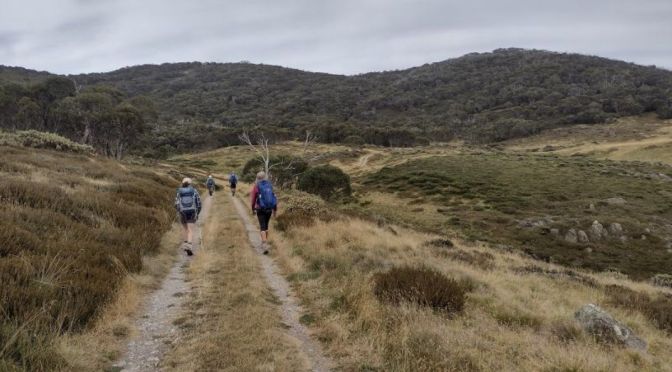
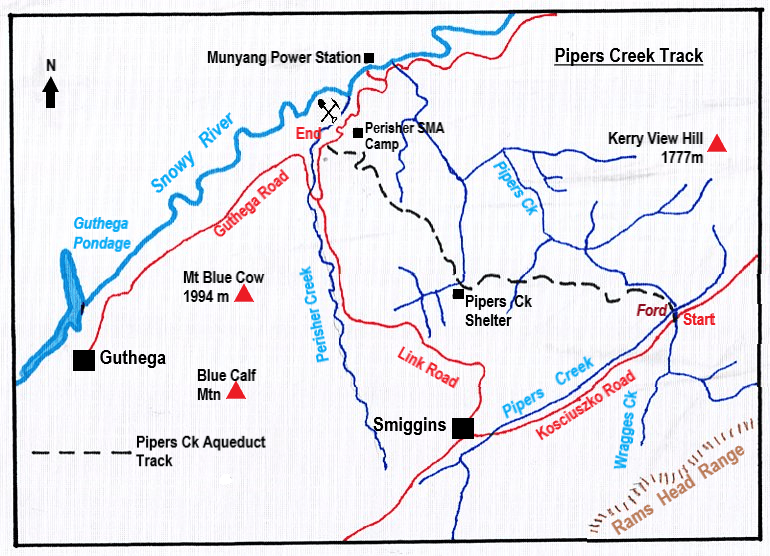
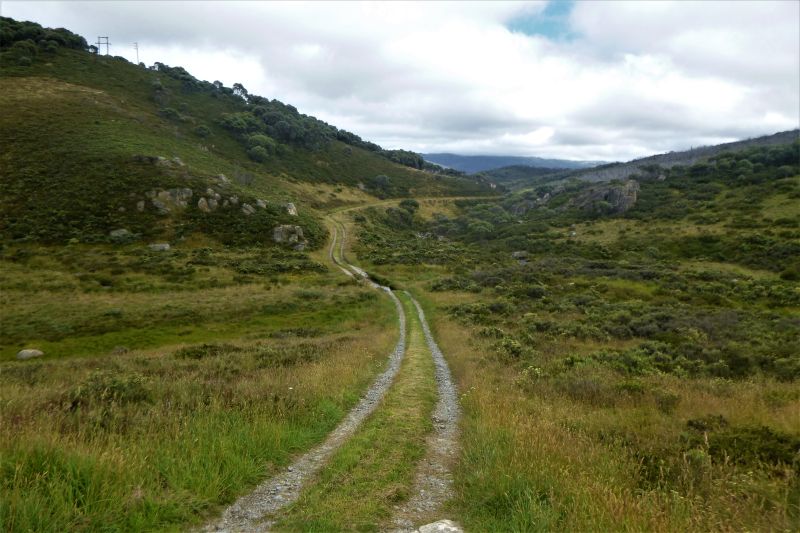
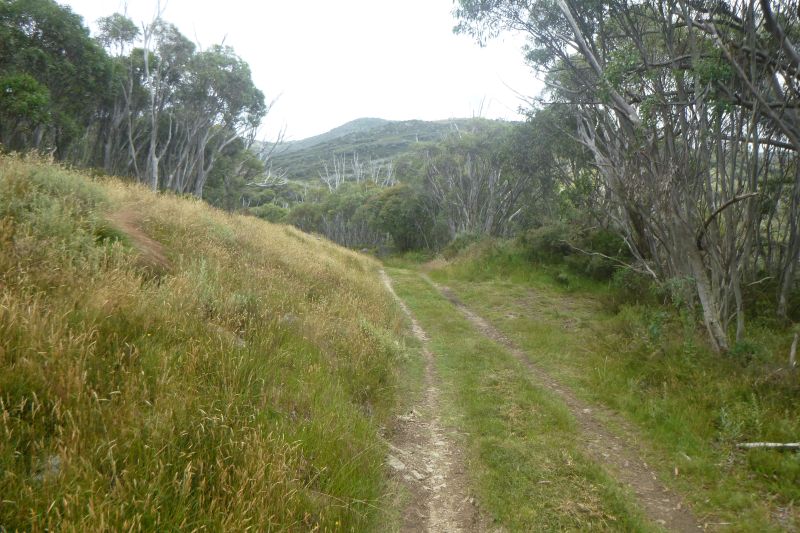
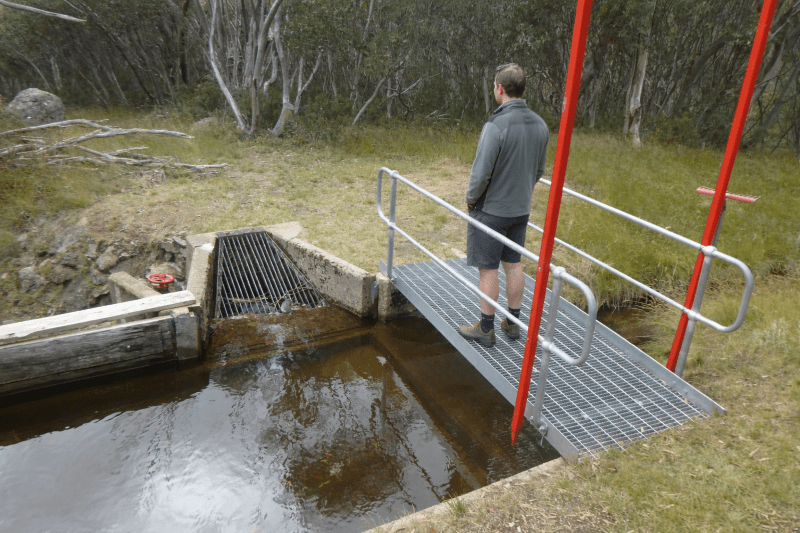
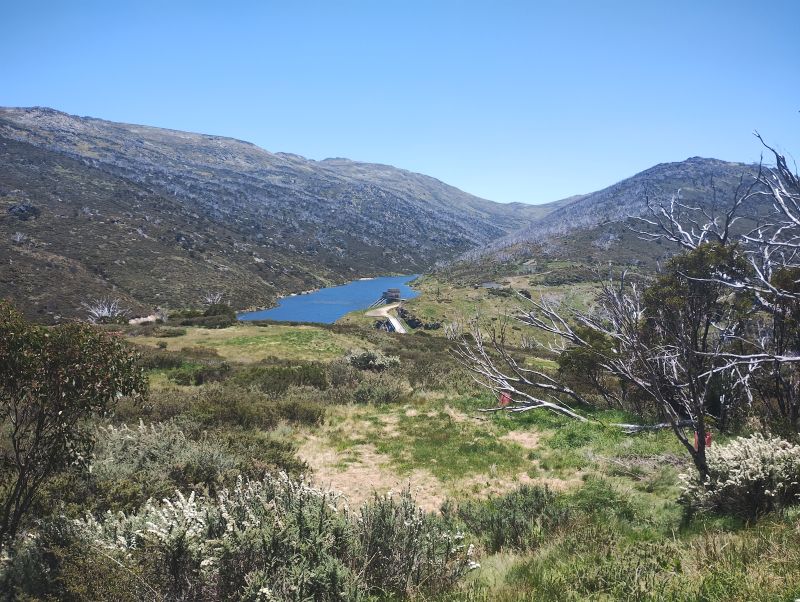
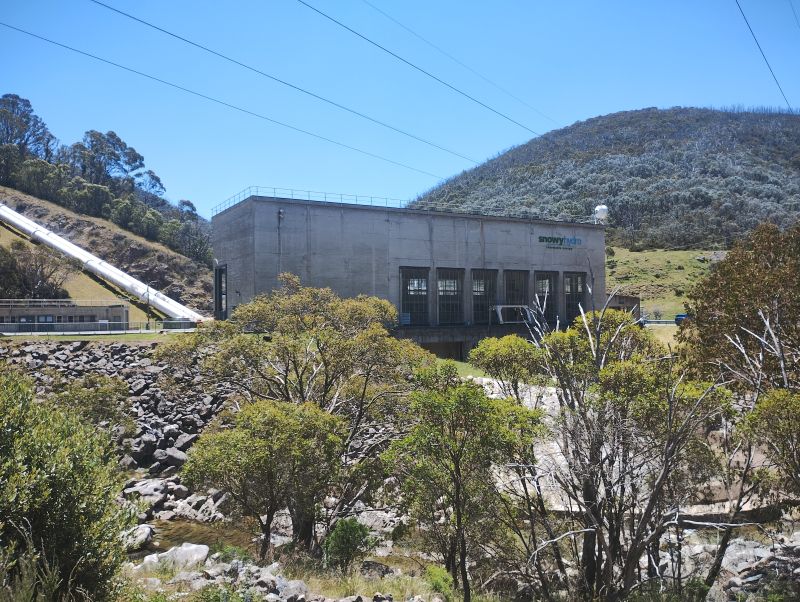
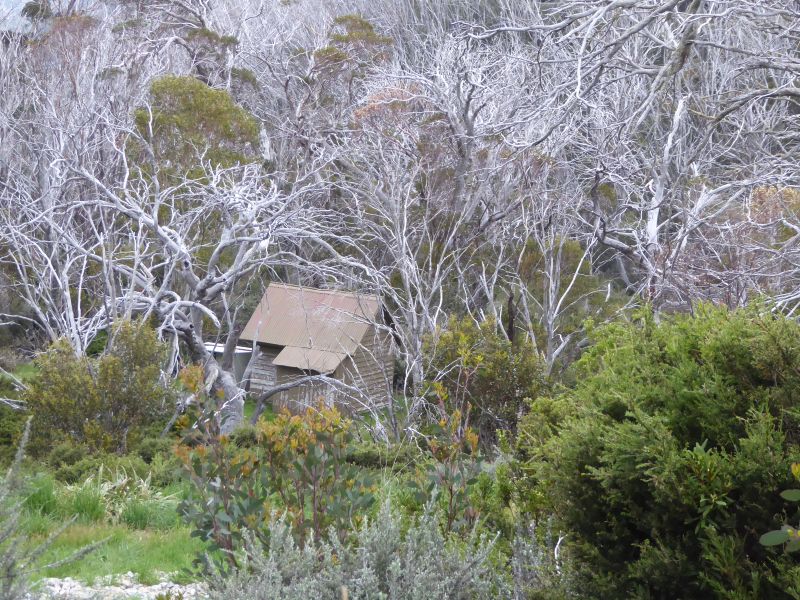
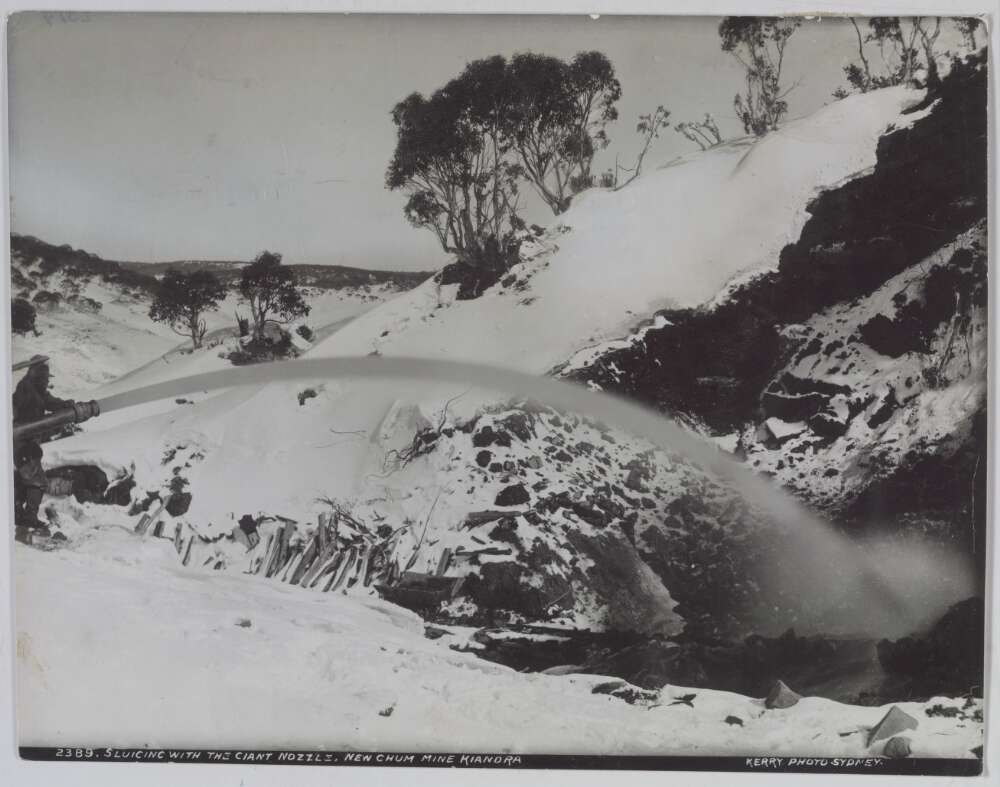
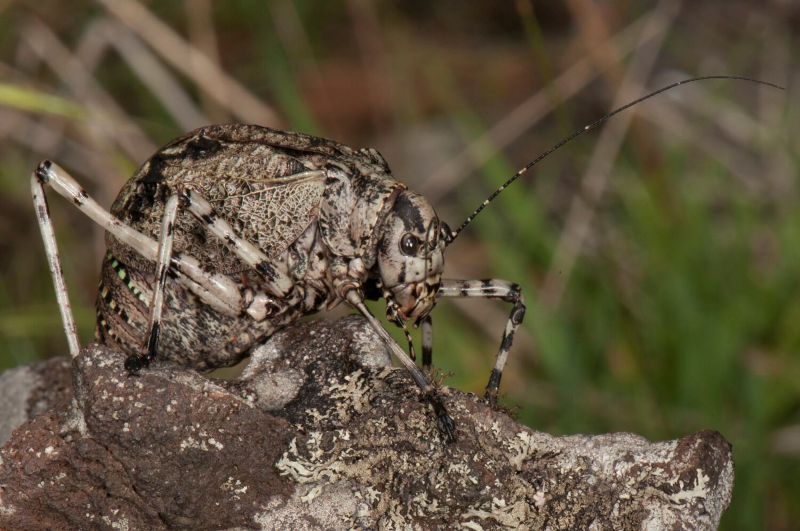
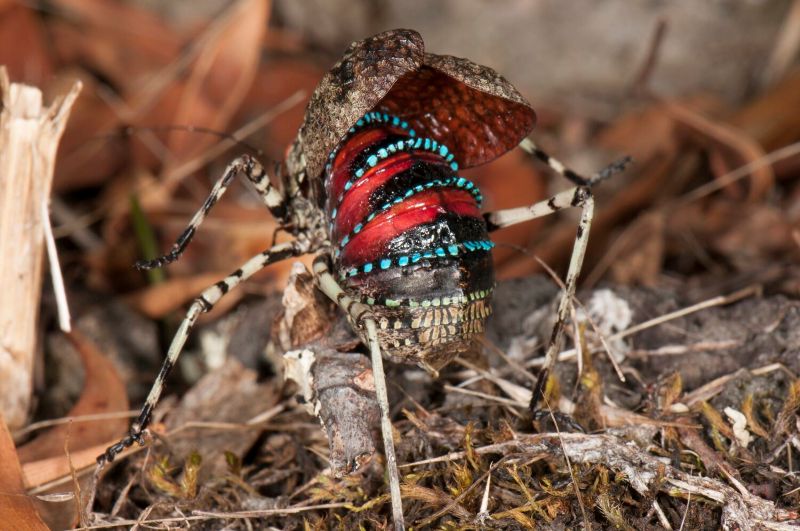
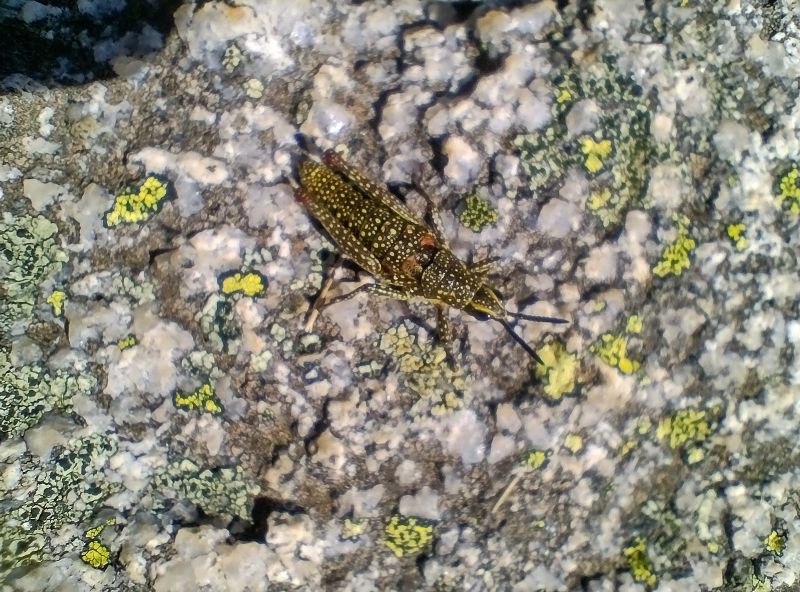
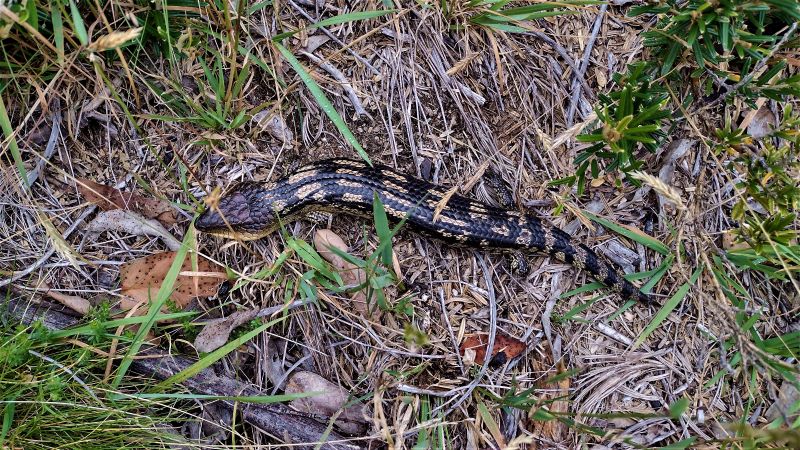
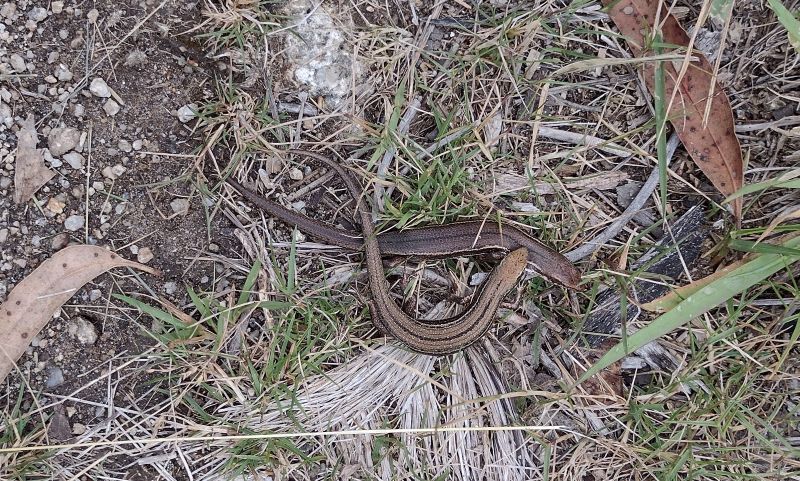
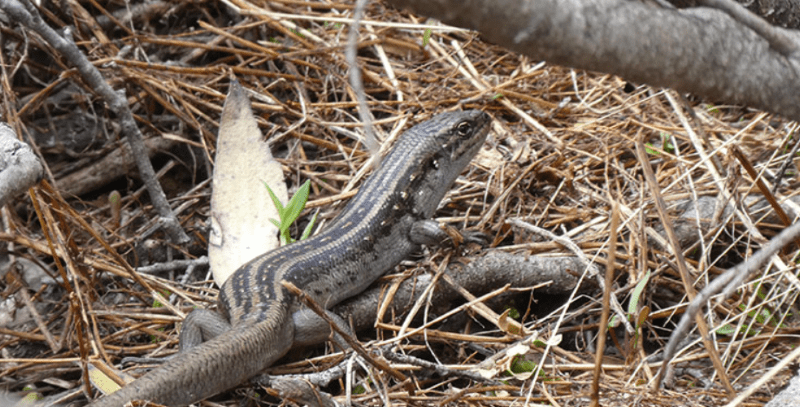
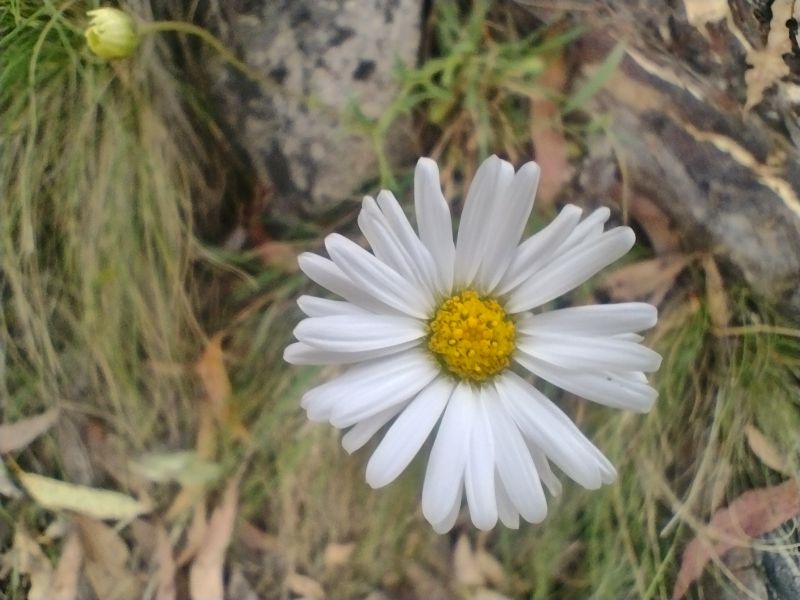
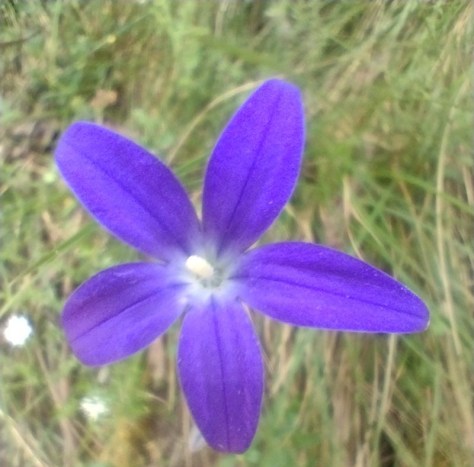
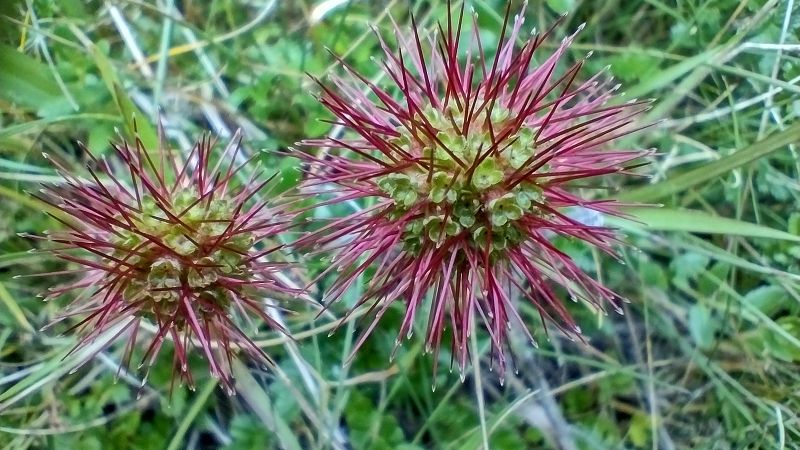
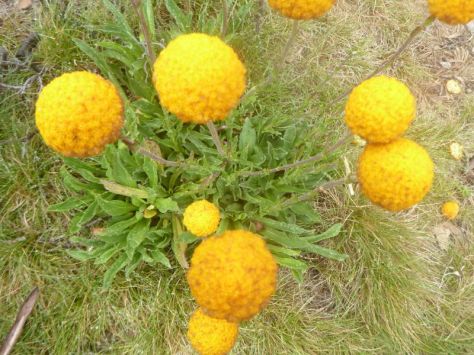
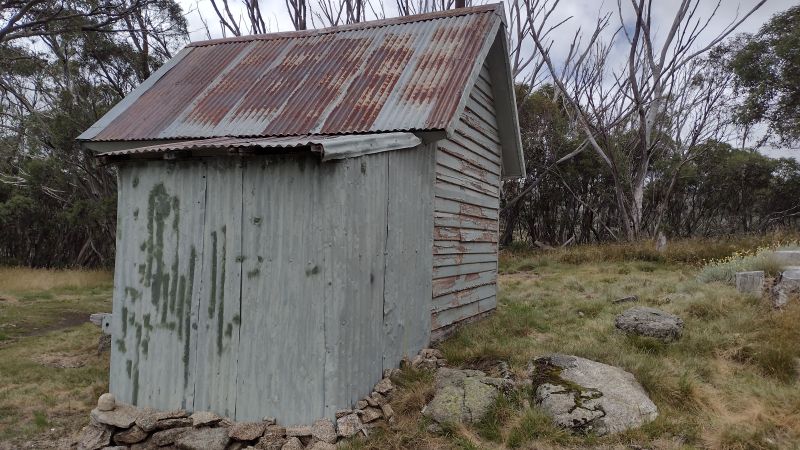
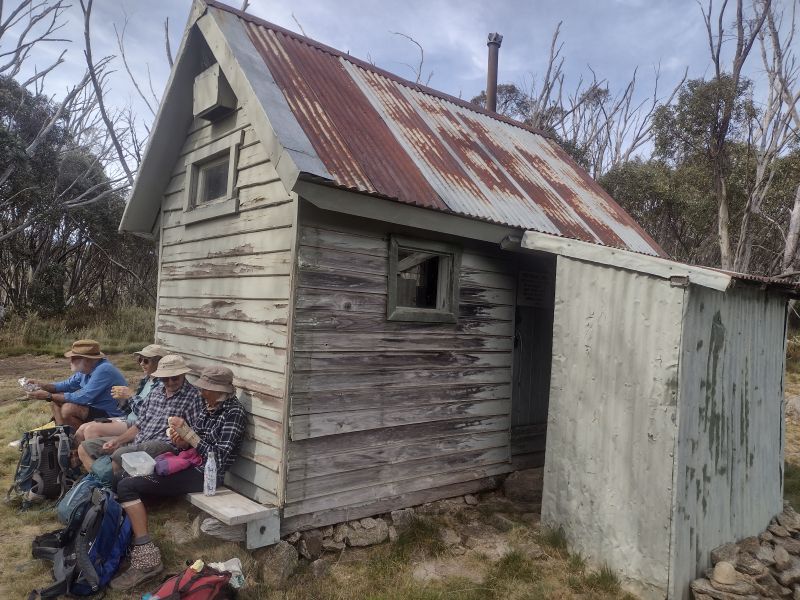
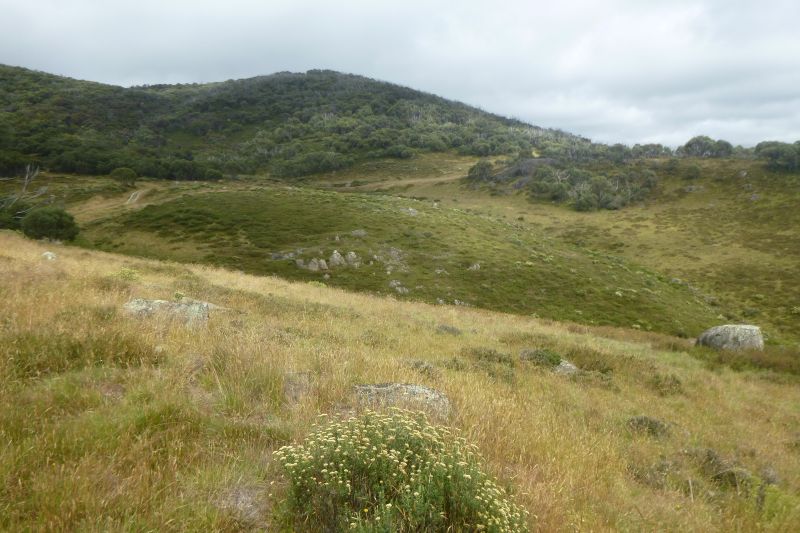
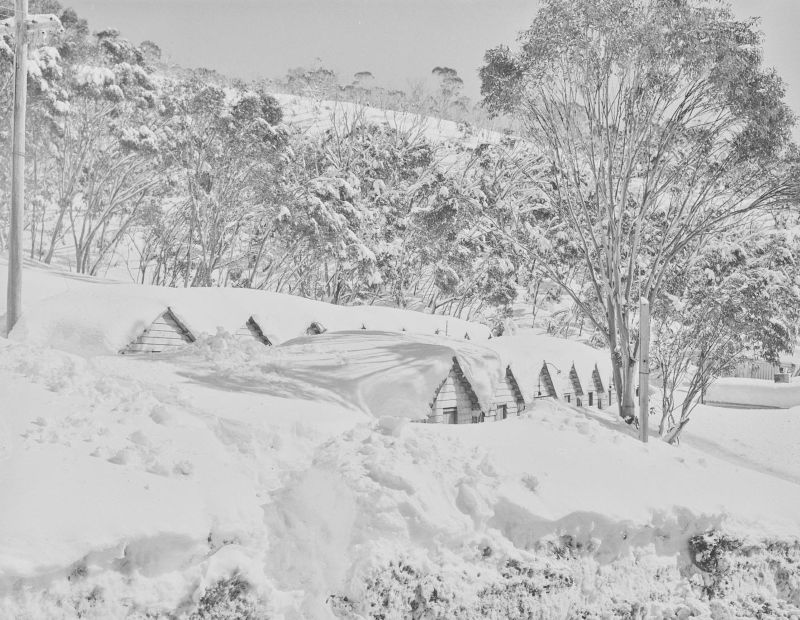
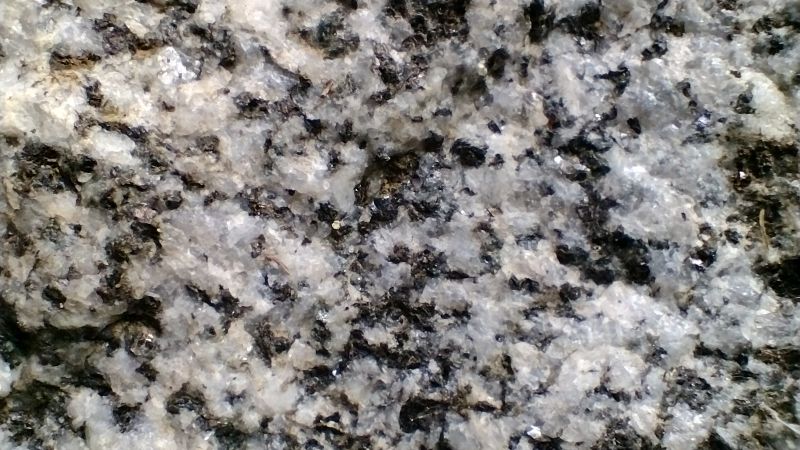
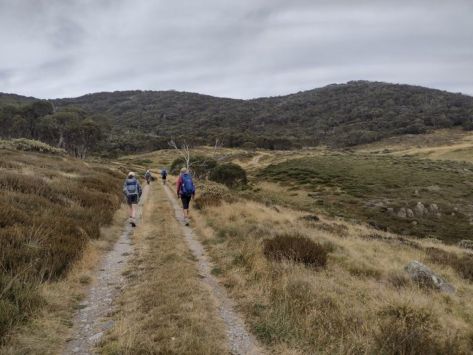
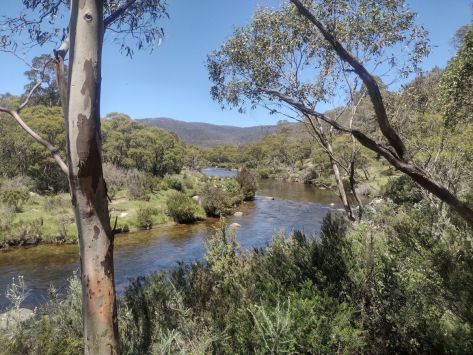
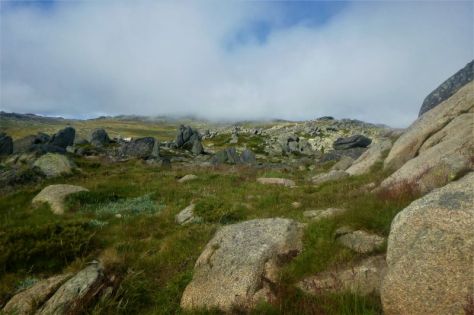
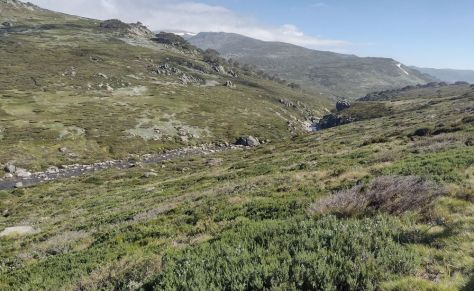


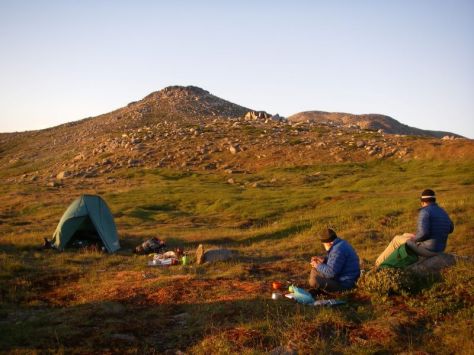
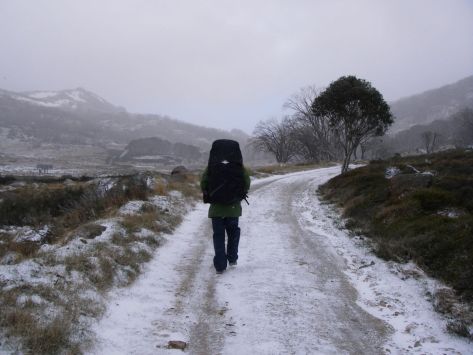

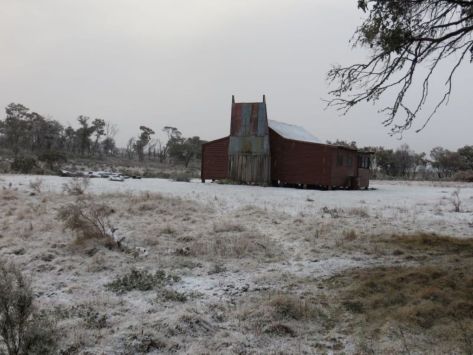
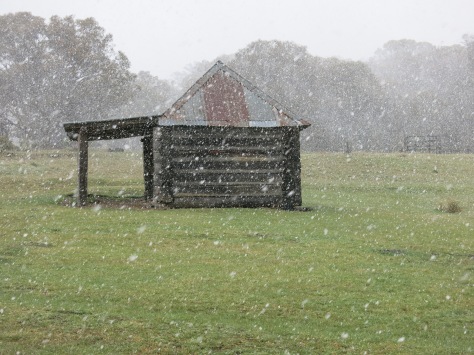
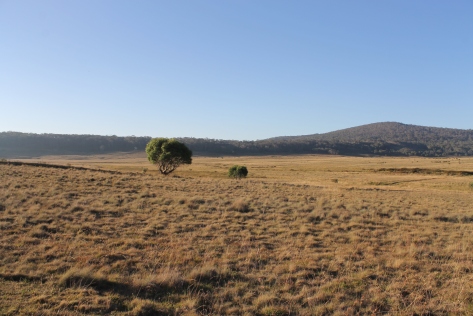

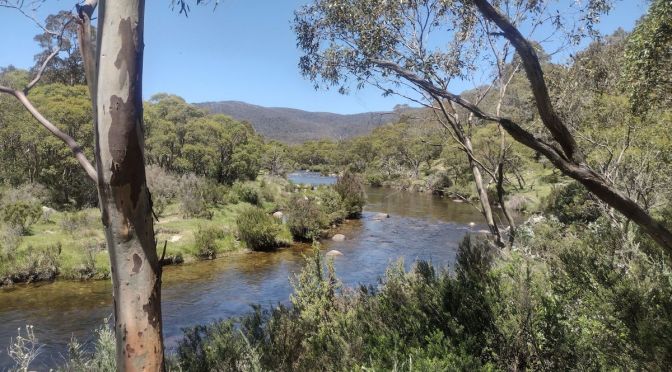
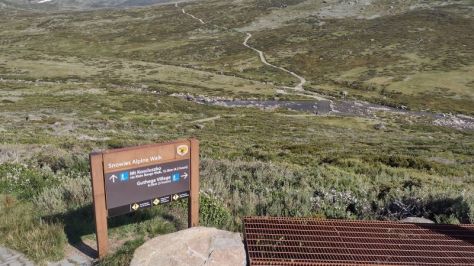
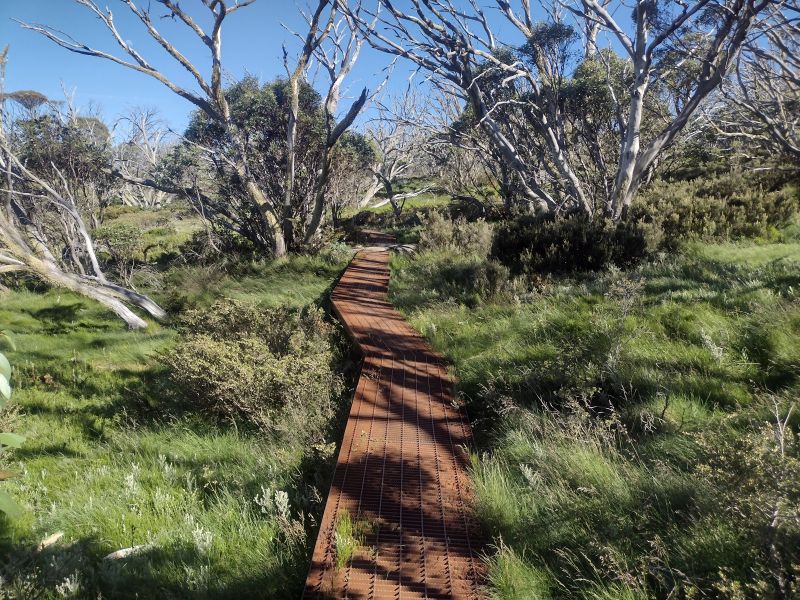


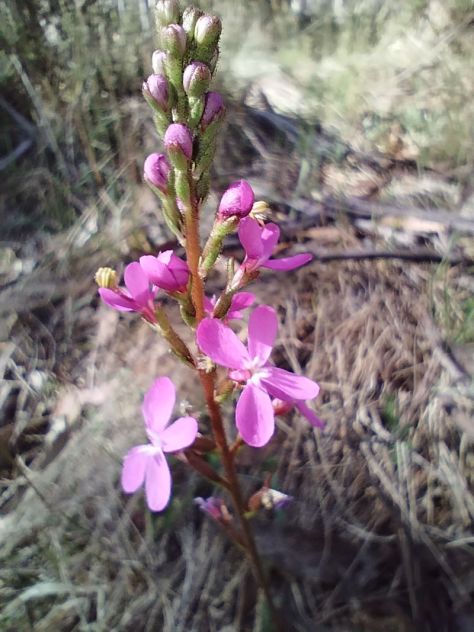

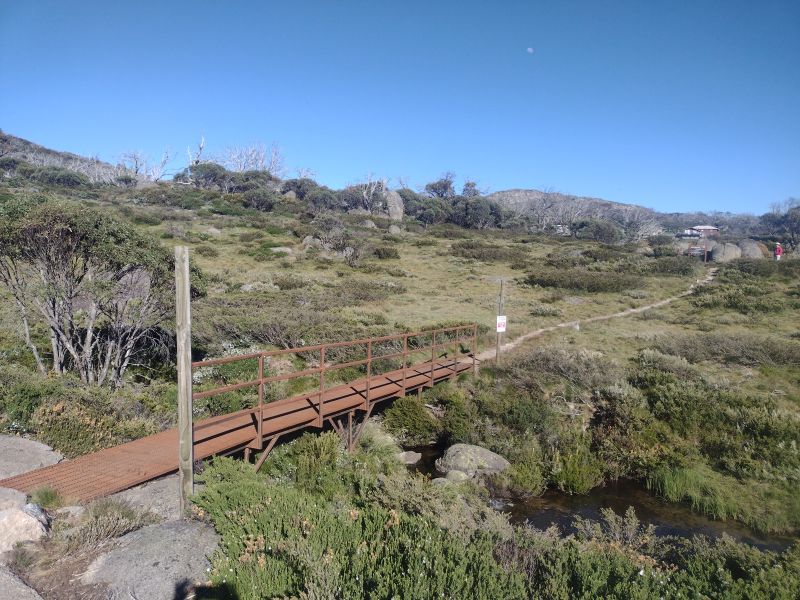


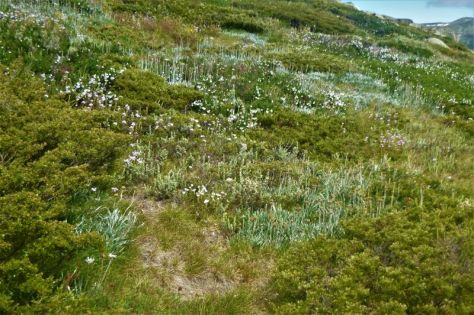


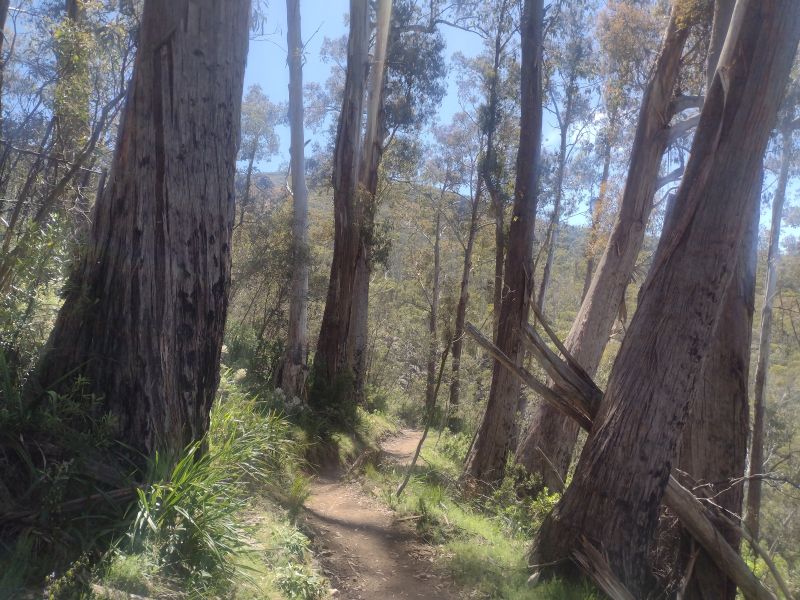

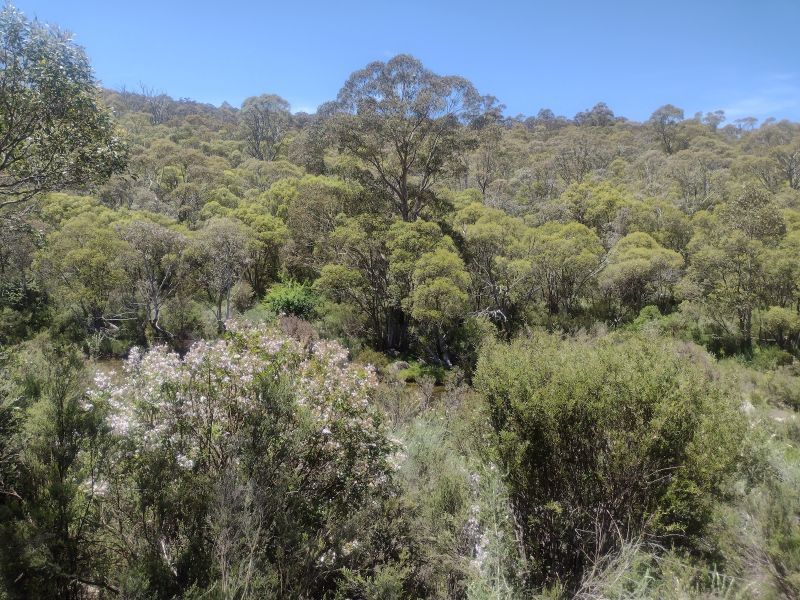
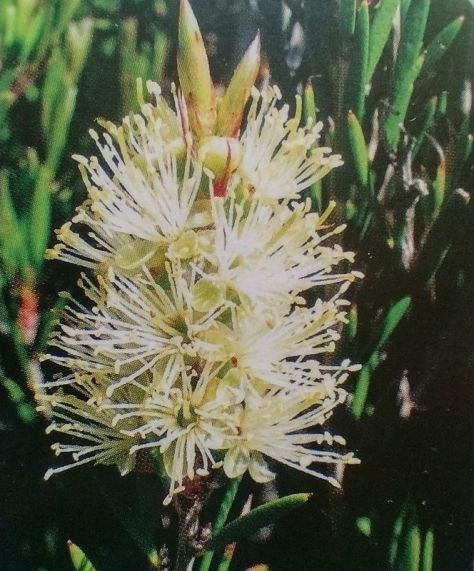

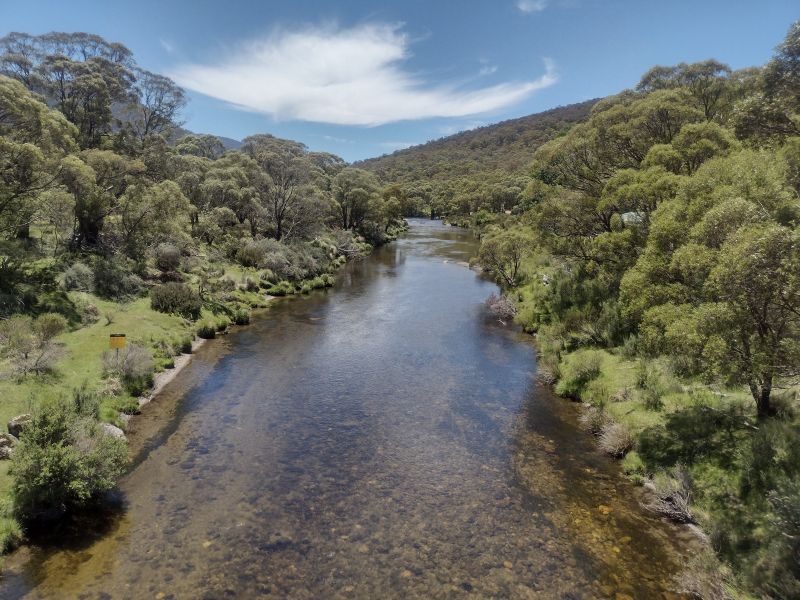


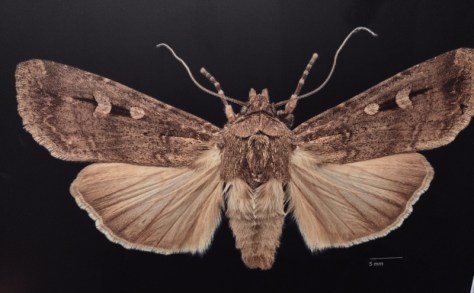
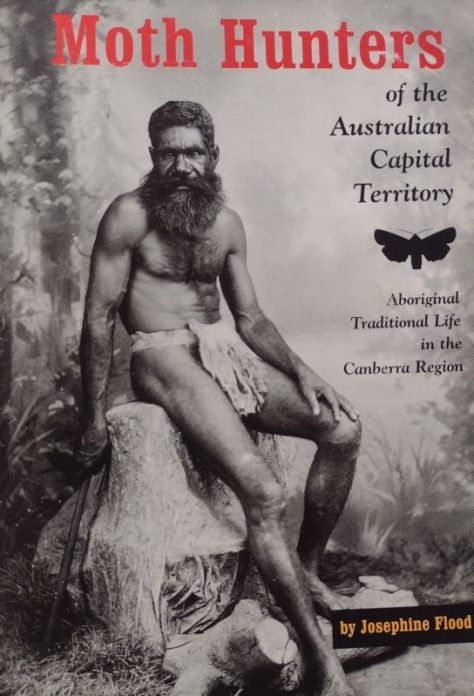
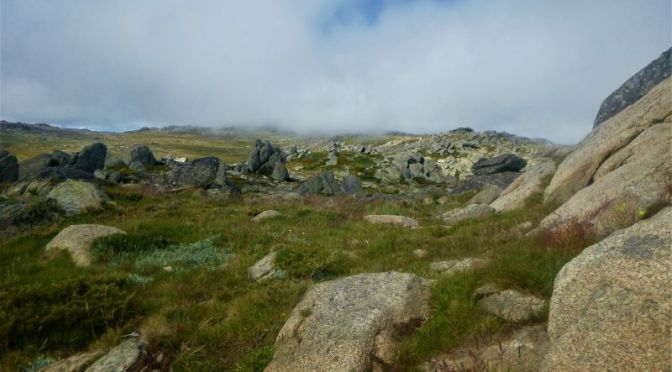
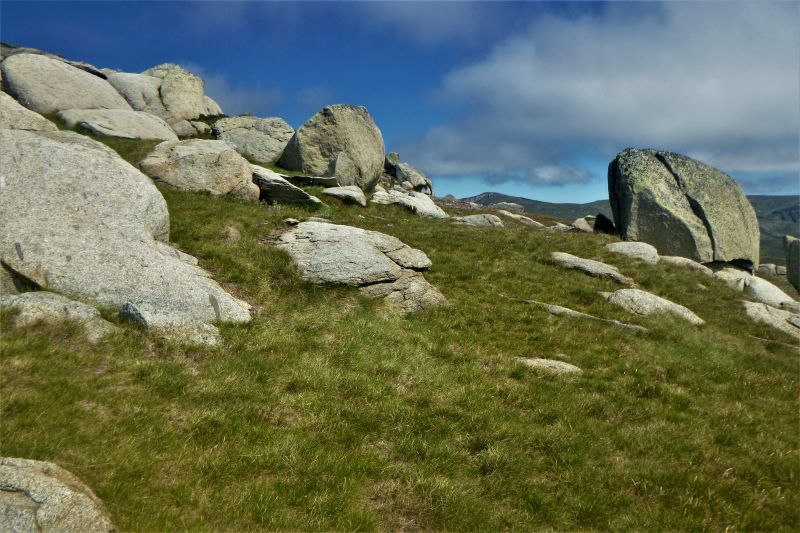


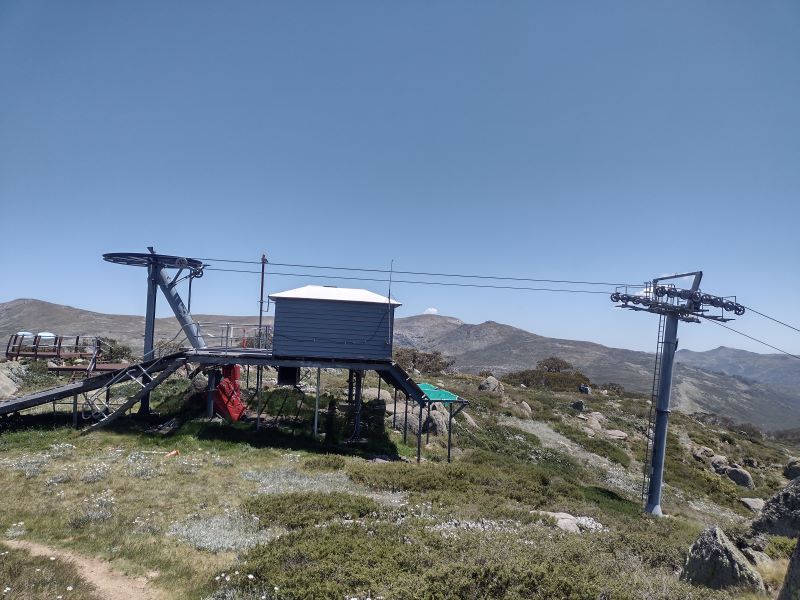


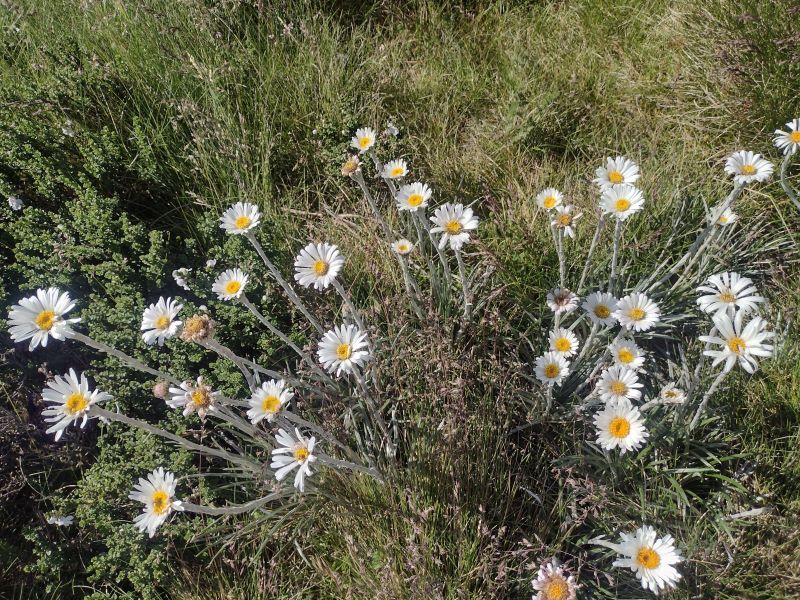
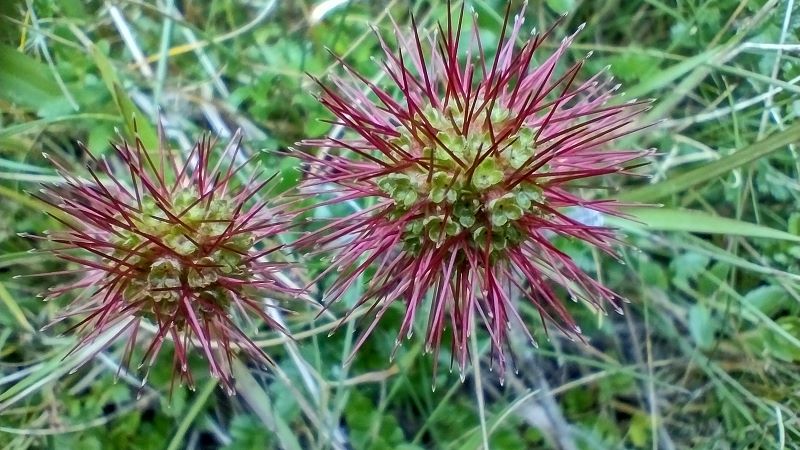


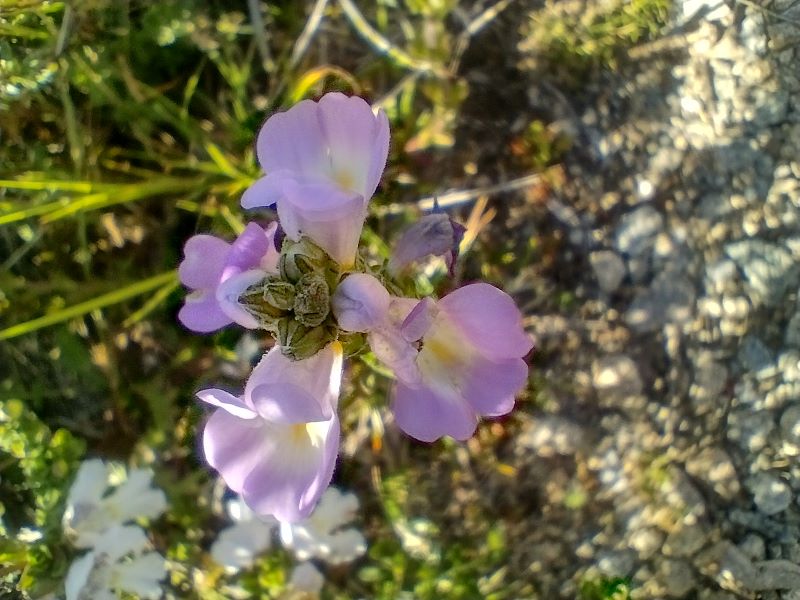


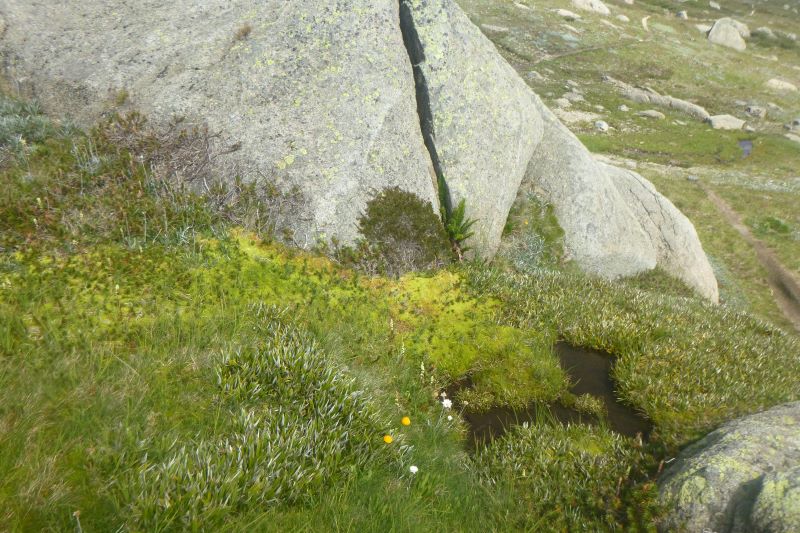
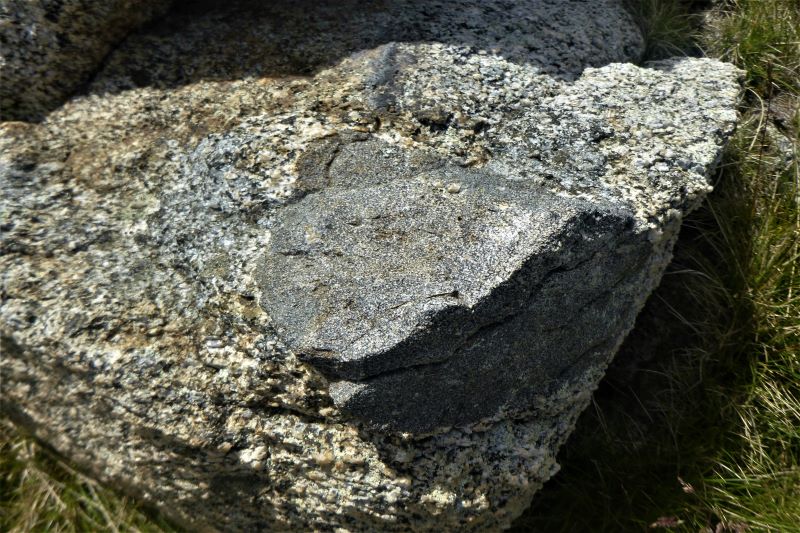
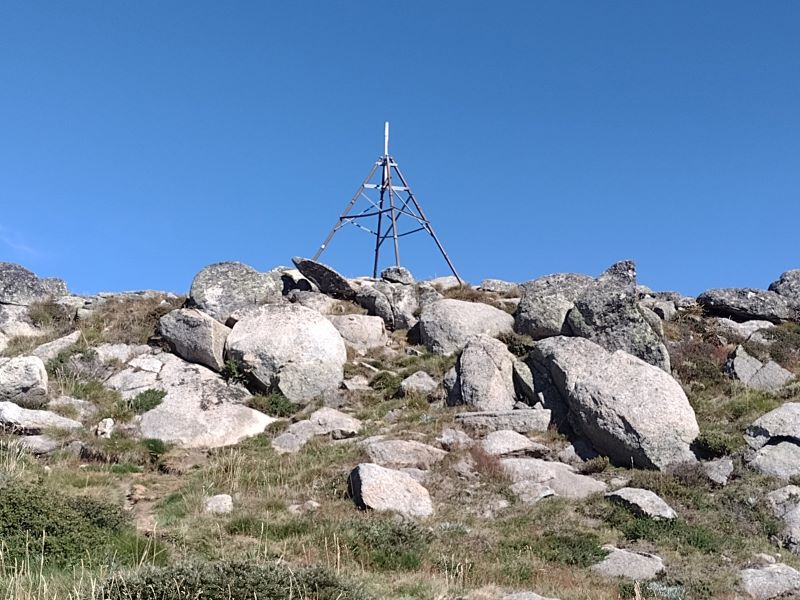
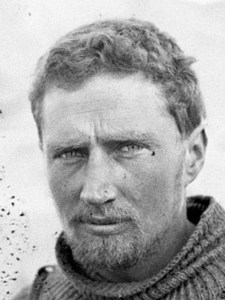


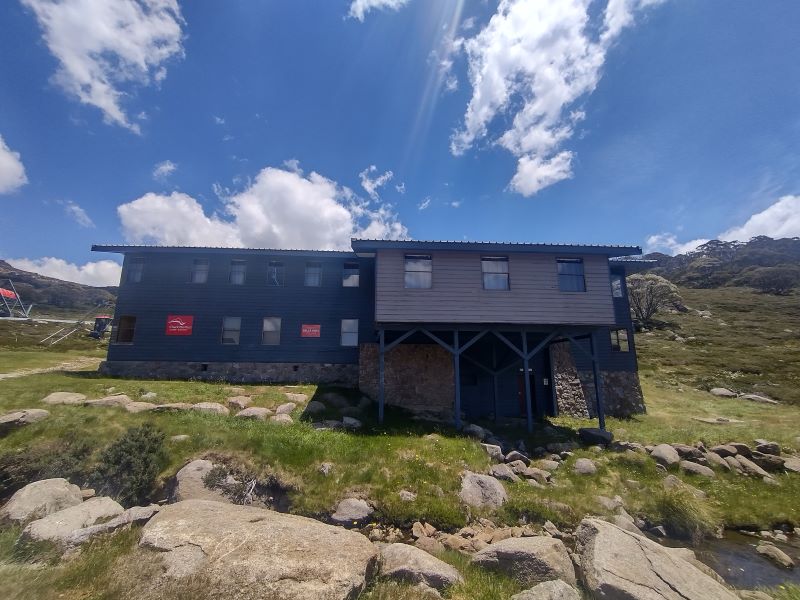


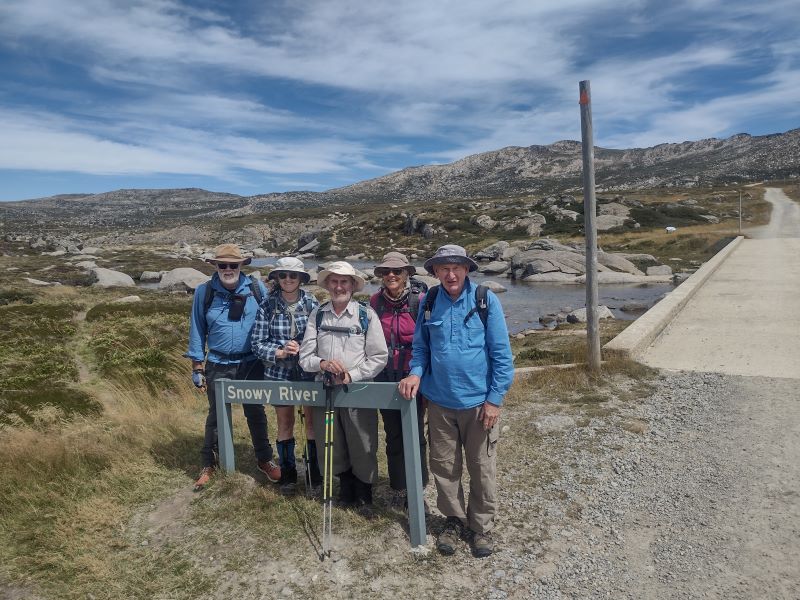

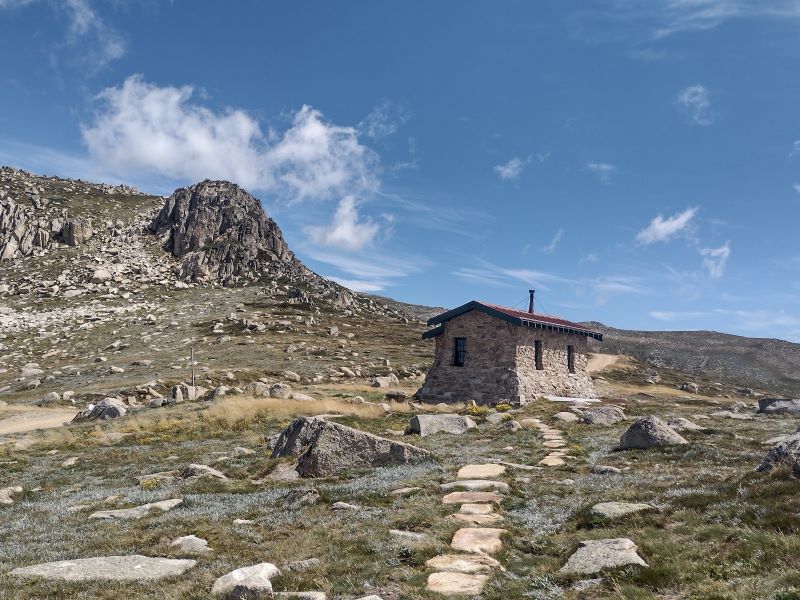


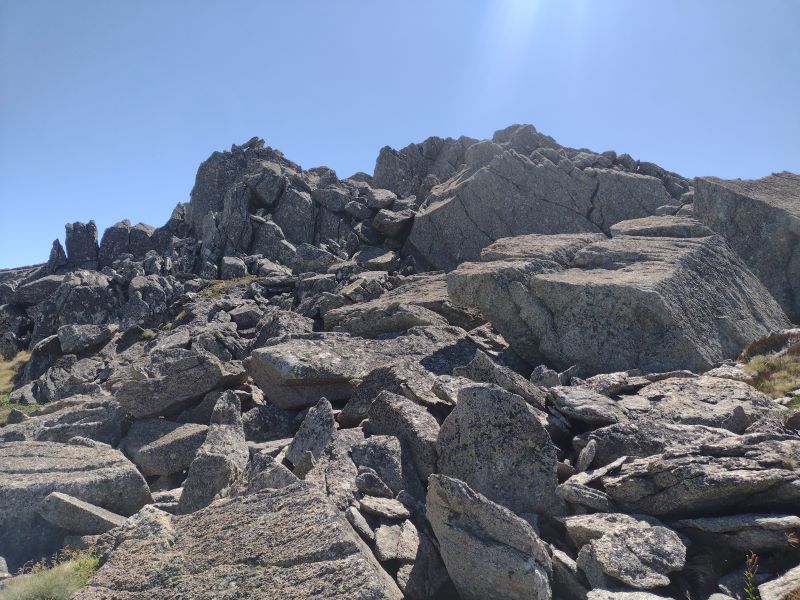

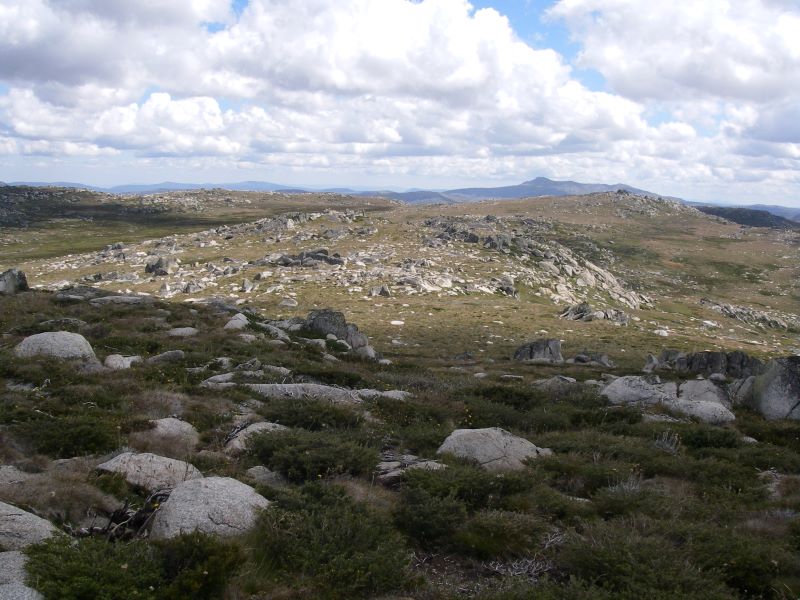


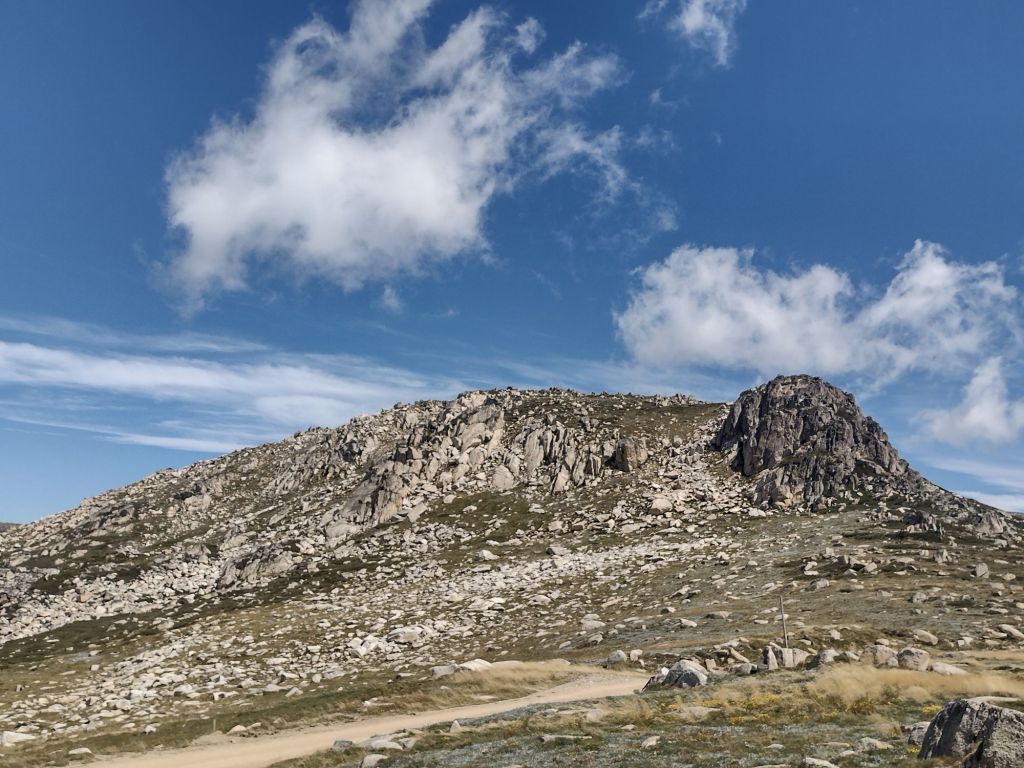
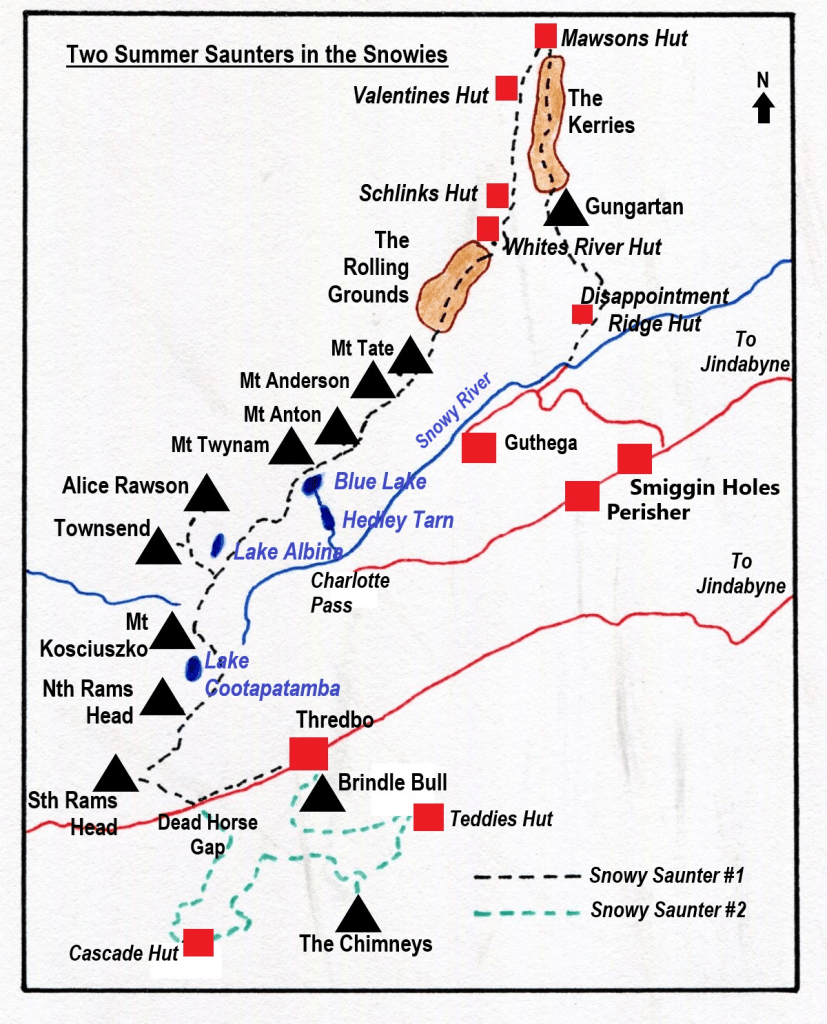

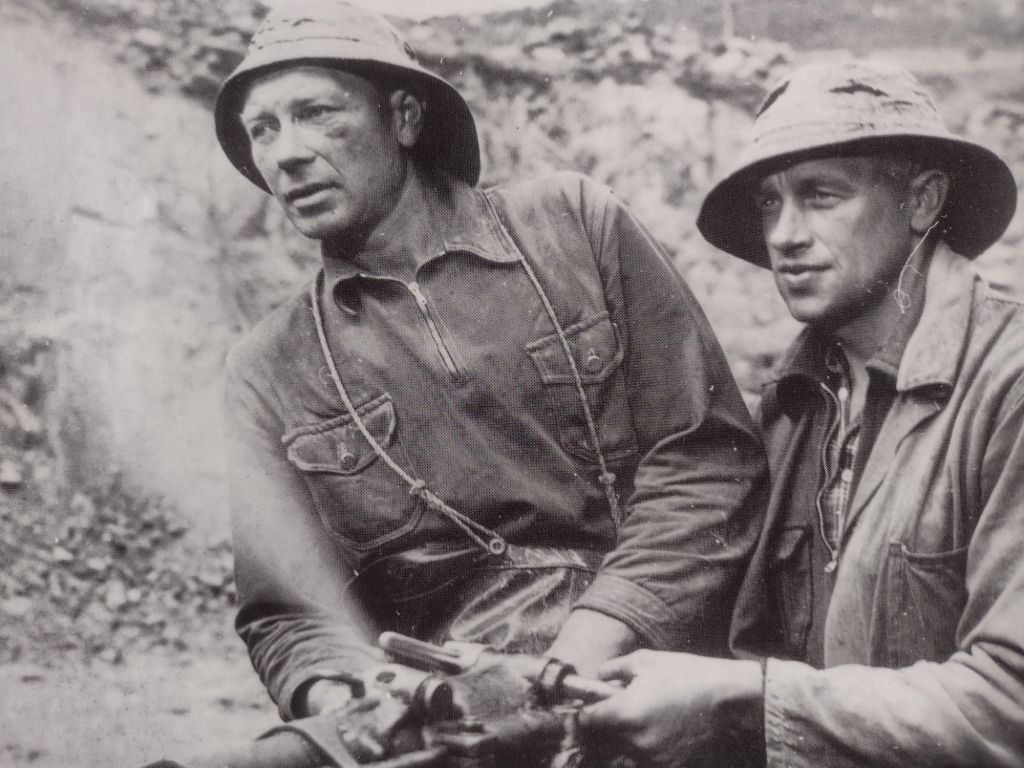


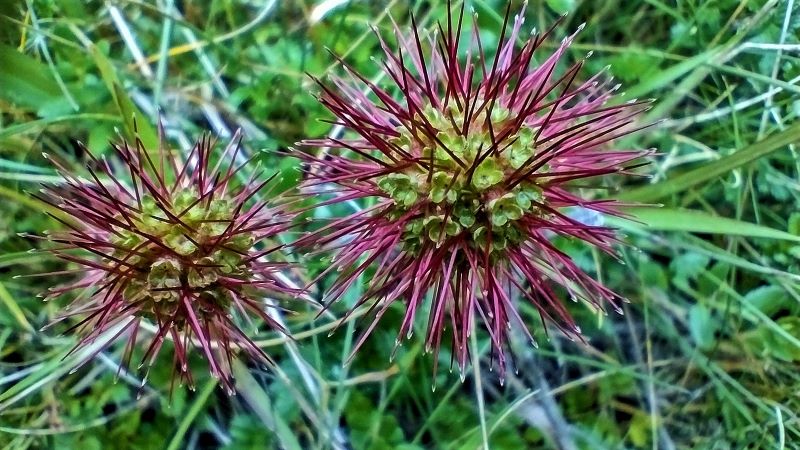
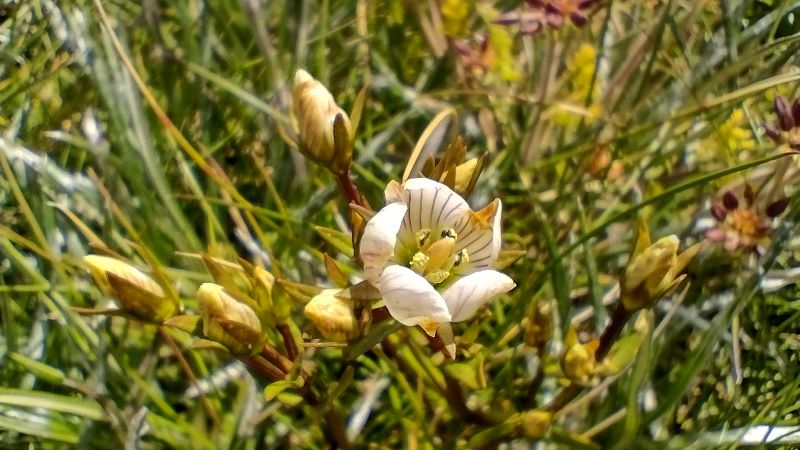


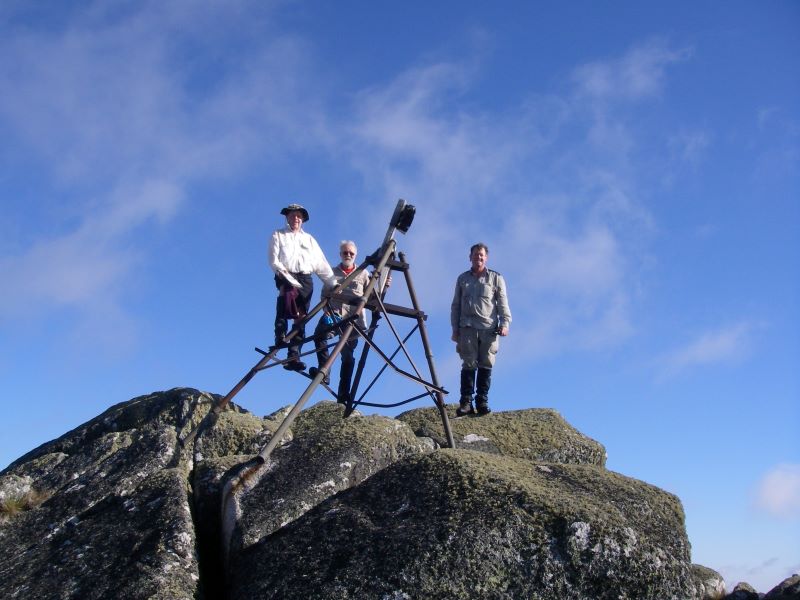


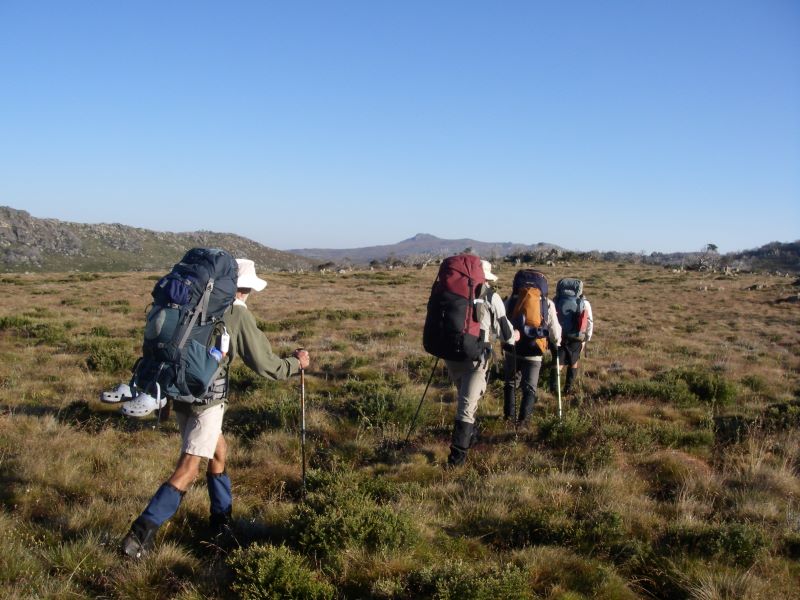
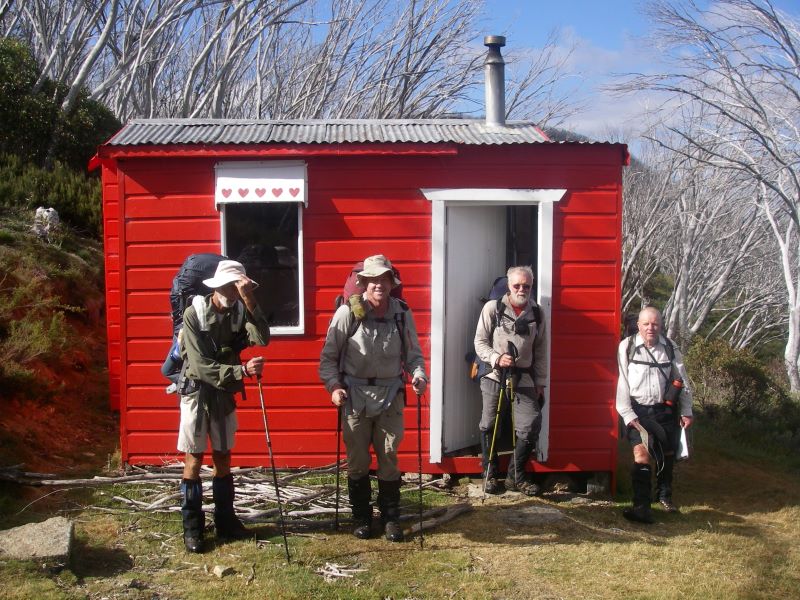


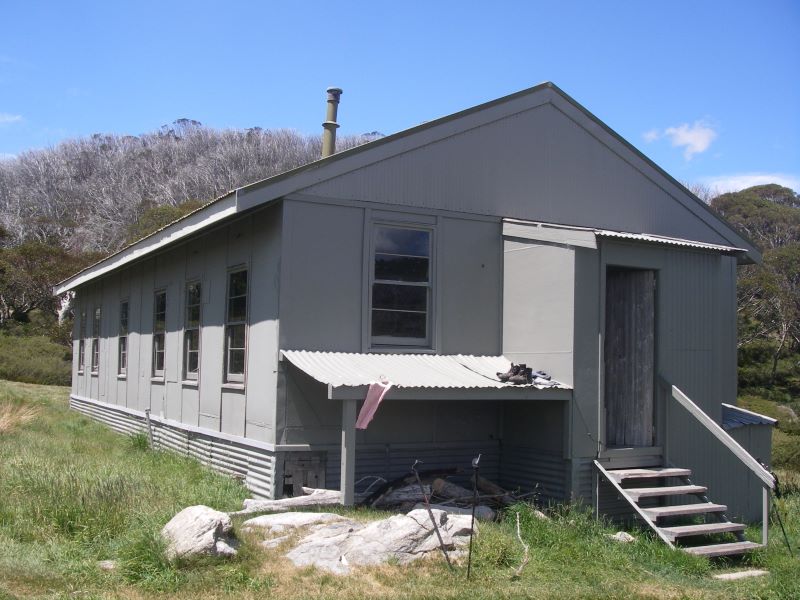
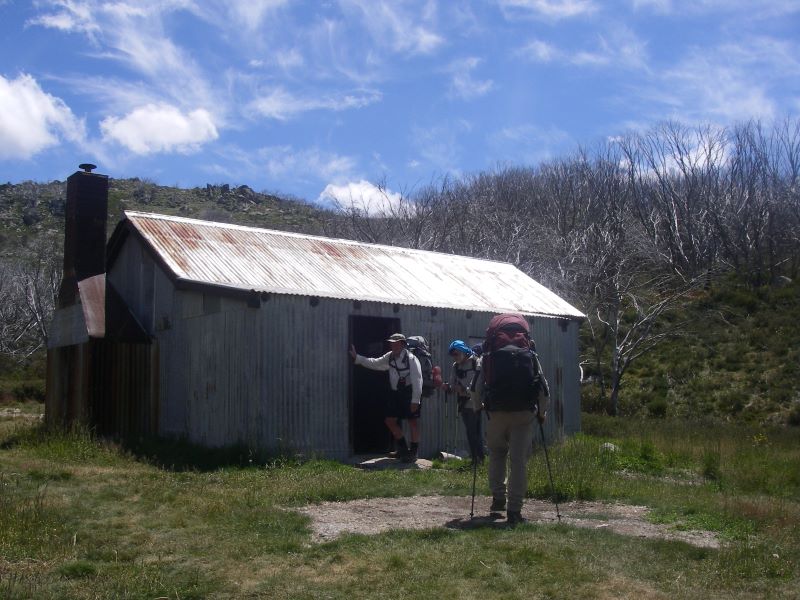


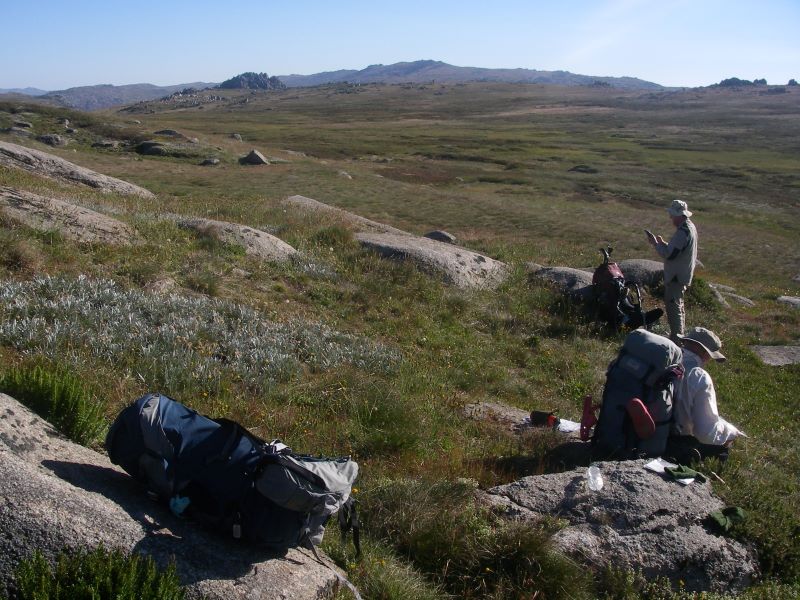

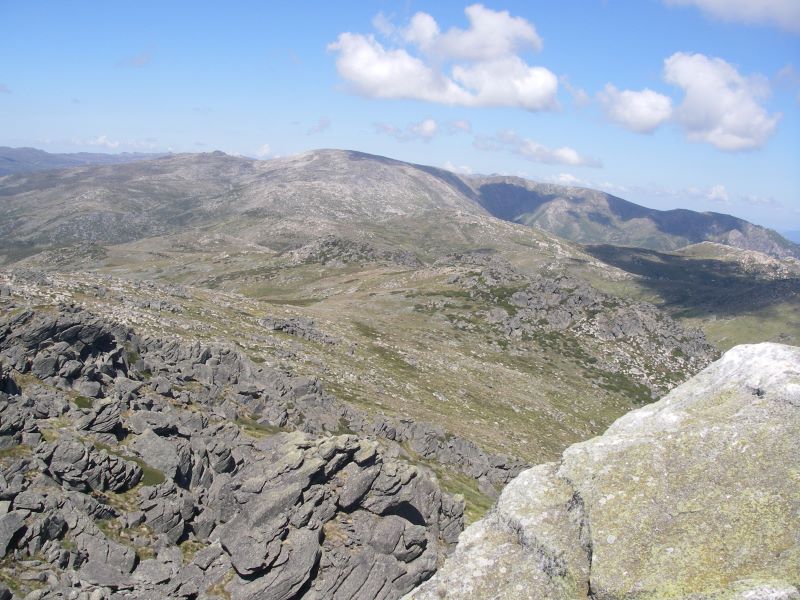


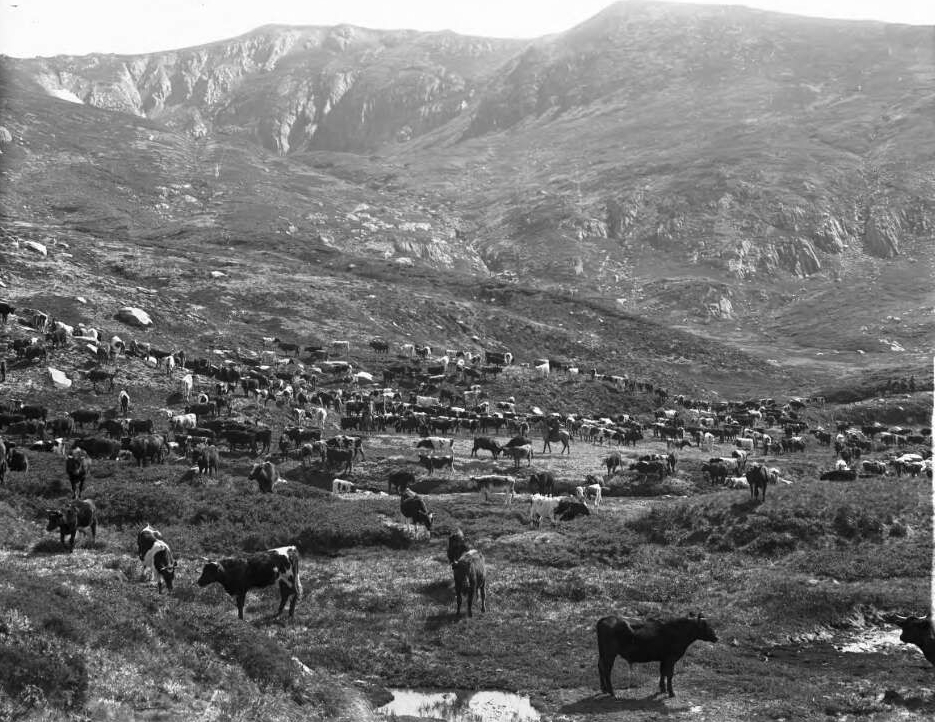


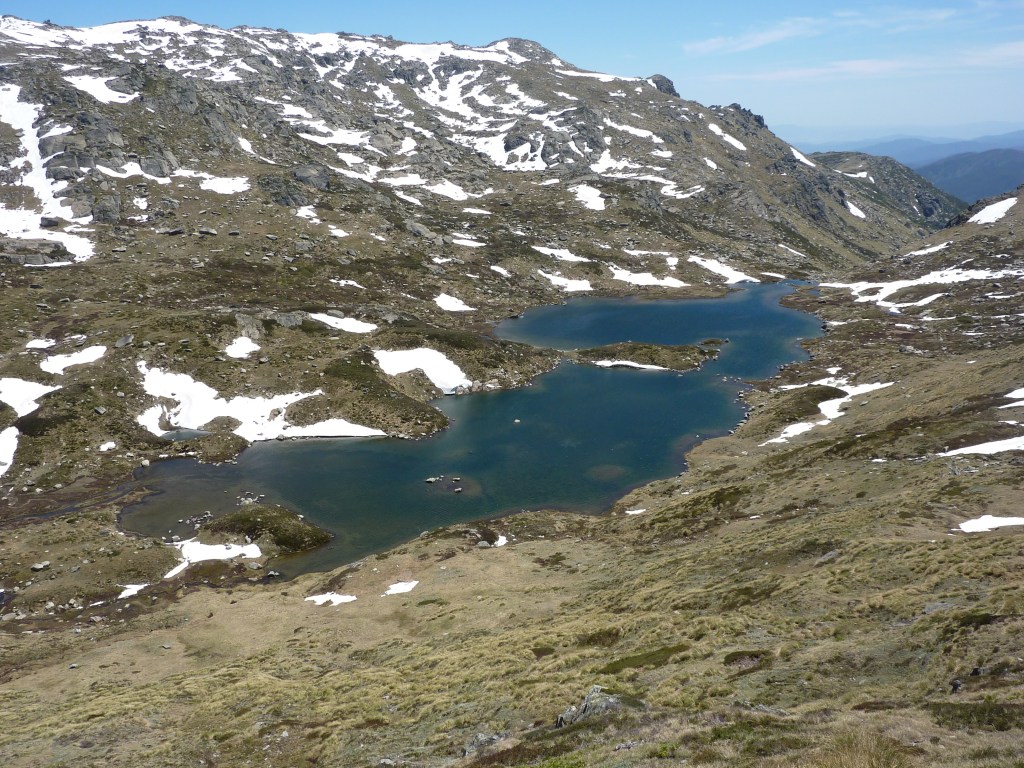


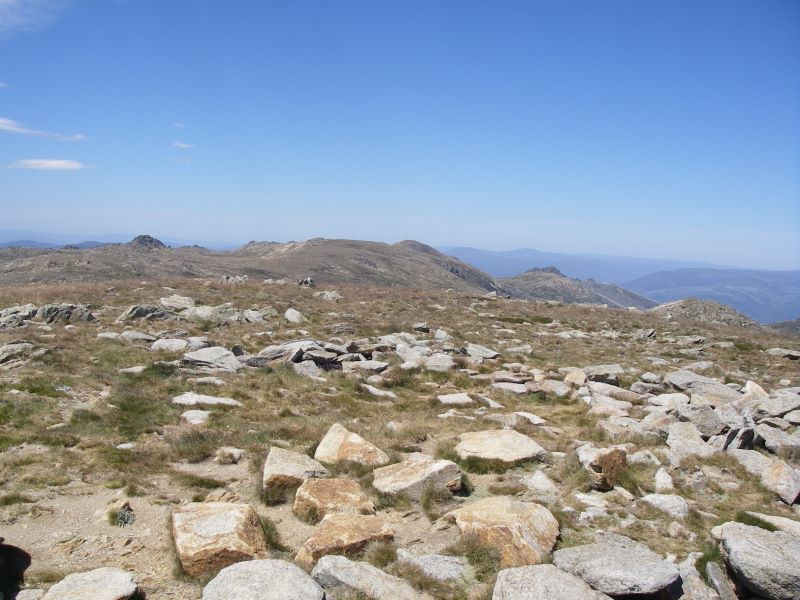

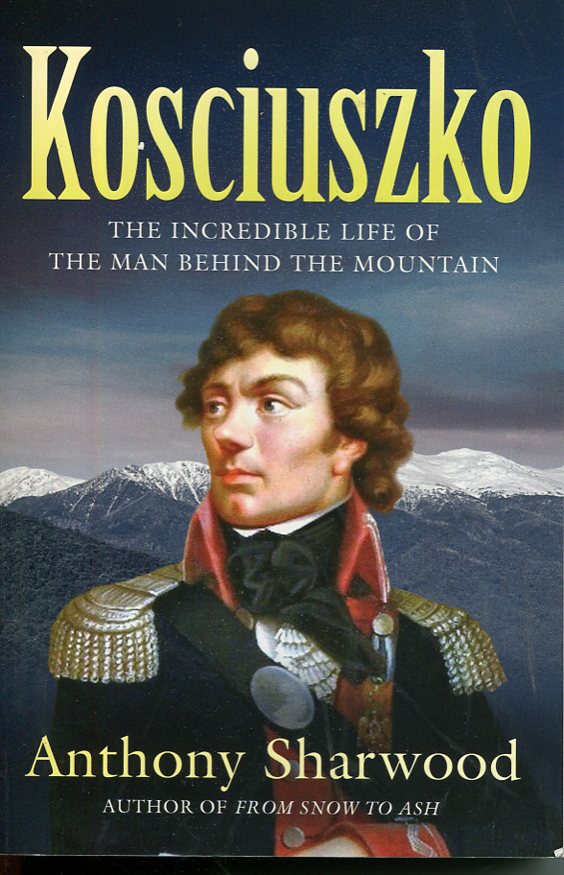
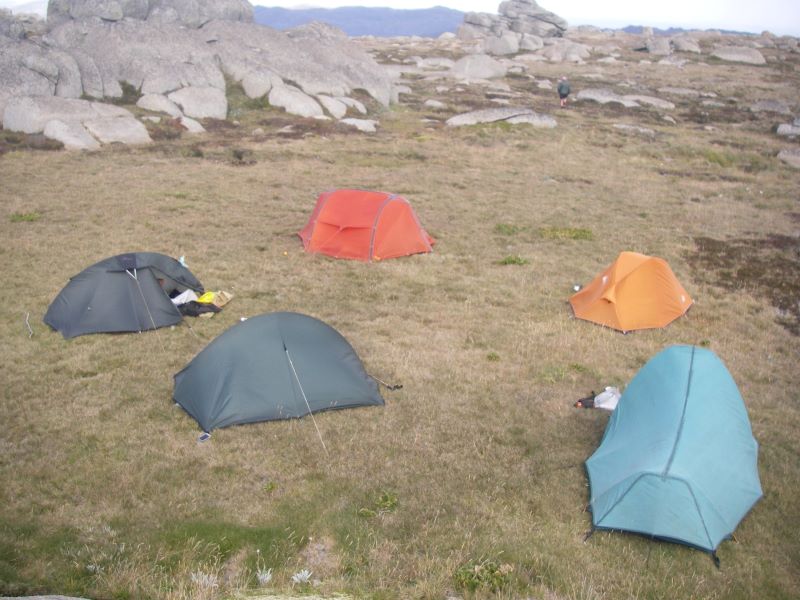

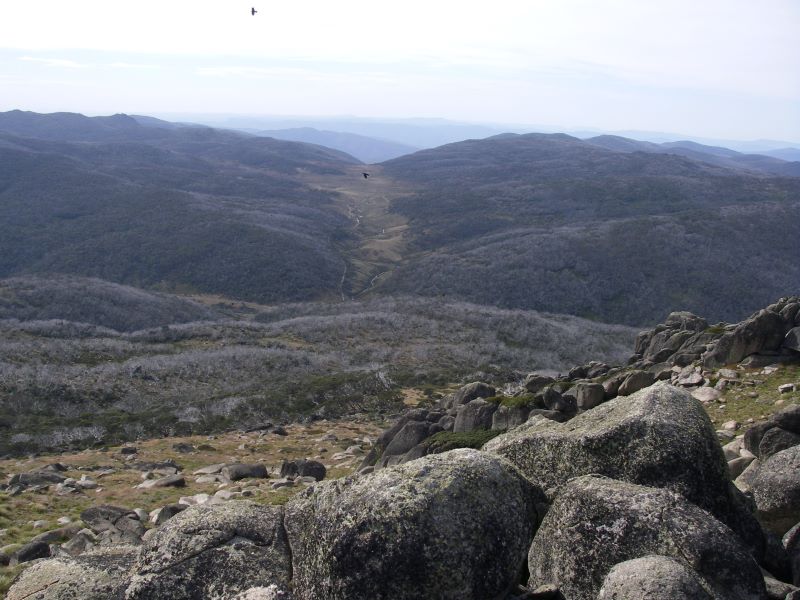

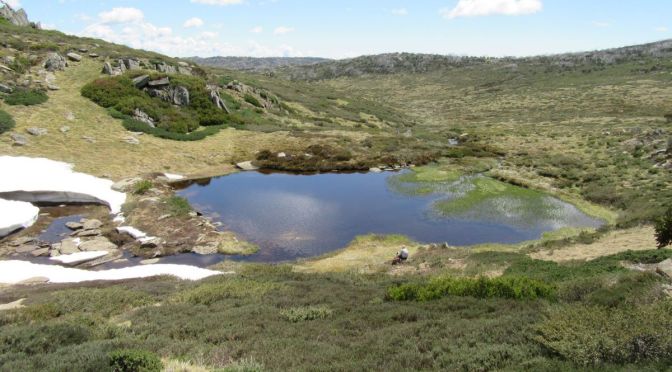
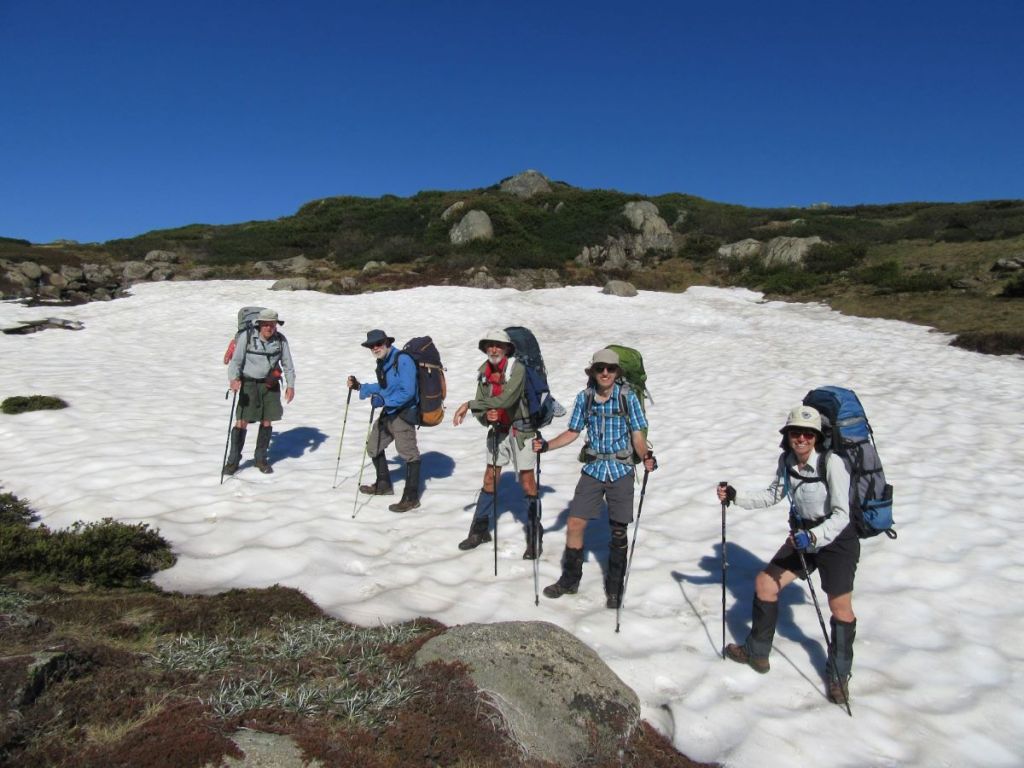
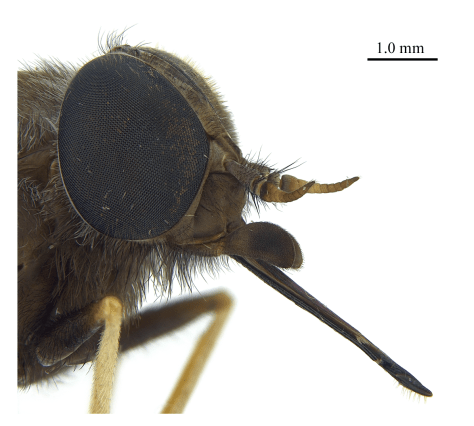


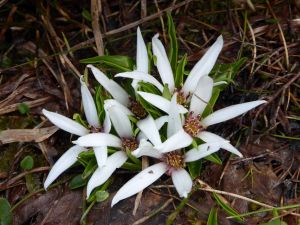

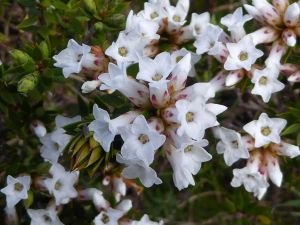

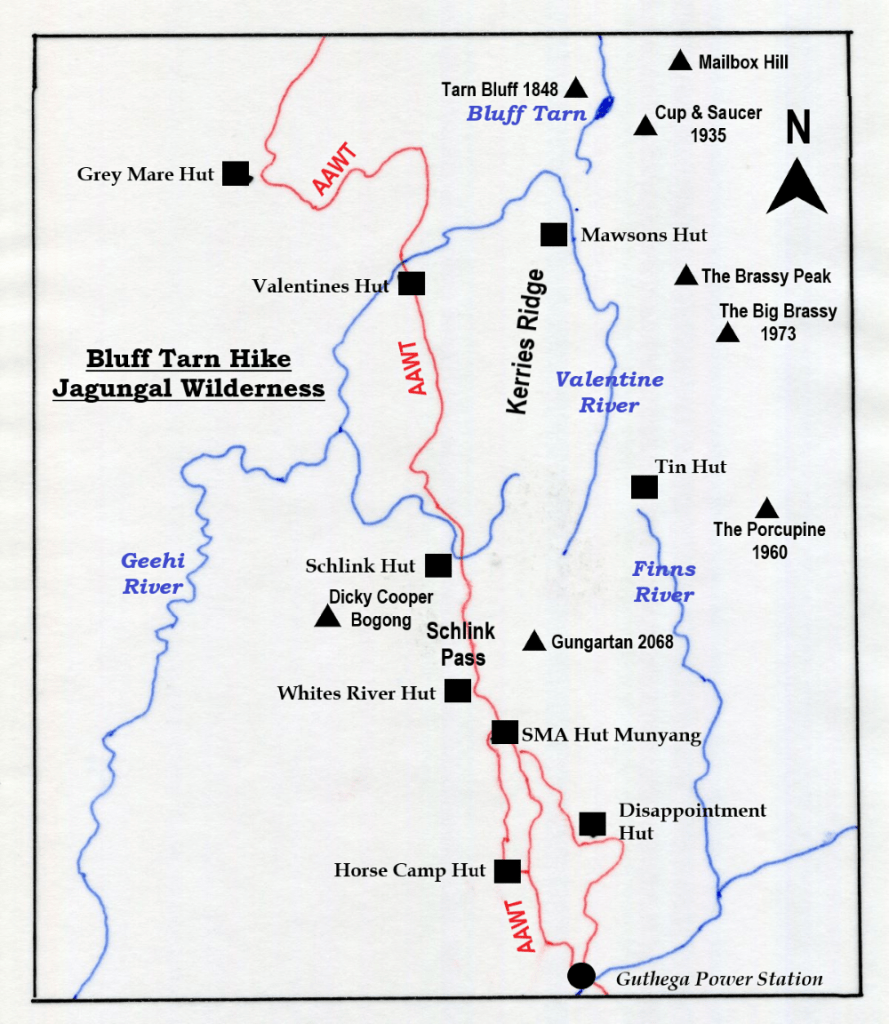


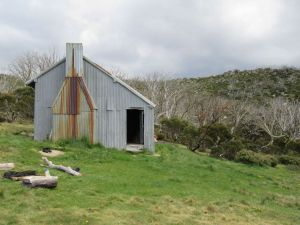


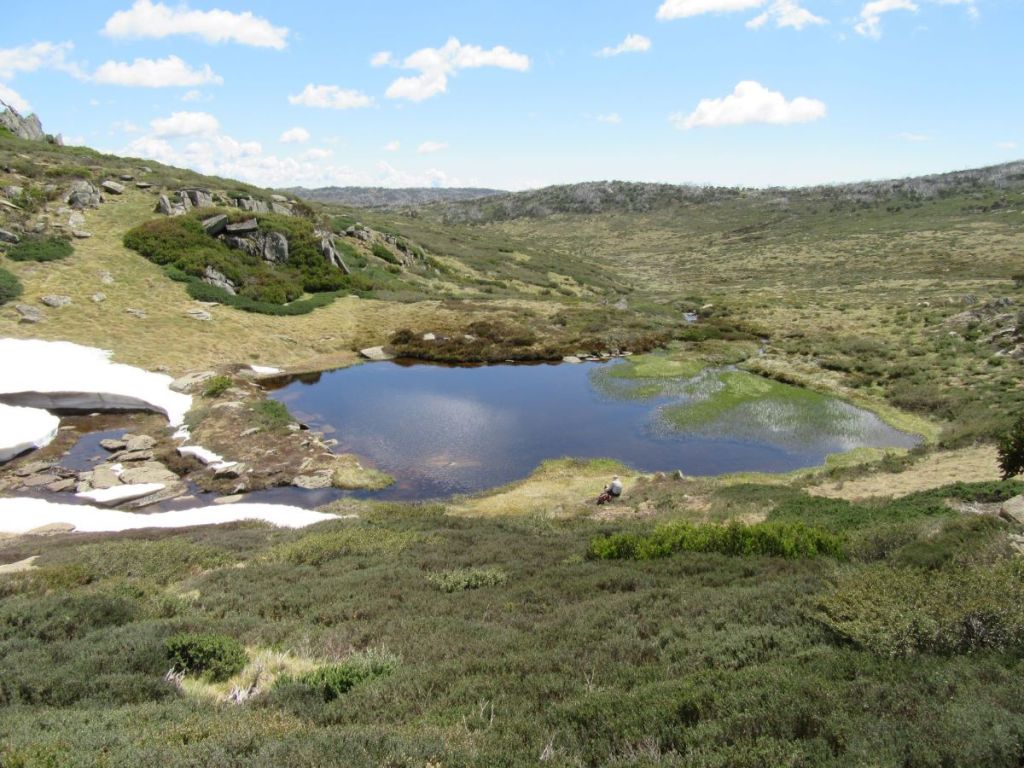

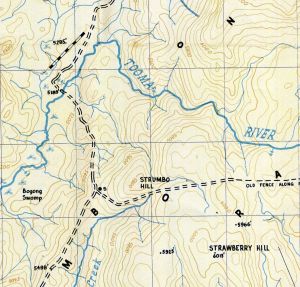
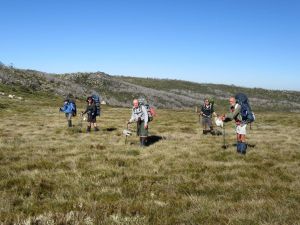

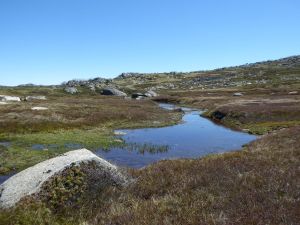
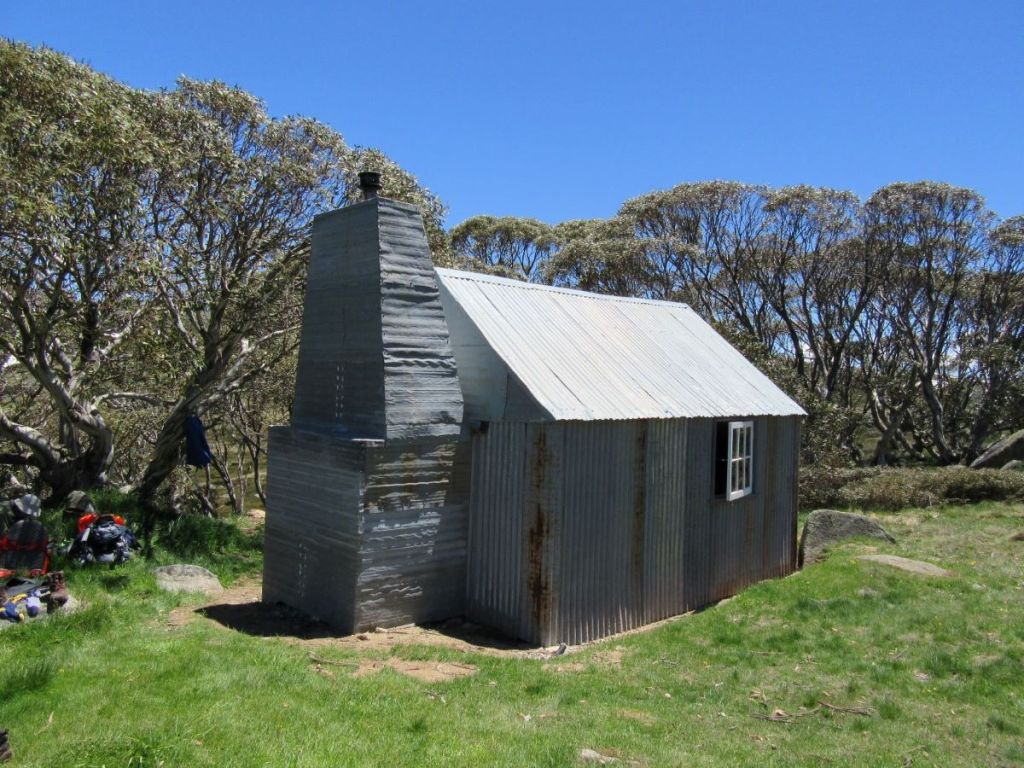




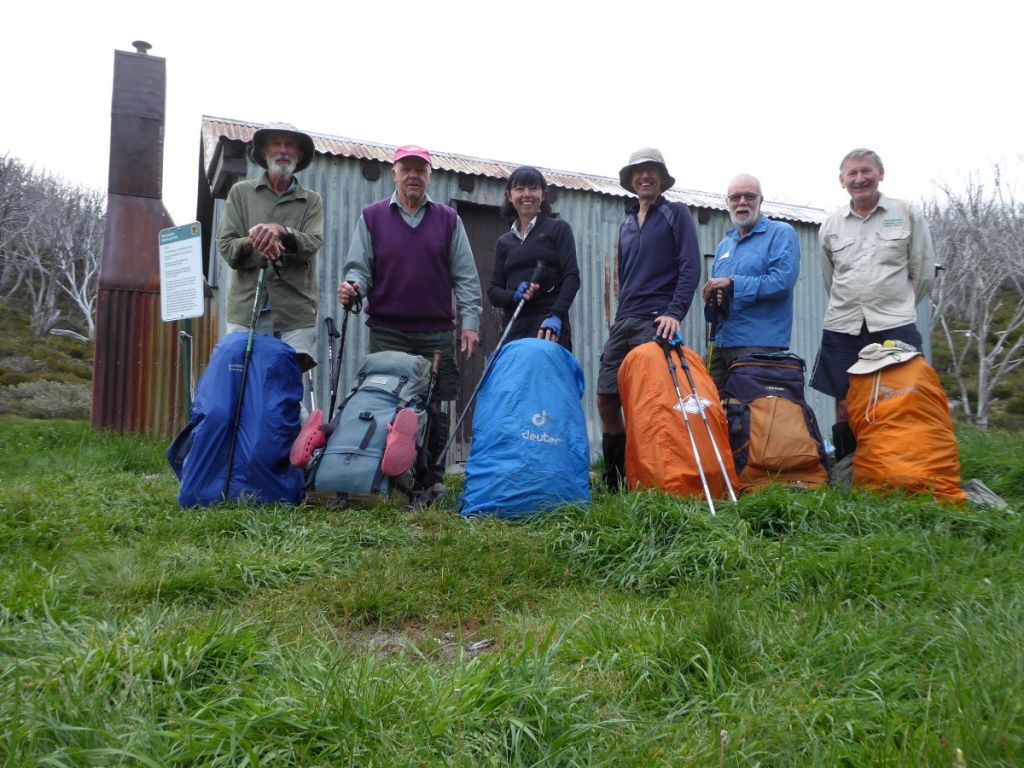
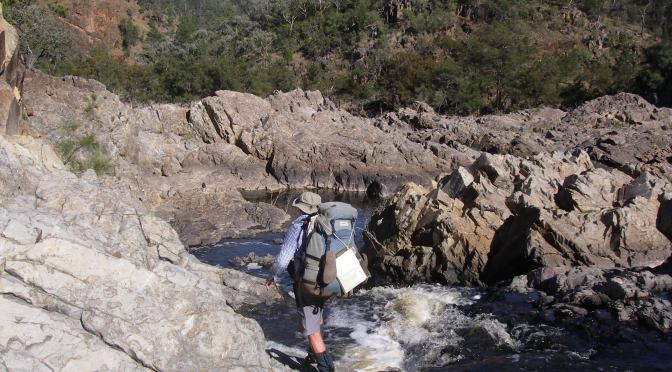


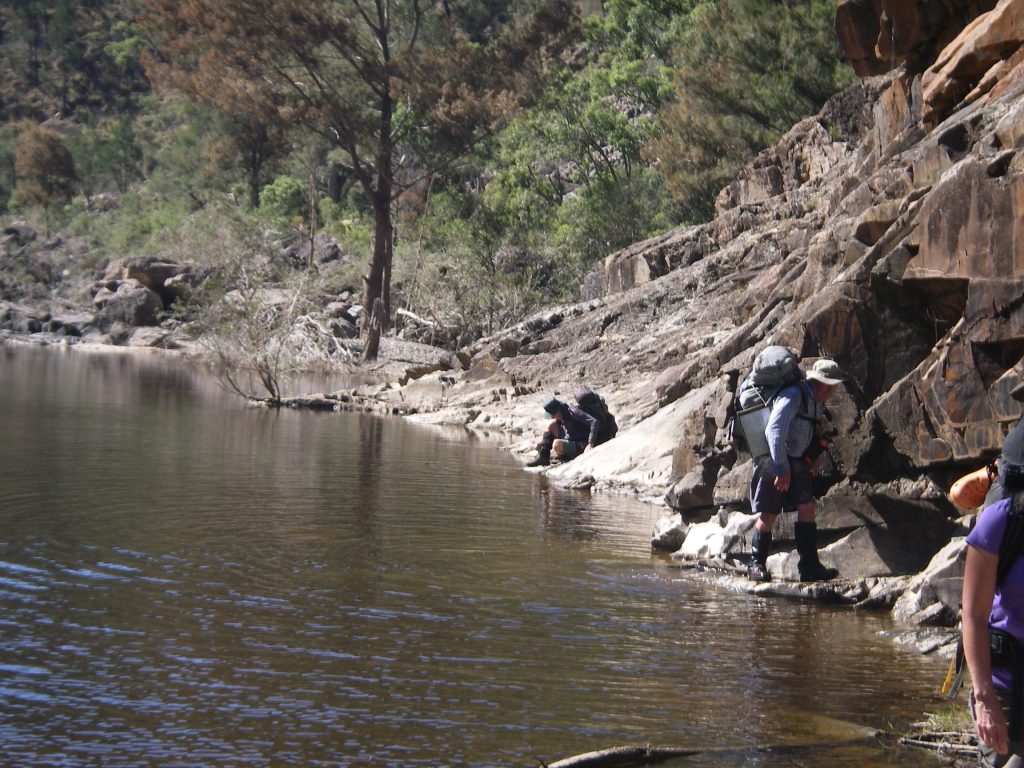

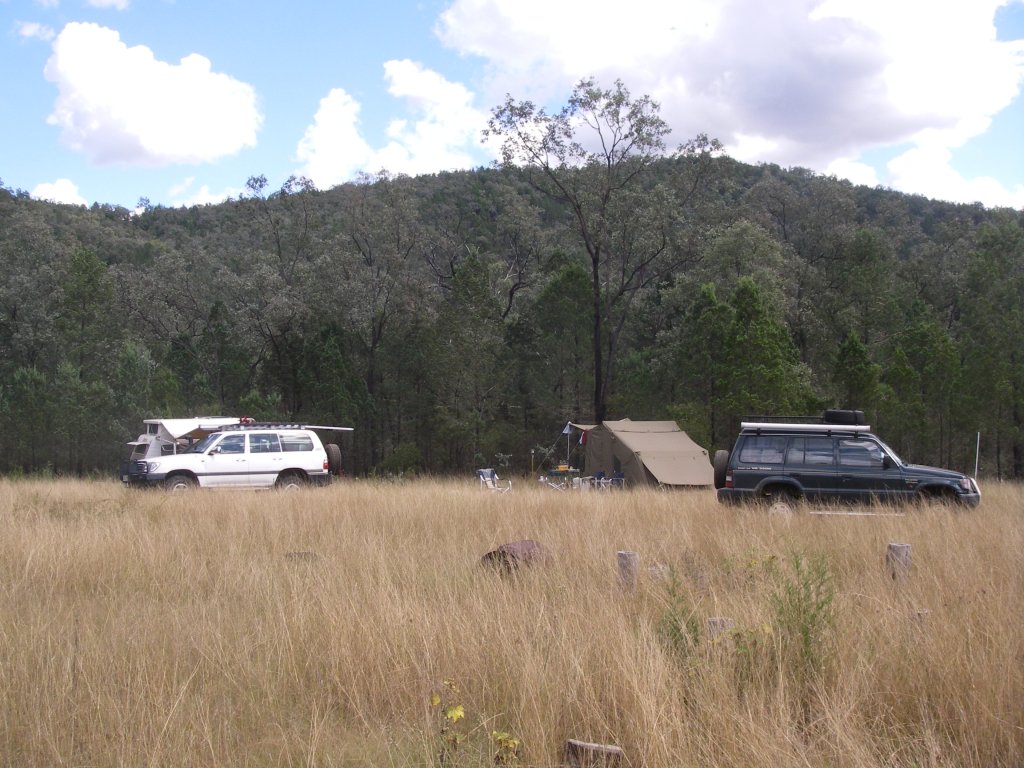

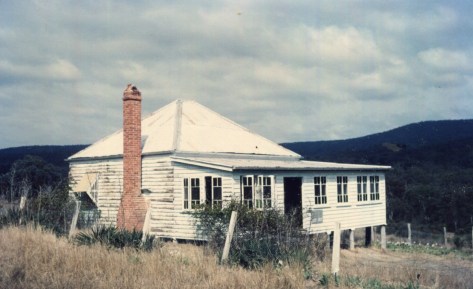
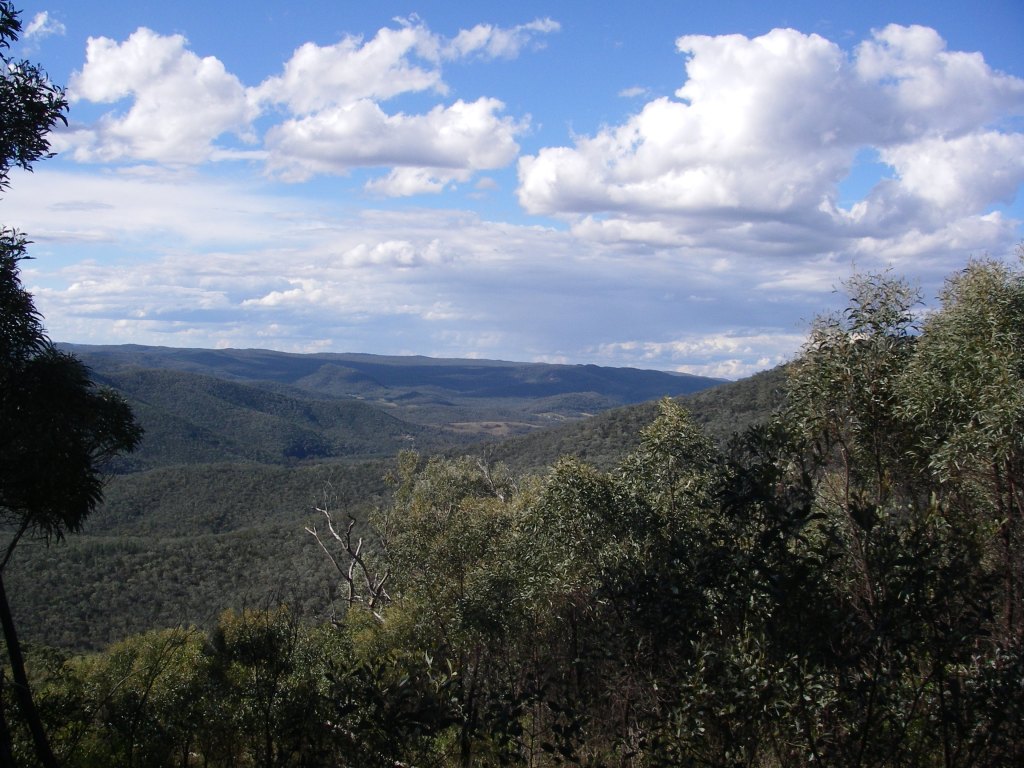

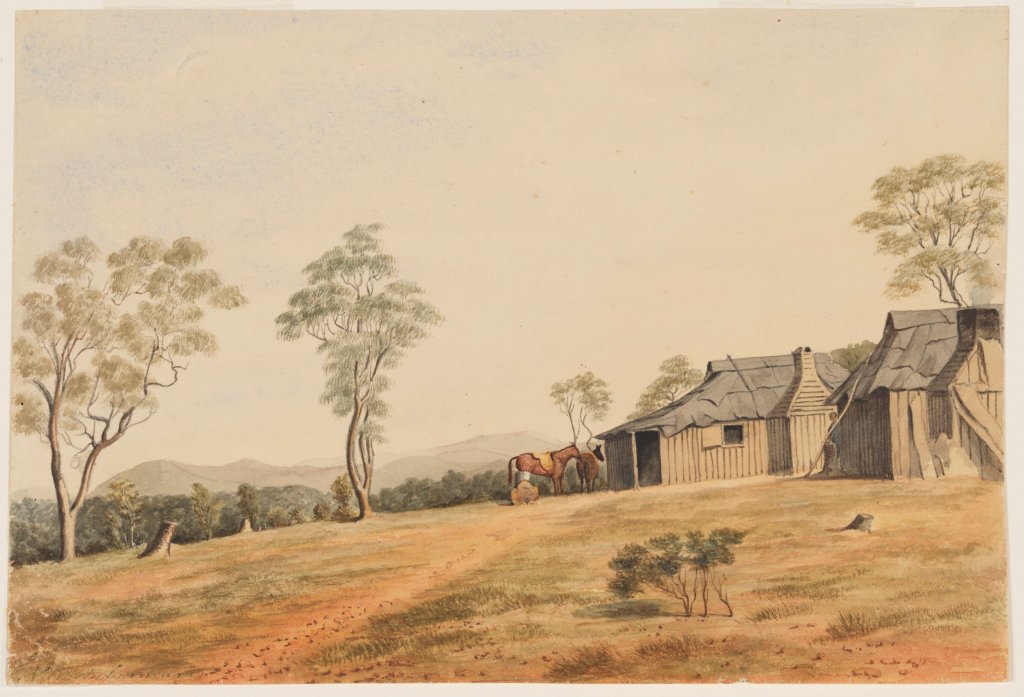


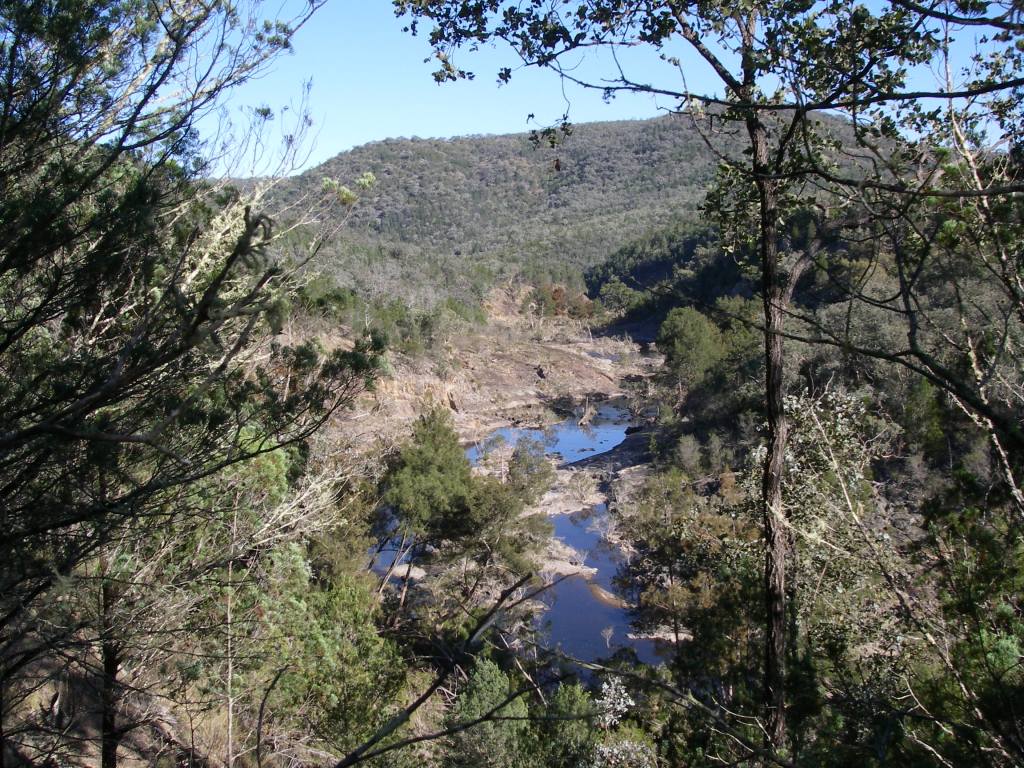


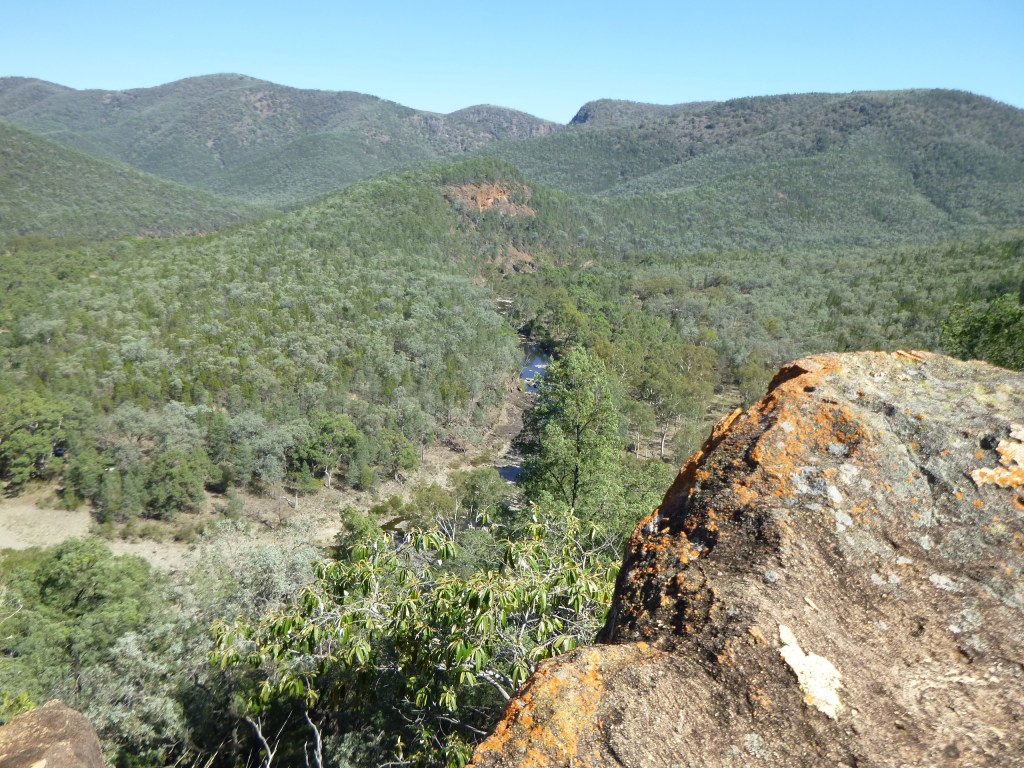

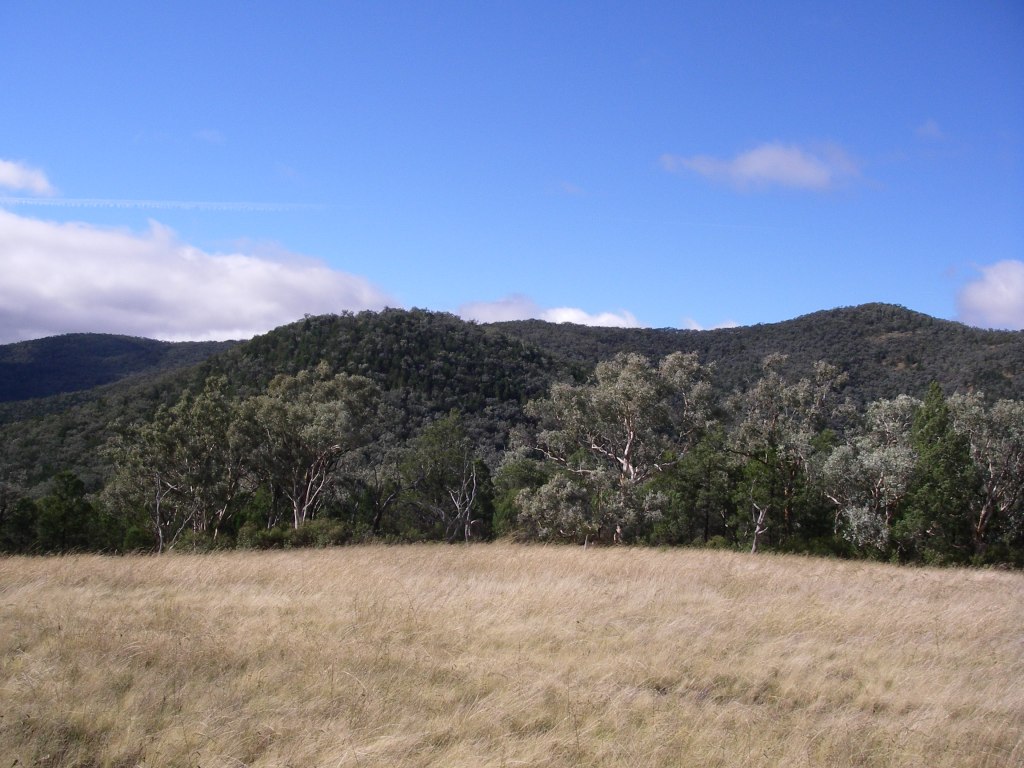

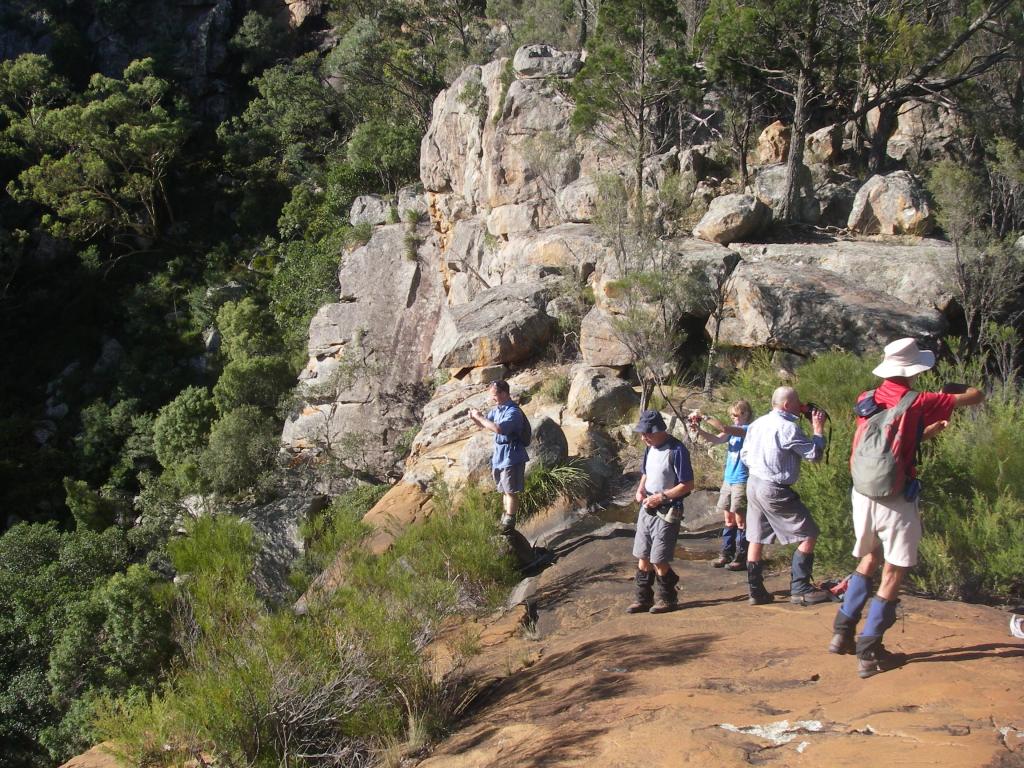

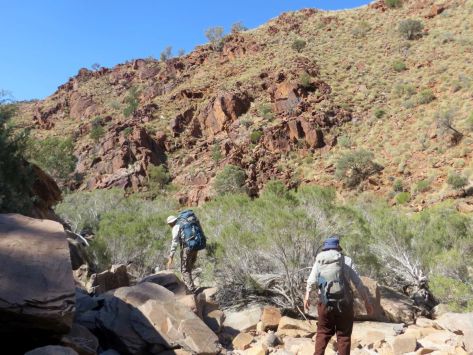
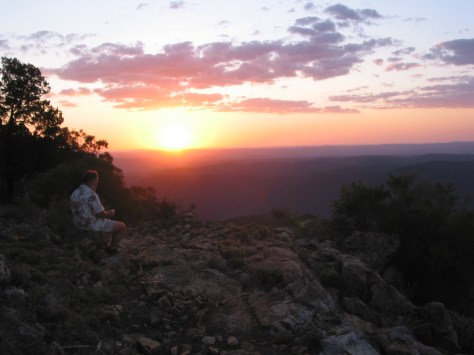


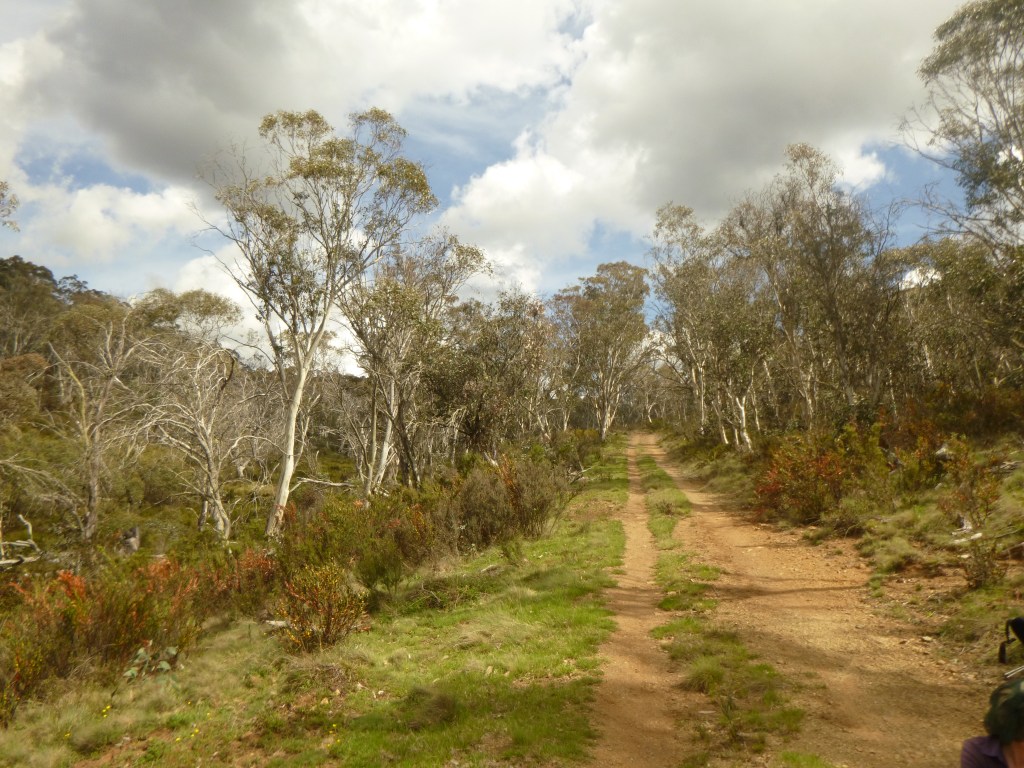

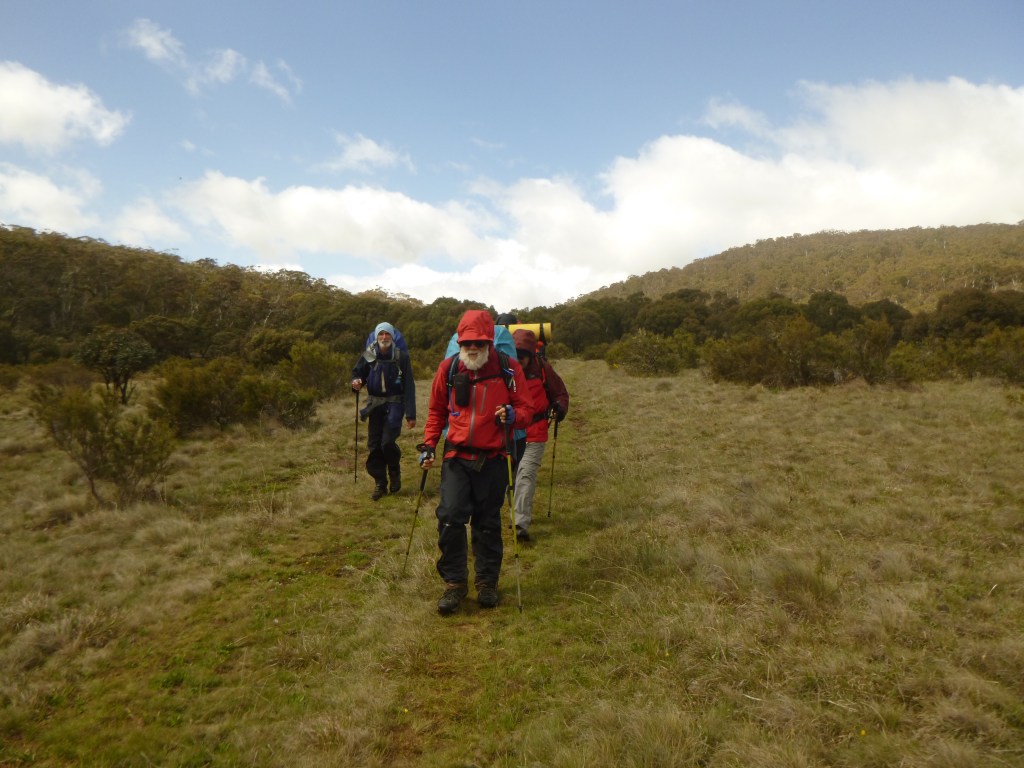


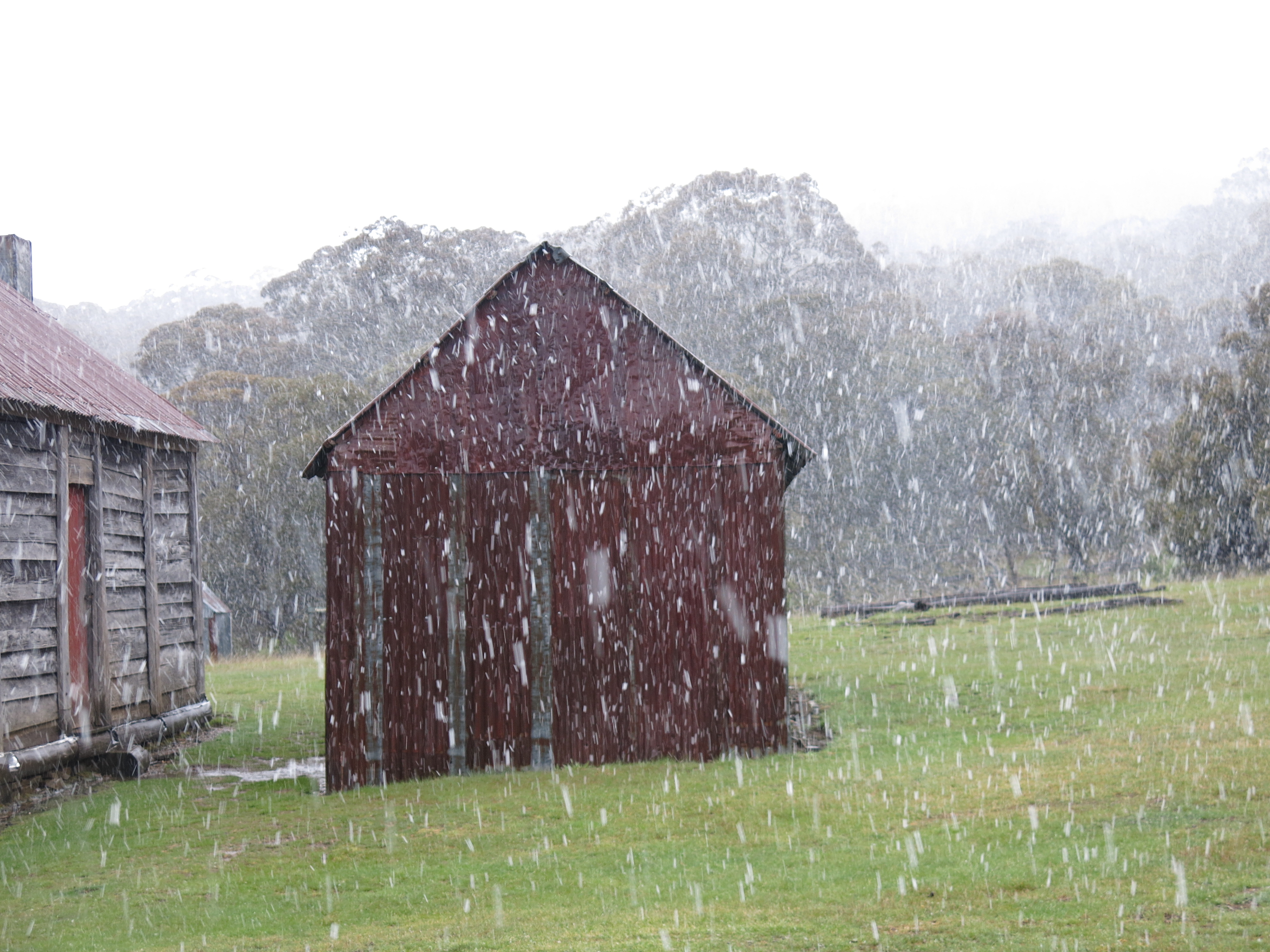

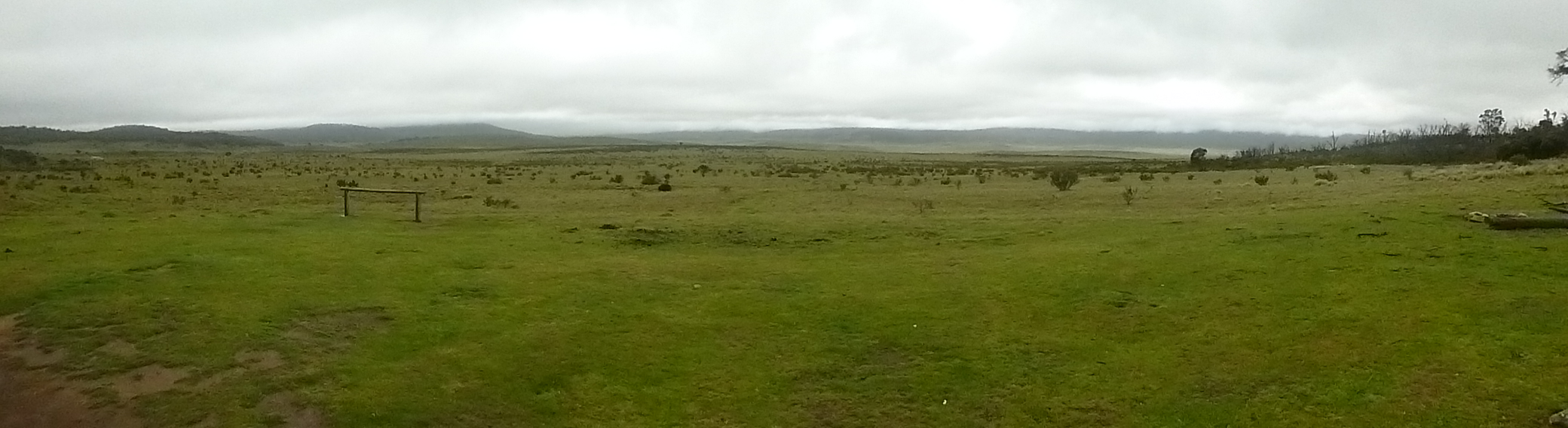

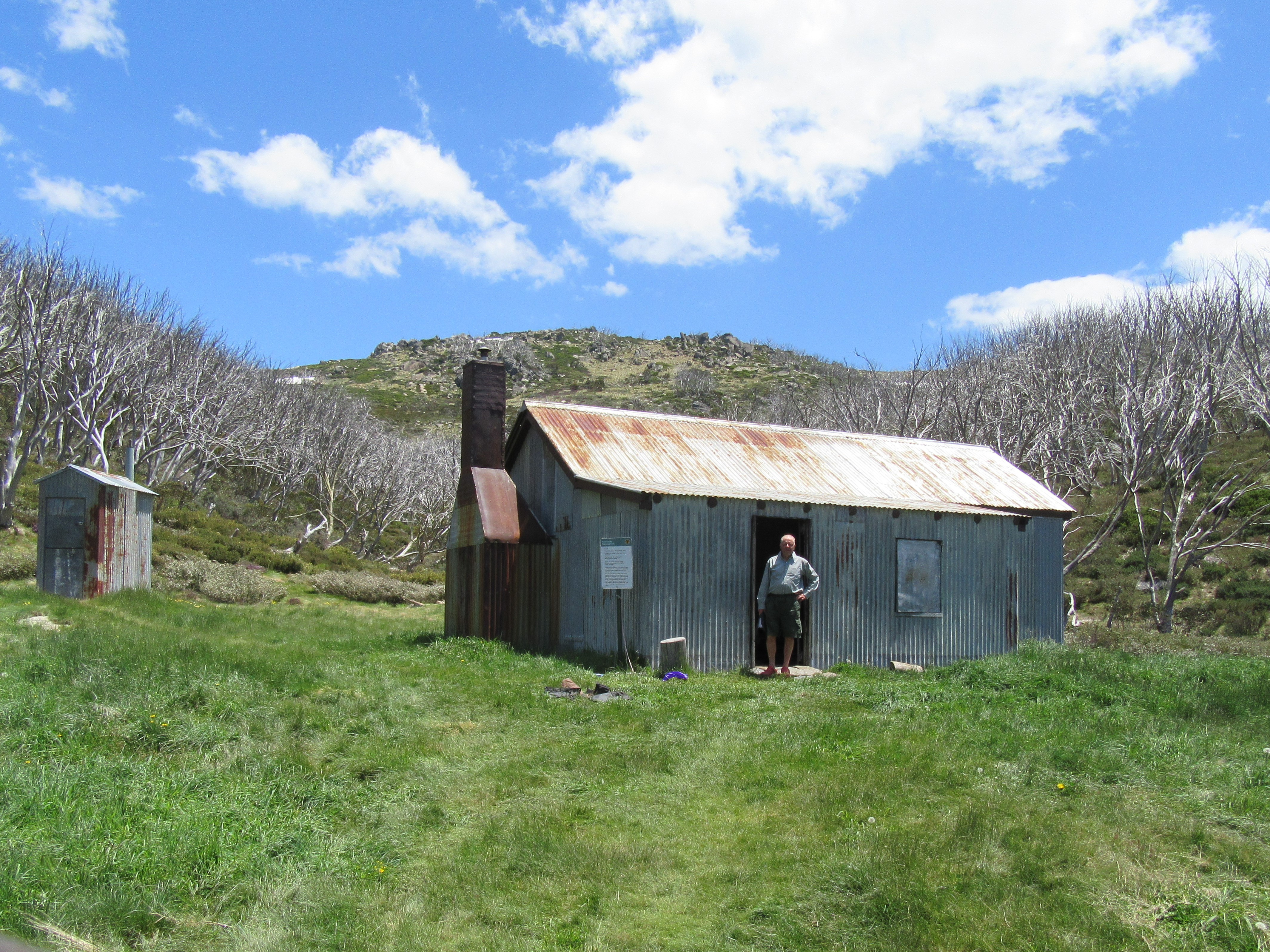
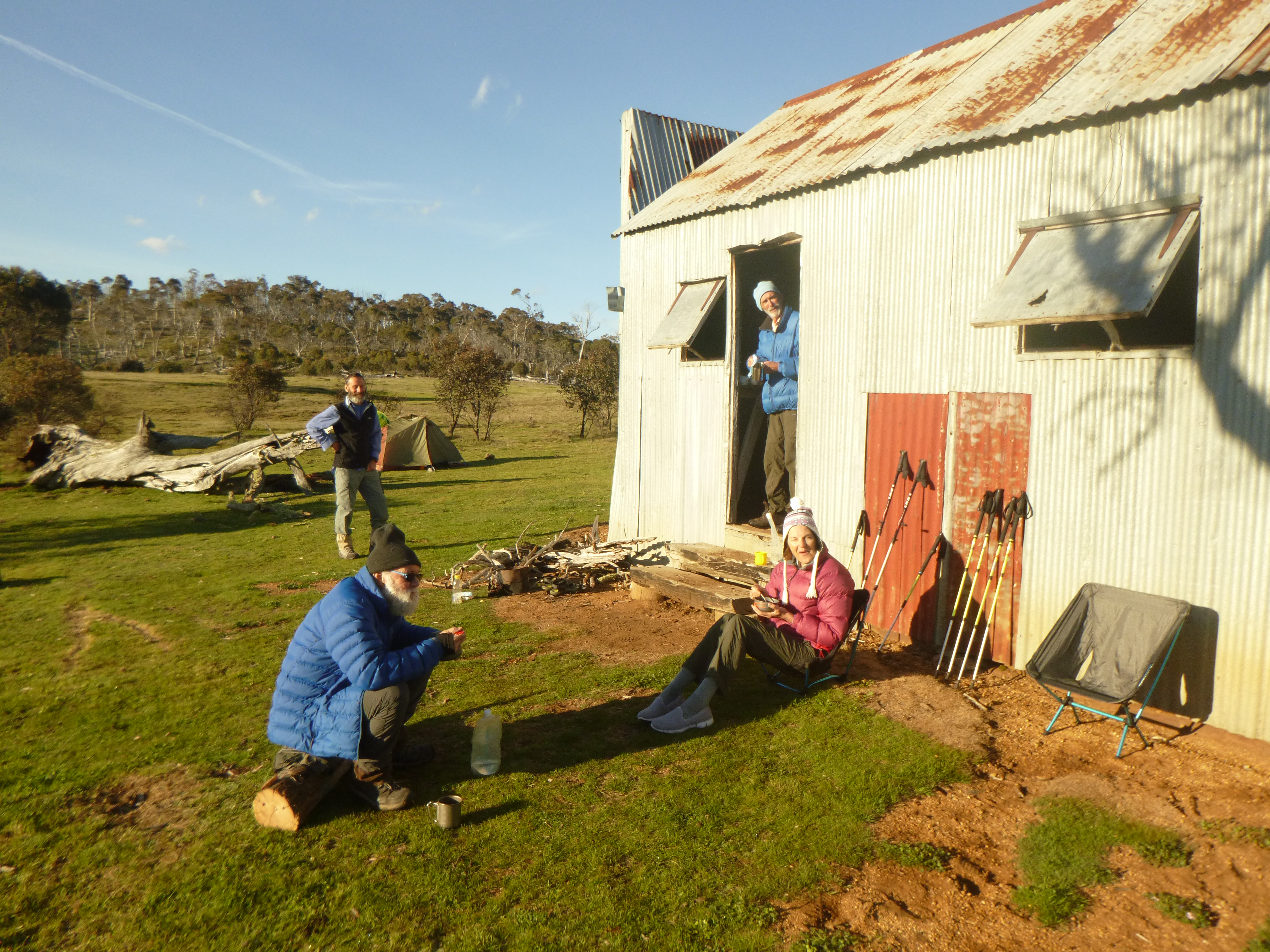


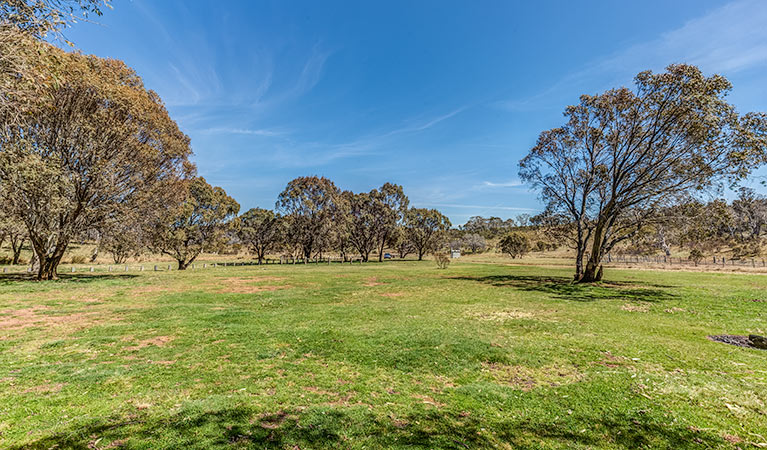
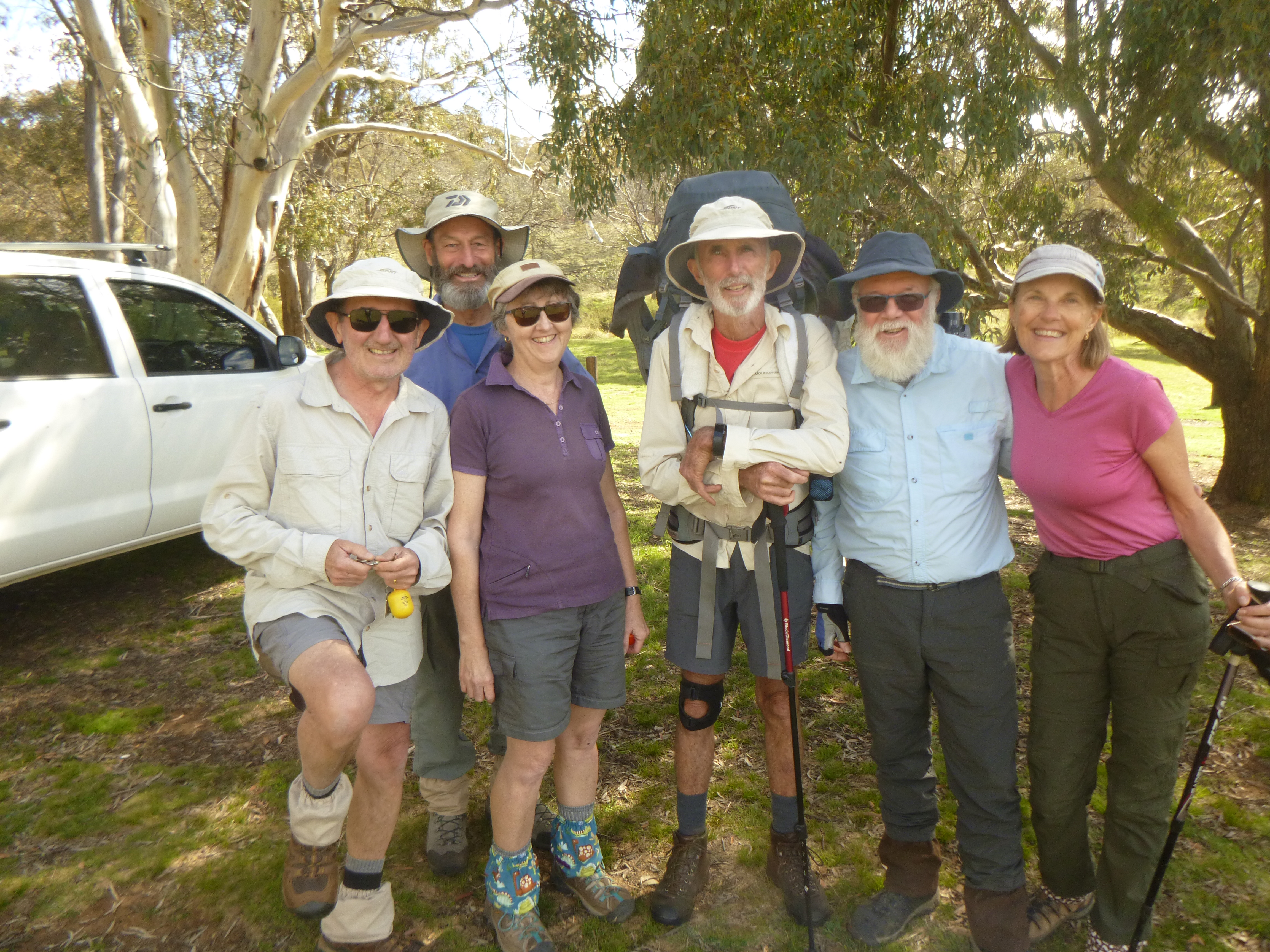
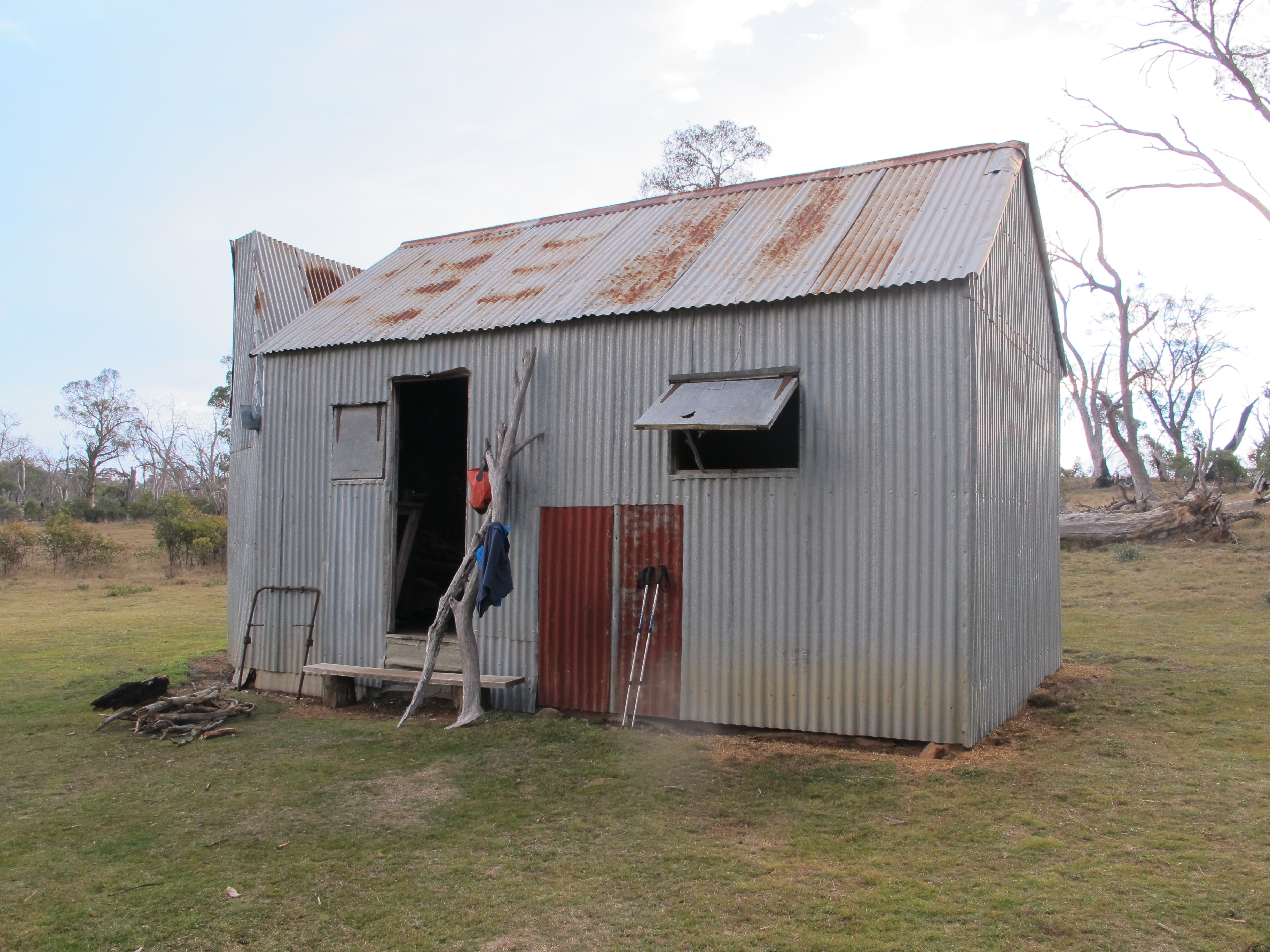

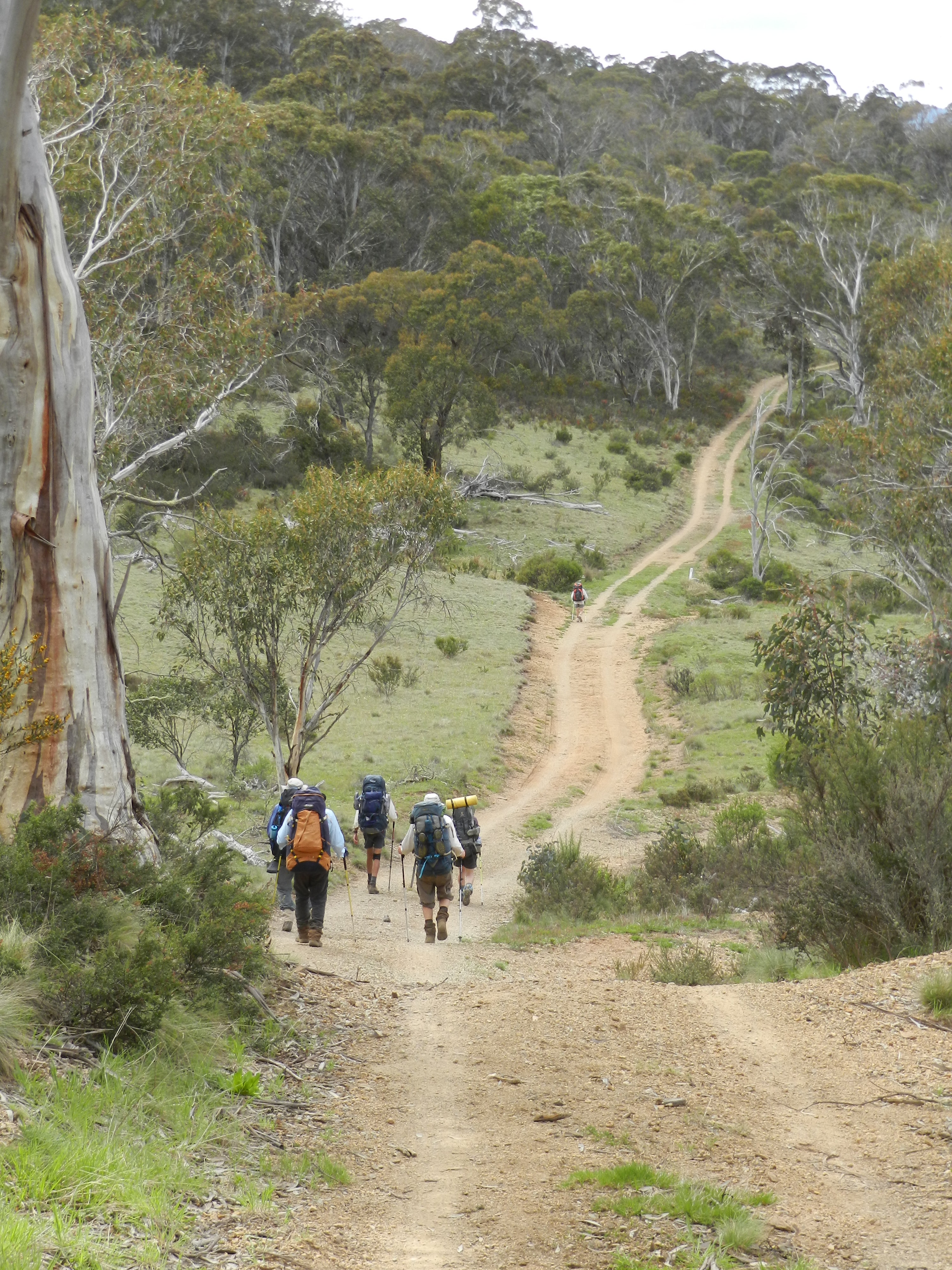


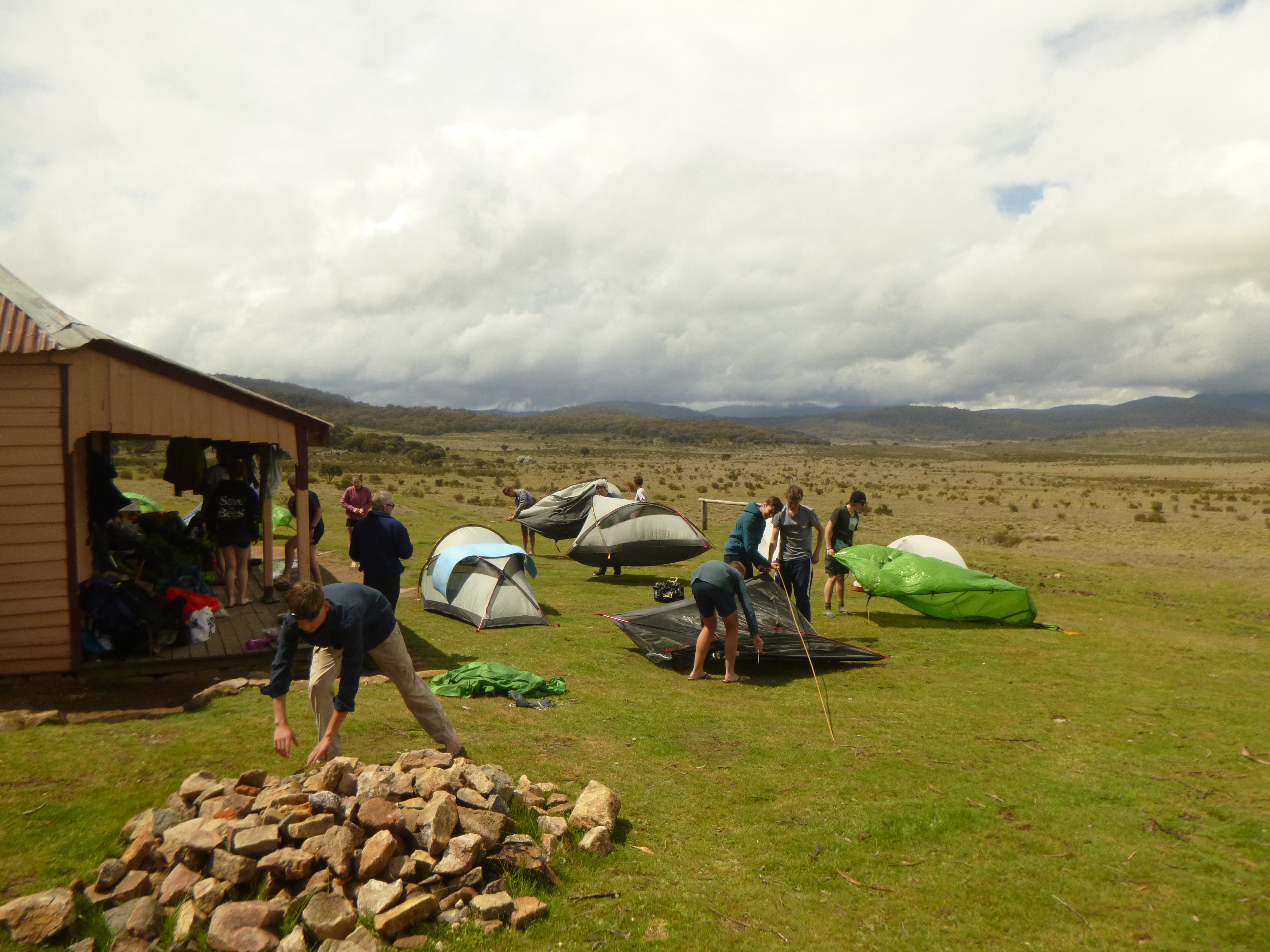


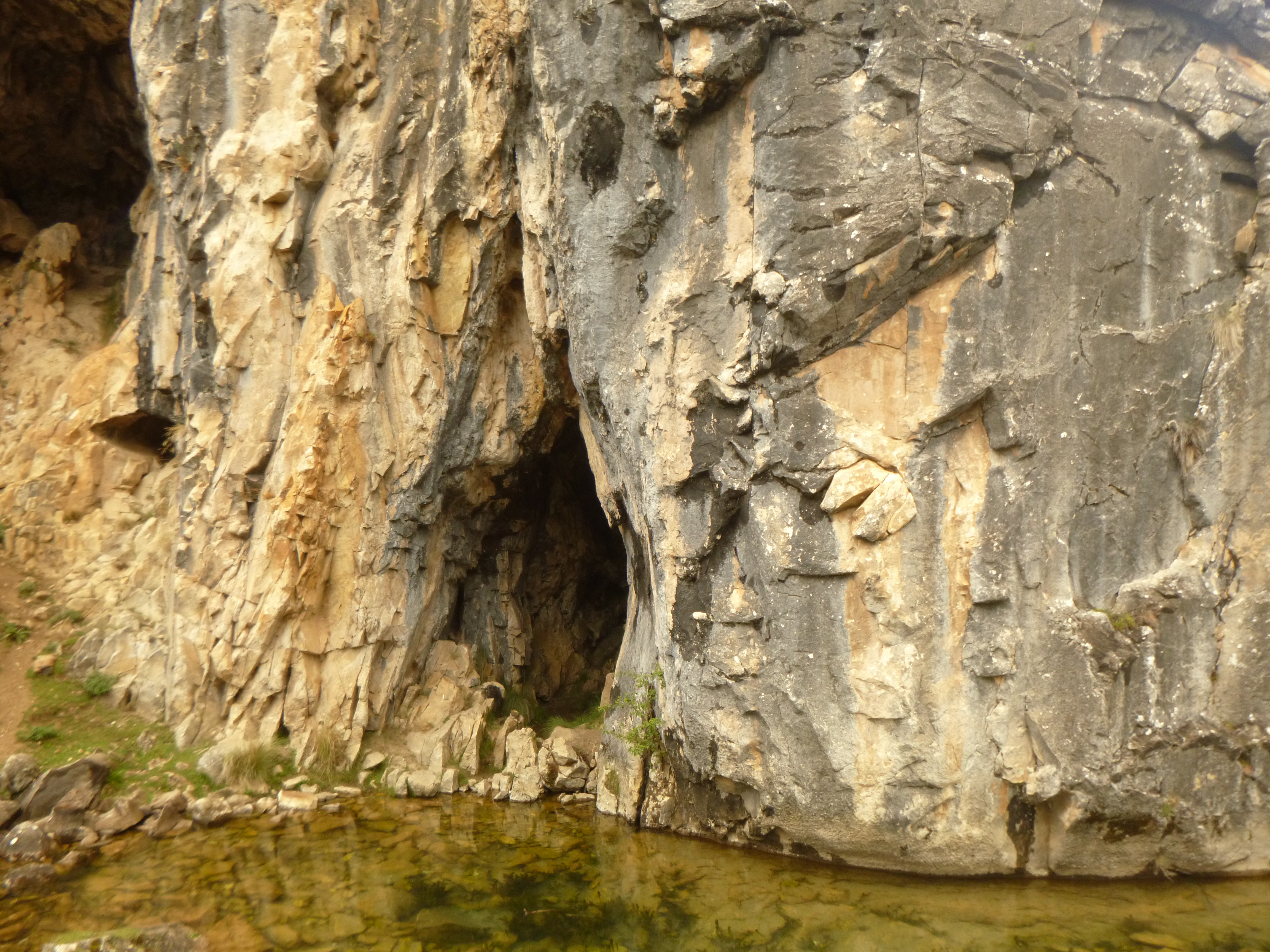
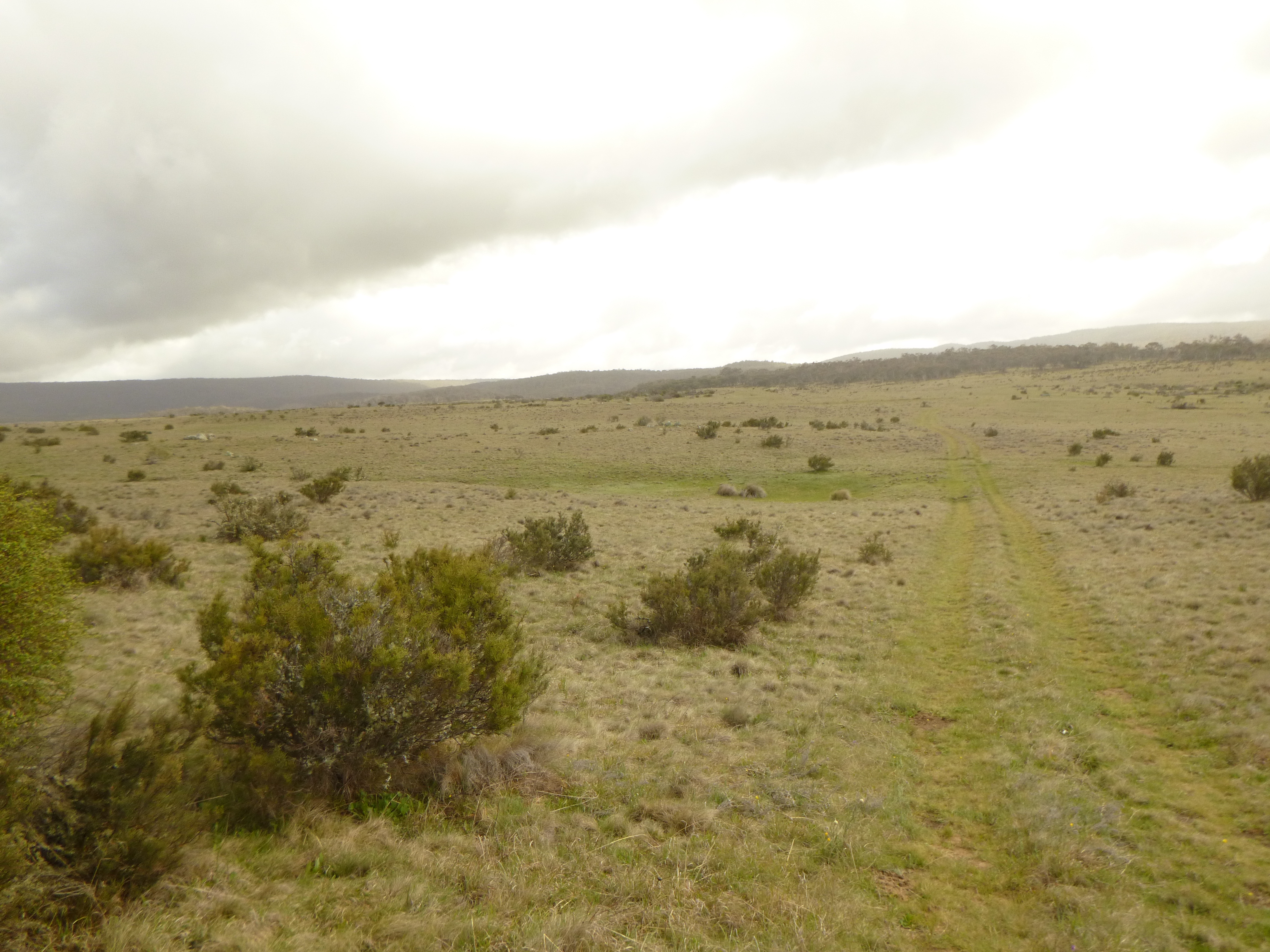


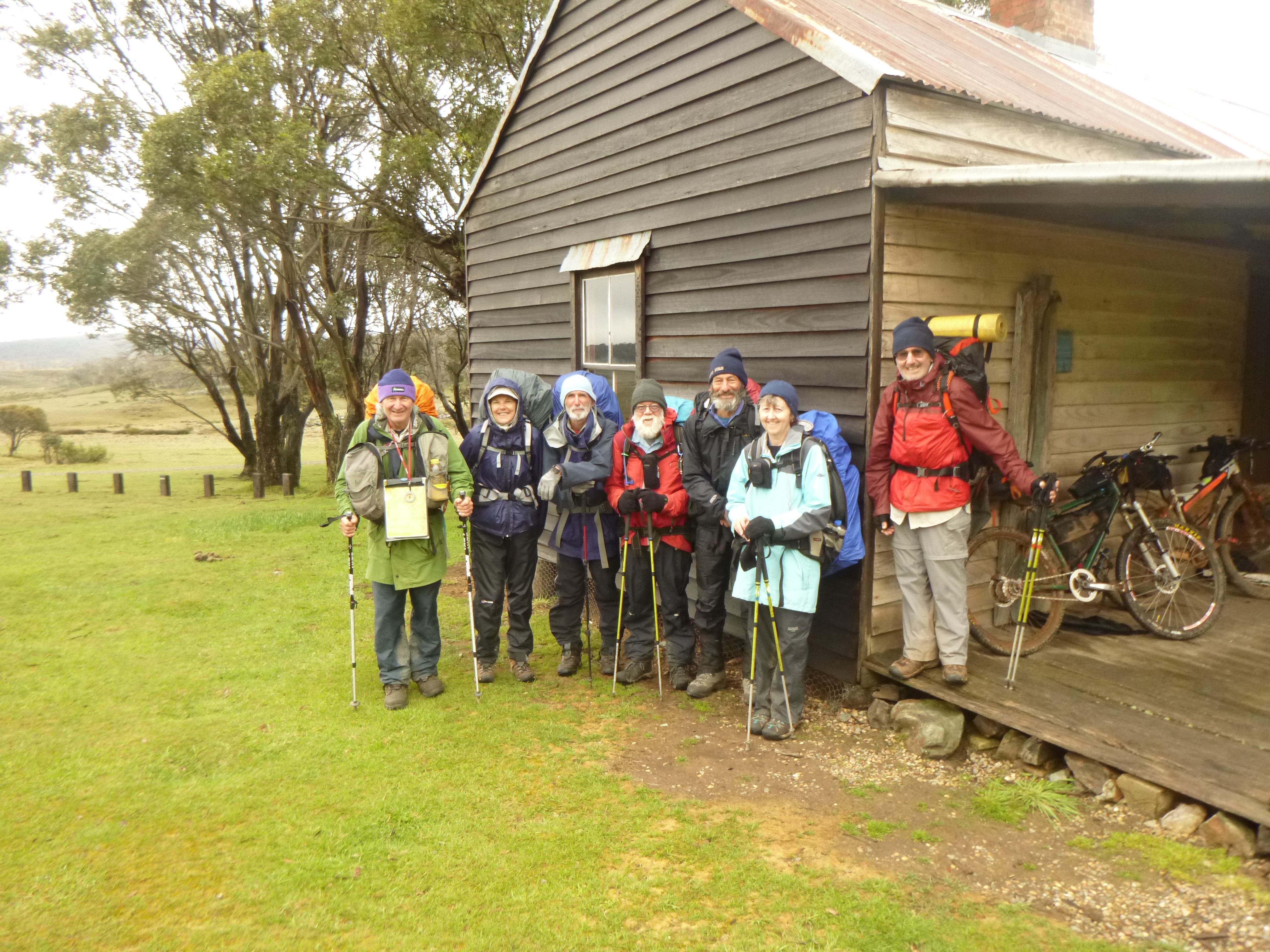


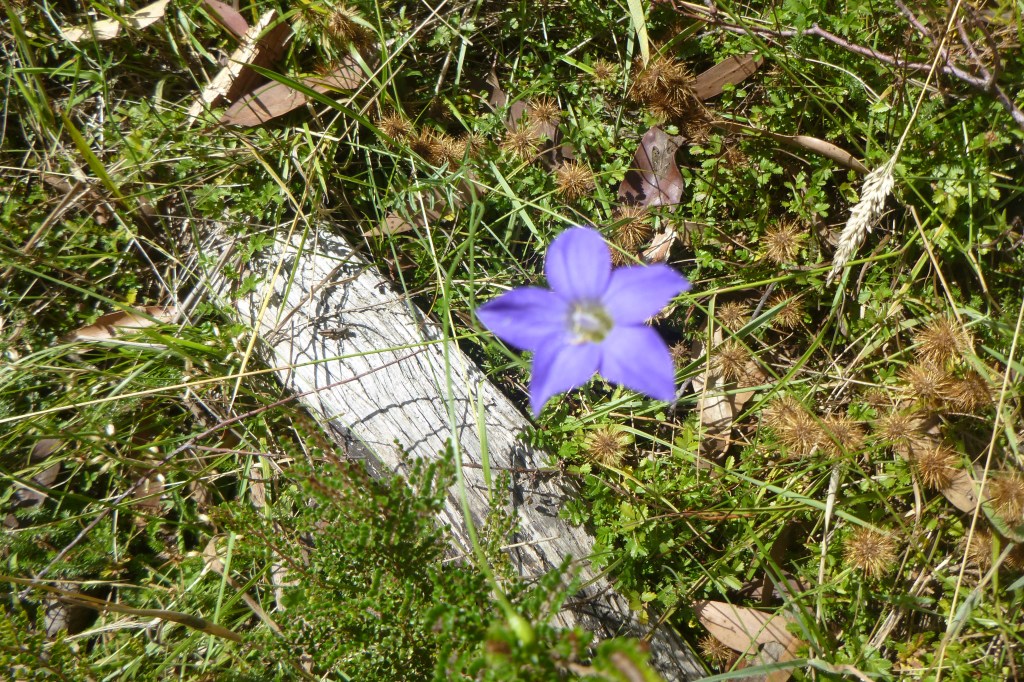
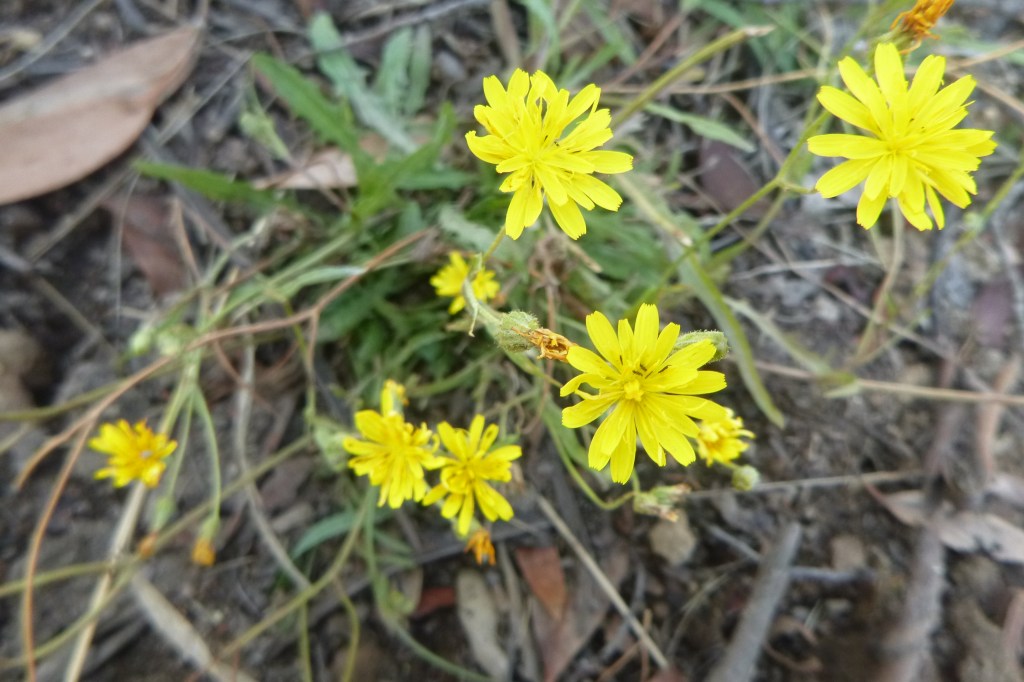
 by map and compass