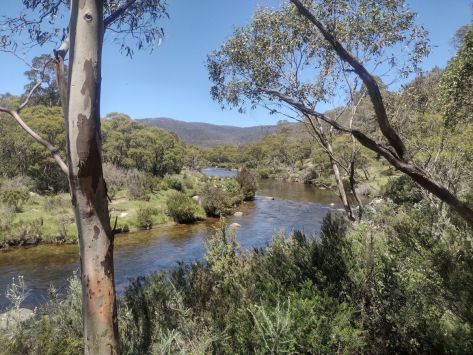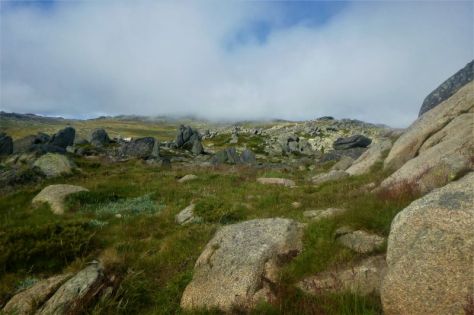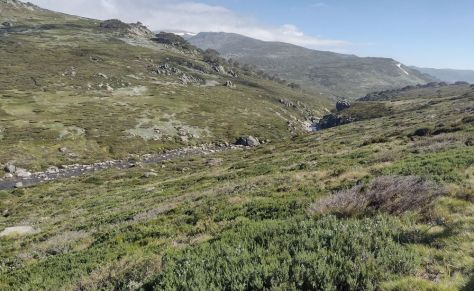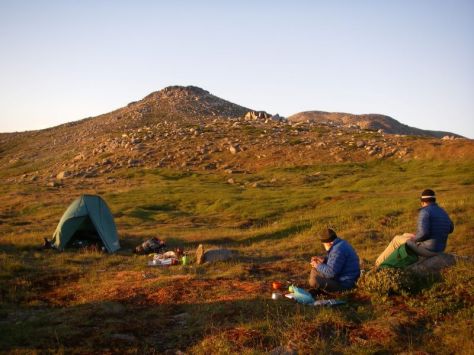
Tag Archives: Brumbies

Summer Saunter in the Snowies #2. Cascade Hut, The Chimneys, Teddys Hut, The Brindle Bull.

And so to the Brindle Bull. You may have read my previous account of our seven day saunter #1 along Kosciuszko’s highest peaks and ridgelines on The Kerries, Rolling Grounds and The Main Range.  Our follow-up foray was into The Pilot Wilderness, south of Thredbo.

by Glenn Burns

But first, as it was Sunday, a day of rest, we parked ourselves in Thredbo. Along with hundreds of mountain bikers competing in the National Downhill Championships.

By Monday morning the drizzle eased, the BOM forecast was propitious so we set out again. This time on a shorter, forty kilometre circuit, at slightly lower altitudes but still over spectacular alpine terrain.

Our circuit started at Thredbo. Thence to Dead Horse Gap, the Cascade Trail, Bobs Ridge, Cascade Hut, the Big Boggy, Teddys Hut, The Chimneys, arriving back at Thredbo via the Brindle Bull Hill. A place name that Brian, our leader, seemed particularly smitten with and was determined to check out. My other companions on the Brindle Bull trip were Richard, Joe and Noel.

Map: Chimneys Ridge: 1:25,000. Geoscience Australia.


Map of Cascade Trail, Cascade Hut, The Chimney, Teddys Hut , Brindle Bull. Kosciuszko National Park.

Monday : Thredbo to Cascade Hut: 12 kms.

With the mist lifting, Richard loped off, at a disconcertingly eager pace after our lethargic day of rest. The morning’s walk took us up the four kilometre Thredbo River tourist track to Dead Horse Gap, the trail head for the Cascade Trail. From here we would climb the Cascade Trail to the crest of Bob’s Ridge (1800 metres), a major south-west spur of the Great Dividing Range.

It is said that Dead Horse Gap takes its name from a herd of twenty or so unfortunate brumbies caught out in a blizzard. But today, the gap was merely a tame car park with an info board telling me that this was once the site of the Dead Horse Gap Hut, a summer grazing hut, built in 1932 by the Nankervis family of Tom Groggin Station.

Old Dead Horse Gap Hut. Kosciuszko National Park.
Old Dead Horse Gap Hut

This type of shelter hut, one of nearly 230 built in the Kosciuszko area, was an integral part of the transhumance practice of herding cattle and sheep up to the high summer pastures or snow leases as they were called. Other huts were built by miners and the Snowy Mountains Authority. But, as with many high country shelters, Dead Horse was lost to fire.


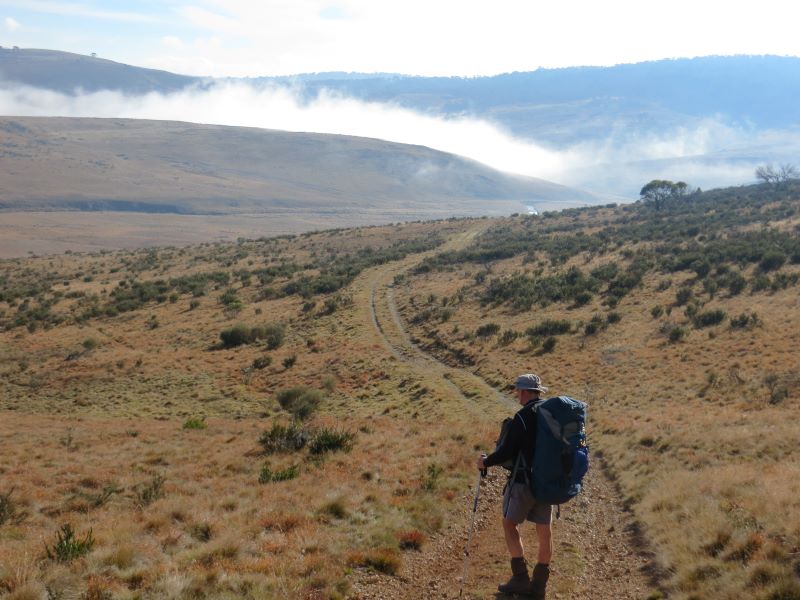
From Dead Horse Gap we engaged granny-gear for the five and a half kilometre drag up to the crest of Bobs Ridge at 1800 metres. Some 300 metres of altitude gain. The Murray River system to our right, the Thredbo- Snowy River to our left.

Thredbo River on Cascade Trail. Kosciuszko National park.
Thredbo River valley with Cascade Track contouring up Bobs Ridge

Here we settled into one of those outstanding lunch spots that leaders rave about, but rarely provide.

The lads loafed under the shade of gnarly old snow gums. Their bottoms comfortably settled on snow gum branches or sprawled out on the ground, padded by springy tuffs of snow grass. Best of all, none of those swarms of mini black alpine ants, the bane, one of several, of bushwalking in the high country.

Lunch break. Bobs Ridge. Kosciuszko National Park.
Lunch break on Bobs Ridge

But these alpine woodlands are swarming with something on a grander scale… wild horses, brumbies, feral horses. Choose your side in the culture wars over brumbies in Australia’s high country.

We discovered a set of portable stockyards behind our lunch site and our progress up Bobs Ridge had been marked by pyramids of horse poo of such grandeur they would do pharaoh Rameses II proud.

Brumby Traps. Bobs Ridge. Kosciuszko National Park.
Brumby traps

We were, of course, in the setting for Elyne Mitchell’s much loved Silver Brumby stories.  The presence of brumbies in Australia’s national parks is a divisive issue.

In other states they have been culled without much of a hue and cry from horse lovers. But in the high country of New South Wales and Victoria, a different mentality prevails. Here brumbies are cultural icons, Man from the Snowy River stuff.

Notwithstanding the damage wild horses do to alpine ecosystems, in parts of Kosciuszko National Park they seem free to roam pretty much unfettered. Their hooves trashing delicate alpine bogs and watercourses. As well, the brumbies selectively chomp out the tastier plant morsels.

No one likes to see horses killed, but the sad reality is that rehoming is not reducing the numbers of horses in Kosciuszko National Park fast enough to reduce population growth.

In 2023 the Australian Government’s Threatened Species Scientific Committee warned that feral horses could be a crucial factor in the final extinction of six critically endangered animals and two critically endangered plants.

Culling of feral horses started again in October 2023, with over 5,539 killed by aerial shooting. Another 427 were removed by trapping, rehoming and ground shooting. This is the first time that more horses were removed than their annual population growth.

Their days appear to be numbered. Under NSW legislation, the government must reduce the number of feral horses in Kosciuszko to 3000 by 2027. Still too many.

Pugging caused by brumbies

The best summary of the brumby issue that I have read is Anthony Sharwood’s The Brumby Wars (2021, Hachette). This is a book about Australia’s brumbies and the intense culture wars that have erupted about their removal from Kosciuszko National Park. Highly recommended.


From Bob’s Ridge we descended into the open Cascade Valley, currently hosting five brumbies chowing on their favourite alpine herbs and grasses. Clearly unfazed by the five plodders wandering past.

These open grassy alpine valleys are below the tree line at 1800 metres and you would expect them to be covered by snow gum woodland. Instead they are devoid of trees. A response to dense, freezing air rolling off the high tops and pooling in the lowest points of intervening valleys. Even snow gum seedlings cannot survive in these frost-hollows with their extreme swings of diurnal temperatures.


Cascade Hut, on the slopes of a ridge, is nestled in a grove of snow gums It is an old friend, a bushwalker’s and skier’s home away from home. The Nankervis family owned the snow lease at Cascades and had the hut built in 1935 with horizontal slabs and a bark roof.

Cascade Hut. Kosciuszko National Park.
Cascade Hut

The bark was later replaced by a corrugated iron roof. On one of our visits a reno job of a sheet of wildly flapping clear polycarbonate sheeting did nothing for its heritage value. This has since been rectified. The old hitching rail still stands, but these days serves only to prop up ever increasing numbers of mountain bikes.

Inside is a stone fireplace, dri-creted dirt floor, table, sleeping platform lurking under which, according to an old log book, is said to be a resident snake. This, undoubtedly, a rumour spread by its caretakers, the Illawarra Alpine Club, to deter those new-age mountain biking people and bushwalking riff-raff from sleeping in the hut.

The Illawarra Alpine Club have been Caretakers for Cascade, Tin Mines and Teddys Hut for over 40 years. A sterling effort and a job well done in maintaining these basic mountain shelters for the safety of bushwalkers, mountain bikers and skiers alike.

Unperturbed by the resident snake, we settled in anyway. First order of business, the peons spread out to collect water and fetch the firewood. Brian sawed the logs into useful sized billets. Just so. His favourite camp thing to do. Joe was tasked with lighting the fire. Finally, tents sprang up on the springy snow grass.

On dusk, five Gang-gang Cockatoos trailed above us, slow powerful wing beats. Impossible to mis-identify these distinctive dark grey cockatoos, the males sporting red heads and wispy red crests.

We whiled away the evening reading the log book, including a scary account of a dingo getting close up and too friendly with a solitary walker, not far from Cascade Hut. His advice: walk briskly and carry a bloody big stick.  


Tuesday: Cascade Hut to Teddys Hut via The Big Boggy: 15 kms.

A coolish morning with bushfire haze from the Victorian fires lingering in the valley below. Our Gang-gangs flew back overhead from whence they had roosted.

Brian’s original plan was that we would go cross-country to Teddys Hut via Jerusalem Hill (1810 metres) on the spine of the Great Dividing Range. From Jerusalem, our track would follow the GDR spine north-west for several kilometres to an outcrop at 1806 metres, from which we could drop into the Big Boggy on the upper Thredbo River. But a quick perusal of the thickly wooded hillslopes in front of us and the map’s ortho image disabused us of that option.

Instead we chickened out and retreated up the Cascade Trail to Bobs Ridge. From here, we could swing off the trail and wander over the top of that un-named knoll on the Great Dividing Range (1806 m) and drop into the Thredbo River (formerly the Crackenback) at the Big Boggy (aka Boggy Plain).

The Crackenback River is said to take its name from stockmen who herded their mobs of sheep and cattle up onto the Main Range from the Crackenback (Thredbo) Valley. It was rugged, difficult country and it was said it would ‘crack-your-back’. Another version was that stockmen had to crack their whips across the backs of the stock to get them to the high tops.

Looking into The Big Boggy. Thredbo River. Kosciuszko National Park.
Looking down into The Big Boggy and upper Thredbo River Valley

We pulled in for lunch at a clump of snow gums on the crest of the Great Dividing Range, at our prominent un-named hill. Before us were sweeping northerly views across to the Rams Head Range and the Main Range.

Lunch above The Big Boggy. Thredbo Valley. Kosciuszko National Park.
Lunch in snow gum woodland above The Big Boggy

Lunch over, we began a longish bush-bash down to the sodden edge of the Big Boggy. Here we swung east, contouring along the southern edge of the Thredbo River and the Big Boggy.

The plan was to aim for the extensive grassy plain that separates the Thredbo River headwaters from the Wombat Gully-Mowamba River System. Some four kilometres upstream.

The Big Boggy is a massive alpine wetland and frost hollow which, although outstandingly scenic, made our afternoon’s upstream walk to Teddys a bit damp underfoot and pretty tedious.

The Big Boggy. Upper Thredbo River. Kosciuszko National Park.
Picking our way up The Big Boggy (Boggy Plain)

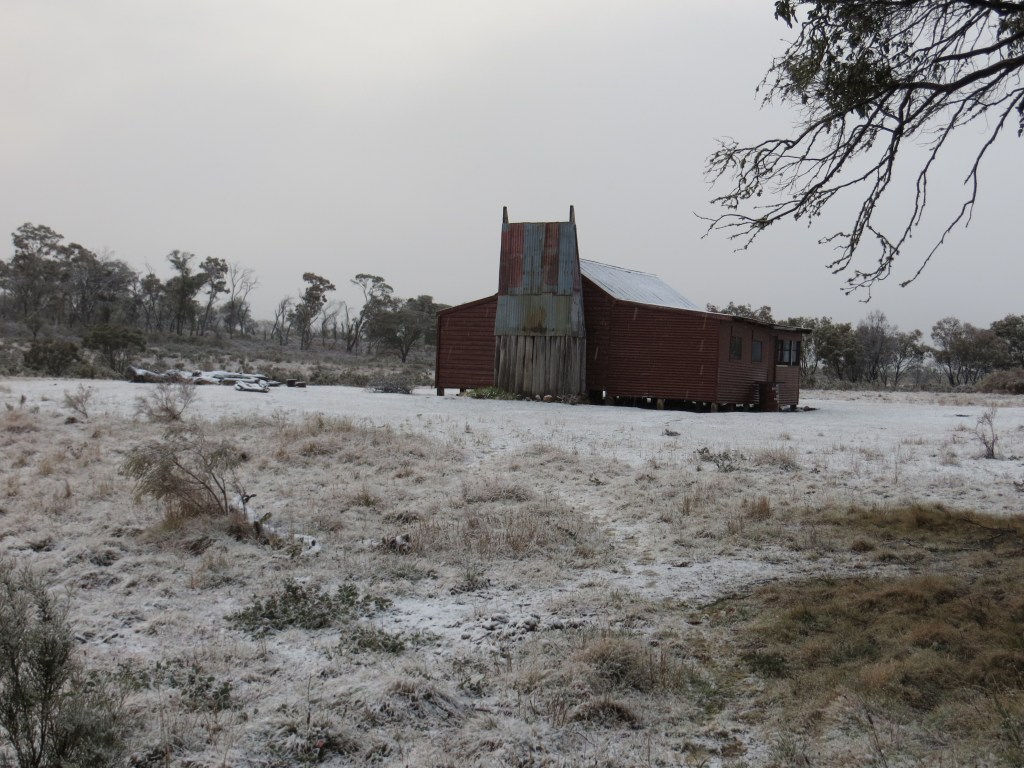
Teddys, once called My Horse Hut, served as a cattlemens’ and brumby runners’ hut and was built by Teddy McGufficke and Noel and Dave Prendergast in 1948. Teddys lies at the headwaters of the Thredbo, a tributary of the Snowy River and is the only shelter on this isolated and often snow-bound plateau. 
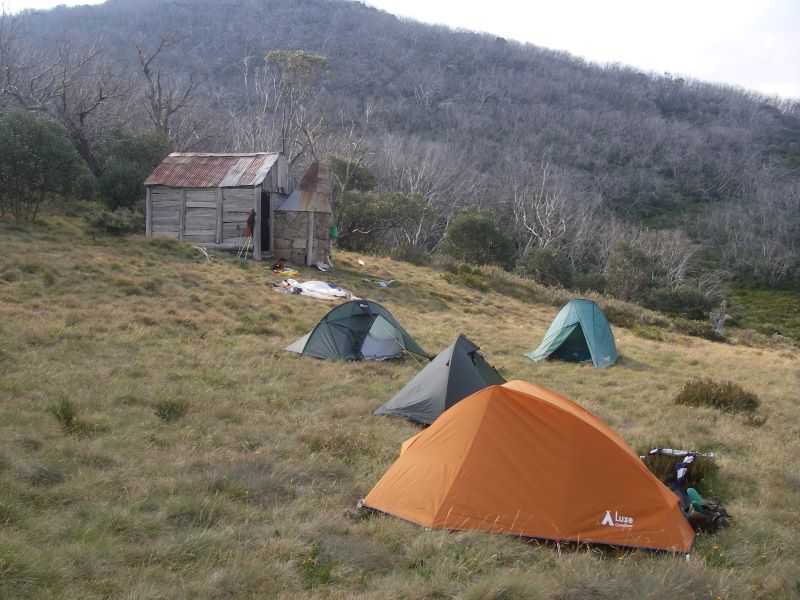
Teddys Hut. Kosciuszko National Park.
Teddys hut with Mt Leo (1875 m) in background

According to the old timers it was on a sort of brumby motorway and clearly nothing much has changed over the decades. We watched as Serengeti-like herds of brumbies grazed peacefully on the vast snow grass plains in the vicinity of this remote hut.


Wednesday: Day Walk to The Chimneys and Chimneys Ridge: 8 kms.

For once, an easy day. In the overall scheme of Brian’s pantheon of dubious ‘rest days’ this one was brilliant. As we tucked into a leisurely breakfast even a bank of dense, damp fog hanging around Teddys rolled ever so slowly away from us, down the Mowamba River system. A promising omen of a great day’s walking.

The Chimneys and Chimneys Ridge form the divide between the Thredbo River and the Jacobs River, also a Snowy River tributary.

Upper Thredbo River. Kosciuszko National Park.
Crossing alpine meadows of upper Thredbo River heading for The Chimneys

The Chimneys (1885 metres) rise, tooth like, a jumble of granitic boulders that are said, with a considerable stretch of the imagination, to resemble chimney pots on old houses. They are outcrops of Silurian Mowambah Granodiorite (age range 444 million years ago to 419 Mya). The view must be one of the finest in Kosciuszko. As a bonus, nary a backpacker, mountain biker, or tourist to clutter up our summit views.
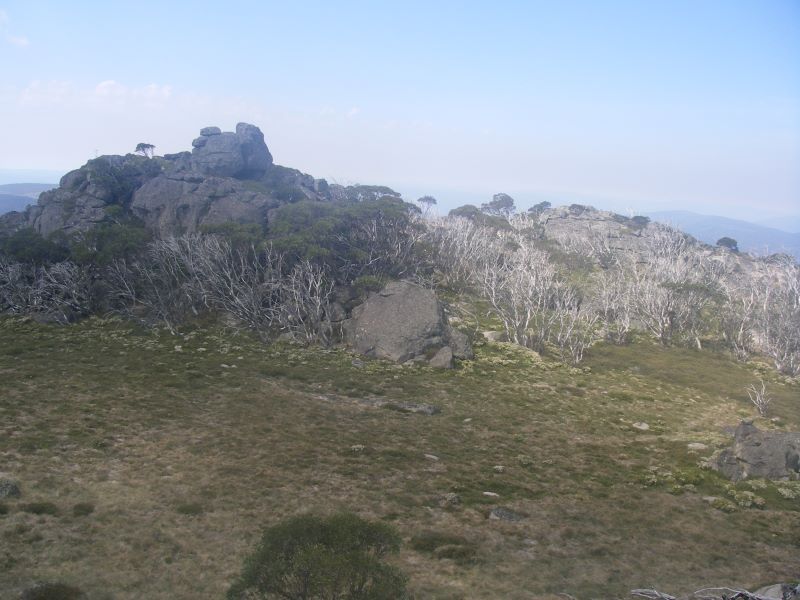
The Chimneys. Kosciuszko National Park.
Chimneys Ridge

To the south was the deep valley of the Jacobs River with the Snowy River in the distance. The Pilot Wilderness area stretched out in a row of five hills: Purgatory, Jerusalem, Paradise, Wild Bullock and Stockwhip. With The Pilot (1829 m) and the Cobberas even further south.

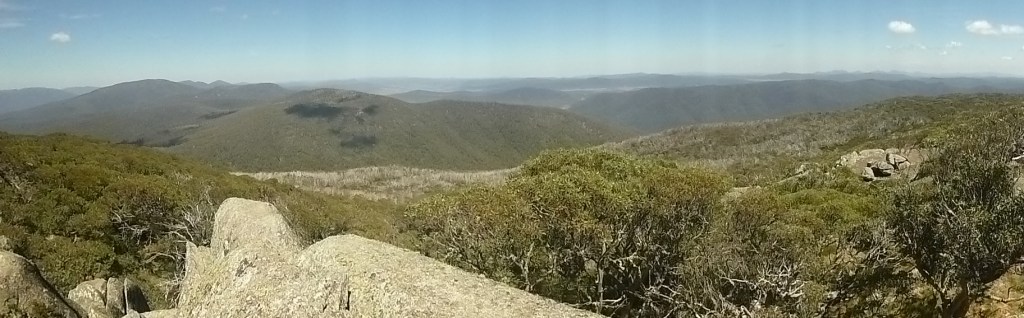
To the north we looked to the Rams Head Range and the Main Range of Kosciuszko. Hundreds of metres below us were extensive views into the alpine grasslands, bogs and fens of the upper Thredbo valley.


The course of the Thredbo River presents an interesting drainage pattern when viewed on a map. It is described by geomorphologists as a rectilinear drainage pattern, where the main bends of the Thredbo River change direction at right angles. In the case of the Thredbo, it initially flows south-east, then turns south-west, then north-west and finally into the main valley which runs north-east to Lake Jindabyne.

Rectilinear drainage pattern of Thredbo River. Position & influence of Crackenback Fault.
Rectilinear drainage pattern of Thredbo River. Kosciuszko National Park.

All these changes of direction are controlled by a complex system of joint lines and faults which are both significant elements in the evolution of the Snowy Mountains landscape.

Joint lines are structures along which there has been no discernable differential movement. Large scale joints are are common feature of granitoid landscapes, like the Chimneys Ridge.

Faults, however, show clear evidence of differential earth movements. The Crackenback Fault is a 35 kilometre long south-west to north-east trending strike-slip fault between the Jindabyne Thrust Fault (at Jindabyne) and Dead Horse Gap. It is a consequence of the Tabberabberan tectonic contraction (390-380 mya).

A strike-slip fault has horizontal movement of the earth’s surface with little vertical displacement. It is along this straight fault structure that the Thredbo River flows towards Lake Jindabyne.

The Big Boggy. Kosciuszko National Park.
Looking over The Big Boggy with Main Range in background

Our return to Teddys was along the spine of the Chimneys Ridge. At nearly 1900 metres, this was a cool and pleasant ramble across snow grass meadows interspersed with outcropping granitic pillars. At Smiths Gap we propped and then looped north, descending to Teddys. One and a half kilometres away, but not visible.

No takers for Brian’s suggestion for an afternoon nip up Mt Terrible (1850m). A predictable response. Maybe we had been ambushed too many times before by Brian’s predilection for hikes to places with dodgy names like Furnace Creek, the Never-Never, the Madderhorn, Heartbreak Ridge, Perdition Plateau, Hurricane Heath, Snake Hill, Tornado Flat and Corruption Gully .


Mt Terrible. Kosciuszko National Park.
Mt Terrible (1850 m) across alpine meadows. If you peer carefully you will see a distant herd of brumbies

Mt Terrible was climbed by explorer John Lhotsky who named it Mt William IV, claiming it to be “the highest point ever reached on the Australian continent”. Historians are divided on whether he did, in fact, climb Mt Kosciuszko. The general consensus is that he probably did see Mount Kosciuszko 13 kilometres to the north-west but never climbed it. Lhotsky had better luck with his naming of the Snowy River, the placename which is still used. “I flatter myself that I am the first writer introducing this river into geography”.


It was Sir Paul Edmund Strzelecki who had the non-indigenous bagging and naming rights to Mt Kosciuszko, which he ascended (with others) in 1840. Though some historians believe he actually climbed Mt Townsend, the second highest peak in Australia.

Paul Strzelecki. Source NLA

But, who was Kosciuszko? Well might you ask why is Australia’s highest mountain named after a Polish freedom fighter? Tadeusz Kosciuszko (1746 – 1817) was a Polish military engineer, freedom fighter and hero of the American War of Independence and his native Poland. He inspired George Washington and was friends with Thomas Jefferson. Short story: Tadeusz Kosciuszko was a thoroughly admirable human being.

Read about Kosciuszko and the mountain in Anthony Sharwood’s: Kosciuszko, the Incredible Life of the Man Behind the Mountain.

Anthony Sharwood: Kosciuszko, Hachette 2024.

And so to Teddys. For me, an afternoon of indolence, lying around on my Thermarest banana lounge with nought to do but eat, drink, read and watch the grazing brumbies. But the inside of the hut was a happening place.

Joe and Noel were busy indoors engaged in epic DIY projects. Like constructing temporary seating, benches and shelves. Shuffling blocks of wood and milled planks around and around and around. Or in long-winded discussions on ways for the KHA maintence volunteers to wind-proof the slab walls. Exciting stuff like that.

For me, as I lounged on the snow grass at the front of the hut, I could see that old McGufficke’s siting of this hut was a stroke of genius. The front doorstep opened out onto beautiful snow grass plains, gently sloping down to Wombat Gully. In the far distance I watched dark rain squalls sweeping over Drift Hill and hoped the weather would be fine for our last day tomorrow. Nothing is ever a certainty with high country weather.


Thursday: Teddys to Thredbo via The Brindle Bull: 8 kms.

This is an outstanding alpine walk, climbing quickly through the tree line then out onto vast alpine meadows. Occasional granitic outcrops rise above the meadows. 

We planned our route from Teddys to take us four kilometres west-nor’-west up into the headwaters of the Thredbo River, then across to the Brindle Bull Hill. From its summit we would swing right to the north-east for another four kilometres to drop into Thredbo village at Friday Flats. It was an immensely satisfying walk for our last day.

The navigation was straightforward enough. Follow the Thredbo River up to its source, dodging Mt Leo (1875m) to our south, keeping Adams Monument (1908m) well to our right. No problems with that.

From the gap we continued beetling west, on a tour of outcrops standing at 1800 plus metres. And there ahead of us, apart from yet more brazen brumbies, was the domed form of the Brindle Bull Hill (1872m). Brian and the lads could legitimately claim another 1000 metre peak.

Brian indicated an easy route up that would have us contouring up to the summit tors. But he immediately ignored his own advice and departed posthaste up the closest vertical granite slab leading to the summit.

Clearly he has a different concept of ‘easy’ and ‘contouring’ to the rest of the hiking universe.  But the herd instinct kicked in and like dumbclucks we followed anyway, somehow juggling the clutter of map cases, compasses, cameras and walking poles as we hauled ourselves up for a well-earned breather on the summit.


The Brindle Bull. Kosciuszko National Park.
The Brindle Bull

The treat was the expansive views south to The Chimneys and The Pilot and off to the north-east, the Rams Head Range from our previous throughwalk.

View to Rams Head from Brindle Bull. Kosciuszko National Park.
Looking towards Rams Heads and Main Range from below the Brindle Bull

Our final leg snaked down a four kilometre ridge to the Alpine Way (1400m) just above Thredbo Village. Joe, Richard and Noel, brandishing multiple GPSs, made sure that their old-school navigators stayed on track in order to gain the correct ridge down to Friday Flat. So we confidently contoured around BB5 (Brindle Bull 5) and BB6, climbed over the top of BB7 and BB8.

This led us finally to BB9, our exit point (at 1660m). But as Brian and I had learnt from a previous experience of coming off nearby Paddy Rushs Bogong, the drop to Thredbo was never going to be plain sailing. Intelligence that we failed to share with our companions.


The vegetation changes from open alpine meadows to a snow gum woodland with a dense scrubby understorey of beastly spikey stuff like Bossiaea, Epacris, Hakea, Grevillea, Oxylobium, and Kunzea . Here’s where those knee-length canvas gaiter things worn by Australian bushwalkers are a brilliant piece of kit.

Snow gum woodland and boulders. Kosciuszko National Park.
Dense vegetation and boulders in snow gum woodland

This undergrowth is called Tall Alpine Heath and is waist-high with tough whippy branches to withstand the weight of snow (and, hopefully, bushwalkers) without breaking. Throw in torpid highland copperheads and pit-fall traps of wombat and bunny burrows, and the Alpine Way to Thredbo couldn’t come fast enough for me.

So, a tad before 2.00 pm, five dishevelled bushwalkers burst through the thick brush and out onto the Alpine Way. Startling a young headphoned damsel who was out enjoying her daily power walk along the Alpine Way.

For us, two weeks of superb alpine walking were over. Anyone for a Kosciuszko Pale Ale?

Kiandra to Canberra Hike on the AAWT. A Late Autumn Traverse.

by Glenn Burns

I dug out my old journal of our Kiandra to Canberra hike after the 2019/2020 summer fires damaged parts of the northern section of the Australian Alps Walking Track ( AAWT) . I have visited the Northern Plains many times and was fortunate to walk from Kiandra to Canberra several years ago with some friends just before the devastating fires. Here is my account of that trip.

Much of the landscape we hiked through then was relatively intact . However in the summer of 2019/2020 this all changed. The summer fires burnt out the New South Wales trail head at Kiandra including the old Kiandra Court House, Wolgal Lodge and Matthews Cottage.

The last three days of the AAWT traverses Namadgi National Park in the Australian Capital Territory. In this section the Orroral Valley and Mt Tennant were burnt. Amazingly, the old Orroral Homestead was saved.


Through the years since the early 1970s I have wandered many a kilometre over Australia’s High Country and more than once have I peered through the grimy window of a high country hut into the pre-dawn gloom… often sleet or rain or mist swirling around outside.

Excellent… back to the sack for another forty winks. But then I hear my fellow hikers. Pesky eager beavers all. Busy rustling around, pulling on boots, donning warm stuff and getting ready their rain/snow gear. Champing at the bit , ever keen to hit the trail.


Photo Gallery

And so it was for five walkers on a late autumn, an eight day traverse of the final northern section of Australian Alpine Walking Track (AAWT), stretching 105 kilometres from Kiandra on the Snowy Mountain Highway to Namadgi Park HQ on the outskirts of Canberra.

Map of route Kiandra to Canberra. Kosciuszko National Park. AAWT
Kiandra to Canberra on AAWT.

The complete 659.6 kilometre AAWT crosses some of Australia’s remotest and highest alpine mountains and snowgrass plains with a weather regime that can be very hot on occasions but is more often than not cold, wet and highly unpredictable.

Signage on Aust Alps Walking Track

As Alfred Wainwright, a famous English fell walker, wrote: ” There’s no such thing as bad weather, only unsuitable clothing.”

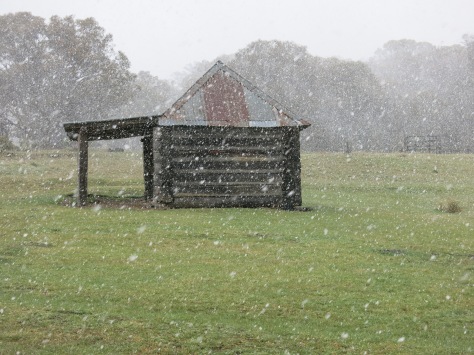
Snowing at Pockets Hut. Kosciuszko National Park.
Rigged for cold weather on AAWT.

Useful Information

NSW Dept of Lands: 1: 25000 maps : Ravine, Tantangara, Rules Point, Peppercorn, Rendezous Creek, Corin Dam, Williamsdale.

NSW Rural Fire Service Brochure: Bushfire Safety for Bushwalkers.

Chapman, J Chapman, M & Siseman J: Australian Alps Walking Track (2009)

ACT Dept of Environment: 1:20000: Namadgi Guide & Map


Some of my other hikes in Kosciuszko National Park.

Day One: Saturday 11 May: Outward Bound: Kiandra to Witzes Hut: 12 kms.

Just after midday, youngest son Alex taxied our hire van to a halt outside the old Kiandra Courthouse since destroyed in the 2019/2020 summer fire season. The Old Court House was the only remaining building of the old gold mining town of Kiandra: population in 1859, 10,000; now.. zero population.

A sudden population explosion as five walkers plunged out of the warm van and into a blast of cool air:  Ross , Leanda , Peter, John and last but not least, their esteemed and worthy leader, yours truly.

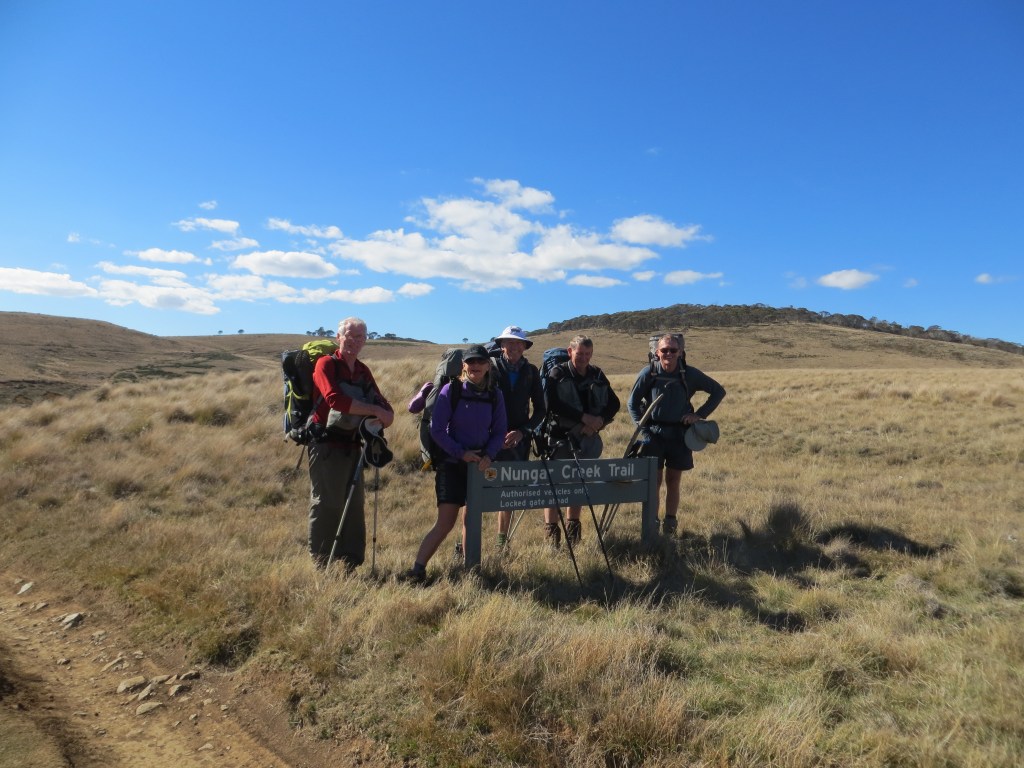
The race was on for the few sunny spots out of the cool blustery wind. We wolfed down our Cooma take-aways, bade Alex a fond farewell, then hit the track, the Nungar Hill Trail.

Our afternoon on the AAWT took us northward over rolling snowgrass plains at about 1450 metres, broken only by occasional alpine streams, which we forded with dry boots and socks intact: the Eucumbene River, Chance Creek, Kiandra Creek and just before Witzes Hut, Tantangara Creek.

After Chance Creek we climbed to the crest of the Great Dividing Range, known locally as the Monaro Range. A minor blip on this undulating high plains landscape.

Start of Nungar Hill Fire Trail near Kiandra. . Kosciuszko National Park.
Leaving Kiandra on the Nungar Hill Fire trail.

The seven day BOM forecast looked agreeably benign: early frosts (a mere -1° C) followed by sunny days (14° C). Perfect timing. But meteorology has a way of biting bushwalkers on the bum. In May this year maximum temperatures averaged 8.2°C while minimums hovered around a miserable 2.8°C. With a record low of minus 20°C, Kiandra is one of the coldest places on the Australian mainland.

Fortunately for this leader, my walking companions, all experienced bushwalkers, were kitted out for all eventualities. But most impressive of all was that they remained unfailingly positive and obliging under some pretty trying conditions.

Australian Alps Walking Track near Pockets Hut
Another cold day on High Plains of Kosciuszko.

The huge grassy plains are an ancient peneplaned surface. They are the almost level remains of a long eroded mountain range system that was later uplifted in a major tectonic movement of the earth’s crust known as the Kosciuszko Uplift thus forming the Kosciuszko Plateau.

The combination of cold air and flat topography created ideal conditions for natural high plain grasslands, technically referred to as the Northern Cold Air Drainage Plains. These were highly prized for summer grazing.

View across High Plains of Kosciuszko National Park from Mt Gingera.
View across High Plains of Kosciuszko from Mt Gingera ACT.

First stop, Witzes Hut. Witzes Hut, possibly a corruption of Whites Hut, like many Kosciuszko huts is set in a picturesque shelter belt of snow gums. Built in 1882 it is a vertical slab wooden hut, single room (about 6m x 3m) with a wooden floor and open fireplace. It is just one of many huts in Kosciuszko: cultural relics from the days of summer cattle and sheep grazing on the high plains.

They are invariably basic: shelters of last resort according to the NPWS signs tacked to the doors. Our late season crossing of the AAWT became hut dependant as the weather closed in. Although we had tents, it was a irresistable temptation for these warm-blooded Queenslanders to sidle into a snug dry hut at day’s end.

Witzes Hut. Kosciuszko National Park
“Is there room at the inn ?” Witzes Hut on Nungar Hill Fire Trail.
Witzes Hut. Kosciuszko National Park.
Witzes Hut on Nungar Hill Fire Trail.

Day Two: Sunday 12 May: Hayburners of the High Plains:  Witzes to Hainsworth Hut: 23 kms.

At 23 kilometres, a longish day beckoned. As a graduate of the Brian Manuel School of Bushwalking I had slyly insinuated to my friends that there was “no hurry” to pack up in the mornings. For those who have not been on the receiving end of this daily regime, expect a rousting out of your downy nest well before sunrise. About 5.00 am is Brian’s preferred time.

Unsurprisingly, a heavy frost carpeted the grass outside. Meanwhile, inside, my scouting friends Peter and John had worked their magic with two sticks, or whatever they use these days, and had succeeded in cranking up a fire of sorts. This we kept going until the last possible moment. Hut etiquette : Always make sure to thoroughly extinguish any fire before leaving the hut and replace firewood used.

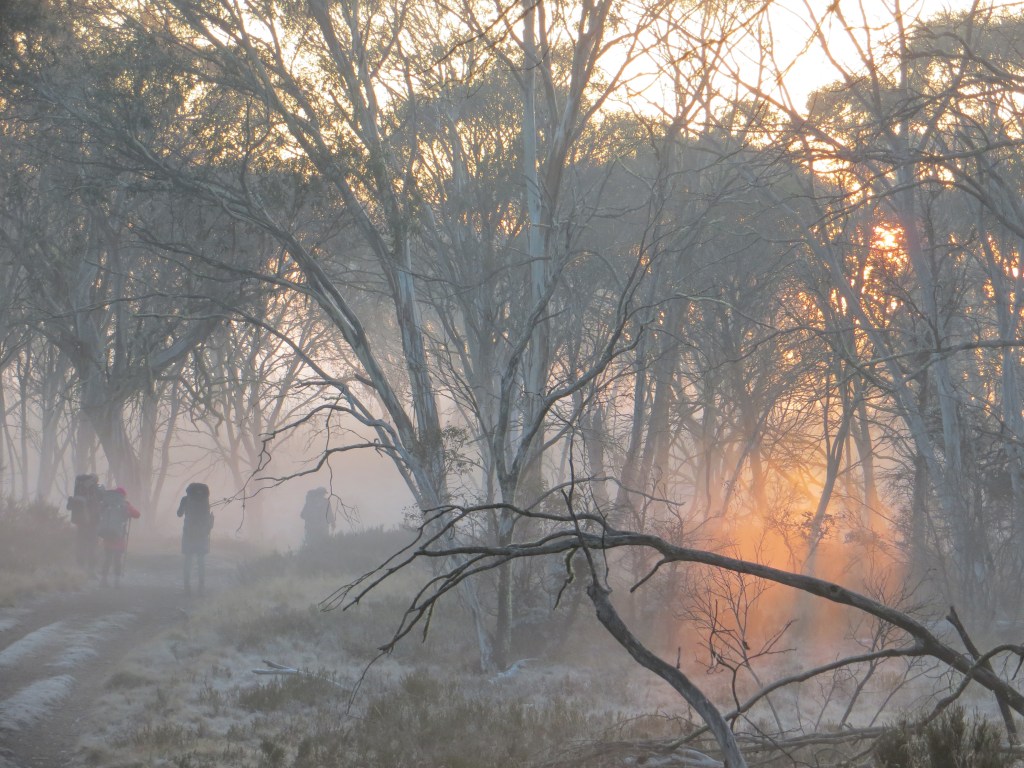
On schedule at 7.30 am we scrunched off along the Bullock Hill Trail. Ghosts in the freezing mist, frost nipping at any gloveless paws. Before long the mist dispersed, revealing a brilliant blue sky and vast frosted grassy plains. Sunny with the max creeping up to a sizzling 13°C. Even the brumbies were out picnicking in the glorious autumn sunshine.

Cold morning on Bullock Hill Trail. . Kosciuszko National Park.
Frosty morning on Bullock Hill trail.
Bullock Hill Fire Trail.  Kosciuszko National park.
By mid-morning the frost and mist had lifted. Descent to Murrumbidgee River.

Brumbies aka Wild Horses aka Feral Horses

A brumby sighting is always exciting for those misguided equinophiles we were harbouring in our midst. But brumbies are feral horses, much the same status as foxes, cats, goats, deer and pigs. And as such they have no place in these fragile alpine ecosystems.

In the ACT they are regularly culled, but in NSW, herds of these hayburners cavort over the snowgrass plains with impunity: brunching on the juiciest alpine wildflowers, carving out innumerable tracks through the scrub and trashing alpine streams and swamps with their hooves.

The Parks service does allow horse riding in Northern Kosciuszko and provides horse camps with yards , water troughs, loading ramps, hitching rails and full camping facilities. From my observations recreational horse riders act responsibly in the alpine environment by keeping to designated management tracks and horse trails . Feral horses are a different matter entirely.

Brumby damage. Kosciuszko National Park
Pugging at a creek crossing in the High Country.

In an attempt to manage brumbies, a 2016 draft Wild Horse Management Plan recommended reducing numbers in Kosciuszko by 90% over 20 years, primarily through culling. That would have left about 600 horses in the park.

Naturally the NSW parliament ignored the advice of its own scientific panel so there was no cull. Instead, the NSW Deputy Premier John Barilaro hatched his own plan, the now infamous: The Kosciuszko National Park Wild Horse Heritage Bill 2018.

The bill would prohibit lethal culling because of the heritage significance of brumbies. I, too, can understand the cultural imperative of maintaining a small sustainable herd of brumbies but there are still serious questions to be answered about the environmental impacts of large numbers of brumbies. The NSW Threatened Species Scientific Committee has described the damage done by brumbies as a ‘key threatening process’.

Fortunately, sanity has prevailed and by 2025 culling was well underway and brumby reproduction rates had dropped below replacement levels.

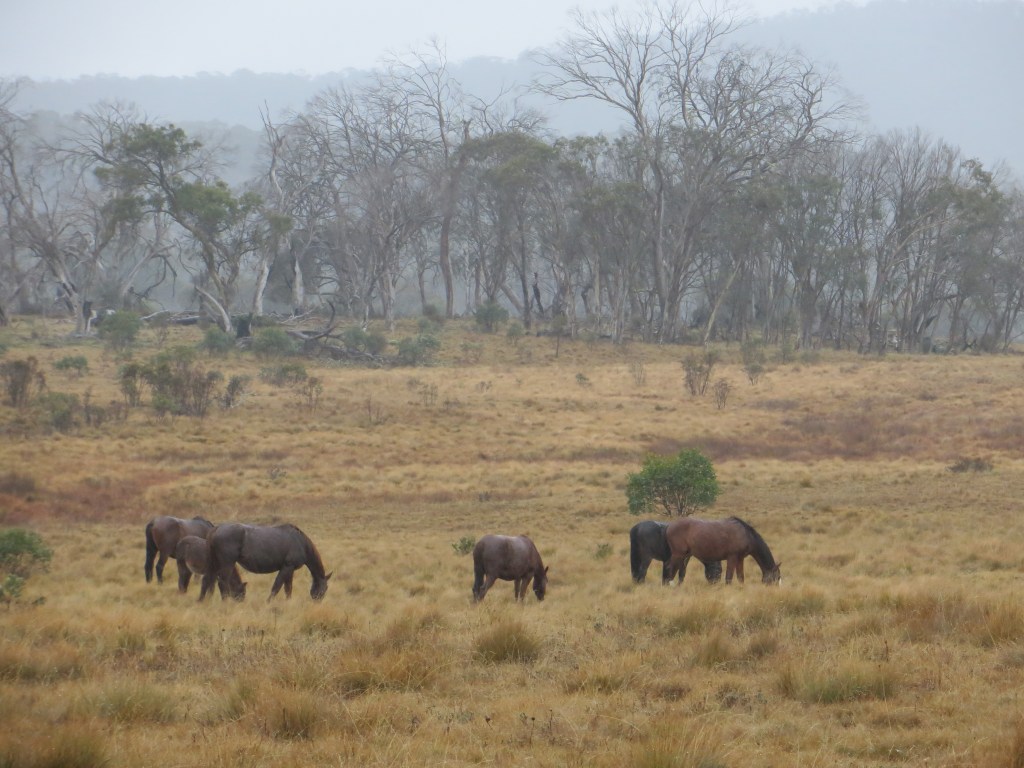
Brumbies. Kosciuszko National Park
Small herd of grazing brumbies.

Update on the Kosciuszko Brumbies
” About 4000 feral horses will be removed from Kosciuszko national park in New South Wales as part of an emergency response to protect the alpine ecosystem after large areas were devastated by bushfires. ” Graham Readfearn. The Guardian . 20 Feb 2020

In February 2020 the NSW Environment Minister Matt Kern announced ” the largest removal of horses in the park’s history”. He had an agreement between ” horse lovers and National Park lovers” to remove wild horses after the unprecedented bushfire damage over the Nungar, Boggy, Kiandra and Cooleman Plains of Northern Kosciuszko.

Recent surveys estimated wild horse numbers increasing from 6000 in 2014 to 19000 in 2019. Clearly environmentally unsustainable in these burnt out landscapes. Minister Kern was reporting on the outcome of a meeting of the Kosciuszko National Park Wild Horse Community Advisory Panel. It is to be hoped that the promised action is taken quickly to reduce horse numbers in the fragile High Plains.

The best summary of the brumby issue that I have read is Anthony Sharwood’s The Brumby Wars (2021, Hachette). This is a book about Australia’s brumbies and the intense culture wars that has erupted about their removal from Kosciuszko National Park. Highly recommended.


Our first obstacle was the mighty Murrumbidgee. We deployed a tried and tested technique, fanning out until someone discovered a likely looking rock or gravel bar. Okay for the four males, each outfitted with long spindly shanks but a big leap of faith for the resident shorty.

Crossing Murrumbidgee River. Kosciuszko National Park.
Crossing the Murrumbidgee River.
Murrumbidgee River. Kosciuszko National Park.
The climb out of the Murrumbidgee River.

Then came one of our few cross-country sections, a mere eight kilometres out to the Port Phillip Trail. For this geographically tricky bit I pressed into service my navigators. Using Peter’s trusty GPS as insurance they tracked to a line of old telegraph poles, which marched across the hills ahead, leading us inexorably towards the dusty Port Phillip Trail on Long Plain. Navigators extraordinaire.

Old Telegraph poles on descent to Port Phillip Fire Trail. Kosciuszko National Park.
Old Telegraph pole on descent to Port Phillip Fire Trail.

More pleasing was John’s distant sighting of the alpine dingo near the Murrumbidgee River crossing. In all my walks in the high country I have had only one previous encounter with this splendid canine, a subspecies of the grey wolf.

Today this solitary light coloured dingo stalked us from afar, surreptitiously tracking our movements from behind clumps of snowgrass. My dingo bible, Laurie Corbett’s The Dingo in Australia and Asia, says that the alpines are a distinctive subspecies, one of three in Australia.

They feast on rabbit, wallaby, wombat with the occasional brumby foal thrown in as a special treat. They are actually quite lazy hounds, rarely travelling more than two kilometres a day and their territories are comparatively small .


Hainsworth Hut

By now it was it was late in the day and with ugly dark clouds brewing we wasted no time, bypassing Millers Hut and Ghost Gully Campsite to reach Hainsworth Hut, on Dip Creek.

Millers Hut. Kosciuszko National Park.
Millers Hut near the Port Phillip Trail.

Just in time for a quick refreshing dip before sunset. Not. Hainsworth Hut, built in 1952, is the archetypal high country hut: a windowless coffin of corrugated iron, two rooms and a large open fireplace at one end. But hugely welcome for these weary walkers. A long 23 kilometre day of up hill and down dale.

Hainsworth Hut. Kosciuszko National Park.
Hainsworth Hut.

Day Three: Monday 13 May: Aquabots: Hainsworth to Pockets Hut via Bill Jones Hut: 24 kms.

7.30 am. We beetled off into light drifting rain, eastwards along the Mosquito Creek Trail, up and over the Gurrangorambla Range (Gurrangorambla granophyre – a hard, fine- grained granite) and then descended onto the Silurian limestones of Cooleman Plain.

The Cooleman is similar in appearance to the other high plains we had traversed, but as it is underlain by limestone it displays the distinctive landforms of a karst landscape: subterranean creeks, caves, sink holes, stalactites, stalagmites, gorges and occasional brachiopod fossils.

When T.A. Murray first saw Cooleman in 1839 he described it as “almost treeless with grasses growing to stirrup height.”

Gurrangorambla Range. Kosciuszko National Park
Climbing over the Gurrangorambla Range at about 1600 metres.

Bill Jones Hut

With the cool, wet and windy conditions persisting we ducked into to Bill Jones hut for our morning tea. The hut is standard daggy and sports a dirt floor, but it was a haven for these five bedraggled walkers. Peter set to and soon had a cheery fire underway then we stood around drinking our piping hot mugs of tea and coffee. Wonderful.

Fire extinguished before we clomped off in saturated footware.

Bill Jones Hut. Kosciuszko National Park.
Bill Jones Hut on the edge of the Cooleman Plain.

Pockets Hut

My fellow aquabots and I seemed less than enthusiastic about doing the tent thing at Bluewater Holes limestone area so it was onward to Pockets Hut, a very comfortable wet weather bolt hole. Pockets is a large four-roomer weatherboard built in the 1930’s, originally hooked up with hot water and electricity. We settled in: a comforting fire, clothes drying in front of the fireplace, hot brews and long nana- naps snug in our warm sleeping bags. Life couldn’t be better.

Pockets Hut. . Kosciuszko National Park.
Pockets Hut on a sunny day.

Day Four: Tuesday 14 May: Rest Day: Pockets Hut to Bluewater Holes via Black Mountain: 14 kms.

A tad cool this morning, -2°C. I had naively promised an easy day walk along 4WD trails back to the Bluewater Holes limestone area on Cave Creek. But as is often the way when associating with these deviant bushwalking types some genius suggested a cross-country “short cut”, contouring around the 1497 metre Black Mountain then dropping into Cave Creek.

With a clearing sky, an easy day walk ahead, things were definitely on the up and up. Or so I thought. We quickly abandoned this contouring lurk, pushed ever uphill towards the summit by massively dense stands of alpine undergrowth.

This was bush-bashing on steroids. In the days of yore when bushwalkers were proper bushwalkers, the handy machete would have swung into action to clear the way ahead. Luckily, John, who is an excellent navigator, as well as scrub-basher, and the ‘genius’ who got us into this predicament, found the rocky summit and then led us down the long northern ridge to land precisely where we needed to be in Cave Creek.

After lunch we poked our way downstream, criss-crossing Cave Creek, checking out Clarke Gorge, Barbers Cave, the Bluewater Hole and Coolaman Cave, a cursory survey at best.

Cave Creek is worthy of several days of exploration but with the sky clouding over (think: it’s going to dump snow now) and the wind rising we hoofed off on the Bluewater Holes Trail toward Pockets. But not before considerable geographical angst as the four males bickered about the location of the trail head. Attn all male leaders: when in doubt always listen carefully to the female of the species who actually bother to read the maps on the Parks information boards.

Blue Waterholes on Cave Creek. Kosciuszko National Park.
Blue Waterholes limestone area: Cave Creek.

Day Five: Wednesday 15 May: An Antipodean Christmas: Pockets to Oldfields Hut: 7 kms.

I peeked out. A white mantle of snow covered all. Snow floated down from a sullen sky. We could freeze our butts off in this stuff but the wild weather gave an exciting edge to the walk. Today’s maximum temperature barely made 3°C.

Pockets Hut. Kosciuszko National Park.
A cold morning at Pockets Hut.

The walk across the snowy plains towards Murray Gap Trail was just magic, snow carpeting the vast Tantangara Plain.  After a Snowy Mountains Hydro valve house (the Goodradigbee Aqueduct) the AAWT climbs over a forested ridge before descending to fetch up at on the river flats of the Goodradigbee River. Tucked away in a stand of gnarled black sallees is Oldfields Hut.

Tantangara Plain. Kosciuszko National Park.
Tantangara Plain enroute to Oldfields Hut.

Oldfields Hut

Oldfields, with slab walls and a long verandah, was constructed in 1925 and is said to have excellent views to Bimberi Peak (1913 m) and Mt Murray (1845 m) on the ACT/NSW border.

Not today; mist and dumps of sleet obscured any views to the east. Our immediate priority as always was to scrounge up a supply of firewood. Then John and Co cut the wood into useable billets.

The golden rule of the huts is to always replace any timber burnt and leave a supply of dry kindling. Which we did in spades.

Oldfields Hut. Kosciuszko National Park.
Oldfields Hut.

Day Six: Thursday 16 May: Border Hoppers: Oldfields Hut to Sawpit Ck camp: 18.7 kms.

Today we would bid farewell to the high grasslands of Kosciuszko and traverse into the forested ranges of the Bimberi Wilderness and Namadgi National Park for our final three days.

We rugged up for the perverse conditions. At Oldfields my pack thermometer read 0°C while maximum temperatures barely held at 2°C all day. Westerly winds gusted to 70 kmh. The morning’s walk would climb 245 metres into Murrays Gap and at 1600 metres we copped the full force of the bad weather coming from the west. Sleet blanketed the mountain slopes and the wind drove rain and sleet horizontally onto our backs.

But soon we descended, over the Cotter Fault line and into the Cotter River System. The weather backed off and a watery sun finally leaked a few rays through a clearing sky.

Apart from cool windy conditions the wet weather was behind us. Relieved at this change of fortunes our little party trotted on, jaunty like: past Cotter Hut (locked to keep those dodgy bushwalkers at bay), and past our turn-off to the Cotter Gap track.

The site of another male navigational misadventure and bailed out again by Leanda who had taken the time to peruse a rat-eared A4 map tacked to a post. For the rest of the day we climbed steadily 350 metres up to Cotter Gap and then descended steeply to our cramped bush campsite on Sawpit Creek.

No more days of lurking in comfortable bush huts for this slack lot. Beyond Cotter Gap a significant change in vegetation occurs; gone are the alpine species, replaced by a drier Eucalypt forest growing on the granites of the vast Murrumbidgee Batholith.


Day Seven: Friday 17 May: One small step for Man: Sawpit Ck to Honeysuckle Ck: 15.6 kms.

With Ross now in full flight mode it was a quick hop down into the grasslands of the narrow Orroral Valley and its herds of Eastern Grey Kangaroos.

We sprawled out in the grass, absorbing the warmth of the sun on our tummies for the first time in several days. Sheer bliss.
Further down the Orroral Valley is the Orroral Homestead and shearing shed built in the 1860s.

It has three rooms, chimney at each end and a full length verandah on the front.

As tempting as this sounded to us, overnight stays by bushwalkers are strictly verboten. Those ACT Parks rangers are pretty toey about that sort of stuff.

Orroral Valley and Orroral Homestead. ACT.
Orroral Valley and Orroral Homestead

Onward and upward to the well-appointed Honeysuckle Creek camping ground, with the small matter of a 420metre ascent onto the Orroral Ridge at 1350 metres to get there.

Honey suckle Creek Campground. Namadgi . ACT.
Honeysuckle Creek Campground. ACT.

Honeysuckle is, like the Orroral Valley, the site of a former space tracking station. A series of excellent info boards informed us that it operated from 1966 to 1981 and was a vital part of communications for the Apollo moon missions, Skylab,Voyager and Pioneer deep space probes. This included The Apollo 11 mission and Neil Armstrong’s signature, “one small step for man, one giant leap for mankind.”


Day Eight: Saturday 18 May: Homeward Bound: Honeysuckle to Namadgi Park HQ: 15.4 kms.

After an all-night rolling stoush with an encampment of feral Rover Scouts we set off in another heavy frost (- 0.3°C) on our final leg of the AAWT via Booroomba Rocks.

This granite outcrop at 1372 metres afforded us speccy views across the plains to Canberra. Several hot air balloons hung in the still air above the city.

But the AAWT wasn’t quite finished with us yet. Just before lunch Ross whipped us up the 240 metres to our lunch spot near Mt Tennent (1384 m), about an hour from the trail exit. You can imagine that I was pretty taken-aback when I pulled my tent fly out for a drying in the sun, and discovered that after five hours in my pack it was still heavily encrusted with layers of ice.

Thus ended one of Australia’s best long distance walks: over high ranges, extensive snowgrass plains, swampy meadows and sinuous alpine streams.

For my money the Kiandra to Canberra section was an unforgettable bushwalking experience. Brilliant high plains scenery, historic huts, caves, gorges, dingoes, brumbies and first-rate walking companions. Who could ask for more? And who among us will ever forget the wild and woolly weather?

Huts destroyed in the 2019/2020 summer fires

Sawyers Hut, Wolgol Lodge, Kiandra Court House, Pattersons Hut, Matthews Cottage, Round Mountain Hut, Linesmans No3 Fifteen Mile Spur (1950), Linesman No 3 Fifteen Mile Spur (1980),Vickerys Hut, Delaneys Hut, Happys Hut, Brooks Hut ( badly burnt), Bradley and O’Briens, Four Mile and Demandering.

Happily, rebuilding of ten of these huts is happening at a rapid pace, thanks to herculean efforts by KHA volunteers and NSW Parks.

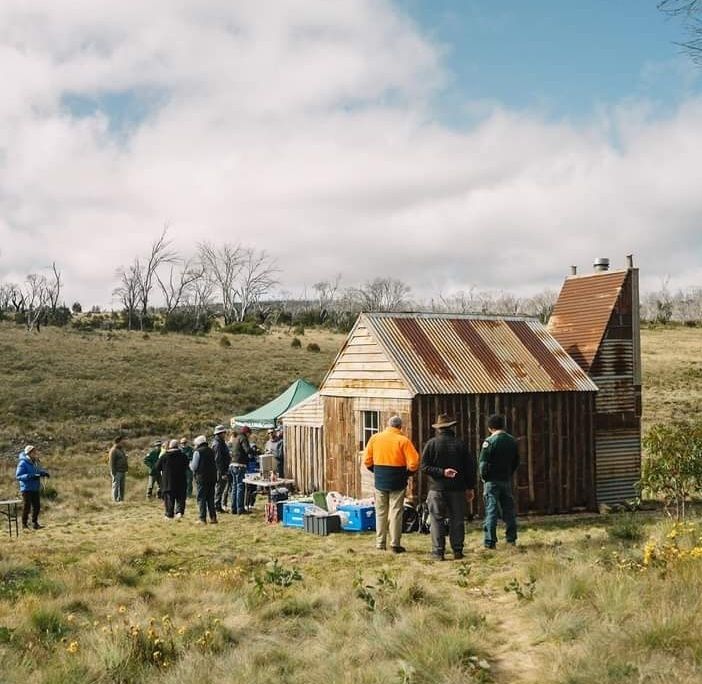
Restored Four Mile Hut 2024. Kosciuszko National Park.
Four Mile Hut after restoration by KHA volunteers and Parks NSW.

Exploring Long Plain: Landscape, History, and Wildlife in Kosciuszko National Park.

One of my favourite places in Australia’s high country is Long Plain in Kosciuszko National Park. The subdued topography of this open grassy plain in Northern Kosciuszko presents a marked contrast to the 2000 metre whaleback mountains and alpine ridges of Southern Kosciuszko.

by Glenn Burns

On a recent trip to Northern Kosciuszko we camped at the Long Plain Hut and also hiked in to Hainsworth Hut, an old grazing hut, via the Mosquito Creek Trail.

Long Plain in autumn. Kosciuszko National Park.
Long Plain in autumn: headwaters of the Murrumbidgee River

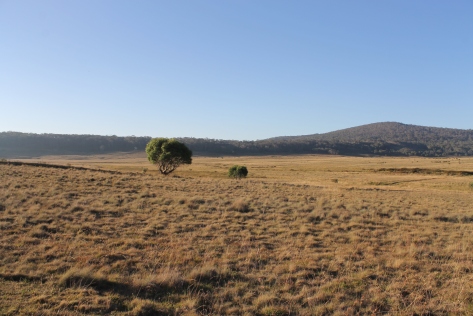
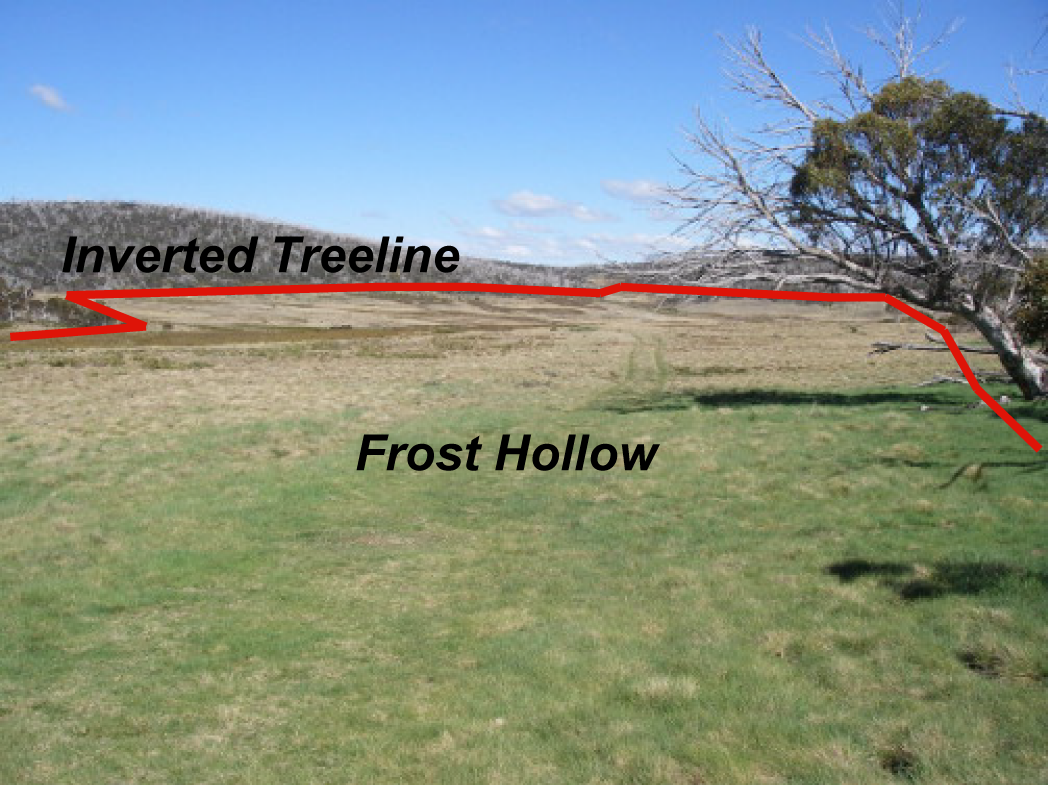
Long Plain, in Kosciuszko NP, is one of the many high frost plains between the Brindabellas and Kiandra, all mostly above 1300 metres. These are called frost hollows or cold air drainage basins and are naturally occurring treeless plains formed when cold heavy air drains into depressions along the valleys of creeks and rivers.

The pooling of frosty air suppresses the growth of tree seedlings and consequently the plains are bereft of trees, even the amazingly hardy snowgums. Instead, the snowgums and black sallees grow on the ridges above the valleys: thus an inverted treeline.

Inverted Treeline: Nth Kosciuszko National Park.
Inverted Treeline: Northern Kosciuszko

Long Plain is, as its name implies, a long plain. About 30 kilometres in length between Peppercorn Hill in the north and Bullocks Hill to the south. This is an immense open grassland drained by the upper reaches of the Murrumbidgee River or Murrumbeeja.

Its European discoverer was Charles Throsby Smith who, in March 1821, followed the Molonglo River to its junction with the Murrumbidgee, close to the present site of Canberra. 

Seventy kilometres south-west of Canberra, the Murrumbidgee rises on Long Plain in an amphitheatre formed by the apex of the Fiery Range and the Gurrangorambla Range, near Peppercorn Hill.

From here it initially  flows south-south-west following the line of the Long Plain Fault, a major structural feature extending from about 25 kilometres north of Brindabella, through Kiandra to just west of Mt Kosciuszko.

The plain is bounded by the Fiery Range to the west and, a few kilometres to the east, a line of 1600 metre peaks: Mt Nattung 1618m, Whites Hill 1597m, and Skaines Mountain 1601m.

Geology Map of Long Plain. Source: Dept. National Dev. Long Plain Geology
Source: Dept. National Dev. Long Plain Geology

 Long Plain’s open grassland vistas, a cultural heritage of grazing huts, interesting bird sightings and the possibility of spotting wombats, dingoes and brumbies make for a great walking and camping experience.

Any time between October and May is a good time to visit but access gates are locked in winter as snowfalls blanket these high plains. Other northern frost plains worth investigating include Coolamon, Tantangara, Gooandra, Boggy, Dairymans and Currango.

Map of Long Plain: 1:250K. Kosciuszko National Park.
Long Plain: 1: 250K

Friday

We had fine warm days and a coolish night for our March overnight trip into Hainsworth Hut. It is an easy walk following the Mosquito Creek Trail which obligingly contours along the lower edge of the sub-alpine woodland for most of the way. The woodland was typical snowgum-black sallee dominant with an understorey of shrubs and snowgrass.

Mosquito Creek Fire Trail. Kosciuszko National Park.
Mosquito Creek Fire Trail

Conveniently placed logs provided opportunities to perch and spy on the local birds. The usual high country customers appeared in due course: Wedgetails, Red Wattlebirds, Crimson Rosellas, Ravens and Flame Robins among the more obvious.

Flame Robin
Flame Robin

Although horse riding and mountain bike riding are permitted on the Mosquito Creek Trail we weren’t bothered by either. But the pyramids of horse poo, hoof marks and tributary brumby pads attested to the presence of horses, wild or otherwise. This was borne out in the number of entries in the hut log book mentioning brumby sightings and horse riders clip-clopping in from Ghost Gully or Cooinbil Hut.

The vast majority of visitors come in summer. I found my old entry from a Kiandra to Canberra trip in May years ago. This was the onset of winter and virtually no-one came through after our party until five months later, the spring thaw in October.

But our current trip was in early autumn and the weather was brilliantly fine but leavened with a sneaky alpine breeze. We pitched our two-man Salewa on the cropped grass and had a very comfortable night under canvas.

The general rule is that huts should only be used for emergencies in bad weather.

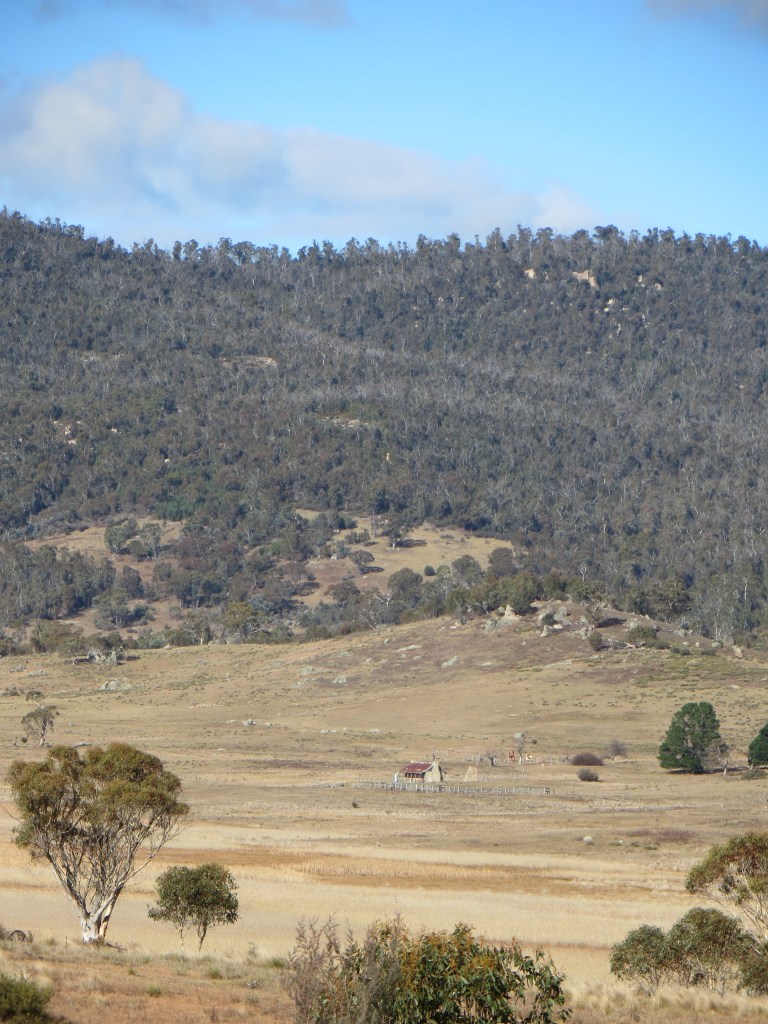
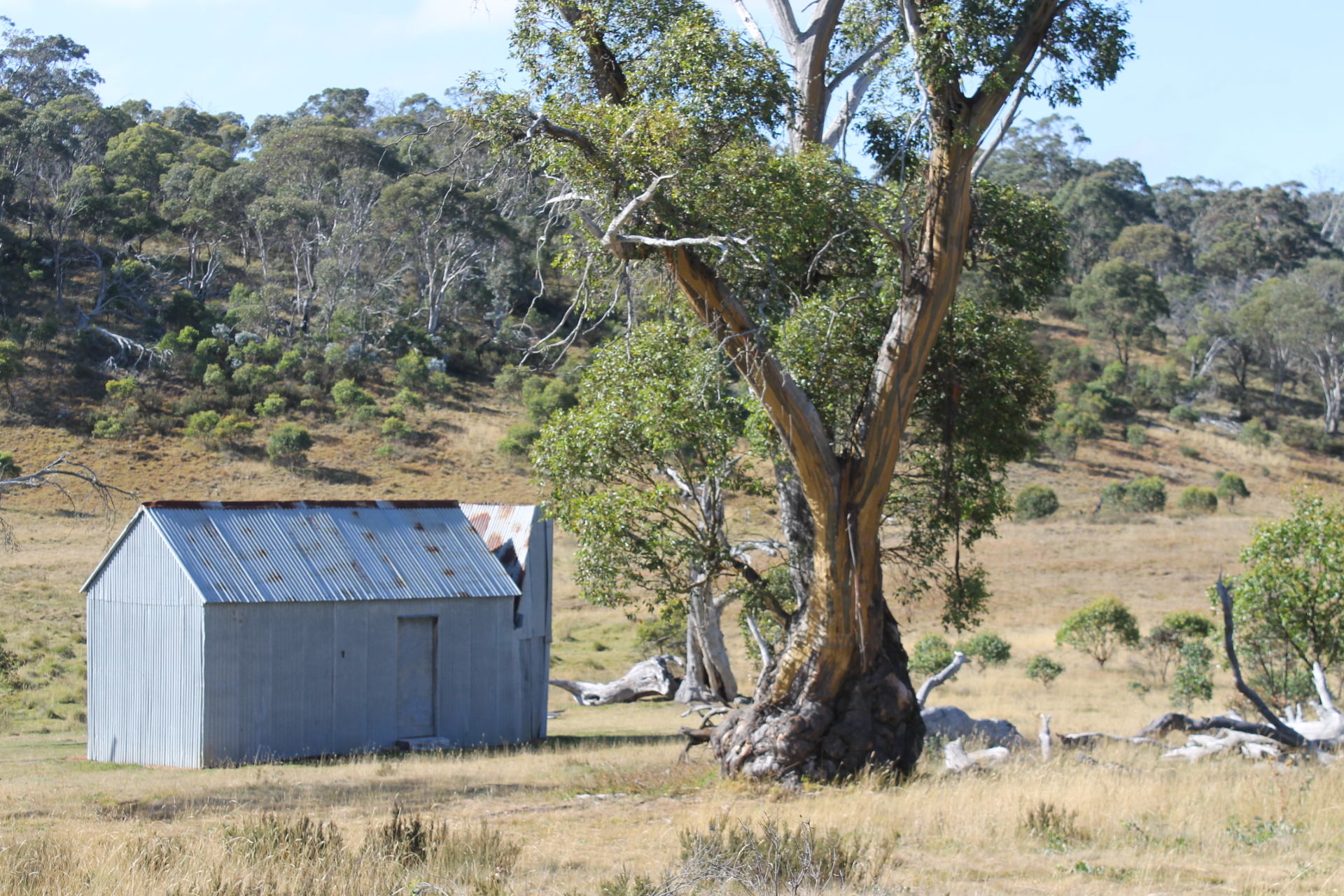
Hainsworth Hut on Dip Creek. Kosciuszko National Park.
Hainsworth Hut on Dip Creek

Hainsworth was one of a string of grazing huts built along Long Plain. Others included Long Plain Hut, Millers Hut, Jannets(ruin), Cooinbil, Peppercorn (ruin), Little Peppercorn(ruin) and Pethers (ruin).

Klaus Hueneke in his well researched and interesting reference book Huts of the High Country estimates that there could have been up to 20 huts across the plain at the peak of grazing. For the mountain hut afficionados among you I can recommend books or articles written by Klaus Hueneke and the Kosciuszko Huts Association website.

Hainsworth or Landrover Hut is a simple two-roomer, a bedroom and a kitchen. It was built in about 1951 by Hainsworth and Corkhill as a summer grazing hut. The hut is clad in corrugated iron, has two doors and two hatch windows, an open fireplace and solid wooden floor.

Like most of the high country huts it is well sited: sheltered from westerly winds, close to a supply of water and timber, with magnificent views over grassy flats and a morning sun aspect allowing the hut’s inhabitants to thaw out. Hainsworth Hut has an excellent location overlooking the grassy flats of Dip Creek.

Dip Creek below Hainsworth Hut. Kosciuszko National Park.
Dip Creek below Hainsworth Hut

Miles Franklin’s Childhood at Brindabella is recommended reading for all high country enthusiasts like myself. Stella (Miles) Franklin was born at Lampe Homestead, a grazing property at Talbingo near Tumut in 1897. She went on to write 21 Australian books. Miles Franklin spent the first ten years of her life at Brindabella only 50 kilometres to the north east from Hainsworth Hut. Childhood at Brindabella is an excellent snapshot of the life and the landscapes of Northern Kosciuszko and the nearby Brindabella Ranges at the turn of the 20th century.

Miles Franklin Memorial, Tabingo, NSW
Miles Franklin Memorial, Talbingo, NSW

Sixty years ago the creek flats below us would have been alive with grazing sheep. A record in the log book by Bill Hainsworth’s daughter noted that up to 3000 sheep would graze around the hut and its environs. But we had to content ourselves with the lone fat and prosperous dingo that cruised along the treeline opposite our vantage point in the doorway of the hut.


We watched for quite a while as it went about its doggy business scoping out various burrows and tunnels. Judging by the prevalence of rabbit burrows, our dingo would have no difficulty in getting a decent feed for tonight.

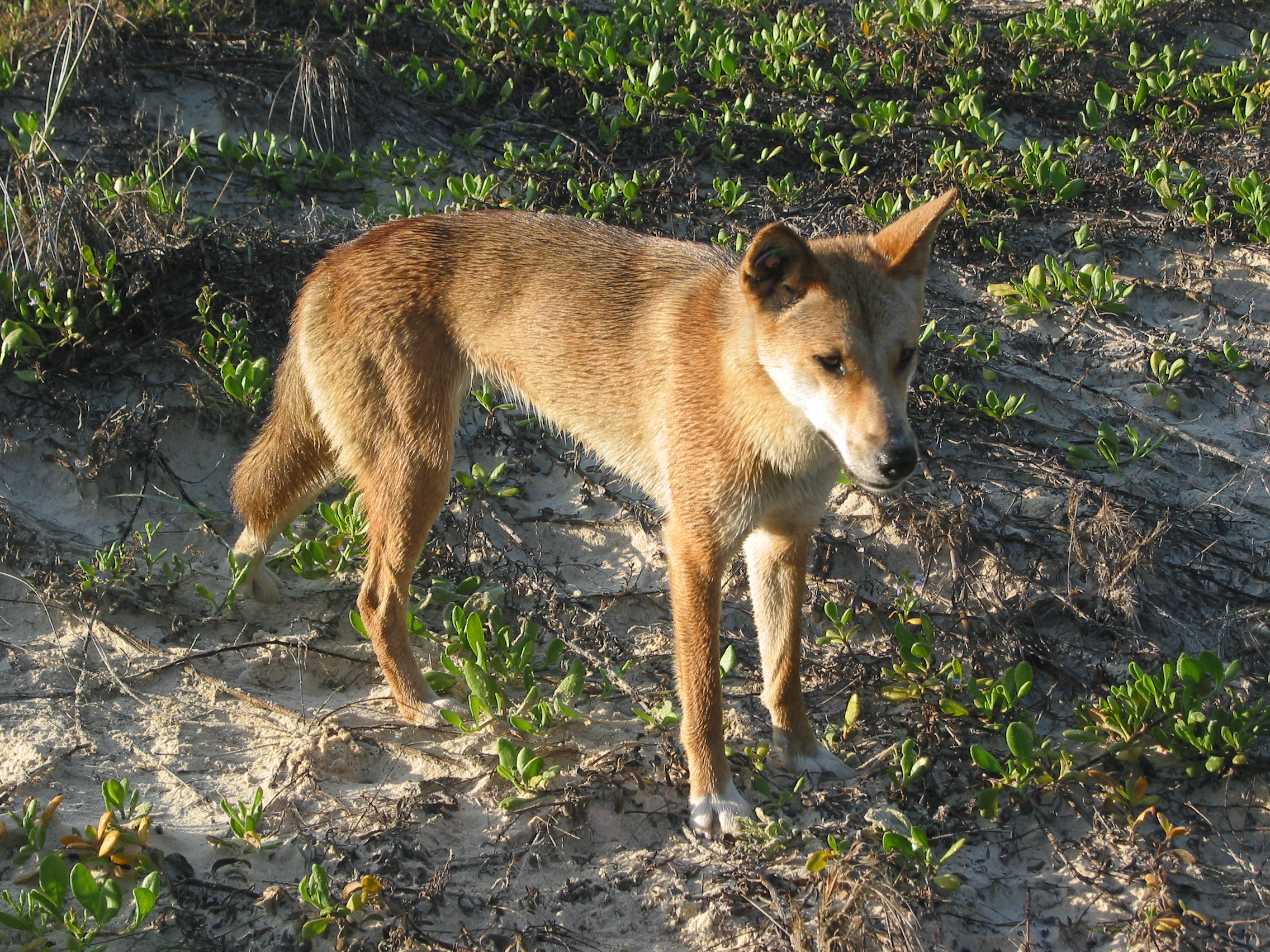
In all my walks in the high country I have had only two previous encounters with this splendid apex predator, a subspecies of the grey wolf. My dingo bible, Laurie Corbett’s The Dingo in Australia and Asia, says that the alpine dingoes are a distinct subspecies, one of three in Australia.

They feast on rabbit, wallaby, wombat with the occasional brumby foal thrown in as a special treat. They are actually quite lazy hounds, rarely travelling more than two kilometres a day and their territories are small ellipsoids, with the long axis only twelve kilometres in length.

Dingo
Pure bred Dingo.

On dusk just as we were drifting off to sleep I heard an ever so light drumming of hooves outside the tent. I peered out through the Salewa’s nifty little plastic window. Below, on the creek’s edge, a mere hundred metres away, a solitary brumby drank from Dip Creek.

In Australia, non-domestic horses are generally known as either brumbies or wild horses or feral horses. The term brumby is attributed to  James Brumby, who released his horses to run free on his land in NSW when he was transferred to Tasmania in the 1830’s.

There is no doubt that horses have played an important part in Australia’s recent history as they have been involved in exploration, mining, racing, transportation, grazing and droving, and as part of the mounted police and Australian Light Horse Regiments.

Photo: Peter Fowler: Brumbies in Nth Kosciuszko. Kosciuszko National Park.
Photo: Peter Fowler: Brumbies in Northern Kosciuszko

So for most people a brumby sighting is always exciting. Australians have a great emotional attachment to horses, and I can relate to this. But the hard reality is that brumbies are feral horses, with the same status as foxes, cats, goats, deer and pigs.

Thus, ecologically, they have no place in these fragile alpine ecosystems. In the Australian Capital Territory, Western Australia, Northern Territory and Queensland they are culled, usually shot from helicopters, but in New South Wales and Victoria herds of these hayburners from hell cavort over the snowgrass plains with seeming impunity: brunching on the juiciest wildflowers, carving out innumerable tracks through the scrub and pugging alpine streams and swamps with their hooves. Numbers in Kosciuszko are have been well over 19,000, and were escalating each year. 

In 2023 the Australian Government’s Threatened Species Scientific Committee warned that feral horses could be a crucial factor in the final extinction of six critically endangered animals and two critically endangered plants.

A recent approach adopted by the NSW Parks Service has been trapping the brumbies then removal from the park. Not all that effective as I have observed from my extensive walks in Kosciuszko.

Culling of feral horses started again in October 2023, with over 5,539 killed by aerial shooting. Another 427 were removed by trapping, rehoming and ground shooting. This is the first time that more horses were removed than their annual population growth.

Their days appear to be numbered. Under NSW legislation, the government must reduce the number of feral horses in Kosciuszko to 3000 by 2027. Still too many.

Superfically, it seems to me that trapping is a reasonable solution, in that it balances conservation of alpine ecosystems and the desire on the part of horse lovers to maintain their high country grazing heritage. However, numbers removed by trapping are very modest. Insufficient to keep up with natural increase of brumby populations. A great read about all these issues can be found in Australian Geographic Vol 130.


Brumby Trap on Cascade Trail

Saturday

Saturday dawned fine and cool. Ideal conditions to putter back along the Mosquito Creek Trail to our ute, still standing unmolested under a grove of shady snowgums at Ghost Gully. After a gourmet meal of crusty bread, cheese, cheesy Ched biscuits and lemon barley cordial we made tracks for the Long Plain Campground.

Long Plain Hut. Kosciuszko National Park.
Long Plain Hut

The hut occupies a beautiful spot in a stand of gnarled old snow gums and sallees, overlooking Long Plain.

It is accessible by 2WDs and has a day use area and two very pleasant low key campgrounds; one for car camping and one for horse camping. The spacious horse camp, on a small knoll, has its own set of horse yards with a stream nearby. This is where we camp.

Horse campsite at Long Plain Hut. Kosciuszko National Park.
Campsite at Long Plain Hut

Unregulated grazing started on Long Plain as early as 1830 and by 1900 there were 22 large snow leases in the high country. In 1909 Arthur Triggs of Yass leased a big chunk of the plain, about 28,300 hectares.

Later, when the lease was subdivided, a Dr Albert Campbell of Ellerslie Station, Adelong obtained several thousand hectares of the old Long Plain Lease. In 1916 he had this sturdy weatherboard grazing homestead built by Bobby Joyce. The timber was milled at Jack Dunn’s sawmill at nearby Cumberland Mountain and drayed to the site by Peter Quinn of Kiandra.

Like nearby Coolamine Homestead, Pockets Hut and Old Currango, Long Plain is a far more substantial structure than most of the pokey summer grazing huts.

It is a massive 13 metre x 7 metre building consisting of a central hall, four large rooms clad with tongue and groove, four windows, a partly-enclosed back verandah and two fireplaces. During its first winter the shingles on the roof split and were eventually replaced by corrugated iron.

It was variously known as Campbell’s, Dr Campbell’s, Oddy’s and Ibbotson’s, depending on who occupied the hut. The final occupants were Jessie and Fred Bridle, fencing workers who lived in the hut in the 1960’s.


Long Plain was also the focus for rabbit trapping and shooting as well as gold mining. Rabbit trappers lived in the Long Plain hut during the depression years of the 1930s when rabbits had reached plague proportions across much of Australia. Rabbiting provided a source of income during the depression.

Source: Phyllis Dowling Collection.Rabbit skins drying on verandah of Long Plain hut. Circa 1939
Source: Phyllis Dowling Collection. Rabbit skins drying on verandah of Long Plain hut. Circa 1939.

Another activity on Long Plain was gold mining. Joseph York worked a small mine just to the north of Long Plain hut until his death in 1898.

Later operators of the mine were Tom Williams ( in the early 1900s), Tom Taylor and Bill Harris in the 1930s. These pioneers are remembered in the naming if two creeks just north of the hut: Yorkies Creek and Taylors Creek.


Reading:

Australian Alps Liaison Committee: Explore the Australian Alps. 2007

Green, K and Osborne, W: Field Guide to Wildlife of Australia’s snow-country.

Hueneke, Klaus: Closer to Heaven: Aust. Geog.93.

Smith, B: Dingo relationships: Wildlife in Australia.Spring 2009.

Dept. Nat. Dev. Geological Excursions: Canberra District. 1964.