Tag Archives: Whites River Hut

A Summer Saunter in the Snowies #1. The Kerries, Rolling Grounds, The Main Range and The Rams Heads.

 My bushwalking friend Brian  is nothing if not persistent.  And so it was that we were off again to walk the length of The Kerries Ridge, said to be ‘some of the finest walking in Kosciusko National Park.’   He for a third attempt and me for a second.  Our previous encounters had taught us that The Kerries ridge was not a good place to be in bad weather.

by Glenn Burns

This time we were accompanied by a surprisingly favourable weather report and that trio of venerable track dogs: Richard, Joe and his walking mate from Townsville, Noel .  As an added inducement Brian had suggested that we should check out The Brindle Bull. 

My initial thoughts on The Brindle Bull turned to one of Brian’s après-walk high country watering holes: a schooner of cold Kosciuszko Pale Ale or perhaps a Razorback Red Ale…..  Who could resist?

Later, far too late, while poring over some Kosciuszko maps on the flight down, I discovered that The Brindle Bull was, in fact, a 1890 m peak in The Pilot wilderness. Just another peak on Brian’s interminable 1000 m ‘to do’ list.
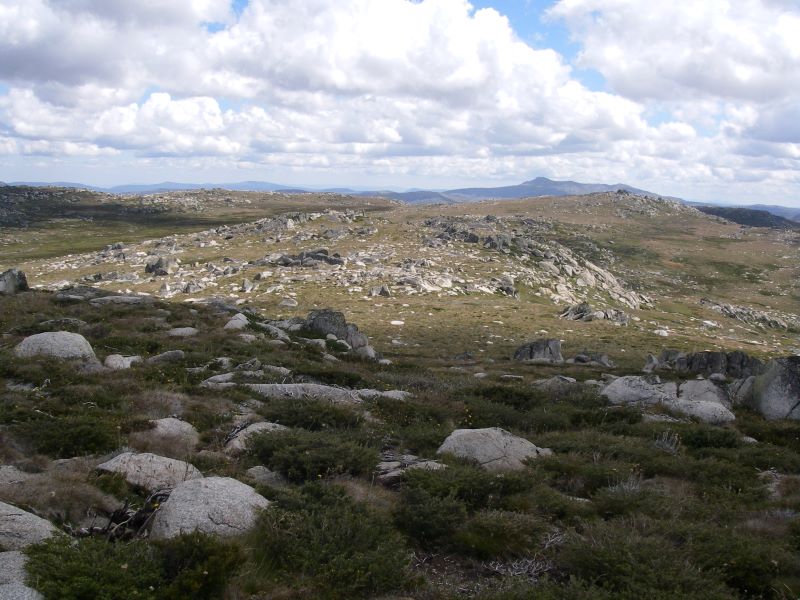
Kerries Ridge with Mt Jagungal in background. Kosciuszko National Park.
Kerries Ridge with Mt Jagungal, 2062 m,  in background

Our initial 90 kilometre circuit, big chunks of it off-track, was a grand tour of some of Australia’s highest peaks and ridges: Disappointment Ridge, Gungartan, The Kerries, The Rolling Grounds, Mt Tate, Mt Anderson, Mt Anton, Mt Twynam, Mt Carruthers, Mt Lee, Mt Townsend, Alice Rawson, The Rams Head, South Rams Head and at 2228 m, the biggest bogong of all, Mt Kosciuszko.

View of Main Range. Kosciuszko National Park. From Charlotte Pass.
View of Main Range from Charlotte Pass.

The final four days would follow The Main Range, also called the Snowy Mountains, over 2000 m, well above the tree line.In fine weather this is one of Australia’s premier walks, but it is very exposed and the weather highly changeable.  Storms and even sleet are not unusual in February so walkers need to be well prepared.

The Main Range from the north-western side. 1867 lithograph by Eugene von Guerard.
Ethridge Range. Koscuszko National Park.
Part of Kosciuszko’s Main Range area. Ethridge Range 2150 m on a fine, though windy day .

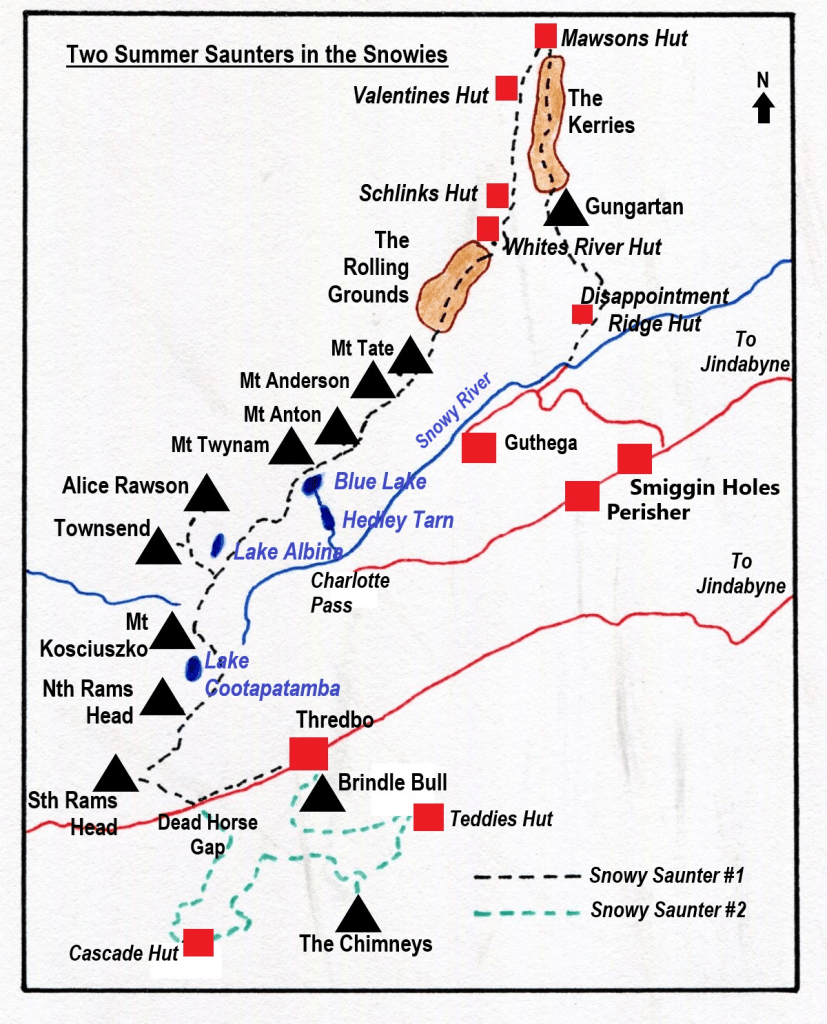
Map of Main Range hike in Kosiuszko National Park. 10 main peaks
Map showing saunter #1 over The Kerries, Rolling Grounds and Main Range.

Sunday: Munyang (Guthega) Power Station to Disappointment Ridge: 8 kms

Our people mover piloted by sons Alex and Ian discharged its cargo of old fellows at Munyang (Guthega) Power Station (1300m) soon after 9.00 am.


MUNYANG (Guthega) hydro power station is the start of many of my favourite walks in Kosciuszko.

Munyang was also the start of the construction of the first major project of the Snowy Scheme in 1951. The Guthega project was awarded to a Norwegian firm Ingenior F. Selmer. A serious player in global dam and hydro construction.

Selmer were required to construct a dam (Guthega Pondage) 30 metres high and 107 metres long; a 5 km tunnel with a penstock pipeline and power station producing 60,000 Kw, the smallest output of the Snowy power stations.

Opening of Guthega Project on 23 April, 1955 by PM Robert Menzies.

The bulk of the workers were Norwegians (450, mainly labourers) from the rural areas of the Arctic Circle.
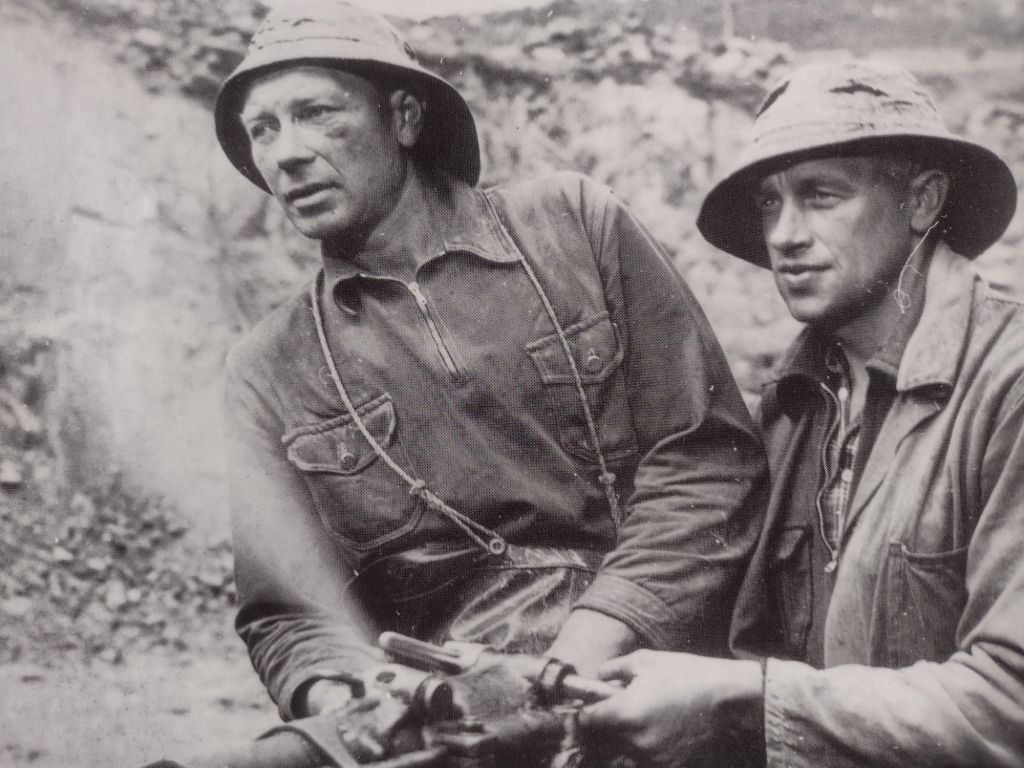
Norwegian workers on the Guthega Project.

On the 21 February 1955 , only a few weeks behind schedule, electricity flowed from Munyang. Like my fellow bushwalkers the Snowy Scheme had sprung to life.

The word Munyang or Muniong derives from the First Nations people. When camped on the Eucumbene Valley, they would point to the snow covered Main Range and repeat the word ‘Munyang’ or ‘ Muniong’ . Said to mean ‘big’ or’ high mountain’. Also’ big white mountain’.


What followed was a salutatory introduction to alpine walking: hauling our backpacks, bulging with tucker for seven days and piles of warm clothing, four kilometres uphill on the Disappointment Spur fire trail to Disappointment Hut (1640 m).

Disappointment Spur Hut. Kosciuszko National Park.
Disappointment Spur Hut: Source P. Hoskins.

Disappointment is spiffy little four berther ex-Snowy Mountains Authority Hut set in a grove of snow gums and had been spruced up with a lick of green paint.  Built as a survey hut in the 1950’s by the Snowy Mountains Authority, it is of weatherboard and iron roof construction with wooden floor.  Cosy as.

Disappointment Spur is said to have been named by a group of stockmen travelling from alpine meadows near Gungartan through to Jindabyne. They followed the ridge down only to be ‘disappointed” at not being able to cross a raging Snowy River. Or so the story goes.

Any thoughts I had of settling in for a comfy overnighter in the hut were quickly scotched by our over-eager leader, ever anxious to press on.  But not before tucking into a hearty al fresco lunch prepared by Joe and Noel:  fresh Thredbo Bakery bread rolls packed with generous slabs of Jarlsberg cheese and slices of salami.  A decent lunch time feed for a change.

The afternoon’s off-track climb onto Disappointment Spur was a fair bugger, pushing uphill through whip-stick thickets of scrubby re-growth from the 2003 fires.  At 3.30 pm we hove to.  Thank god Eager Beaver wasn’t at all keen on the extra three kilometres over Gungartan to Gungartan Pass.

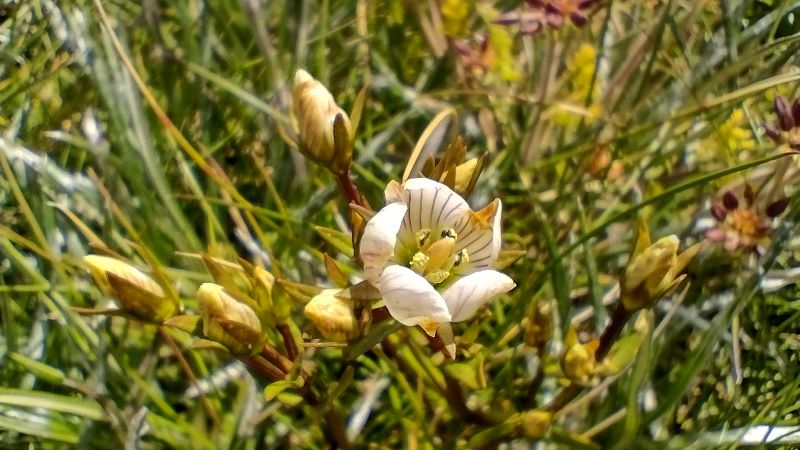
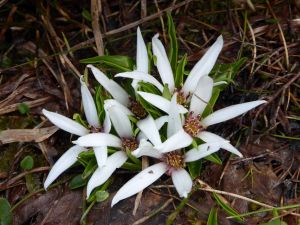
The make-do campsite at 1940 m on the picturesque alpine herbfields of Disappointment Ridge was no hardship.  Tickety-boo, in fact: springy snow grass bedding, speccy views north to Gungartan and Jagungal, nodding pastures of yellow billy buttons, silver snow daisies, Australian bluebells and white gentians all topped off by the promise of fine weather for our passage across The Kerries on the morrow.

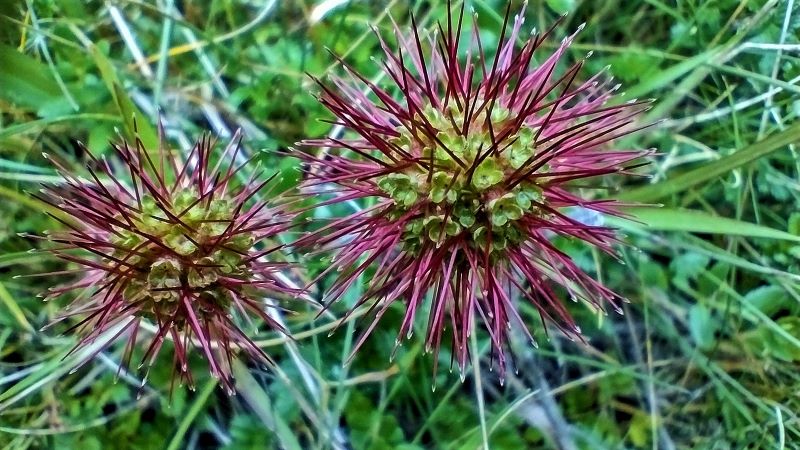
Gungartan Pass. Kosciuszko National Park
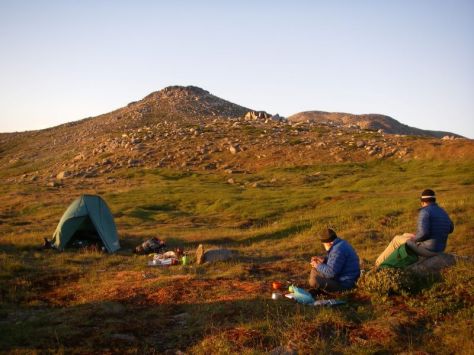
Campsite near Gungartan Pass  1940 m.
Bidgee-widgee. Kosciuszko National Park.
Bidgee-widgee: Acaena novae-zelandia.AA prickly nuisance that loves your socks.
Muellers Snow Gentian. Kosciuszko National Park.
Mueller’s Snow Gentian: Chionogentias muelleriana.
Billy Buttons. Kosciuszko National Park.
Billy-buttons: Craspedia sp.
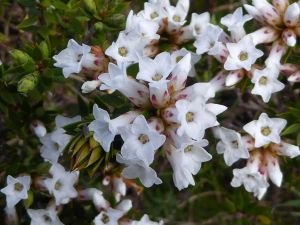
Carpet Heath. Kosciuszko National Park.
Carpet Heath: Pentachrondra pumilis.
Bluebell. Kosciuszko National Park.
Bluebell: Wahlenbergia sp.

Monday: Gungartan, The Kerries to Mawsons Hut: 9 kms.

Despite Brian’s daily assurances that there was ‘no hurry’ to pack up each morning, soon after 5.15am we heard the familiar zzzzzzzzip  from his green hutch and Brian would, wombat like, reverse out on all fours into the crisp, crepuscular dawn.Air temperature hovering at barely 1°C according to my pack thermometer.  A quick breakfast of weet-bix, muesli or maybe hot porridge, washed down with a mug of piping hot coffee or tea.   Our departure was invariably before 8.00 am. No hurry.No pressure.

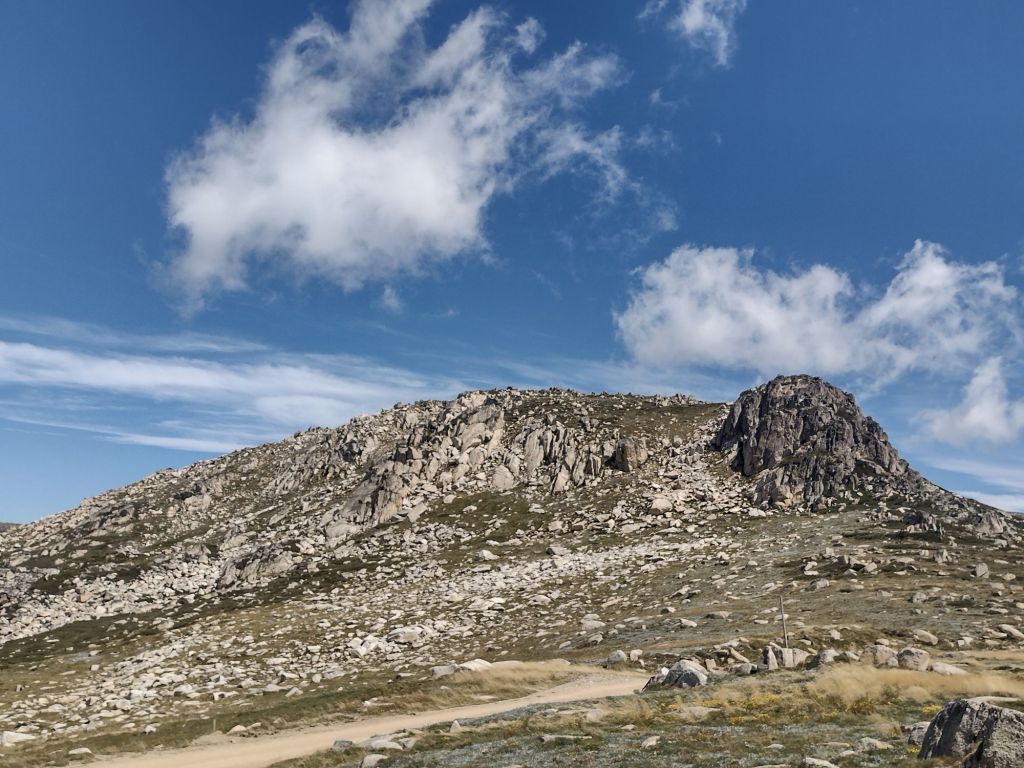
First up, Gungartan, a jumble of granitic tors and a trig station which had seen better days.  At 2068 m this is the highest point north of the Main Range.   Stretching away to its north was the open rolling ridge of The Kerries (2040 m). A magnificent walk across trackless wildflower meadows dotted with granite boulders, alpine bogs and mountain streams.
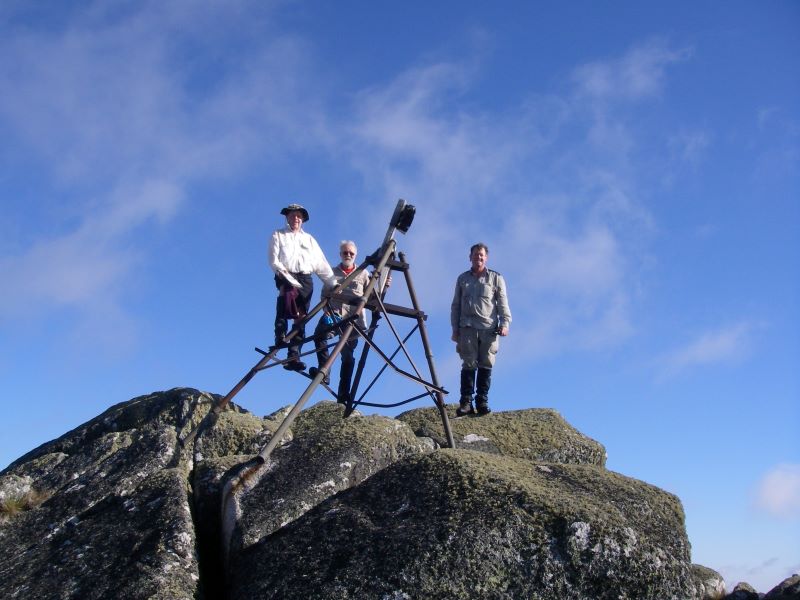
Gungartan summit. Kosciuszko National Park.
Trig on Gungartan, 2068 m

As with much of the Kosciuszko plateau, the Kerries Ridge has been eroded to form a small peneplain. It’s surface is capped by granitic ( granodiorite) boulders rising only a 50 to 100 metres above the general landscape. Like much of the Main Range , the underlying rock is Silurian Mowambah Granodiorite, some 430 to 400 million years old. Granodiorite, superficially similiar to granite, is also a coarse grained intrusive igneous rock. But, there are important differences in mineral composition. I generally differentiate from granite by the greater abundance of dark minerals in granodiorite.

But this seemingly benign landscape can change dramatically in bad weather and walkers need to be competent off-track navigators to find the safety of Mawsons, Schlinks or Tin Hut in a whiteout.  No such problems today: perfect weather, duelling GPSs, a twin-set of maps, a cart load of compasses and the lads keeping two wayward old-school navigators on a tight reign.  Although the mushrooming cumulo-nimbus clouds suggested wet bums if we mooched around too long enjoying our sojourn on The Kerries.

The Kerrries. Kosciuszko National Park.
Lunch on The Kerries

Mawsons Hut

The three-roomed Mawson’s Hut (1800 m) was built in five days in 1929 by Herb Mawson, manager of Bobundra Station.  Not Sir Douglas Mawson, Antarctic hero, as generally supposed.It is typical of cattlemen’s summer huts built all over alpine and sub-alpine Australia: corrugated iron walls, corrugated iron roof, wooden floors and a granite fireplace. 

Generally dark, dirty and dingy but a welcome refuge when the weather turns bad.As it did.  Fortunately we were snugly ensconced in Mawsons with our NPWS issue ‘Ultimate 500’ cast iron stove blasting out mega BTUs of hot air once Brian and cub stove technician Joe nutted out its many irritating idiosyncrasies.

Mawsons Hut. Kosciuszko National Park.
Mawsons Hut

As the rain eased, ‘Ken from Canberra,’ docked at Mawsons.  A bespectacled public service mandarin type; pleasant, intelligent company and a mine of local bushwalking information.

Apparently Ken was road testing his born again status as light-weighter.  A three day shake-down cruise to Mawsons Hut and The Kerries thence to Tin Hut on the Brassy Mountains with brand new Golite pack and pup tent of some new fangle dangle wafer-thin nylon stuff.

 Ken joined us inside for an evening of tall story telling by those travelling troubadours, Joe and Noel… wild and woolly tales from  Far North Queensland .Of the ‘now I know you don’t believe me but it really is true’ genre, and populated with characters with names like Gorilla Biscuit, Half a Cowboy, Pedal Pete, PVK…

Cup and Saucer. Kosciuszko National Park.
Collecting water near Mawsons.  Cup and Saucer in background

Tuesday: Mawsons Hut to Whites River Hut via Valentine Hut. 13 kms.

An easy day starting with some minor off-tracking from Mawsons to Valentines Hut.
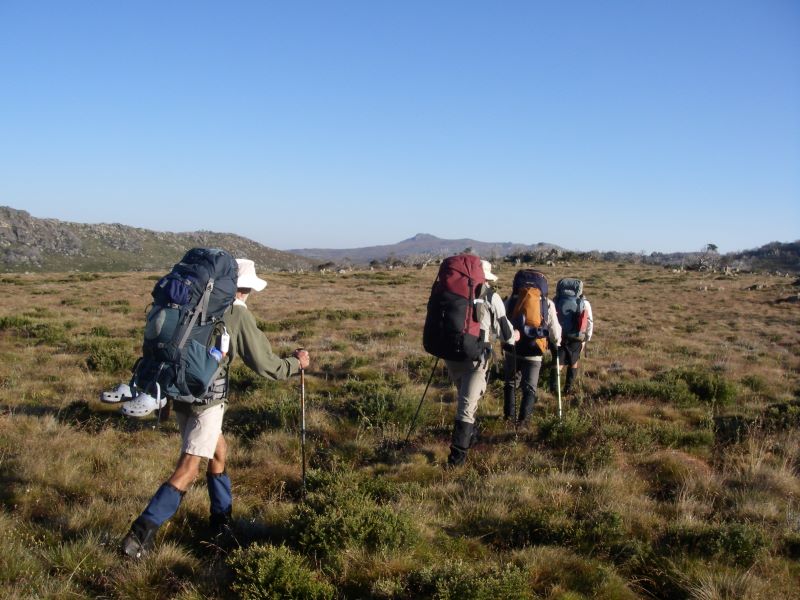
Cross country near Mawsons Hut. Kosciuszko National Park.
Cross country Mawsons Hut to Valentines Hut
Valentines Hut

Valentines Hut has to be my all time favourite hut.  A small weatherboard ex-SMAer, coated in cherry red paint and decorated with a frieze of six valentine hearts.  Hence the name Valentines Hut. Cute.  Maintained by the Squirrel Ski Club, it is always kept clean inside and out.

 After a brief pit stop at Valentines, the rest of the morning was spent in a pleasant ramble through a tunnel of snow gums along the Valentine fire trail before finally popping out onto the Schlink trail, just in time to flag down the passing Snowy Hydro 4WD. No luck hitch-hiking here.
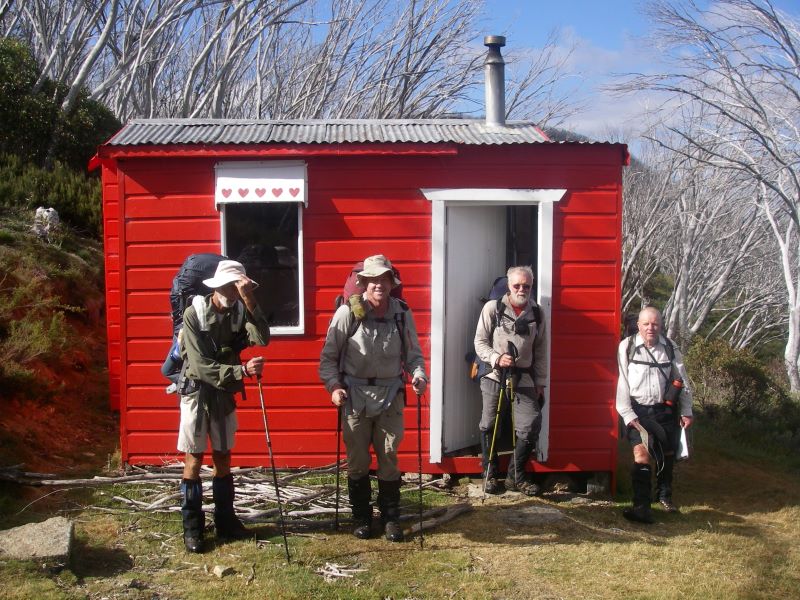
Valentines Hut. Kosciuszko National Park.
Valentines Hut

Meanwhile, still on the hoof, The Schlink ‘Hilton’ appeared for us soon after midday.  None too soon as it was warm, windy and the high country horse flies were driving us batty.  We ducked inside this fly-free nirvana for lunch. 


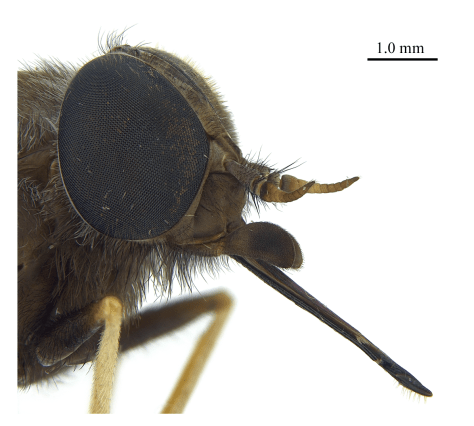
March, Horse or Vampire Flies

No horse flies, nor their sneaky little bush-fly buddies, nor any of those Lilliputian black ants that swarmed over us whenever we propped on tussocks of snow grass or rocks for a break. Horse or March flies are known by southern bushwalkers as Vampire flies.For good reasons.  These bug-eyed pests lurk in piles of wet wombat and brumby poo waiting to pounce on any bushwalker foolish enough to be out and about without a full suit of body armour.

March Fly CSIRO
Source: CSIRO. March , Vampire or Horse fly. Family: Tabanidae.

It also behooves me to inform the reader that it is the female who bites and draws blood.  She lands on a likely victim, unfurls her proboscis and silently inserts it through multiple layers of clothing, canvas gaiters or even nylon rain pants to suck out your vital juices.

Meanwhile the real heroes of this story, the male horse flies, quietly go about their business, productively spending their days zooming from flower to flower, hoovering up nectar for a feed and pollinating those pretty alpine wildflowers as a sideline.


Schlink Trail on Aust Alpine Walking Track. Kosciuszko National Park.
On the Schlink Trail : Australian Alpine Walking Track near Schlinks Hut

The Schlink Hilton was named after Dr Bertie H. Schlink who,  in 1927, was the first to complete the 150 kilometre Kiandra to Kosciuszko ski run.  Built in 1960, it is another ex-SMA hut, a massive 11 roomer maintained by The Gourmet Walkers Club.Sign me up.

Schlink Hilton. Kosciuszko National Park.
Schlinks Hut

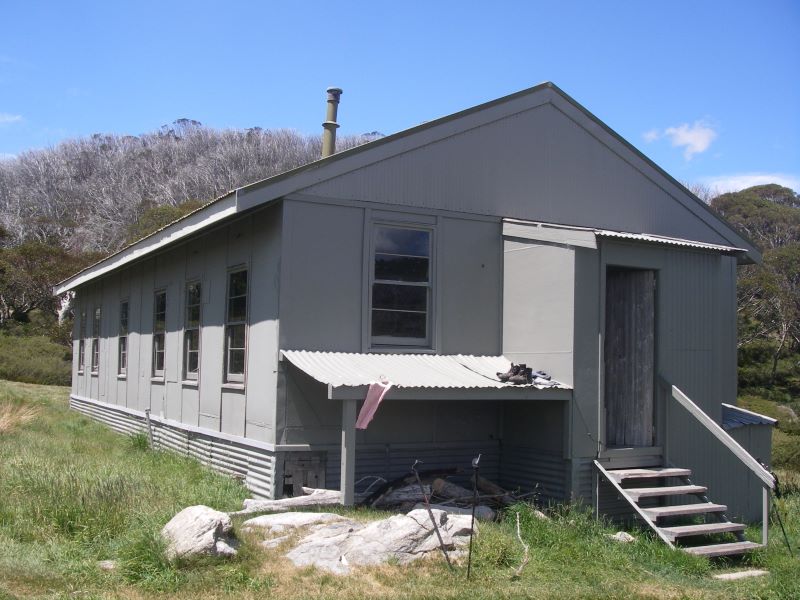
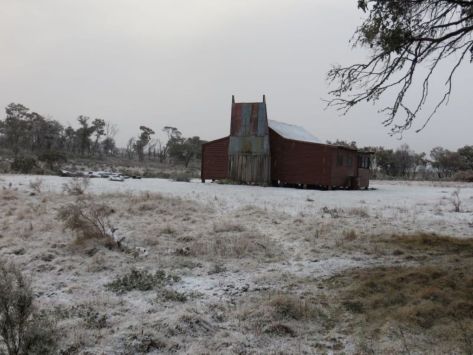
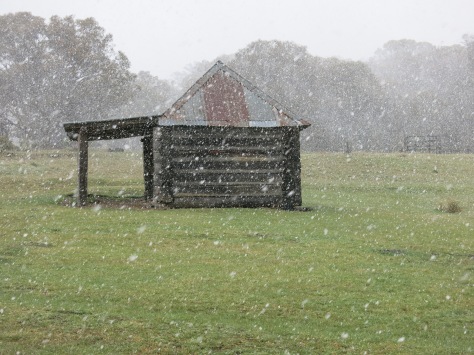
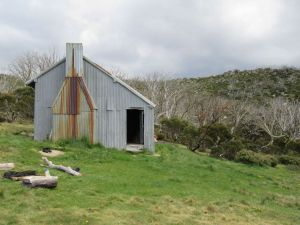
Whites River Hut

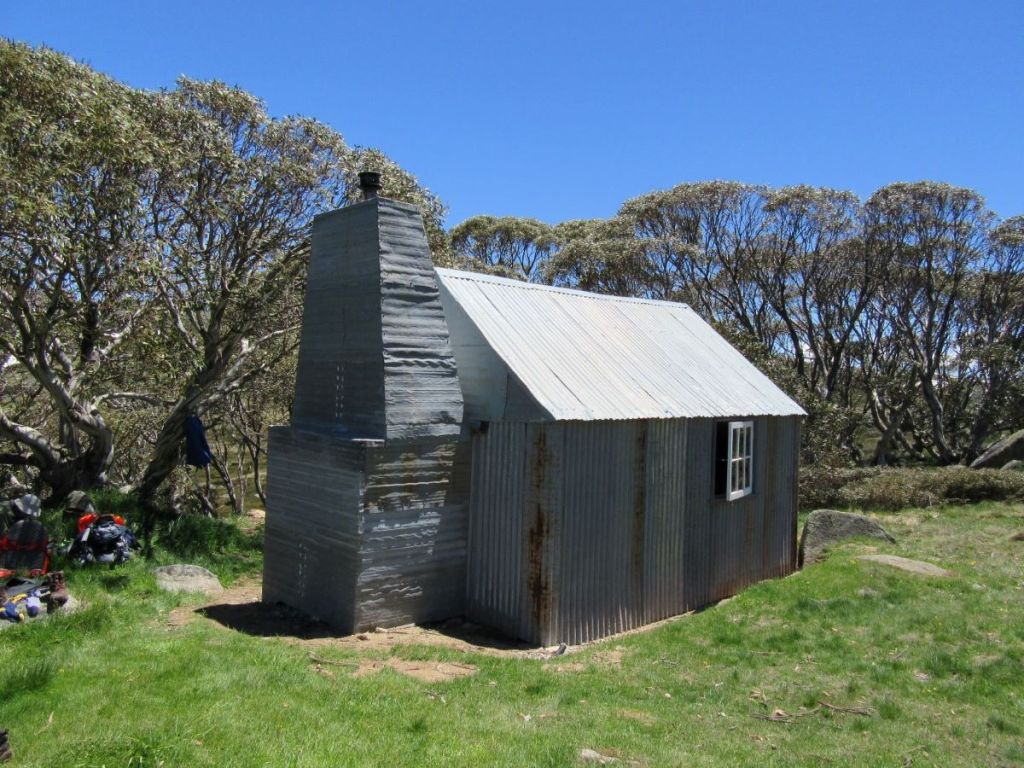
And so onto Whites River Hut, which was burnt down by some dumb-cluck skier in winter 2010.The original hut was built as summer grazing hut in 1935 by Bill Napthali and Fred Clarke.  It has been rebuilt in the mountain hut heritage style and the Kelvinator, a white annex, has been removed.
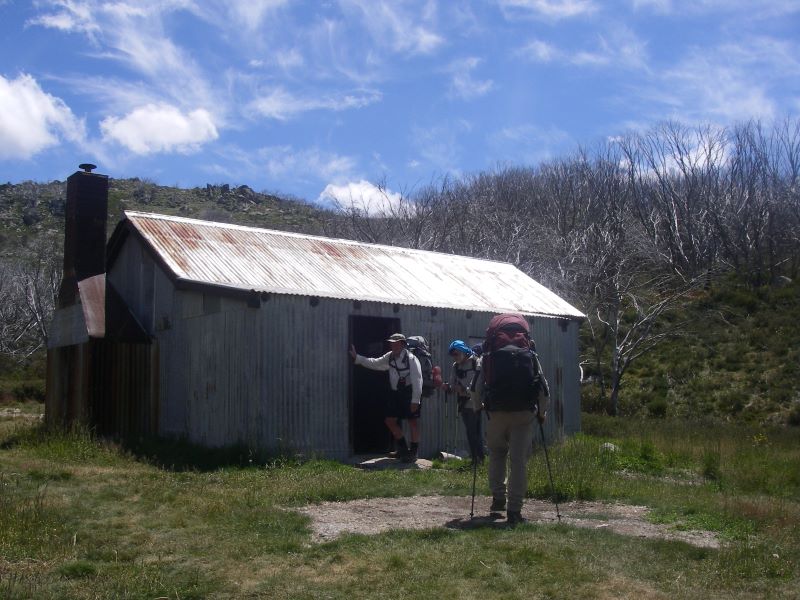
Whites River Hut. Kosciuszko National Park.
Whites River Hut

Whites River is now the official summer residence of Bubbles and Bubbles Jnr, bush rats extraordinaire.The mayhem and pandemonium caused by our two furry friends is well known to anyone who has ever checked out the hut log book or tried to snatch forty winks at Whites River. 

As with our previous visits we spent much of the our evening ‘Bubbles’-proofing our gear; all rucksacks and food bags were then suspended on the nails belted into the huge transverse hut beams.  Which seemed effective as there were no nocturnal disturbances from the Bubbles outfit but plenty from my hut mates who seemed to spend their night streaming outside to gaze at the brilliant star show, or so they would have you believe.

Whites River Hut Logbook rendition of Bubbles.

Wednesday: Whites River to Pound Ck via Mt Tate: 11 kms.

Today would be our hardest day, a distance of only eleven kilometres and a vertical ascent of 328 m… give or take a few major ups and downs. But the most problematic part was our traverse over the Rolling Grounds, which are described in one guidebook thus: ‘Known as the Rolling Grounds…. on a fine sunny day it is best described as bleak. What it is like in a blizzard is left to the imagination. The Rolling Grounds are notorious for difficult navigation in bad weather’.

Whites River Hut with Rolling Grounds in background.

Fortunately the day was fine and clear, ideal conditions for crossing these high level alpine meadows and bogs. Just absolutely brilliant walking.  It is said that The Rolling Grounds are so called because in the days of cattle grazing, stock horses would make their way up to roll in the numerous depressions between clumps of snow grass.

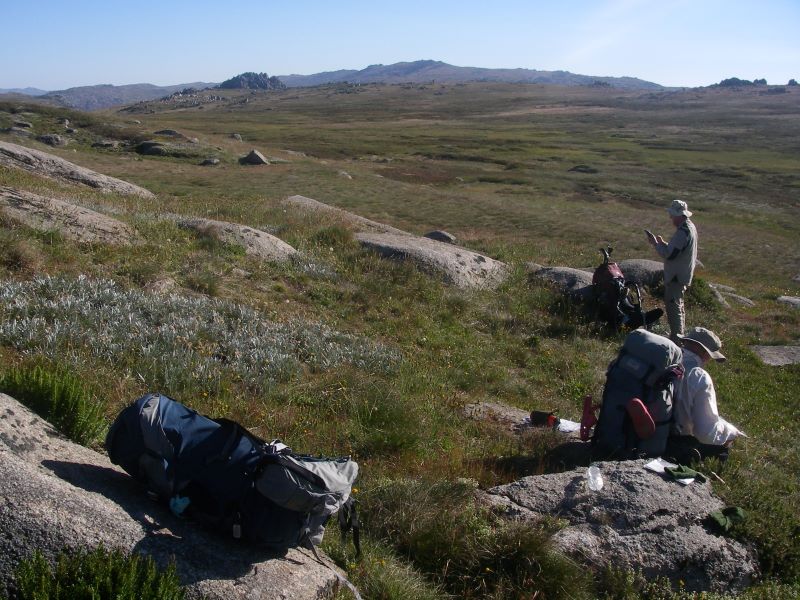
Rolling Grounds on brilliant walking day. Kosciuszko National Park.
The Rolling Grounds
Rolling Grounds. Kosciuszko National Park.
Rolling Grounds. Never truly lost. The Granites in mid-ground.

By 10.30 am we reluctantly vacated The Rolling Grounds and dropped into Consett Stephen Pass to begin the tedious haul up to Mt Tate, 2028 m and the start of the Main Range.

Consett Stephen Pass. Kosciuszko National Park.
Descending into Consett Stephen Pass. Guthega pondage in the distance.

The lads were in seventh heaven, an orgy of peak bagging for the next four days.

The Main Range. We were now in the Alpine Zone, well above the tree line, travelling at an average elevation of 2000 metres. Here are Australia’s highest peaks: Tate (2068 m), Carruthers (2145 m), Alice Rawson (2160 m), Ram’s Head (2188 m), Twynam (2196 m), Townsend (2210 m) and Kosciuszko at 2228 m. The Main Range is predominately granitic, an intrusive rock formed deep within the earth’s crust by the slow cooling of molten magma. The overlying rocks have been eroded away through eons of time. But a belt of older belt of Lower Ordovician sedimentaries sneakily outcrops for parts of the Main Range walk. Much of the granitic bedrock along the Main Range has been subjected to great stresses and thus has a layered appearance, and is called gneissic granite.

These highest of our mountain peaks are typically rounded humps, bearing little resemblance to the typical pyramidal alpine peaks of Europe or the Himalayas. It is possible that this rounding took place in an early stage of the Pleistocene when a large ice cap covered much of the Main Range, extending as far south as Mt Bogong.

Later glaciation was valley glaciation. Temperatures now average 10C in summer and -5C in winter, too low for tree growth and most plants require special adaptations to survive. We needed four more days of fine weather to traverse the Main Range back to Thredbo.

Mt Tate was named after Ralph Tate, Professor of Geology at the University of Adelaide. From Tate’s trig summit we looked down to Guthega Pondage near where we had started three days ago and across the valley to the confrontingly named The Paralyser and The Perisher.
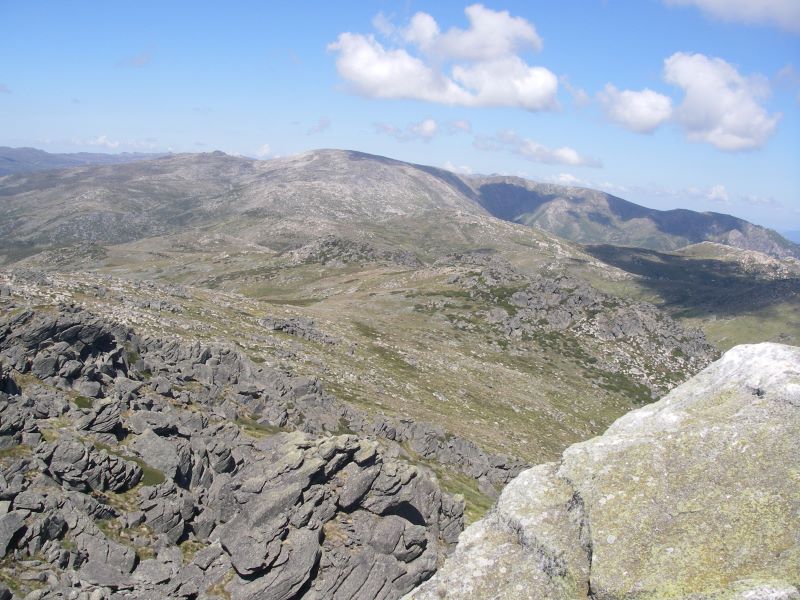
View from Mt Tate. Kosciuszko National Park.
View along Main Range from summit of Mt Tate, 2028 m

Onwards to Mt Anderson (1997 m) and below its southern flanks our overnight campsite in the headwaters of Pound Creek.This campsite was bereft of any cover, sunny and exposed, but we made ourselves comfortable on the snow grass and tumbled into our tents before 8.00 pm.Knackered.

Camping in upper Pound Creek.  Kosciuszko National Park.
Camping in upper Pound Creek.

Thursday: Pound Creek to Wilkinson Valley: 12 kms.

Brian’s original plan had been to walk through to Alice Rawson (2160 m), camping high up on the saddle between Alice Rawson and Mt Townsend. But such is the nature of high country walking that the prudent leader always has a contingency plan. For much of our trip we had been plagued by 20-30 kmh winds that showed no sign of abating. In fact, they were about to get a lot worse.So with the nor’westerlies idling along at 40 km/h and maximum gusts hitting 61 kmh it was decided that camping in the relative shelter of Wilkinson Valley under Mt Kosciuszko was our best option.

Pound Creek & Mt Anton.  Kosciuszko National Park.
Early morning in Pound Creek looking towards Mt Anton, 2010 m

Despite the wind it was still an outstanding alpine walk along Australia’s highest points: Mt Anton (2010 m), the long crawl up Mt Twynam (2196 m), down onto the Main Range tourist track, back up to Mt Carruthers (2145 m) summit where we didn’t linger longer.

Instead we hunkered down for lunch behind a shelf of rocks overlooking Club Lake, one of the many moraine-dammed glacial lakes in Kosciuszko.  

Club Lake. Moraine dammed. Kosciuszko National Park.
Club Lake. A moraine- dammed glacial lake.

During the Pleistocene, small mountain glaciers ground their way down the valleys now occupied by glacial lakes. In recent historical times, during summer, huge flocks of sheep and later herds of cattle grazed these steep alpine slopes, fouling the pristine snow fed lakes below:  Club Lake, Lake Albina, Hedley Tarn, Blue Lake and Lake Cootapatamba.Fortunately, the sheep and cattle were shown the door in 1963.
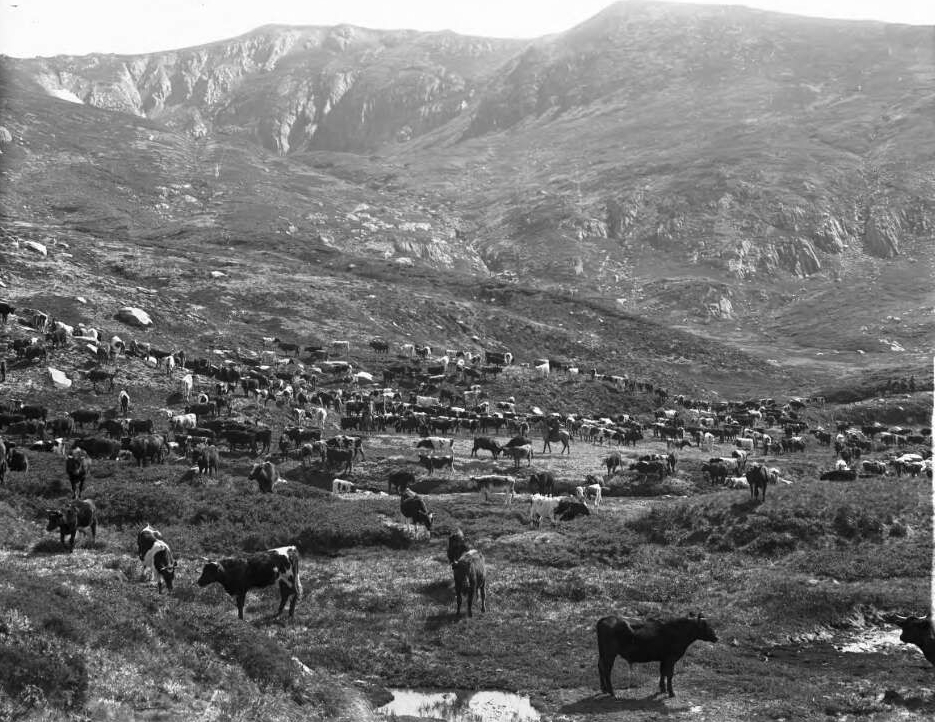
Source: NLA. Frank Hurley: Cattle grazing in the Snowies.

Mt Carruthers named after Sir Joseph Carruthers, a Premier of NSW, who instigated the construction of the Kosciuszko Road and the old Kosciuszko Hotel.

Between Mt Carruthers and Mt Lee the track dips onto a sharp exposed ridge formed when valley glaciers cut back towards each other (a col). This is windswept Feldmark, location of the rarest alpine plant community. Plants here must survive on a wind blasted ridge where the soil has been blown away, leaving only cold rocky ground. A fortuitously located info plaque allowed us to identify Alpine Sunray (Leucochrysum albicans spp alpinium), Coral Heath (Epacris gunnii), Feldmark Grass (Rytidosperma pumilum) and Feldmark Eyebright (Euphrasia collina spp lapidosa) and Feldmark cushion-plant (Colobanthus pulvinatus).

 Far below was the basin of Club Lake, a moraine dammed glacial lake, the water held behind unsorted glacial debris. The track mercifully by-passed Mt Lee (2019 m) and skirted along the flanks of Mt Northcote (2131 m) and then descended into Mueller’s Pass. Descending further, we came to rest in the boulder strewn but picturesque Wilkinson’s Valley.

Blue Lake. A glaciated Cirque Lake.  Kosciuszko National Park.
Blue Lake. The only cirque basin lake in Kosciuszko National Park.
Hedley Tarn. Moraine dammed lake.  Kosciuszko National Park.
Hedley Tarn. A moraine dammed lake downstream of Blue Lake.
Lake Albina. Moraine dammed lake.  Kosciuszko National Park.
Lake Albina. A moraine-dammed glacial lake.
Wilkinson Valley.  Kosciuszko National Park.
Campsite in Wilkinson Valley

During the evening a pussy storm cell swept past accompanied by the roll of distant thunder, light rain and a lightning display of sorts.Which is just as well as I wouldn’t like to get caught out on this open valley in a bad electrical storm.   But it was enough to confine the lads to their tents for half an hour before a dose of tent fever broke out and they poured out to watch the last vestiges of sunlight fade over the Abbott Range.

Abbott Range.  Kosciuszko National Park.
Storm building over Abbott Range. View from Wilkinson Valley.

A blood red sunset from smoke haze drifting from the Victorian bushfires just 80 kilometres to our south west.


Friday: The Main Range and The Rams Head Range: 9 kms.

With the tents left up to dry, Brian herded his two-legged flock up Mt Townsend (2209 m) and Alice Rawson (2160 m) as a sort of a warm-up for what was to come later in the day. Minus our packs it was too easy, a brisk 45 minute trot to Townsend summit and then a pop over to Alice Rawson which had the more interesting views: down into Lake Albina and into the very precipitous western fall of Lady Northcote Canyon.

Mt Townsend.  Kosciuszko National Park.
Summit of Mt Townsend , 2209 m.
Source NLA: Frank Hurley: The Portal, Mt Townsend

We stood on Mt Kosciuszko( 2228 m) by midday. Sharing the summit was the usual crew of day walkers, grey nomads, young international backpackers and five debonair track dogs who, with a certain degree of satisfaction and nonchalance, would point out to any unsuspecting tourist type who would listen, the mighty Gungartan, where we had stood five days prior.
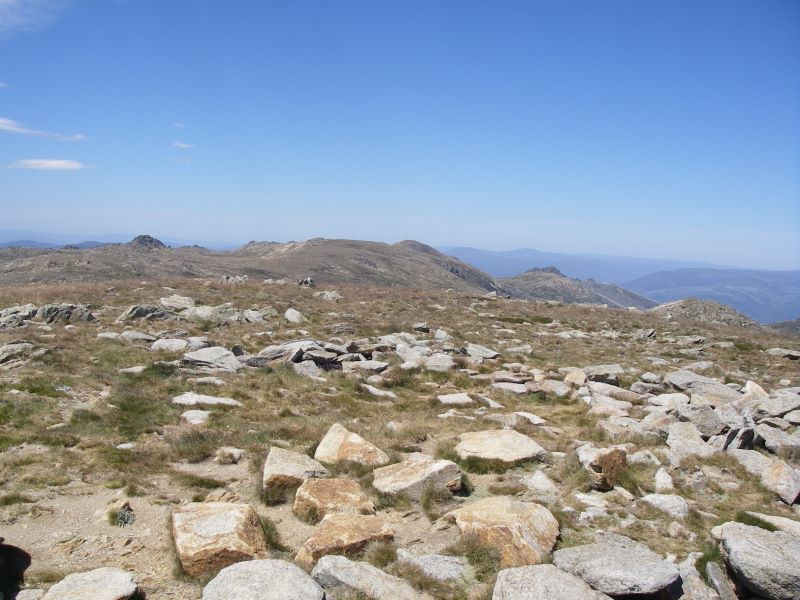
Mt Kosciuszko summit.  Kosciuszko National Park.
Kosciuszko Summit, 2228 m

Tadeusz Kosciuszko

Mt Kosciuszko was named by the Polish explorer Count Paul Edmund de Strzelecki who spent four years travelling in Australia. In February 1840 Strzelecki climbed to the highest point of the Snowy Mountains and decided to name it after his fellow Pole, General Tadeusz Kosciuszko, who had distinguished himself in the American War of Independence and had led an uprising in 1794 against Prussian and Russian control of Poland.

Thaddaeus Kosciuszko. Source: NLA.

 Strzelecki gave two reasons for using the name ‘Kosciuszko’.  Strzelecki pointed out that in Australia he was “amongst a free people, who appreciate freedom” hence the name of the Polish liberation fighter was an appropriate choice. Another reason he gave was that the profile of Mt Kosciuszko resembled the memorial mound that honours Kosciuszko on the outskirts of Krakow.  An interesting side line to this story is that Kosciuszko authorised the sale of all his Ohio (U.S.A.) property to buy freedom for slaves and provide them with an education.

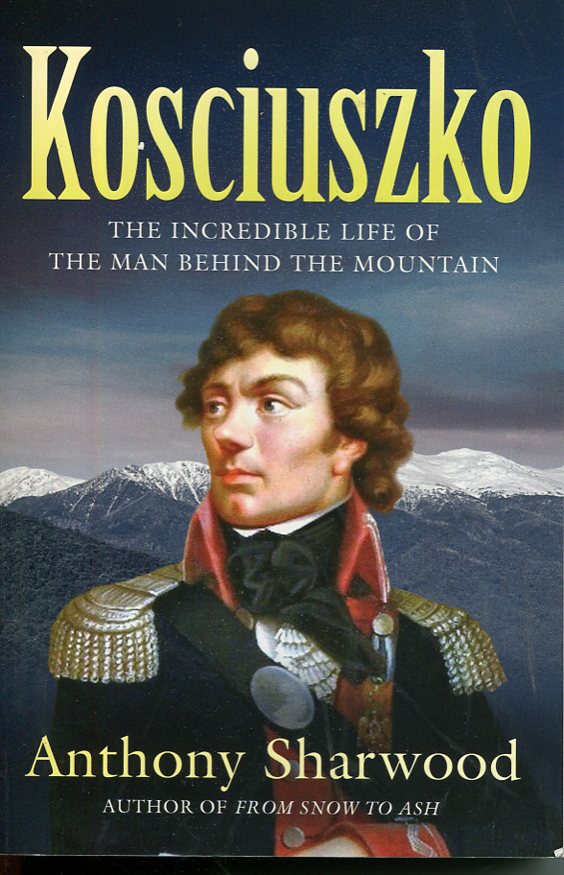
Should you wish to read more about Tadeusz Kosciuszko, you could do no better than to have a gander at Anthony Sharwood’s tome: Kosciuszko, the Incredible Life of the Man behind the Mountain.

Then it was a dodder down to Rawsons Pass for lunch, hopefully sheltered from the near gale force 50 kmh wind gusts.After lunch we headed up onto the Rams Head Range but the boys were, strangely, more interested in finding a sheltered campsite than climbing North Rams Head.

The wind was now whipping across the open alpine meadows.Come 3.30 pm we called it off for the day and guyed our wildly flapping tents down behind a jumble of granite boulders.Evening showers drifted over, chasing us into our tents to cook our dinners only to re-emerge later to watch yet another red sunset.
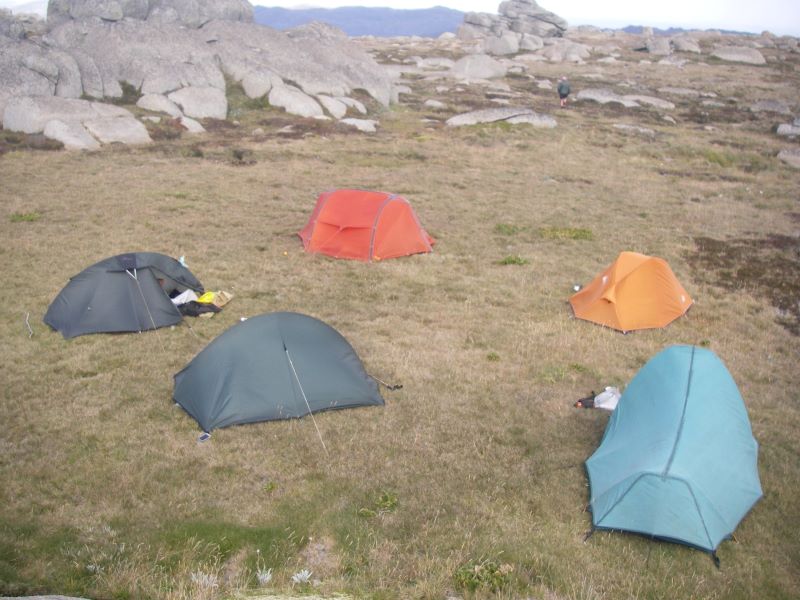
Rams Head Range.  Kosciuszko National Park.
Campsite under North Ramshead

Saturday: Rams Head Range to Thredbo. 10 kms.

Our last day on the track.We woke to a sky laced with thin wispy cirrus cloud, the harbinger of rain predicted for Sunday. Our route would take us over The Rams Head (2188 m) and South Rams Head (1931 m), descend to through snow gum woodland to Dead Horse Gap and follow the Thredbo River back to Thredbo.

Rams Head Range.  Kosciuszko National Park.
Rams Head Range

As we approached South Rams Head a shaggy black swamp wallaby bounded past, closely pursued by a salivating dingo, closing fast. But this was one wily wallaby. On spotting us it saw its chance, performed a nifty u-turn, and headed back towards our group, placing us between it and the dingo. My last sighting was the swampy disappearing up into the pile of granite boulders behind us.  

From South Rams Head trig we saw The Pilot Wilderness stretching off to the distant south: the Thredbo River Valley, Cascade Trail, The Pilot, Little Pilot, The Chimneys, Paddy Rushes Bogong and the Brindle Bull, masquerading as a mountain.These were some of the landmarks that we would visit after a rest day in Thredbo, but more of that some other time.
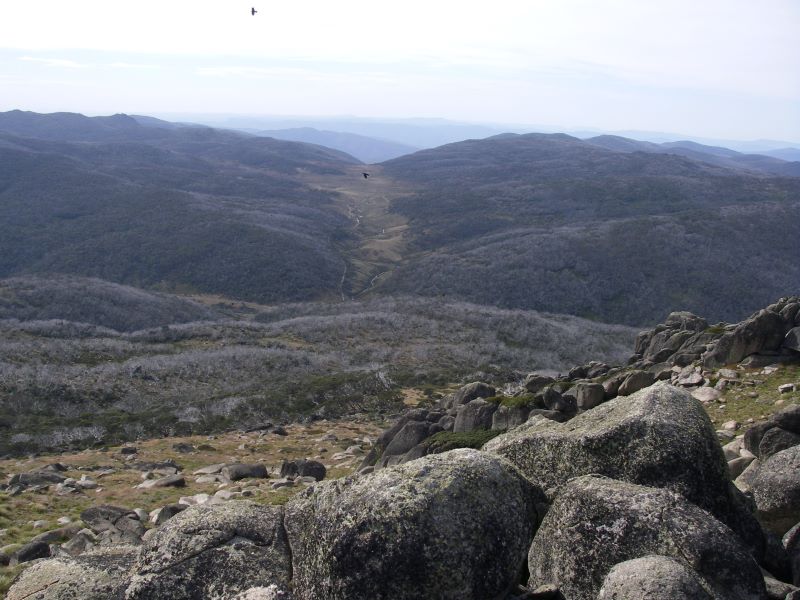
View from South Rams Head. Looking towards upper Thredbo River

Meanwhile, a flock of Australian Ravens cawed overhead. These fellows were chasing the Bogong Moths that hibernate in vast numbers during summer in rocky crevices on our alpine peaks.

A final bush bash led down to Dead Horse Gap (1582 m).So named because a herd of brumbies perished there when trapped in a blizzard.

Photo of old Dead Horse Gap Hut. Built in 1932 by Nankervis family. Destroyed by fire in 1972.

Then came a four kilometre dash down the Thredbo River trail, arriving at Thredbo  just ahead of the first light sprinkles of rain. The first part of our summer Snowy Mountains adventure was over.It seemed to me that I had well and truly earned that schooner of Razorback Red. Which way to the Brindle Bull, Brian?
A Hike to Bluff Tarn and The Brassy Mountains in Kosciuszko National Park

Exploring Australia’s High Country.

by Glenn Burns

Nestled high up in Kosciuszko National Park’s Jagungal Wilderness Area at about 1850 metres is Bluff Tarn. It is a small alpine lake set in an extensive landscape of alpine ridges, swiftly flowing rivers and the vast swamps that make up the area loosely called Australia’s High Country. Robert Green in his book ‘Exploring the Jagungal Wilderness’ describes Bluff Tarn as “…one of the prettiest spots in the mountains”.

On an early November afternoon I set off with five bushwalking friends, Sam, David, Joe, Richard and Brian on a seven day, 60 kilometre cross country circuit from Guthega to Bluff Tarn on the upper Geehi, then to Tin Hut on the headwaters of the Finn River.

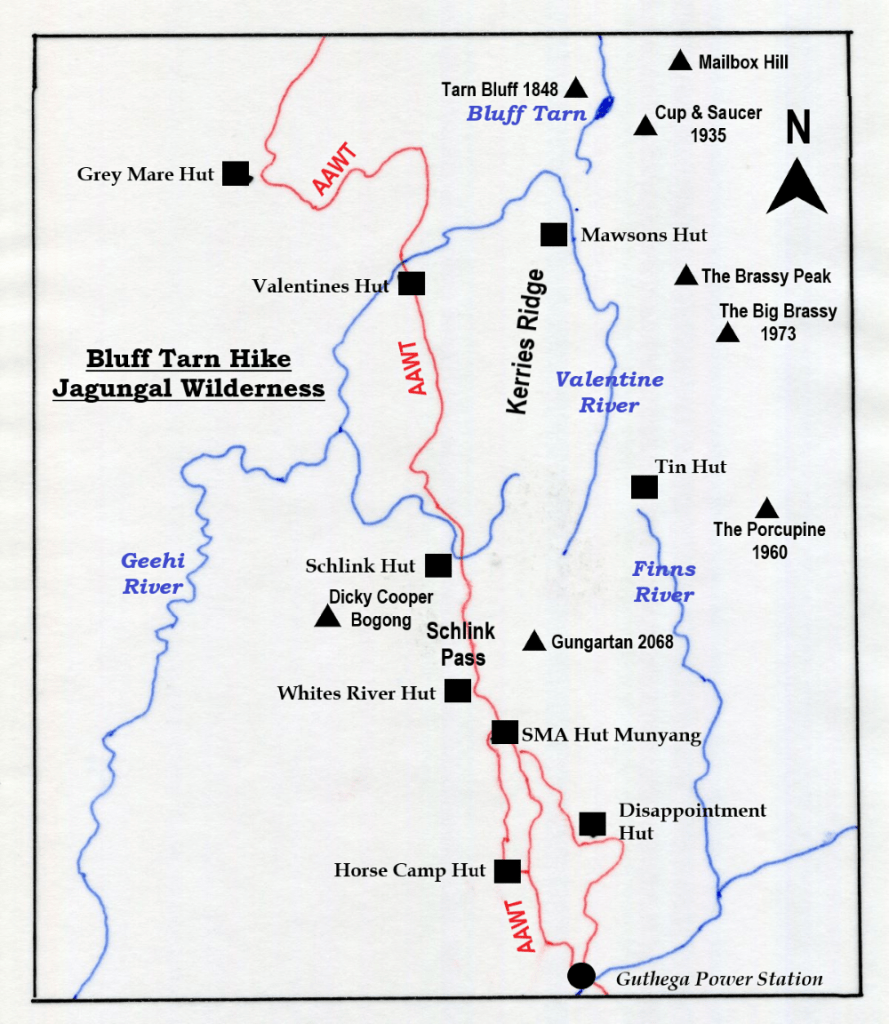
Our route started at Guthega Power Station and took in Whites River Hut, Gungartan (2068 m), The Kerries Ridge (2000 + m), Mawsons Hut, the Cup and Saucer (1934 m), Bluff Tarn, the Mailbox (1900 + m), the Brassy Mountains (1972 m), Tin Hut, the Porcupine (1960 m), and Horse Camp Hut via the Aqueduct Track.

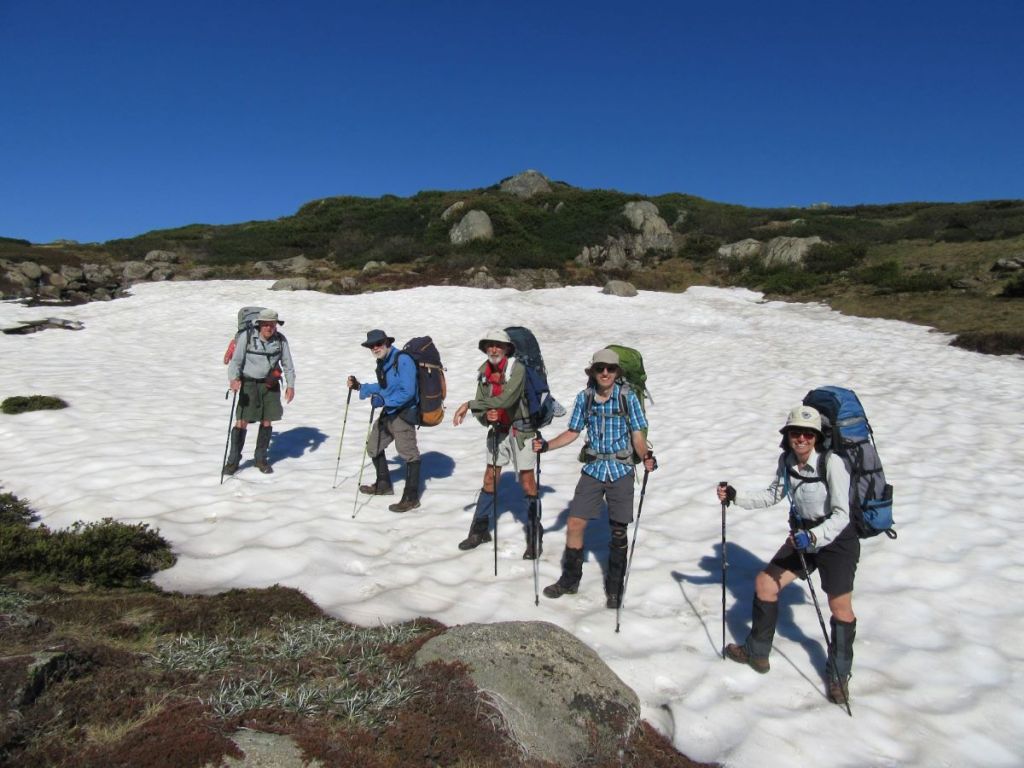
Bushwalkers. Kosciuszko National Park
Left to Right: Brian, Joe, Richard, David, Sam. On snow patch under Gungartan

THE WEATHER

The alpine forecast wasn’t quite what this leader was hoping for. Showers most days, starting with a possible thunderstorm for our first day on the track. Temperatures would be pretty friendly though: 7°C to 18° C . Apparently, our luck really would desert us on Friday, 6 days hence. A 90 % chance of 20 to 40 millimetres.

Upgraded later in the week to 100 millimetres. I was disinclined to hang around to test out that old saying that ” there is no such thing as bad weather, only unsuitable clothing”.

November is my preferred alpine hiking month. The weather is starting to settle; night temperatures are bearable, day temperatures are just perfect; and even light snowfall makes for magical walking. Water is abundant and easy to find.

Wildflowers are blooming but best of all, those nuisance bush flies and their high country cousins, the biting Horse/ March/ Vampire flies have yet to descend on the unsuspecting walker.

March Fly CSIRO

Horse or March flies appear as adults almost unvarying in the second week of December and hang around all the way through to February. Although they are called March flies they are rare in alpine areas in March.

These are large members of the Family TABANIDAE (genus Scaptia). March flies, at 25 mm, are the largest of our biting dipterans. The female does the blood sucking bit, while the benign male is content to feed on nectar and pollen.

On one mid-December Kiandra to Kosciuszko trip in 2006 with my friend Brian, March fly numbers were truly appalling. There was no escape from these pests. They operated on a sunrise to sunset roster and were so bad that it was unpleasant to stop for the vitals like meal breaks, water stops and even navigation checks.

They attacked with persistence and determination, and could bite through clothing with impunity. We often tried to find huts for meal breaks, but failing that, donned fly veils, rain jackets and long trousers or rain pants to keep the blighters at bay while we ate.

As Queenslanders, our preferred hiking apparel is usually shorts and short sleeved shirts, not thick rain jackets and long trousers. On the warmish December days the rain jacket/rain pants garb was not for the faint- hearted.

Whites River Hut. Kosciuszko National Park.
The heavens about to open. Early morning at Whites River Hut

Alpine Wildflowers: Photos by Sam

More Information

Map: Geehi Dam: 1:25000.

Map: Jagungal: 1:25000.

Map: Tim Lamble: Mt Jagungal and The Brassy Mountains: 1:31680.

Green, K and Osborne, W: Field Guide to Wildlife of Australian Snow-Country. (New Holland 2012).

Hueneke, K : Huts of the High Country (ANU Press 1982).

Codd, P , Payne, B, Woolcock, C : The Plant Life of Kosciuszko. (Kangaroo Press 1998).

McCann, I: The Alps in Flower. (Victorian National Parks Assn 2001).

Slattery, D : Australian Alps. (CSIRO 2015).

Kosciuszko Huts Association: Website


Map of Bluff Tarn & Jagungal Wilderness. . Kosciuszko National Park.

Sunday:  Guthega Power Station to Whites River Hut: 8 kms.

With cars stabled at the Guthega Power Station we wandered off, ever upward. Sam, David and Richard setting a pretty lively pace under a low leaden sky.  There were just enough irritating spots of rain to encourage the old laggards creaking along in the rear to lift our pace.

Mid-climb, a squadron of two-wheeling weekend warriors swooped around a blind corner. Braking furiously, some nifty controlled slides, a spray of gravel, and they were off again, pedalling downhill at speed. Eat my dust, Boomer.

Our mountain biking friends also anxious to reach cover before the heavens opened. Given my weighty rucksack, I too, could be sucked into this mountain biking game. Though I’m pretty sure that I would end up pushing said mountain bike up the current 250 metre ascent.

I may curse my heavy rucksack but mostly I am grateful for the good things its contents make possible: a snug downy sleeping bag, the protective cover of my little Macpac one-man tent, a comfy sleeping mat and a generous supply of crystallised ginger and chocolate licorice bullets.

By 3.30 pm we landed at Whites River Hut, disconcerted to find four tents moored on the creek flats below the hut. The tents belonged to a bunch of hikers from the Newcastle Ramblers Bushwalking Club, apparently intent on doing much the same circuit as we had planned.

No sweat. Plan B. They were no shirkers, these Novocastrian types. Instead of lolling around the hut for the afternoon (as I would have happily done), they struck out on a somewhat damp stroll across the tops from the Rolling Grounds to nearby Dicky Cooper Bogong (SMA 0113: 2003 m). The place name ‘Dicky Cooper Bogong’ recognises the the traditional Aboriginal custodian of this mountain, one Dicky Cooper.


Aborigines inhabited these highlands as far back as 21,000 years ago with evidence of their occupation coming from Birrigal Rock Shelter in Tidbinbilla Nature Reserve and many sites in the upper Snowy River. Small stone scatters can be found in the alpine landscapes with the highest being a collection found near the saddle of Perisher Gap (1800m).

It is well known that aborigines travelled to these highlands in the summer months to collect and eat the abundant Bogong Moths which were found sheltering in the rocky crevices of all the major outcrops in the Snowy Mountains. I have written extensively about this in my trip report Kiandra to Kosciuszko.

Aboriginal stencils Yankee Hat site Namadgi National Park
Aboriginal stencil art. Yankee Hat site. Namadgi National Park

Many place names in the Alps have been derived from local Aboriginal languages: Jagungal, Jindabyne, Talbingo, Yarrangobilly, Suggan Buggan, Mitta Mitta and Tumut. It is not hard to find many other examples from your maps. Apparently the Geographical Place Names Board of NSW was considering giving Mt Kosciuszko a traditional Aboriginal name (Kunama) which would sit alongside its current name. But it hasn’t happened.


Whites River Hut Kosciuszko National Park
White River Hut in fine weather.

On dusk the predicted showers finally arrived, as did a damp and dishevelled clutch of boys and their teachers from Bathurst. No hanging out in comfortable huts for this lot: they pitched their tents in the rain, had a quick feed then quietly settled down for the night.

Meanwhile back at the ranch, Brian’s traditional first night treat of bangers and mash seemed to have  spread like some medieval contagion. Most of my fellow hikers had succumbed to this dubious culinary delight and were enthusiastically whipping up dollops of instant mash leavened with green peas, sun-dried tomatoes, and heating neatly folded alfoil cylinders containing pre-fried bangers: beef for preference but maybe lamb & rosemary for those with more delicate taste buds.


Monday: Whites River to Mawsons Hut via Gungarten and The Kerries: 11.5 kms.

Showers overnight but with the mist lifting from The Rolling Grounds and Gungartan, things were on the up and up, weather wise. As were Brian and Joe, clanking about in the dark, soon after 5.30 am. Disturbing my slumber.

Our crafty Newcastle Bushwalkers friends still got the jump on us and had drifted off by 7.30 am. A comprehensive report of their walk can be found in the Kosciuszko Huts Association Newsletter: No 178 Autumn 2018. But we were soon hot on their heels desperate not to be pegged as a bunch of idle slackers.

Today’s walk would take us to Schlink Pass thence to Gungartan, down into Gungartan Pass, up along The Kerries to Mawsons Hut, tucked in a thicket of snow gums at the northern end of The Kerries. But first, the 300 metre climb from Schlink Pass to the Main Divide through snowgum forest.

David in Schlink Pass. . Kosciuszko National Park.
David in Schlink Pass

The Kerries Ridge (2000 m), a spur of the Great Dividing Range, offers open alpine walking at its very best… in fine weather. This trackless ridge is a landscape of huge granite outcrops and vast alpine meadows. Suffice to say by the time we were well into The Kerries  traverse, we watched a succession of storm cells sliding along the high peaks to our north and west, heading our way.

Come lunchtime we hunkered down in the lee of a granite boulder, sheltering from the rain that Hughie dropped over us . I’m always a bit disconcerted to be caught out in the open alpine zone with distant lightning and thunder rolling around.

But my fellow travellers didn’t seem all that concerned as they disappeared into their rain jackets and munched contentedly on muesli bars, dry biscuits and slabs of cheese. The rain eased to light drizzle, and we moved out, heading north, following the crest.

The Kerries Ridge Kosciuszko National Park
The Kerries Ridge (2000 m) . Storms heading our way.

A further four kilometres of alpine tramping dropped us down to Mawsons Hut. Joe and Richard navigated us off the heights and down to our destination. Pretty much spot on. Being tucked into a grove of snowgums, the hut can be a tad difficult to find. Mawsons was deserted. A Novocastrian-free zone. When we last saw them ambling across Gungartan Pass, they were heading for Tin Hut on the Finn River. Another afternoon thunderstorm and hail swept through, driving us into the hut to finish drying our gear and have a feed. No fry up tonight. It was strictly dry rations for the rest of the week for this lot.

Mawsons Hut Kosciuszko National Park.
Mawsons Hut
Mt Jagungal from Mawsons Hut. . Kosciuszko National Park.
Photo: Sam: View to Mt Jagungal from our front yard at Mawsons Hut.


Tuesday: Day Walk to Cup and Saucer, Bluff Tarn and The Mailbox: 7 kms.

Fine weather and an easy day walk called us to the hills on our third day. From Mawsons we would cross the Valentine River; scamper up the Cup and Saucer; cut across the grasslands of the upper Geehi to Bluff Tarn; returning to Mawsons via The Mailbox. That was the plan and for once I stuck to it.

We left Mawsons in brilliant  weather. A superb day of walking beckoned. We dropped down to the Valentine which still flowing strongly from the spring thaw but we sussed out a partly exposed gravel bed. Richard, Brian and Joe volunteered to check it out. Sacrificial lambs. I am told that there is nothing so grumpy as a leader with wet boots this early in the day.

Valentine River: Kosciuszko National Park
Valentine River with Cup and Saucer in background

The Cup is a granitic dome ( Happy Jacks Monzogranite: < 20 % quartz) sitting on its saucer, a shelf of nearly horizontal granitic rock. This Silurian granite is 444 to 419 my old and dates from a time when the Earth entered a long warm phase which continued for another 130 million years.

Oceanic life flourished and vascular plants increased in size and complexity. The supercontinent Gondwana drifted south and extended from the Equator to the South Pole. Australia was located in the Equatorial zone.

From a distance the Cup and Saucer are well named and form an unmistakable landmark for kilometres in all directions. Topping the Cup is an old Snowy Mountains Authority Trig 133 standing at 1904 metres. This was our first objective. From the top of the Cup we should be able to see a line of travel across to Bluff Tarn.

Crossing Valentine River. . Kosciuszko National Park.
Crossing swampy ground enroute to the Cup and Saucer

It was only one and a half kilometres to the Cup but swampy ground made our approach more circuitous than I anticipated. My original plan was to clamber up the long south western ridge to reach the Trig. But the final steep and damp and moss encrusted granite slabs thwarted all but Brian. Unsurprising really. His friends call him “Straight Line Brian”.

Contouring or backing off isn’t part of Brian’s bushwalking lexicon. But the rest of us were content to retreat and scarpered up the more accessible northern facewithout any further difficulties. Where upon we settled on the rock outcrops to take in the landscape and enjoy a leisurely morning tea.

Summit of the Cup and Saucer. . Kosciuszko National Park.
Sam atop the Cup and Saucer

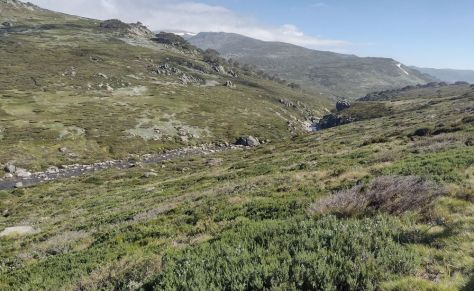
From the summit of the Cup and Saucer unfolded a vast alpine panorama. To the east rose up the high range of the The Brassy Mountains, part of Australia’s Great Dividing Range system. To our east was the valley of the Geehi River and its tributary, the Valentine River.

Directly to our east and just below our vantage point is the Big Bend. Here the Valentine swings off its northerly course to flow south-west another six kilometres to its junction with the Geehi. No doubt the granitic dome of the Cup and Saucer forms a structural control over the direction of flow of the Valentine.

View from Cup and Saucer looking south. . Kosciuszko National Park.
Photo: Sam: View south from the Cup and Saucer ( 1900 m ) .

To our north , less than a kilometre across the swampy headwaters of the upper Geehi valley was Tarn Bluff (1900 m) with Bluff Tarn tucked somewhere still out of sight.


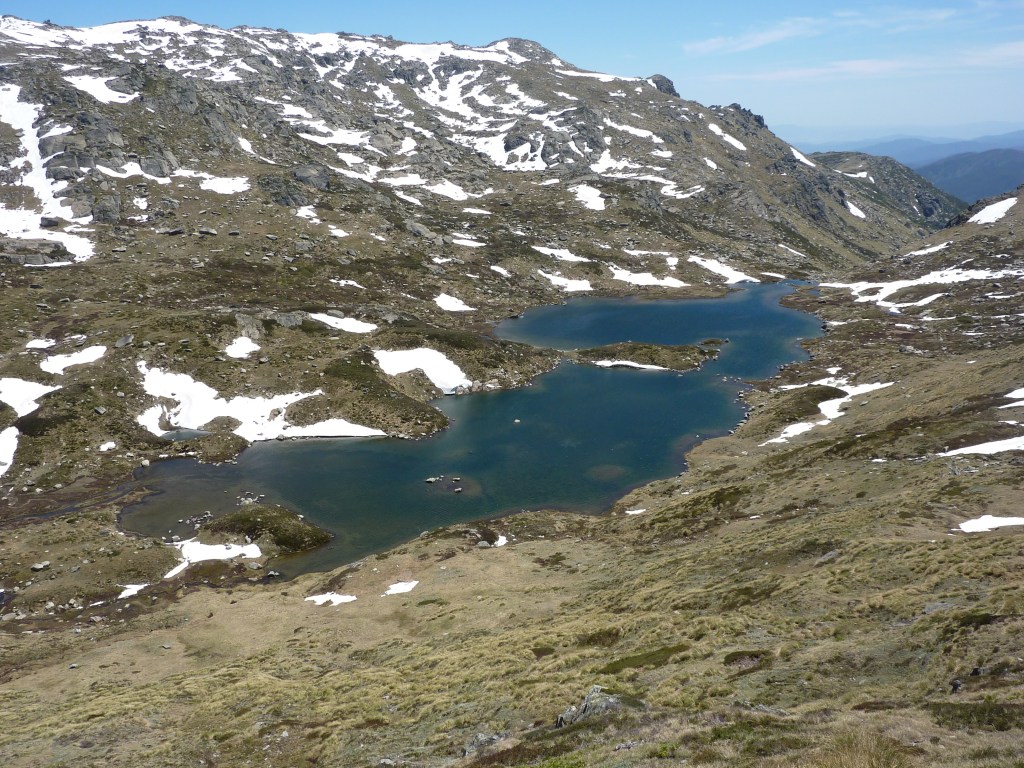
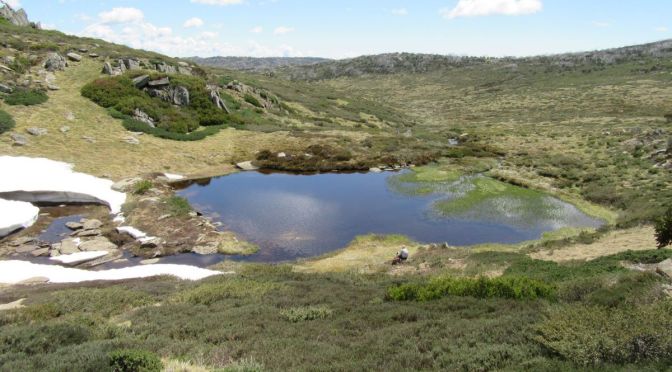
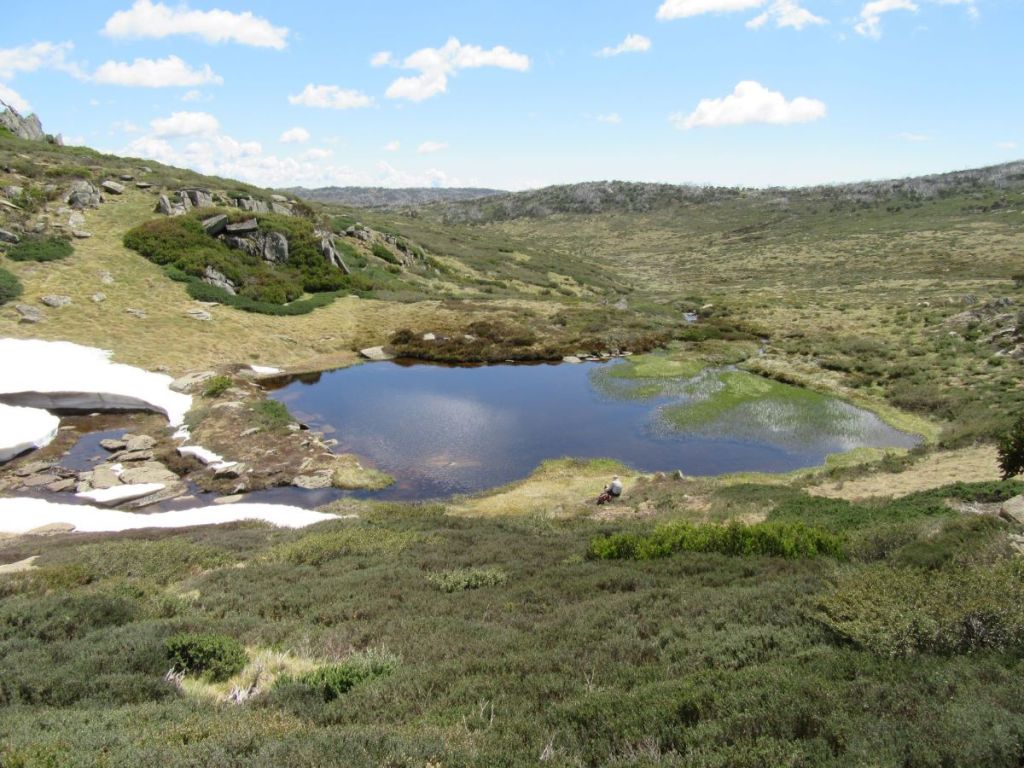
Bluff Tarn
Bluff Tarn Kosciuszko National Park
Bluff Tarn.

Bluff Tarn certainly met our all our expectations. It is, indeed, “one of the prettiest spots in the mountains”. But is is not, strictly speaking, a tarn. Merely a lake. My inner pedant would tell you that a tarn is “a small mountain – rimmed lake, specifically one on the floor of a cirque”. No cirque here. But quibbles over geographical precision couldn’t detract from the beauty of our surroundings.

While Bluff Tarn is a small lake, it is fed by a major headwater tributary of the Geehi, with the stream cascading through and over large rounded boulders. The lower reaches of the cascades were still covered by a thick snowbank, even though we were only a few days short of the start of summer.

I’m not sure of the origins of Bluff Tarn, but it appears to be formed as a shallow pool fed by the cascades dropping over a shelf of harder rock. Its outlet was restricted by a prominent bank of coarse, unsorted gravels. It would have been interesting to spend more time checking out Bluff Tarn but the worms were biting and my fellow walkers had lost interest in playing in the snow and my geological musings. They were itching to move on for their lunch break.


Our lunch spot was Mailbox Hill about a kilometre due east of Bluff Tarn … first though, one of Brian infamous uphill flat bits to raise a sweat and develop a healthy appetite for lunch. The Mailbox or Mailbox Hill, your choice, is a series of rounded outcrops standing at about 1910 metres. It was named The Mailbox because, I guess, mail was collected there by the cattlemen in the days of summer grazing.

The Kosciuszko Huts Association, my alpine bible, have researched the origin of the placename: Post was delivered to the men on the lease by a Mrs Bolton. She was engaged to deliver the mail on horseback to the Grey Mare Mine, travelling the old dray route from Snowy Plain across to Strumbo Hill. Ernie Bale recalled that on Mailbox Hill “there was a clump of rocks and they had shelves in them and she used to leave the mail for Mawsons Hut – it was always known as the Post Office – she used to leave the mail and put a rock on top of it“.

After a leisurely lunch spent sprawled on slabs of rock well out of the reach of those pestilent little black alpine ants, we wandered off towards Mawsons keeping a weather eye on the clouds building over The Kerries. But not before some male argy bargy about its location.


Later in the afternoon our Newcastle friends arrived from Tin Hut while the males were down at the creek having sponge-downs. We spent a very congenial evening around the campfire trading tall tales, listening to their hiking stories from far flung parts of the globe and getting some very handy gear tips from Shayne.

Mawsons Hut at dusk. . Kosciuszko National Park.
Photo: Sam: Mawsons Hut on dusk.

Wednesday: Mawsons Hut to Tin Hut: 8.5 kms.

A pleasantly cool and clear high country morning. By 8.00 am we were packed and on the road. Our route would take us across to the western bank of the Valentine then a gentle 80 metre climb following an old fence line that is marked on my old Tim Lamble map.

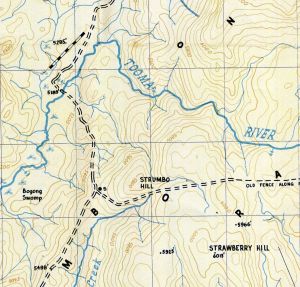
Tim’s maps, if you can get hold of one, provide a plethora of details useful to the bushwalker and skier: rock cairns, old fence lines, posts, old yards and even magnetic bearings. Anyone interested in maps will appreciate the quality of Tim’s cartography.

An extract from Tim Lamble’s Jagungal & Brassy Mts map

We followed the fence line up to a low rocky knoll overlooking the north-south trending Brassy Mountains (1900m), directly in front of us. Klaus Hueneke in his well researched Huts of the High Country (ANU Press 1982) gives an explanation of the naming of Brassy Mountains .. “named in the early days on account of the reflection from running water over rocks. At certain times this resembles polished brass and can be seen from up to 16 kms away.”

Brassy Mountains. . Kosciuszko National Park.
Brassy Mountains.

A navigation huddle soon sorted out our next moves. The Brassy Peak (1900 m) was directly in front of us while The Big Brassy (SMA Trig 1972 m) was off to our south east, directly behind The Brassy Peak. But between our eyrie and The Brassy Mountains were the swampy headwaters of Valentine River.

I had originally planned to follow the main divide of the Brassy Mountains south to Tin Hut. But an easier option was simply to cross the swamp and then contour along the western base of the Brassies keeping the thick heath just to our left but staying above the fens and bogs of the Upper Valentine to our right ... sound strategy in theory.

Crossing the upper Valentine River. Brassy Mountains Kosciuszko National Park
Crossing the upper Valentine, heading towards the Brassy Mountains

But before we trundled off towards Tin Hut there was plenty of time to clamber up to the rock cairn sitting atop The Brassy Peak. From here we looked westward over the vast network of fens and bogs of the upper Valentine to the craggy outline of the Kerries Ridge which we had traversed three days ago.


Bogs and Fens

The upper Valentine is a wide alpine valley of impeded drainage: a fluvial landscape of bogs and fens. A fen is a specific geomorphic and botanical entity: namely still clear, pools of standing water with ground-hugging matted plants and the easily recognisable Tufted Sedge, Carex gaudichaudiana. A number of small but showy flowering plants manage to thrive in these waterlogged conditions: the pale purple Mud Pratia (Pratia surrepens), the pale cream or white Dwarf Buttercup (Ranunculus millanii) and the white Rayless Starwort (Stellania multiflora).

Bogs and Fens in upper Valentine River. . Kosciuszko National Park.
Photo: Sam: Bogs and Fens of the upper Valentine River.

Bogs are areas of wet, spongy ground also found in areas of impeded drainage. Floristically bogs are dominated by Spagnum Moss (Spagnum cristatum) and associated with a variety of rushes and sedges, especially the Tufted Sedge. Bogs are associated with the decomposition of organic matter which will ultimately form peat.

These high alpine valleys are commonly underlain by peats formed by the decomposition of plant material after the last glacial period (15000 years ago). The peats are important for absorbing and regulating waterflows in alpine Australia, thus are listed as protected communities under both State and Federal legislation. (PS: tell that to the brumbies).

So with sodden boots and a sense of achievement we pulled into Tin Hut after a full morning’s hiking; just in time for another well deserved bite to eat. Always looking for the next feed. Tin has a bit of reputation for being difficult to locate in bad weather and is hidden in a belt of snowgums. But with fine , clear skies this was no issue for us.


Tin Hut

Tin is the oldest hut in the High Country built specifically for ski touring. Its origins go back to Dr Herbert Schlink’s attempt at the first winter crossing from Kiandra to Kosciuszko. Schlink needed a staging post for his final push along The Great Divide. In the summer of 1925/1926 a bespoke hut was built on the site of an old stockmans’ camp at the head of the Finn River. As 2017 was the 90th anniversary of its construction, our visit was timely.

Tin Hut. Upper Finn River. . Kosciuszko National Park.
Tin Hut on the headwaters of the Finn River

It is called Tin Hut because the roof and walls are constructed of corrugated iron. Some of the timber and iron for its construction was packed in by horseback across The Snowy Plain and The Brassy Mountains. It had a wooden floor and was lined with tongue and groove with the door opening to the east. Initially it was stocked with a horse rug, 24 blankets, a stove, tools and firewood. When Schlink’s party arrived from the south, a blizzard trapped them in the hut for three days, forcing them to give up the 1926 attempt.

On 28 July 1927 Dr Schlink, Dr Eric Fisher, Dr John Laidley, Bill Gordon and Bill Hughes skied out of Kiandra to reach Farm Ridge Homestead on the first night. Excellent snow cover allowed them to reach Tin Hut by 1.00 pm on the second day. They pressed on to the Pound Creek Hut (now Illawong Hut) on the second night. They completed the first winter traverse finishing at Hotel Kosciusko on the third day.

In 1928 Tin Hut served as the base for two winter attempts to Mt Jagungal. The party led by Dr John Laidley skiing to the summit…. for just the second time in history.

In 2017 restoration work on Tin commenced with a partnership between the Parks Service and the Kosciuszko Huts Association. Men, gear and materials were helicoptered in for the major facelift. One KHA member, Pat Edmondson, eschewed the helicopter ride and walked in from and out to Schlink Pass. Pat was over 80 years old. I can only hope that I can still climb from Schlink Pass to Gungartan when I turn 80.


Afternoon stroll: Tin Hut to The Porcupine & Return: 5.5 kms.

Brian, ever keen on filling in his (and our) afternoons, decided that we shouldn’t waste time hanging around the hut. A more productive use of our time would be a quick jaunt over to The Porcupine, a nondescript alpine ridge (SMA 0109 :1960 m) which separates the Finn River from the Burrungubugge River.

From the hut we climbed the long ridge behind the hut to a knoll from which we could look across to the Trig on The Porcupine. Unfortunately, a very steep drop into a saddle then a climb back up to the Trig separated us from our quarry on this decidedly warmish afternoon.

Brian and his co-conspirators Richard and Joe were still keen as mustard, happy to descend and climb up again onto The Porcupine Ridge. David and Sam seeing the lie of the land, sensibly returned to Tin Hut for an afternoon of leisure. The walk to Porcupine is a scenic enough walk, but on reaching The Porcupine ridge I observed that the heat was getting to them and so the lads weren’t pushing me to go any further. Bless their little hot socks.

View from The Porcupine towards the Kerries and Gungartan. . Kosciuszko National Park.
View from The Porcupine (1960 m ) west to Kerries Ridge and Gungartan

We waddled back, avoiding the dreaded climb back up the knoll and reached Tin about 4.00 pm and set about a major rehydration, downing multiple cups of tea, soups and choc-au-laits. An evening perched around the campfire finished off a very satisfying day.


Thursday: Tin Hut to Whites River Hut : 7.5 kms
Tin Hut. . Kosciuszko National Park.
The troops about to leave Tin Hut for Whites River Hut.

The easiest route to Whites was to climb the long ridge which separates the Valentine and Finn Rivers, keeping Gungartan to our west. An ascent of a mere 200 metres vertical, but with dense knee-high heath and the odd snake or ten lurking underneath, it seemed endless.

One snake had decorously draped its ectothermic body across the top of a heath bush, obviously hoping to warm up in the feeble sunlight and frighten the bejesus out of a passing bushwalker.

Once on top of the Great Dividing Range we bypassed Gungartan, skirting around its rocky spine until we had a view of Guthega Village.

Richard and Joe looking south down the Munyang River Valley

Time for a snack stop, perched atop huge boulders. A well tested strategy to keep out of the clutches of the maurading hordes of those little black alpine ants that swarm over any rucksack carelessly tossed on the ground. More disconcerting is their ability to overrun boots, climb up gaiters and finally ascend the thighs of any alpine rambler. Trying summer camping in Wilkinsons Valley and tell me how it goes.


Alpine Ants: Iridomyrmex sp.

The ants are probably Iridomyrmex sp, which my copy of Green and Osborne’s Field Guide to Wildlife of the Australian Snow-Country tells me are ‘ a conspicious part of the fauna in a few habitats, such as herbfield and grassland…. this omnivorous ant is the only common ant species in the alpine zone.’

It nests in waterlogged areas such as bogs, fens and wet heaths, and raise their nests above the water surface by constructing a mound of plant fragments in low vegetation. They are also found in tall alpine herbfield and dry heath.”


From our rocky eyrie we were treated to superb views across this small patch of Australia’s alpine wilderness. Time also for a weather update from duelling smartphones. Tomorrow: (Friday): 90 % chance of 20 to 40 mm. Maybe 100 mm. No arguments about pulling out a day early.

After a good laze around we skirted Gungartan and commenced the long descent to Schlink Pass (1800 m). Landing in the pass, a mutiny of the “are you stopping for lunch ? “ type broke out. Ever the considerate leader (probably not) , I caved in and we propped for lunch. Whites River Hut only one tantalising kilometre downhill.

Schlinks Pass. . Kosciuszko National Park.
Schlink Pass (1800 m)

We reached Whites River Hut soon after 2.00 pm. No interlopers on the radar so we had the place to ourselves. Despite tomorrow’s unfriendly weather report everything here was pretty relaxed. The usual suspects weren’t badgering for an afternoon walk (unusual), the weather was warm and sunny so a lazy afternoon beckoned.

The Wash Down

We enjoyed a quick cat lick in the nearby icy snow-fed creek…. very quick, did any washing then spread clothes out to dry. The rest of the afternoon was filled with consuming cups of tea/coffee/soup; horse trading of leftover goodies, cutting wood, firing up the stove and reading whatever came to hand. Inside the hut were recycled Kosciuszko Hut Magazines and the hut log book.

Over the years the Whites River Hut log has provided us with many hours of very entertaining reading: the adventures of Bubbles the Bush Rat; the trolling of some trip leader called Robin and heaps of very well executed drawings and cartoons. Mr Klaus Hueneke should write a book about this stuff.


Friday: Whites River Hut to Guthega Power Station via Aqueduct Track and Horse Camp Hut: 10 kms.

I peeked out. Heavy roiling clouds were brewing over Gungartan and heading our way.

Early morning. Whites River Hut. . Kosciuszko National Park.
Early morning view from Whites River Hut

By 8.00 am we had beetled off along the Munyang Geehi road before swinging off onto the Aquaduct track which crosses the Munyang River via a weir. Nearby is an old SMA hut…locked to keep that mountain biking, skiing and bushwalking riff-raff out. Especially those dastardly mountain bikers.

Munyang Hut. Snowy Mountains Authority. . Kosciuszko National Park.
The Snowy Mountains Authority Hut: Munyang Hut.

The Aquaduct track is a gem of a walk. It winds above and parallel to the Munyang River, weaving around the hills on the 1800 metre contour. My kind of walking.

Aquaduct Track. . Kosciuszko National Park.
Resting on the Aquaduct Track

Mid morning we lobbed into the refurbished Horse Camp Hut for a final feed. I had been to Horse Camp before, returning from an early spring walk to Mt Jagungal with my youngest son. We got to Horse Camp just on dark. I remember how bitterly cold it was, how daggy the hut was and how our evening meal was pretty sparse, even by my standards.

Horse Camp Hut. . Kosciuszko National Park.
Horse Camp Hut

Since then the Kosciuszko Huts Association and the Parks Service had been very busy and the hut was looking very spruce indeed. Unlike the young guy who had taken up residence in the hut. He was obviously there for the long haul or maybe the end of the world and had somehow dragged in all manner of heavy duty camping gear.


Horse Camp Hut

Horse Camp is a two room, iron clad hut set in a belt of snow gums under The Rolling Grounds. Its construction history is a bit fuzzy but was built initially in the 1930s as a shelter for stockmen working the snow lease owned by the Clarke brothers. It has the main elements of a traditional grazing era mountain hut with a bush pole frame, steeply pitched gabled roof, clad with short sheets of corrugated iron that could be packed in on horses.

At some stage over the decades it was partitioned into two rooms – a northern bunk room with a pot belly stove and the main kitchen room. A ceiling loft was added as well as a wooden floor and nifty three panel narrow windows. Several of the modifications were done by the Snowy Mountains Authority in the early 1950s. The SMA used Horse Camp as a base for their horseback survey teams working on the first Snowy Mountains Project, the Guthega Dam and associated infrastructure.

Interior of Horse camp Hut. . Kosciuszko National Park.
Esteemed leader: Burnsie lurking in the warmth of the kitchen of Horse Camp Hut

Leaving our young prepper friend to his preparations for the Covid 19 lockdown, we drifted off. A quick descent to the Guthega Power Station to find our vehicles waiting patiently in the car park, wheels and windscreen wipers still attached, and ready to transport us back to Canberra. But not before we detoured into the Parks Visitors Centre Parc cafe in Jindabyne for a selection of their satisfyingly greasy offerings, all washed down with a decent coffee.

As always, a big thank you to my band of merry bushwalking companions: Sam, David, Joe, Richard and Brian. May we enjoy many more rambles in the back blocks of Australia’s magnificent High Country.